
Sports
Most sixes in ODIs – Rohit breaks Afridi’s 15-year record


Rohit Sharma broke the record for the most sixes in ODIs [351] during the first match against South Africa in Ranchi. He overtook Shahid Afridi, who had held the record for 15 years.
Rohit was not a prolific six-hitter at the beginning of his ODI career. He hit his first in his third innings – against Pakistan in Jaipur – but by the time he scored his maiden hundred in his 40th innings, in May 2010, he had only five sixes off 1023 balls faced.
Three years later, against Australia in Bengaluru, Rohit let loose, smashing 16sixes – a record for an ODI innings at the time – on his way to the first of three double-centuries. Until then, he had hit only 36 sixes in 102 ODI innings at a rate of 102.14 balls per six.
His six-hitting skyrocketed after that – 316 in 167 innings with a six every 27.35 balls on average. During this period, only two batters hit more than 150 sixes in ODIs – Jos Buttler (171) and Eoin Morgan (155). Since he became all-format captain in 2022, Rohit’s balls-per-six ratio has improved even further to 17.69 – 107 sixes in 46 innings.
Rohit only got better at six-hitting after becoming India’s ODI captain – striking 126 sixes in 55 innings at a ratio of 17.76 balls per six. Only Morgan (147 sixes in 115 innings) has more sixes as an ODI captain.
Rohit holds the following records:
most sixes against a team (93 vs Australia),
most in a country (182 in India), and
most in a year ( 67 in 2023).
most sixes in the ODI World Cup – 54, including 31 in the 2023 World Cup, also a record.
Rohit hit ten sixes off just 128 balls from offspinner Glenn Maxwell, eight sixes off 102 balls from legspinner Shadab Khan. Among fast bowlers, Rohit hit seven sixes each off the Australians Clint McKay, Kane Richardson, Mitchell Starc and Pat Cummins.
Marco Jansen, who was on the receiving end of the record 352nd six, was the 150th bowler to be hit for a six by Rohit in ODIs. The only bowler off whom Rohit faced more than 100 balls without hitting a six is the West Indian offspinner Marlon Samuels, followed by Shahid Afridi (89 balls).
Rohit hit 232 sixes off fast bowlers and 120 against spinners. As many as 123 sixes against pace have come while playing the pull or hook shot, and 188 of his 352 sixes are in the region from backward square-leg to deep midwicket.
Rohit has hit 130 sixes in the first ten overs of an ODI innings, only behind Gayle’s tally of 152 in matches where ball-by-ball data is available. Between the 11th and 40th overs, he has 170 sixes, the most by any batter, while another 52 were hit in the last ten overs.
Before Rohit, the record for most sixes in ODIs changed 18 times, starting with former Australian captain Ian Chappell, who was the first to hit a six in the format – at the MCG in 1971. Allrounders Richard Hadlee and Chris Old then held the record briefly before the West Indians took over from 1976.
Clive Lloyd, Gordon Greenidge and Viv Richards were at the forefront for West Indies, and challenged by Ian Botham, Lance Cairns. Eventually Richards emerged on top, becoming the first batter to 50 sixes (in 1985) and 100 sixes (in 1987) in ODIs. He was the highest six-hitter until February 2001 – for 6091 days – the longest anyone has held the ODI record. Sanath Jayasuriya was the first to overtake Richards, edging out Sachin Tendulkar.
Tendulkar was the only Indian batter to come close to the record before Rohit. He was tied on 124 sixes with Jayasuriya at the end of 2000, only two behind Richards’ 126. Jayasuriya’s record 127th six came in Auckland in February 2001 and then the record changed hands between him and Afridi for nearly a decade. Jayasuriya was the first to 150 and 250 sixes, while Afridi was the first to 200, 300 and 350. After Jayasuriya stopped playing ODIs, Afridi’s 15-year reign began with his 271st six in June 2010.
Rohit ended Afridi’s stay at the top after 5641 days, the second longest after Richards.
Among active players, Buttler is second to Rohit with 182 sixes, while Virat Kohli (159) is the only other batter with 150-plus sixes. Both are more than 35 years old. The most sixes by an active player below the age of 30 in ODIs is 70, by Afghanistan’s Rahmanullah Gurbaz, who turned 24 last week.
Rohit could become the first to hit 400 sixes in ODIs if he plays for couple of more years. Even if he doesn’t, he could still hold the record for a long time, with no other contenders in sight and the reduction in the number of ODIs played.
[Cricinfo]


A clinical display helped West Indies dispatch Nepal by nine wickets, as they continue their perfect record in this World Cup. They are through to the Super Eights, while Nepal are now left with only pride to play for.
Nepal’s fans were loud and proud through the tournament, and will be disappointed after these last two defeats, after having run England so close.
For West Indies, a repeat of 2016 now looks much more real a prospect than at the start of this tournament. A commanding display, right from the first over of the game till the last.
[Cricinfo]
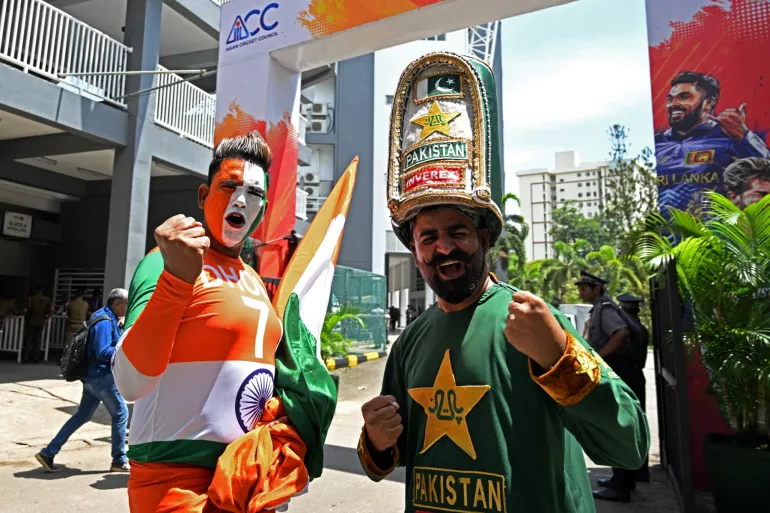
Almost 30 years ago today, India and Pakistan formed a combined cricket team to take on Sri Lanka ahead of the 1996 Cricket World Cup in an unprecedented moment of unity in the sport’s history.
The two age-old rivals put aside their differences and came together in an act of solidarity to support a fellow South Asian team, who faced the threat of match boycotts in a tournament they had battled hard to host.
India versus Pakistan is the most highly marketed fixture at every multination tournament – the World Cup, Asia Cup or Asian Games – whether it’s a men’s, women’s or Under-19 event.
Few sporting events globally carry the weight and anticipation of an India-Pakistan cricket match. So, when Pakistan’s government ordered its team not to face India at the ongoing T20 World Cup, the tournament was briefly pushed into a state of chaos.
It also left Sri Lanka, the designated host of the fixture, holding its collective breath.
A week of negotiations led to a dramatic late U-turn by the Pakistani government and the match will now take place as scheduled on Sunday at the R Premadasa International Cricket Stadium in Colombo.
But what if the boycott had gone ahead? The impact could have been catastrophic, not just for Pakistan, but also for the International Cricket Council (ICC), as well as Sri Lanka.
With the crisis seemingly averted, the island nation stands poised to reap the benefits in its financial landscape, diplomatic standing and community.
The tourism and hospitality industry was one of the hardest hit during Sri Lanka’s financial meltdown and this match will see an enormous influx of fans from India and Pakistan coming into the country.
Hotels in and around Colombo were fully booked out well ahead of the tournament but the industry braced itself for heavy losses after Pakistan threatened a boycott.
“There’s been a massive impact since the boycott was announced,” Sudarshana Pieris, who works in Sri Lanka’s hospitality sector, told Al Jazeera.
“All major hotels in Colombo were fully booked by Indian travel agencies well ahead of the match and once the boycott was announced, we lost almost all of those bookings,” he said.
“But after Pakistan reversed their decision, hotel room rates shot up by about 300-400 percent at five-star establishments in Colombo.”
It’s not just hotels but several other local businesses – from street vendors to high-end restaurants – who are hoping for an increased footfall and spending over the weekend.
These short trips and the experiences they offer could influence visitors to extend their stay or return to Sri Lanka on holiday, long after the game has ended, in a potential long-term benefit to the industry.
Another relatively underestimated impact of the game would be the employment opportunities it creates, albeit temporarily, in the media, event management, security and transportation industries.
Asanka Hadirampela, a freelance journalist and broadcaster currently working as a Sinhala language commentator for the World Cup, recognises the marquee match as a great opportunity from a personal standpoint.
“This is my first World Cup as a broadcaster,” Hadirampela said.
“The India-Pakistan fixture is the biggest and most-watched game of the tournament. So to get to work on such a match is exciting and I consider it a special achievement.”
The lines are always blurred between sport and politics in South Asia.
So while the financial gains are expected to be significant, the fixture’s impact on the region’s geopolitical environment cannot go amiss.
Pakistan’s boycott, too, was explicitly political, as confirmed by the country’s Prime Minister Shehbaz Sharif when he said that they were offering support to Bangladesh after the Tigers were kicked out of the tournament by the ICC.
The reversal of Pakistan’s decision, which they said came after requests to reconsider the boycott by several regional “friends”, was steeped in politics, too.
Sri Lanka’s President Anura Kumara Dissanayake reportedly had a phone conversation with PM Sharif, urging his government to rethink their decision to boycott the game as the successful staging of this encounter would not only position Sri Lanka as a capable host of global sporting events but also reinforce its standing as a neutral mediator in a region fraught with geopolitical complexities.
Sri Lanka and Pakistan have always maintained strong diplomatic relations, which have extended to the cricket field as well.
Sri Lanka were one of the first teams to travel to Pakistan following their 10-year ostracisation from international cricket, which came as a result of a terrorist attack targeting the Sri Lankan team in March 2009.
When Al Jazeera reached out to Sri Lanka Cricket (SLC), its vice president Ravin Wickramaratne confirmed that SLC did, indeed, reach out to the Pakistan Cricket Board (PCB) after the boycott was announced.
“We asked them to reconsider the decision,” Wickramaratne said.
“It [boycott] would have impacted Sri Lanka economically, whether directly or indirectly.
“We have always had a good relationship with the PCB and we have always supported them, so we’re happy with their decision.”
A little over 24 hours ahead of the match in Colombo, there is a sense of palpable excitement and a growing buzz around the fixture as it returns from the brink of cancellation.
As of Saturday morning, 28,000 tickets had been sold for the game but local organisers expect a capacity crowd of 40,000 to make it into the stands.
Come Sunday, thousands more will line the streets in and around Maligawatte, the bustling Colombo suburb that houses the famous Premadasa Stadium.

Well, everything about this game is big picture. If we needed a reminder of how much in cricket is sustained by this fixture, it came over the past two weeks, when it dangled over the precipice of not happening at all. The result of an India-Pakistan match might feel like it means everything, but, as the ICC view has appeared for at least the last decade and a half, it doesn’t have to mean anything at all. It just needs to happen.
And then there’s the rivalry. Indian captain Suryakumar Yadav triumphantly declared, after the second of three Asia Cup wins over Pakistan in Dubai, that this was no longer a rivalry, as if it were solely the cricket played within the boundary that had set its terms. India may now measure its cricketing standards against teams that play superior cricket to Pakistan, but crowds still pack stadiums more consistently against this side, and it draws more eyeballs than games against purportedly better competition. In Pakistan, meanwhile, there has never really been an attempt to deny that a win against India matters most of all.
Perhaps it is absence that has made Pakistan supporters’ hearts grow fonder. They have won three games against India in the past decade, and two of them have become iconic enough to be referred to in numerical shorthand. You’d need little further explanation in Pakistan beyond “180 runs” and “152-0” to know what you were talking about. But while they represent two of Pakistan’s three wins, the 17 defeats on the other side of the ledger have clustered into one sad muckheap.
The slightly smaller picture is that this game doesn’t have much riding on it from the tournament’s perspective. Both sides have come through scares to compile 2-0 records against less fancied opposition, and a defeat is unlikely to complicate progress to the next round for either. This, really, is a game that exists for its own sake, outside the context of the tournament it is a part of.
On the field, well, we know the score. India have both a cricketing and psychological edge, having won their three games against Pakistan at the Asia Cup in three different ways. They won with the ball in the first, the bat in the second, and the mind in the final, opening up further wounds in a rivalry whose tide Pakistan are struggling to find ways to reverse. India’s top order is uniquely devastating in T20Is, their middle order has heft, their spin has dazzling world-class variety, and their fast bowling has Jasprit Bumrah. There are increasingly few nits to pick with any of it.
It can feel bleak at times for Pakistan, but only those who know little about Pakistan cricket will assume they go in without hope. Curiously, for all the gulf that has opened up between these sides, Pakistan will be scratching their heads wondering how they don’t come into this match with a three-game T20 World Cup win streak over India. After their decisive win in 2021, they let victory slip from their hands in Melbourne in 2022 and in New York in 2024. It is where they will have learned how vast the difference between hope and belief is, and in moments where the match presents them with opportunities, as those two and last year’s Asia Cup final did, Pakistan will need to find a way to grasp them.
India against Pakistan gets talked about a lot, and almost never for the right reasons. But, for a few hours on Sunday, that’s exactly what could happen. That, in itself, is perhaps a good enough reason to get a game on Sunday, and, with any luck, a good one.
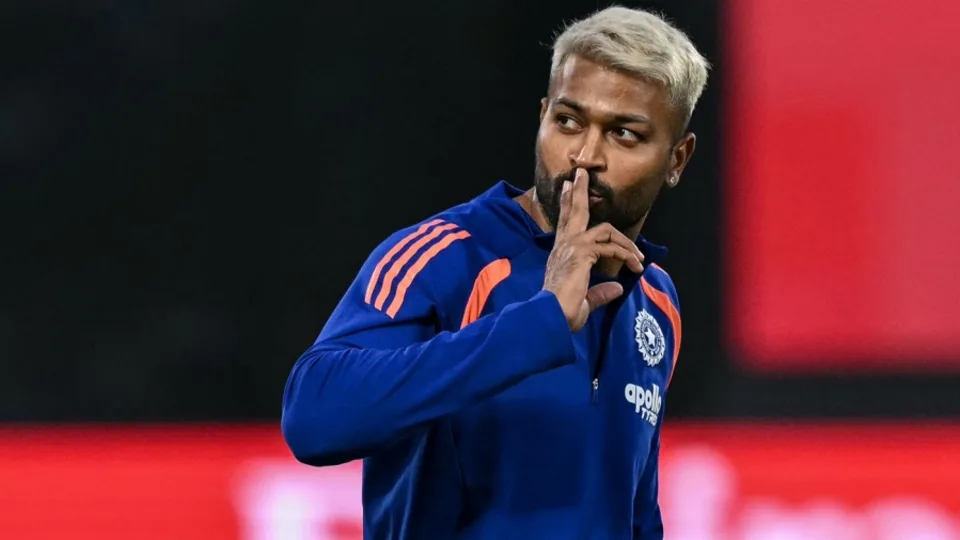
Perhaps no player in this India side loves playing against Pakistan more than Hardil Pandya. Against this opposition, he has a better bowling average, a better bowling economy rate and a better bowling strike rate than his overall T20I numbers. While his T20I batting numbers against Pakistan are not great, every Pakistan fan remembers his 43-ball 76 in a losing cause in the 2017 Champions Trophy final. In the last three games, he has dismissed Babar Azam, Saim Ayub and Fakhar Zaman, with his two-in-one credentials in this fixture offering India the ultimate luxury.
Shaibzada Farhan has played three matches against India, all within two weeks of each other. He scored 40 in the first, following up with two half-centuries, and helped Pakistan get off to dream starts in two games against India at the Asia Cup. Most famous was his relative comfort in dealing with Jasprit Bumrah, against whom he scored at a strike rate of 150 without once losing his wicket. He struck him for three sixes during that purple patch, more than any other batter has managed against Bumrah in their T20I careers. If Pakistan are to finally get over the line against India, they may require the same overperformance at the top, even if Bumrah is a hard man to keep down for long.
Abhishek Sharma has made a recovery in time for the game and will replace Sanju Samson. India wish to add another spin option, which likely means one of Washington Sundar or Kuldeep Yadav will come in for Arshdeep Singh.
India (probable): Ishan Kishan (wk), Abhishek Sharma, Tilak Varma, Suryakumar Yadav (capt), Hardik Pandya, Shivam Dube, Rinku Singh, Axar Patel, Kuldeep Yadav, Varun Chakravarthy, Jasprit Bumrah.
Pakistan have shown a willingness to stick with Babar Azam in the middle order, and with a commanding performance over USA, there is little immediate clamour for change. There remains a possibility of Fakhar Zaman being brought in, possibly as Usman Khan’s replacement, which would hand Farhan the gloves. Wholesale changes, however, are unlikely.
Pakistan (probable): Sahibzada Farhan (wk), Saim Ayub, Salman Agha (capt), Babar Azam, Shadab Khan, Usman Khan (wk)/Fakhar Zaman, Mohammad Nawaz, Faheem Ashraf, Shaheen Shah Afridi, Usman Tariq, Abrar Ahmed

West Indies brush aside Nepal to reach Super Eights

India vs Pakistan match is a godsend for T20 World Cup hosts Sri Lanka

Imran Khan to be moved to hospital amid rising health concerns

Fairly heavy showers are likely at some places in the Rathnapura, Kalutara, Galle and Matara districts

India vs Pakistan is finally here. Over to cricket now

“We Are Building a Stable, Transparent and Resilient Sri Lanka Ready for Sustainable Investment Partnerships” – PM

‘Dates have the highest sugar content to fight Coronavirus’

Sunday Island 27 December – Headlines

#SundayIsland 17th December – Headlines

Sunday Island – 28th March

Sunday Island Headlines – 21 March

Sunday Island – 21st February – Headlines
-

 Business4 days ago
Autodoc 360 relocates to reinforce commitment to premium auto care
-
 Midweek Review4 days ago
A question of national pride
-
 Opinion3 days ago
Will computers ever be intelligent?
-

 Features12 hours ago
The Rise of Takaichi
-
 Midweek Review4 days ago
Theatre and Anthropocentrism in the age of Climate Emergency
-

 Editorial6 days ago
The JRJ syndrome
-

 Life style12 hours ago
Marriot new GM Suranga
-

 Opinion4 days ago
The Walk for Peace in America a Sri Lankan initiative: A startling truth hidden by govt.