
Foreign News
More than 150 migrants rescued after boat catches fire in Channel


More than 150 migrants have been rescued after the boat they were using to cross the Channel caught fire on Tuesday morning, French authorities have said.
The boat was attempting to cross to the UK when its engine caught fire, according to the French maritime prefecture of the Channel and North Sea.
It said 157 people have been rescued and are being taken to port in Boulogne-sur-Mer. There are no reports of anyone having been injured or killed.
It comes just a day after Prime Minister Andy Burnham pledged his government will be “relentless” in curbing the number of people arriving in the UK on small boats.
French authorities said the boat left France on Monday night.
Overnight “five people on board the vessel required rescue… the remaining people on board refused the assistance offered by the French patrol boats”, the French maritime prefecture said.
“Determined to reach the United Kingdom, migrants crossing the Channel in small boats refused assistance offered by French emergency service, accepting it only in situations of extreme emergency,” it said in a statement.
Because of the “structural fragility” of boats used to cross the Channel, it said they decided not to intervene further at that stage.
But this morning the engine caught fire and the “vessel’s integrity deteriorated very rapidly”.
Rescue boats went to the scene from France and the UK, including the RNLI Eastbourne lifeboat and the UK Border Force vessels BSC Contender and BSC Courageous.
Two French boats rescued 103 migrants and the British boats rescued 54.
All of them are being taken to Boulogne-sur-Mer for treatment, where they were expected to arrive there at 12:30 local time (11:30 BST) on Tuesday.
A UK government spokesperson said the Border Security Command was alerted to an incident in the Channel this morning “concerning a migrant small boat in distress in French waters”.
It said British vessels assisted in the operation, adding that so far there have been no fatalities reported.
They added that the incident “underlines the terrible dangers of small boat crossings”.
“We continue to work relentlessly with the French and our partners overseas to prevent these perilous journeys,” they said.
Earlier, the UK Coastguard said: “A vessel caught fire earlier this morning whilst in the French search and rescue region. UK vessels and a lifeboat are assisting.”
Reform UK leader Nigel Farage said in a post on X: “We must put a stop to this. Our plan will save lives.”
Earlier this week, his party said if in government it would deploy the navy to ward off crossings.
Political discussions around the UK’s policies on illegal migration have resurfaced since tens of thousands of migrants swam into the Spanish exclave of Ceuta on Thursday.
The Conservatives have said that Labour has not delivered on its promises on migration, while the Lib Dems said the government should increase efforts to improve relationships with Europe and cut down the asylum backlog.
The number of migrants who have arrived in the UK on small boats since Burnham became prime minister a fortnight ago surpassed 2,000 on Saturday.
Last Wednesday was the busiest day for crossings so far this year, with 752 migrants arriving in the UK.
Most people attempt the crossing in the summer when conditions are better. It’s also become the most common way for people to be detected entering the UK illegally.
Home Office figures show the number of crossings so far this year are down about 43% compared to this time last year. The number peaked in 2022 and has been on a downward trend ever since.
During a visit to Dover on Monday, Andy Burnham said progress had been made in curbing the number of people arriving in the UK on small boats.
The prime minister said “people want to see this issue addressed”.
He added that enforcement officers tackling people-smuggling gangs have been doubled on both sides of the Channel, but “a system that offers safe routes for people” needs to be built as well.
In April, the UK and France struck a 773m euro deal aiming to stop illegal migrants from crossing the Channel.
The three-year agreement included plans to send riot-trained police to French beaches to tackle violence and “hostile crowds”, as well as France deploying millions of pounds of drones and two helicopters as part of a system to intercept people smugglers and illegal migrants.
UK ministers have also said about £100m in funding could be redirected or withdrawn after a year if not enough journeys are stopped – but the government has not confirmed what targets the French would have to meet.
[BBC]

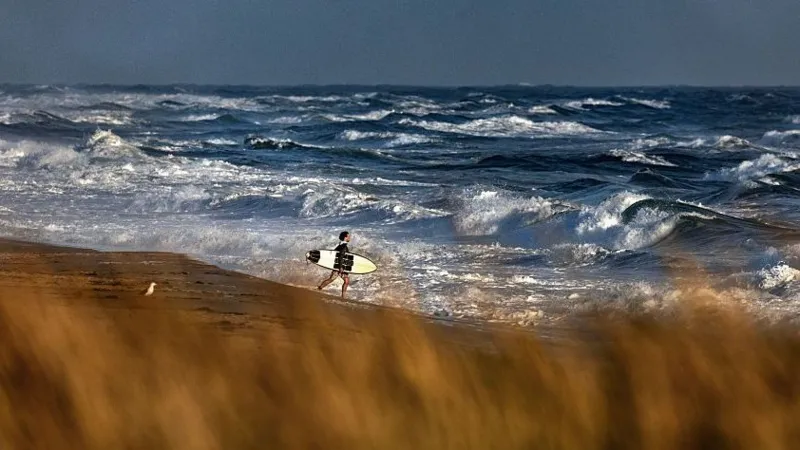
US authorities have found debris from a medical transport aircraft that went missing with six people on board.
The Federal Aviation Administration told the BBC it had lost contact with the Gulfstream G-100 plane just after 01:00 local time (05:00 GMT) on Saturday, while it was travelling from Bermuda to Boston, Massachusetts.
The search for survivors continues off the coast of Nantucket, a Massachusetts island, the US Coast Guard said.
Authorities have notified the next of kin of those on the flight, four Canadian nationals and two Bermudian nationals.
“Search crews located a debris field confirmed to be from the aircraft off the coast of Nantucket,” the US Coast Guard said in an update on Saturday night. It added that ships, helicopters and planes were involved in searches that would through continue the night.
The plane departed from Bermuda’s L.F. Wade International Airport at 23:40 local time, according to flight data from FlightAware, and was due to land at Boston’s Logan International at 01:30 EDT (05:30 GMT).
According to the tail number released by the Coast Guard, the plane belonged to Latitude Air Ambulances, a company that provides international medical flights for patients returning home.
Among those on board were two pilots and two medical staff, both Canadian, Clarence Togeretz, director of flight operations at Latitude, told CBC News.
The crew flew to Bermuda to collect a patient and their relative, who are not Canadian, Togeretz said.
FlightAware’s tracker shows the aircraft significantly dropped in altitude before its communications went dark, plummeting from around 7,300m (24,000ft) to 3,300m (11,000ft).
Radio transmissions shows trouble with communications between the air traffic controller and the pilot, the Boston Globe reported based on transmissions provided by LiveATC.net.
“You’re coming in blind? Is that what you said?,” the air traffic controller asked. “Are you declaring an emergency, or no?”
The pilot’s response was inaudible.
“You’re coming in a little weak so I didn’t hear what your response was, if you were declaring an emergency or not,” the air traffic controller said, according to the Globe.
The air traffic controller later confirmed the pilot had declared an emergency.
An area fire dispatcher asked emergency crews just after 01:00 EDT to prepare to meet a plane with an “electrical issue”.
The dispatcher later said “the aircraft has lost radio and radar”.
The Coast Guard said it would provide an update on Sunday morning local time.
[BBC]
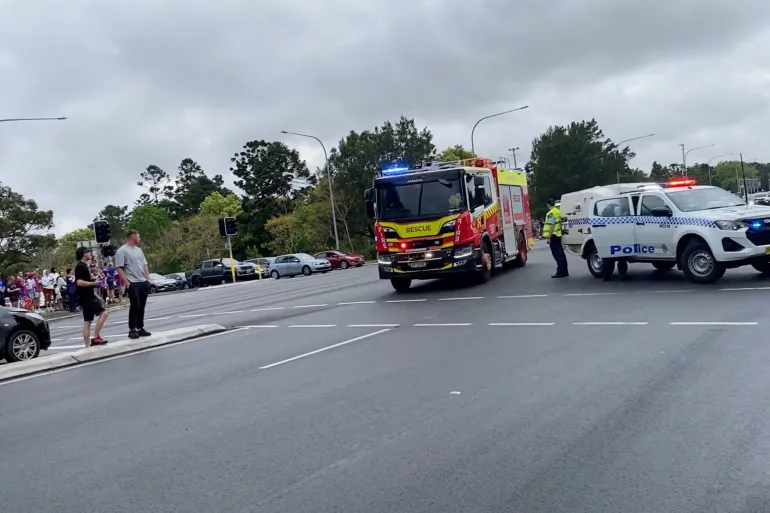
A car has crashed into a crowd of rugby league supporters in the eastern Australian city of Newcastle, injuring 10 people, including three children.
New South Wales police said on Saturday that two of the injured – a five-year-old girl and a 67-year-old man – were in a critical condition and the other eight were in stable condition in hospital.
Police said they had arrested the 18-year-old man driving the vehicle and were investigating what happened. They said the crash was not believed to be related to “terrorism”.
The crowd had gathered to farewell the local rugby league side, the Newcastle Knights, ahead of their grand final against the Sydney Roosters on Sunday.
Newcastle Lord Mayor Gavin Morris said the driver, a rugby league fan, had lost control of his vehicle and had been taken into custody.
“He was revving the car, he was excited, he was a supporter, he was there for the joy of the moment,” Morris told the national broadcaster ABC.
“Somehow he lost control of the car … and he’s gone into the crowd,” he added.
Prime Minister Anthony Albanese said: “My thoughts are with everyone injured or involved in the horrible incident this morning in Newcastle.”
“Rugby league brings people together, and this should have been a weekend of excitement and pride for Newcastle fans,” he wrote in a social media post.
[Aljazeera]
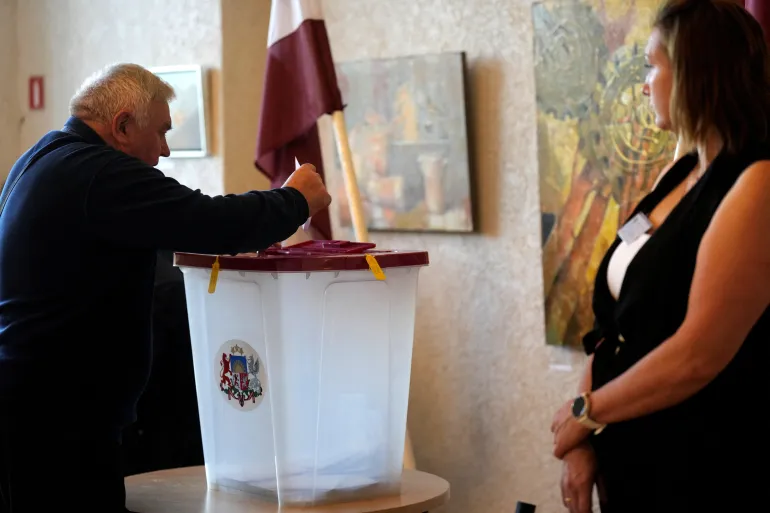
Polls have opened in Latvia for an election taking place against the backdrop of perceived security threats from Russia and a nationwide cost-of-living squeeze.
Saturday’s vote is the first electoral test for Prime Minister Andris Kulbergs after coming to power in May this year when his predecessor resigned due to a backlash from stray drone incursions from Ukraine.
Kulbergs, whose right-wing United List party is currently polling at about 20 percent, is expected to hold onto his position, but the decline of two allies in his current coalition means he is set for a complicated negotiation over the makeup of any future government.
Polls opened at 05:00 GMT and will close at 17:00 GMT. The results are not expected to change Latvia’s pro-European and pro-Ukrainian course.

About 1.5 million people are eligible to vote in the country’s 11th parliamentary election since independence from the Soviet Union in 1991.
Latvian politics are highly fragmented, with parties rarely seeing above 20 percent vote share and coalitions being the norm.
This year, 14 electoral lists are contesting the election, but polls indicate only seven are likely to enter parliament, with the rest expected to fail to meet the minimum 5 percent vote threshold.
Rising living costs, low wages, strains on the healthcare system and long-term population decline have all featured prominently in campaign debates.
Most parties in Latvia are pro-Ukraine; however, the populist Sovereign Power party – which says it wants Ukraine to win but argues money spent supporting Kyiv would be better spent at home – looks likely to become the country’s second-biggest party, with more than 9 percent of the vote. Most other parties have ruled out forming a coalition with Sovereign Power.
Latvia First, a pro-Ukraine and populist nationalist party currently polling at about 9 percent, could be a potential coalition partner for PM Kulbergs.
The Progressives, a pro-European social democratic party, are polling at 6 percent.
Ethnic Russians make up roughly one in four Latvian citizens, but their vote, which has traditionally been cast along identity-based lines, looks set to be made according to economic and social issues.
Latvia is the poorest of the Baltic states, and it has sharply increased its defence spending since Russia invaded Ukraine, now allocating nearly 5 percent of its gross domestic product (GDP) to defence.
[Aljazeera]

Govt. urged to halt ‘illegal’ presidential pardons

GL urges cautious handling of Saudi death row case, blasts govt. over BRICS affair

Shiranthi files anticipatory bail application

Sri Lanka renews Honorary Consul appointment in Mombasa

Govt. plans to amalgamate NDF and ‘Api Wenuwen Api’ Fund

SLPP Gen. Secy. alleges political persecution and institutional decay

‘Dates have the highest sugar content to fight Coronavirus’

Sunday Island 27 December – Headlines

#SundayIsland 17th December – Headlines

Sunday Island – 28th March

Sunday Island Headlines – 21 March

Sunday Island – 21st February – Headlines
-

 Latest News6 days ago
Gold winner Tharanga gets brand-new Honda Vezel from SLAAJ
-

 Features6 days ago
Why Sri Lanka needs an Inclusive Civic Nationalism – urgently
-

 News5 days ago
US-assisted ‘Ice’ detection: NPC to examine IGP’s move to transfer drug-busting team
-

 Editorial4 days ago
Colombo Port drug bust: The plot thickens
-

 News6 days ago
Civil society activist accuses govt. of favouring Ven. Gnanasara
-

 Editorial6 days ago
When crime bosses rise above law and shrines
-

 Midweek Review6 days ago
Dappula’s Easter Sunday ‘grand conspiracy’ claim demolished
-

 News6 days ago
75 new inmates sent to Bogambara re-establishing it as a correctional facility