
Business
More statutory powers for BOI, assures Dilum Amunugama


In a bid to further facilitate investors through speedy approvals for investment projects, thereby easing the ease of doing business, the Board of Investment of Sri Lanka (BOI) will be granted more powers in the future, Investment Promotion State Minister Dilum Amunugama stated.
He stressed that the new powers would see investors being given more efficient clearance processes for relevant projects, offering investors additional certainty and clarity. The State Minister made these remarks during a discussion held with the BOI trade union representatives recently.
“It is evident that the modus operandi in obtaining necessary approvals for investment projects causes significant hindrances to investors, which has a considerable bearing on the willingness and confidence of the investors to continue their business. In fact, some projects require approvals from 70 institutions,” Amunugama highlighted.
“In this context, attention has been drawn to leveraging a business model called the plug-and-play model where all clearances and other prerequisites will be in place before the project is awarded to any investor. Here, the business firms are not required to focus on the basic requirements for setting up a business as everything is arranged by the relevant authority, which would be the BOI” he explained.
“With the new powers in place, the BOI will be equipped to act more independently and effectively and thus, upbeat about wooing more investors to Sri Lana,” Amunugama added.



The government’s proposal to raise fines on manufacturers of substandard plastic products to as much as Rs. 1 million is expected to trigger a major compliance shift within Sri Lanka’s plastics industry, correcting long-standing market distortions caused by weak enforcement.
Environment Deputy Minister Anton Jayakody said the move targets producers who continue to bypass approved standards, undercutting compliant manufacturers and exacerbating environmental damage.
Environment Ministry Advisor Dr. Ravindra Kariyawasam said the initiative represents a structural market correction rather than a purely environmental intervention.
“Non-compliant producers have enjoyed an artificial cost advantage for years, distorting pricing and discouraging legitimate investment,” Kariyawasam told The Island Financial Review. “Meaningful penalties are essential to restore fairness and industry discipline.”
He said the widespread circulation of low-grade plastic products has eroded consumer confidence and delayed the sector’s transition towards higher-value and sustainable manufacturing.
Industry analysts note that a Rs. 1 million fine would significantly alter risk calculations for marginal operators, forcing upgrades in machinery, testing and compliance or pushing weaker players out of the market.
Kariyawasam stressed that the policy is intended to support responsible businesses rather than suppress industry growth.
“Manufacturers investing in recycling, biodegradable alternatives and quality assurance should not be penalised by competing with environmentally damaging, low-cost products,” he said.
The Deputy Minister indicated that tighter enforcement will be paired with policy support for sustainable packaging and circular-economy initiatives, aligning the sector with emerging global trade and environmental standards.
From a business perspective, the proposed regulation is likely to impact pricing, supply chains and capital investment decisions, while improving the long-term credibility of Sri Lanka’s plastics industry in both domestic and export markets.
By Ifham Nizam

First Capital Holdings PLC (the Group), a subsidiary of JXG (Janashakthi Group) and a pioneering force in Sri Lanka’s investment landscape, is set to host the 12th edition of its renowned ‘First Capital Investor Symposium’ on 22 January 2026 at Cinnamon Life Colombo, starting from 5.30 pm onwards.
The 12th Edition will focus on Sri Lanka’s Economic Outlook for 2026, offering attendees a comprehensive analysis of market forecasts, investment strategies and emerging opportunities in the capital markets. The symposium serves as a crucial gathering for investors seeking insights to navigate the evolving economic landscape and make sound, strategic decisions.
As a leading investment institution, First Capital remains committed to promoting informed decision-making through comprehensive research and market analysis. By hosting this annual symposium, the organisation reinforces its role as a trusted partner in Sri Lanka’s capital markets, providing a premier platform for investors, professionals, and industry leaders to exchange knowledge, explore opportunities and build meaningful connections.
A key highlight of this year’s agenda will be First Capital’s presentation on the Economic and Investment Outlook, outlining market conditions and investment strategies for the period ahead. The presentation will be delivered by Ranjan Ranatunga, Assistant Vice President – Research of First Capital Holdings PLC.
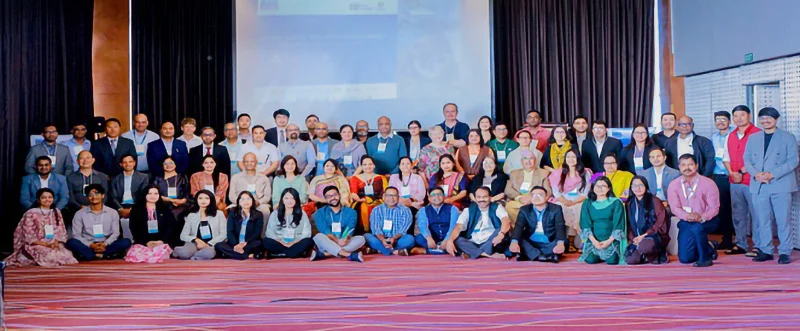
Oxfam in Asia commenced the Rivers, Rights, Resilience Forum (RRRF) 2026, a three-day regional forum bringing together water experts, policymakers, civil society, researchers, and community leaders from across South Asia and beyond to strengthen cooperation on shared river systems and climate resilience.
The Forum is part of the Transboundary Rivers of South Asia (TROSA) programme, supported by the Government of Sweden, which works on the Ganges–Brahmaputra–Meghna (GBM) river basins, while also encouraging cross-basin learning at the regional and global levels. This year’s theme is “Building Resilient Communities and Ecosystems.” The Forum is co-organised by Oxfam in Asia and Dev Pro, Sri Lanka.
The forum opened with a welcome address by John Samuel, Regional Director, Oxfam in Asia, who highlighted the deep connection between rivers, politics, climate change, and sustainability. He underlined how rivers shape both environmental and social outcomes across South Asia and called for stronger collaboration between governments and civil society.
“Today building resilience is important in terms of climate and politics, and when civic space is shrinking, we should all work in solidarity,” he said.
Speaking at the Forum, Chamindry Saparamadu, Executive Director of DevPro shared examples of how communities in Sri Lanka have taken actions to ensure equitable access to water resources through catchment protection initiatives, community-based water societies etc. She further highlighted that learning exchanges would be useful to further strengthen inter-provincial water governance in Sri Lanka.
The Chief Guest, Syeda Rizwana Hasan, Advisor, Ministry of Environment, Forest and Climate Change and Ministry of Water Resources, Bangladesh, in her video message, emphasised the need for regional cooperation among South Asian countries beyond the upstream–downstream identity.
“Climate change will make water scarce, so South Asian countries have to come together to work on the common interest of their communities. Rivers are not just ecology but economics as well for communities. Forums like this help us to share our experience and learn from each other,” she said.

Red-hot Royal Challengers Bengaluru stay perfect ain 20nd march into playoffs

Zadran, Rasooli power Afghanistan to commanding win over West Indies

Italian fashion designer Valentino dies aged 93

U – 19 World Cup: Sri Lanka beat Ireland by 106 runs

U – 19 World Cup: Rowles, Bulbulia star in South Africa’s big win over Tanzania

U – 19 World Cup: Raza, Usman steer Pakistan to victory over Scotland

‘Dates have the highest sugar content to fight Coronavirus’

Sunday Island 27 December – Headlines

#SundayIsland 17th December – Headlines

Sunday Island – 28th March

Sunday Island Headlines – 21 March

Sunday Island – 21st February – Headlines
-

 Editorial2 days ago
Illusory rule of law
-

 News3 days ago
UNDP’s assessment confirms widespread economic fallout from Cyclone Ditwah
-

 Business5 days ago
Koaloo.Fi and Stredge forge strategic partnership to offer businesses sustainable supply chain solutions
-

 Editorial3 days ago
Crime and cops
-
 Features2 days ago
Daydreams on a winter’s day
-

 Editorial4 days ago
The Chakka Clash
-
 Features2 days ago
Surprise move of both the Minister and myself from Agriculture to Education
-

 Features1 day ago
Extended mind thesis:A Buddhist perspective