
Sports
More on Lorenz and Daya Sahabandu


On one of those boring lockdown days of early June, Lorenz Pereira lit up The Sunday Island with a highly entertaining piece in which he recalled what he termed as one of his most satisfying sporting achievements. That was the making of Daya Sahabandu the cricketer. Several generations have rolled by since Lorenz Pereira’s heyday in sport, and for the benefit of today’s man about town, a few paragraphs on Lorenz Pereira would not be out of place, before we begin discussing the enigma that was Daya Sahabandu.
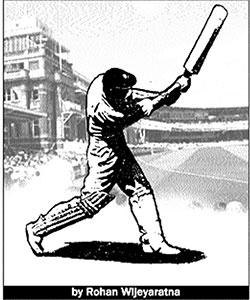 Eustace Lorenz Pereira was a born sport; both as a player and a person. Cricket came to him naturally. Blessed with a fine cricketing brain while still in school, he was an excellent left-hand bat, a very useful off spinner and an outstanding fielder in the gully or in the covers in particular. Given the flamboyance, the confidence and the style with which he played his sport, it was natural he became the cynosure of all eyes, be it when playing cricket or rugby football.
Arguably, the finest ……
Lorenz first played for Royal under Fitzroy Crozier in 1956. He was Michael Wille’s deputy in 1957. He went on to captain Royal in 1958 – the year in which Michael Tissera captained St. Thomas’. Lorenz also played for Royal in 1959, when the team was led by Sarath Samarasinghe. His sporting accomplishments and talents were such, many wise heads considered him as arguably, the finest sporting talent that Royal had unearthed till then.
Lorenz won Royal College colours at Cricket, Rugby, Athletics and Tennis, in addition to also winning Public Schools Athletics colours. He would have won more, had not those ancient Egyptians and horologists decided that a day should consist of only 24 hours and no more. In recognition of his outstanding contribution to sport, and given his other accomplishments and agreeable attributes, Royal College appointed him their Head Prefect in 1958. Further, in recognition of his continued outstanding achievements at cricket, he was picked the Schoolboy Cricketer of the Year in 1959.
Lorenz Pereira made his mark at rugby for Royal as a brilliant wing three quarter but did not captain his school. One of the standout features of his play was his ability to hit high speed from a near standstill position within seconds. His play was also characterized by his tendency to frequently cut in and join the threes in mesmeric overlaps, often side stepping the enemy with no discernible drop in speed. He preferred to make his advances without having to endure human contact. This he often achieved through the use of speed, dash and verve. Memorably, in the return leg of the Bradby shield in 1958 Lorenz playing on the right wing threw the ball into a line out, and from the ensuing maul the ball changed hands several times while moving down the line and across the field to the left wing, where a speeding Lorenz Pereira was at hand to collect the final pass and score a sensational try! That brilliant piece of work won Royal not only the match, but also the Bradby Shield in the dying moments of that game.
Talent without question
After leaving school Lorenz Pereira played cricket for the SSC and rugby football for the CR & FC before proceeding to Cambridge, where he didn’t play much and therefore did not win a Varsity Blue. Given his awesome talent and his natural flair, this could only have been through some lack of application on his part. In fact, if I were to hazard a guess, he may have devoted far too little time to sport for reasons best known to him; for his promise and his sporting talent were both without question.
Having obtained his degree and upon his return, Lorenz joined John Keells Tea Department and began working as a Tea Broker. Always seen with a characteristic kerchief knotted round his neck on a cricket field, he turned out for the SSC once again, before giving up the game altogether – owing possibly to waning interest. Although his cricketing skills were munificent, it was at Rugby that he shone with spectacular success.
First ‘non-white’ Captain
Lorenz Pereira was a man of great charm and winsome ways. Given his pedigree, his panache and his awesome popularity within the sporting circuit, it came as no surprise when he was conferred the then highly prestigious membership of the C.C.C., CH & FC and the Gymkhana Club as one of the first Ceylonese to be accorded that honour. That was sometime in the early 1960s. He was also the first ‘non-white’ to captain C.C.C. and CH & FC at cricket and rugby football.
Even though he never captained his school at rugby, Lorenz captained the national rugby team while playing for the CH and FC. Playing alongside the likes of Omar Sheriff, John Burrows, Mike Davies, Maurice Marrinon, Y.C. Chang and Brian Baptist (to name but a few), he became an integral part of most CH sides in the 1960s and early 1970s. He would often thrill spectators with his raking runs, his brilliant side stepping and swerving; his selling of perfect dummies while accelerating into the space created, and leaving the opposition defense reeling in his wake. Outside the paddock he developed many social skills, not the least the ability to amuse, while delivering some outstanding after dinner speeches. That was a skill he would unfurl with great finesse and timing whenever the occasion demanded. But despite all that, not many heard him say until now that he had a direct hand in making Daya Sahabandu, the cricketer he turned out to be!
The spindly Daya Sahabandu
Daya Sahabandu began his cricket career at Royal as a spindly left arm in-swing bowler. He played only a few First XI games under Michael Wille’s captaincy in 1957 before he was dropped. Relieved he was no longer under Wille’s stringent leadership, Sahabandu played for the Second XI where he tried out and acquired a great liking for spin bowling. Playing under the more relaxed regime of Lorenz Pereira in 1958, Sahabandu employed both styles of bowling and met with much success. Having played in the Royal-Thomian of 1958, 1959 and 1960, Bandu won his cricket colours in each of those years, while opening the bowling and thereafter reverting to spin.
Bandu’s chief weapon was his awesome accuracy. The trick with his bowling was that he would adjust the flight of the delivery according to the state of the wicket. For instance, if he found he could extract more spin at a certain trajectory of delivery, he would make it his stock ball. From then on, he would tie up the batsman in knots, and finally commit him into error. He developed his ‘chinaman’ and the googly later on in his career while playing club cricket, but in the main during his schooldays, he was a ‘no frills’ left arm orthodox bowler of great consistency.
‘DH’ the mentor
Daya Sahabandu played under several captains in his time but it was under D.H. de Silva that he flowered out and achieved his best. ‘DH’ mentored him and was a great influence on Bandu’s personal progress during his playing years at Nomads. But try as he might, there was one aspect over which ‘DH’ could not wield any influence whatsoever over Bandu. That was the aspect of fielding – but more on that later.
To this day, Bandu considers ‘DH’ as the finest captain he played under. ‘DH’ was the Brian Close of Sri Lanka cricket. He was aggressive, up front and in your face. Not the most popular or best liked among those who knew him purely as an opponent, ‘DH’ carried a lot of cricket between his ears. Cricket to him was a thinking man’s game, and he lived his life for the sport – playing, thinking, analysing. He and Bandu were like peas in a pod; one doing the plotting and the other doing the executing. Having unerringly analysed each opposing player, ‘DH’ would – either from first slip or any bat-pad position – surreptitiously direct Bandu where he should be pitching next. Sometimes Bandu would open the bowling for Nomads and bowl quickish left arm orthodox. He had the ability to make some balls pop up more than others, and this kept the bat-pad fielders always interested. Even when well into his 40s, ‘DH’ would position himself at silly point or forward short leg and employ several others in brazenly attacking positions close to the bat, only because he had such an unshaken belief in Sahabandu’s unerring accuracy.
Often punching above their weight ….
In short, Bandu could pitch the ball on a 50 cent piece if he so wished. Once he had discovered the best trajectory to bowl, he was like a wound-up clockwork; faithfully trudging back to his bowling mark, turning and running in, and landing the leather exactly where his skipper wanted it, time after time. He repeated this routine like a mantra, never allowing himself to be flustered by any outside influence or distraction. If ‘DH’ was the Sri Lankan equivalent of Brian Close, Sahabandu was to Ceylon, what Underwood was to England. DH and Bandu were brilliant – even eccentric, and for sure, crankily cricket mad! If the wicket took spin or suggested the slightest trace of dampness, Sahabandu – be it with spin or seam – was near unplayable. It was grippingly entertaining spectacle, watching Nomads often punch above their weight and getting the better of more fancied teams with their tight cricket and cunning!
Could no longer be ignored ….
Bandu played his cricket at a time when athleticism and fielding excellence weren’t the most sought after attributes in players, when it came to selection. Despite that concession, it was generally agreed that Bandu ‘s ideal fielding position should be the remotest possible in the field, since placing him behind the sightscreen was not an option. Although his fielding skills remained static over the years, his skills with the ball continued to improve, particularly with the advent of Stanley Jayasinghe to Nomads in 1968 or thereabouts. Teaming up with D.H., Stanley helped Sahabandu raise his game by several notches, until it was no longer possible to ignore him for national service.
And so despite his near magical ability with the ball, It took Bandu all of two months short of 29th years to play his first match for Ceylon. That was in January 1969 when he represented the country in a 60 over game against a powerful MCC team. Not unsurprisingly Bandu returned the best bowling figures, capturing 3 for 35 off his allotted 12 overs against the likes of Edrich, Fletcher, Graveney, Cowdrey and D’Oliveira. Playing for Ceylon in the three day game which followed, Sahabandu again returned the best bowling figures for the Ceylonese, capturing 2 for 90 in 44.2 overs. His two scalps were the prized wickets of Tom Graveney and Keith Fletcher.
Next followed Ian Chappell’s Australians in Ceylon in 1970 (27-12-64-2 and 22-6-52-2), England in Ceylon in 1970 (23-12-33-1 and 37-15-86-5) and England in Sri Lanka in 1973 (16-5-42-0 and 14-4-24-0). Daya Sahabandu played his last game for his country in November 1975 while touring India.
A masterpiece in stonewalling ….
Of the three “Tests” that were played on that Indian tour of 1975, it was with the bat that Bandu grabbed the greatest attention. In the first “Test” at Hyderabad (Nov 8th – 11th) Bandu held up the Indian juggernaut of Madan Lal, Amarnath, Bedi, Chandrasekhar and Prasanna, by batting till after tea on the final day and stalling what might have been a galloping innings defeat for his side. Going in as night watchman in the Sri Lankan 2nd innings the night before, Sahabandu held his end up for four hours and 16 minutes on the final day, with a rare exhibition of ‘stroke-less batting’. His marathon effort might not have been enough to save the game for his side, but it certainly went a long way towards helping Sri Lanka avoid the ignominy of an innings defeat, while prolonging the inevitable till the 2nd last over of the final day. His final representative game was the 3rd Test at Nagpur on 28th, 29th, 30th November, and 1st December 1975.
If Daya Sahabandu with the ball in hand was unquestionably a champion, his repute as a fieldsman as mentioned before, was nothing short of withering. Lorenz describes him as a total liability in the field, stating that if he were placed at wide third man at the start of an over, he would meander with no particular aim or direction, until he ended up at fine leg by the time the over ended! In short, Lorenz found that Bandu needed supervision and his fielding position set, not just once every over, but before each ball! Bandu’s legendary habit of loitering whilst being engrossed in a world of his own continued unabated throughout his playing career, much to the chagrin of many of his captains.
Bandu, the incomparable!
But perhaps the final word must remain with Mike Wille, captain of Royal in 1957 who is credited with this story. Royal were getting smashed at the hands of St Benedict’s when Neville Casiechetty ‘s scorching hit off a Bandu delivery was brilliantly caught at cover. As luck would have it the ball was deemed a ‘No ball’. On noticing the batsman at the non-striker’s end was yards out of his crease and having no chance of a safe return whatsoever, the fielder gently lobbed the ball back to Sahabandu, who had only to remove the bails to effect what would have been a run out by yards!
What Bandu did next must surely go down in the annals of cricket’s rich folklore, passed down the generations. Catching the ball that was gently lobbed back at him, Bandu turned, and with bowed head, simply walked back to his bowling mark, contemplating the infinite!
It must have been Mike Wille’s fitness and his youth, which saved him from suffering a midfield heart attack!





Years of political history and football rivalry will collide in Atlanta when England face Argentina in a World Cup semifinal for the ages.
From the controversial “Hand of God” goal by Diego Maradona in 1986 to David Beckham being red-carded for kicking Diego Simeone in 1998, sporting contests between England and Argentina are often theatrical, tense and tricky.
Then, there is also the lingering sovereignty dispute over the Falkland Islands.
Divided by geography and conflict, England and Argentina are vastly different in many ways, yet at this World Cup, they have at least one thing in common – both have made a habit of surviving on the edge.
For England, the plan is simple: Find a way to stop the magical force of Lionel Messi and reach their first final in six decades.
And for Argentina? To grind again and chase history in back-to-back finals.
Here’s everything you need to know about this semifinal:
How did England and Argentina reach the semifinals?
England topped Group L with seven points, beating Croatia and Panama and drawing with Ghana. They needed a second-half comeback to beat the Democratic Republic of the Congo in the round of 32 and knocked out co-hosts Mexico3-2 in a scintillating last-16 contest at the iconic Azteca Stadium.
In the quarterfinals, they came from a goal down to beat Norway 2-1 in extra time.
Argentina had a strong showing in the first round, topping Group J by beating Algeria, Austria and Jordan. In the round of 32, they were pushed to their limits before squeezing past Cape Verde 3-2 in extra time, and came from two goals down to beat Egypt 3-2 in a controversial last-16 contest which drew allegations of officiating bias.
Against Switzerland in the quarterfinals, they again played a full 120 minutes before securing a 3-1 win.

At last, Messi meets England
From winning the World Cup to Copa America, lifting the Champions League trophy to the Ballon d’Or, and kissing the Golden Ball, Messi has achieved almost everything possible in football.
But in his 21 years playing for Argentina, there is one thing he has not done: face England.
The 39-year-old forward will play against the Three Lions for the first time, 21 years on from the red card he received in the early days of his career, which denied him the chance in a 2005 friendly.
“I have played against everyone except England, and it is special because they are a major nation, a powerhouse, and it is always nice to play against a side like that, especially in a World Cup semifinal,” Messi said.
With eight goals in six matches, Messi is enjoying a World Cup campaign like no other as he bids for his first Golden Boot. As the captain, he is also leading Argentina’s charge to become the first team to retain the World Cup since Brazil in 1962.
Should they beat England, Argentina would be in their third final in four World Cups, and Messi could follow in the footsteps of Brazil’s great, Cafu, who played in three in a row from 1994 to 2002 – even Maradona only ever played in two.
“Getting to another semifinal is not a normal, mundane thing, so this is something we should really enjoy because we don’t know if it will happen again,” Messi said.
Pickford backs England to keep cool in tense clash
Generations in England have not seen their team lift a major trophy. Their only success came when hosting the 1966 World Cup.
This current squad – headlined by the dynamic duo of Harry Kane and Jude Bellingham – is, however, within touching distance of making history, by not only winning a second trophy, but a first on foreign soil.
Before the game, though, Thomas Tuchel’s side knows the pressure is firmly on them, but goalkeeper Jordan Pickford believes the team can cope.
“You’ve seen throughout the tournament our desire to win tackles. We’ve not got into any scuffles or anything,” he said on Monday.
“We’ve been very well respected within the game. Decisions go our way [or] they don’t go our way, we just reset, we go again, and we let the football do the talking.”
England, fourth in the FIFA rankings, two spots below Argentina, are set to feature in a fourth semifinal in the last five major tournaments.

England vs Argentina predictions
As of Tuesday, Opta’s supercomputer gives England a 39.1 percent probability of winning in regulation time, while Argentina’s chances of winning are 31.6 percent.
The model estimates a 29.3 percent probability of the game going to extra time.
Who is the referee for England vs Argentina?
- Referee: Ismail Elfath (US)
- Assistant referee 1: Corey Parker (US)
- Assistant referee 2: Kyle Atkins (US)
- Fourth official: Maurizio Mariani (Italy)
- Reserve assistant referee: Daniele Bindoni (Italy)
Where is England vs Argentina being played?
England will play Argentina in the second semifinal at Atlanta Stadium, commonly known as Mercedes-Benz Stadium, in Atlanta, Georgia, United States. It is the last of the seven World Cup matches held at this venue, which has a capacity of 68,239 for the tournament.
The stadium, boasting a retractable roof and a 360-degree halo video display, undoubtedly has the most space-age architecture of the 16 host cities.

What is the weather forecast for Atlanta?
AccuWeather forecasts rain on Wednesday afternoon. “Some sun with a thundery shower,” it says.
England vs Argentina: Head-to-head
Overall, they have met 14 times in competitive and friendly matches.
England lead the head-to-head record with six wins, while Argentina have three. Five games ended in a draw.
England vs Argentina: Past results
- England 3-2 Argentina (International friendly, 2005)
- England 1-0 Argentina (World Cup 2002, group stage)
- England 0-0 Argentina (International friendly, 2000)
- Argentina 2-2 England (4-3 on penalties, World Cup 1998, round of 16)
- England 2-2 Argentina (Challenge Cup, 1991)
The winner of the semifinal between Argentina and England will face Spain in Sunday’s final at New York New Jersey Stadium.

England vs Argentina: Team news
England midfielder Declan Rice, who has been struggling with illness, is a doubt, while veteran player Jordan Henderson is out with a wrist injury.
No injuries reported in the Argentina camp.
England’s predicted lineup
(4-1-3-2): Pickford; Konsa, Stones, Guehi, O’Reilly; Rice, Anderson; Madueke, Bellingham, Gordon; Kane
Argentina’s predicted lineup
(4-1-3-2): Martinez; Molina, Romero, Lisandro, Tagliafico; Paredes; De Paul, Fernandez, Mac Allister; Messi, Alvarez
[Aljazeera]
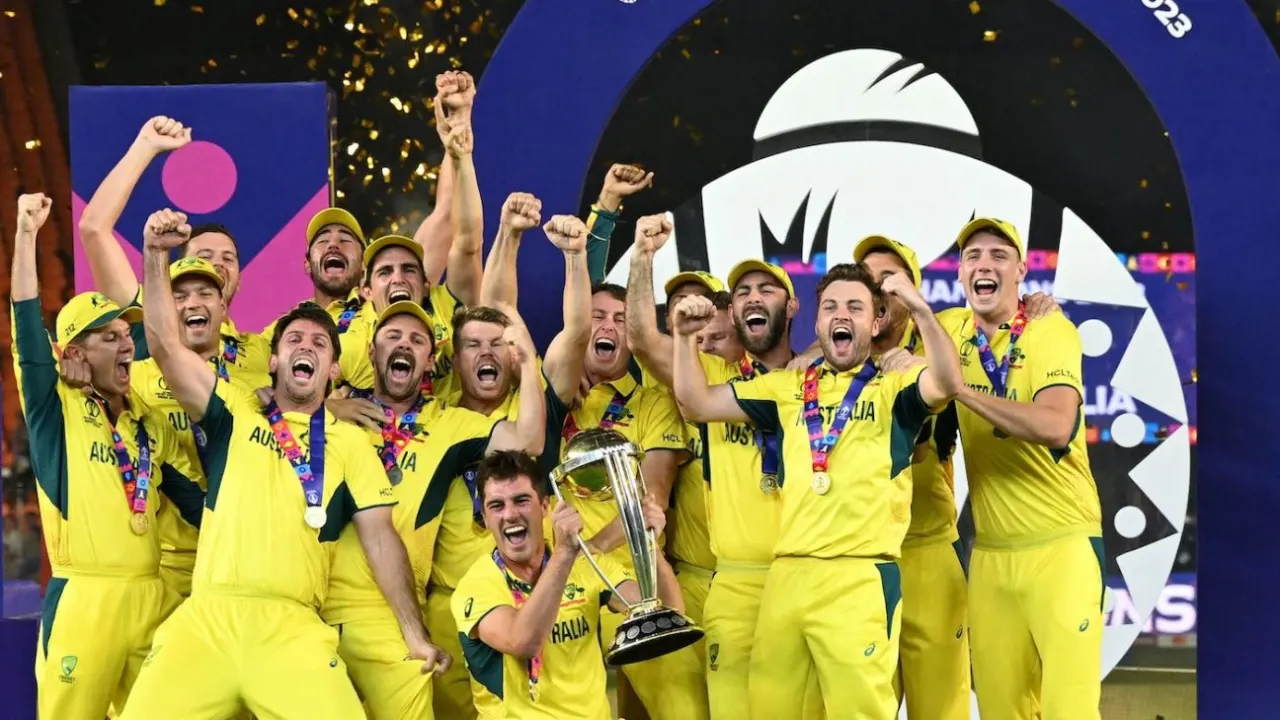
The 2027 ODI World Cup, to be co-hosted by South Africa, Zimbabwe and Namibia, will be a 14-team event but will include a Super Series round before the group stages, and a new Super 7 before the semi-finals.
The new structure, announced by the ICC on Wednesday following the body’s Annual Conference in Edinburgh over the weekend, was introduced, the ICC said, to “enhance consequence” in the early stages.
Teams qualifying 12th to 14th will play the Super Series round. One team from the three will progress to the Group round, becoming one of 12 teams split across two groups. The top three from each group along with the next-best-ranked team across both groups will then qualify for the Super 7, from which the top four go through to the semis.
A 14-team event in 2027 means the ICC sticks to a decision made in June 2021 to expand the marquee 50-team event, after 10-team events in the 2019 and 2023 editions. But the introduction of the round-robin Super Series from which one team goes through, means 12 teams will play in what becomes the meat of the tournament, the group round where 30 games take place. In the original format of this event, two groups of seven would lead to a Super 6 stage, before the semis and final.
The restructure comes after concerns were expressed about the possibility of too many dead rubbers and resulting empty stadia at the ICC’s annual conference. Prompted by the number of foregone conclusions at the recent T20 World Cup and to ensure more jeopardy in the early stages of the tournament, the ICC have decided to introduce a knockout phase earlier, rather than change the number of teams.
“The structure has been designed to strengthen the competitive narrative across every stage of the event, with matches from Round 1 and Round 2 carrying higher consequence with a highly competitive Super 7 stage witnessing 7 qualifying teams going through a round-robin stage to qualify for the semi-finals,” the ICC said.
The game has gone back and forth on the size and format of its marquee event for a number of years now; 14 teams split into groups played the 2015 World Cup (and 16 in 2011) before the move to a 10-team event in which each side played the others. In that time the T20 World Cup has become the ICC’s primary vehicle for growth but calls to expand the 50-over version have never gone away.
The final structure of the tournament, and exact fixtures, will be confirmed at an ICC meeting in September, where the next FTP will also be tabled. The initial distribution of fixtures at the 2027 World Cup is not expected to change significantly, with South Africa set to stage the majority of fixtures, Zimbabwe around ten, and a handful in Namibia.
The ICC’s release made no reference to whether the entry or qualification process to the event changes. As things stand the 14-team tournament has 10 automatic qualifiers: the two Full Members among three co-hosts, South Africa and Zimbabwe, and the eight highest teams on the ODI rankings.
The remaining four teams will be decided by a global qualifier, which is currently scheduled to be a 10-team event contested between the next two highest-ranked teams, four teams from the World Cup Cricket League 2 and four teams from a qualifier playoff. A date for the global qualifier has not been set but Cricinfo understands it will take place in the first third of 2027 and is likely to be held in Namibia or South Africa.
[Cricinfo]
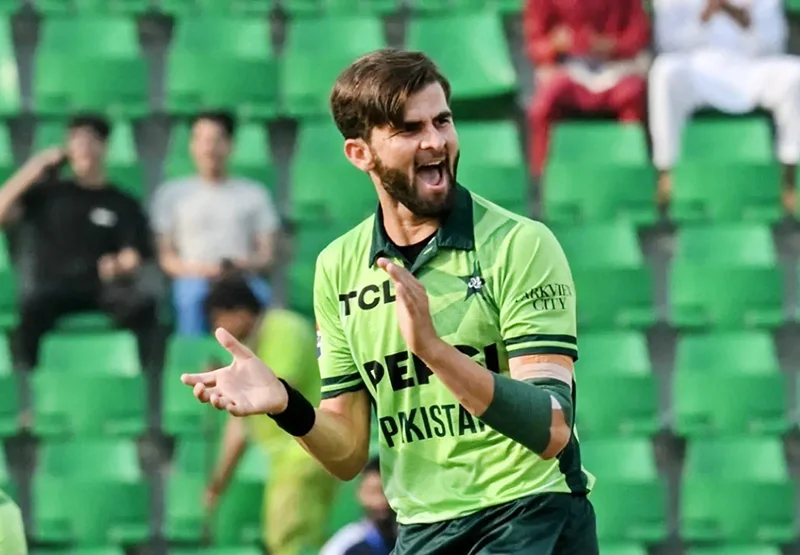
Shaheen Shah Afridi is set to make his maiden appearance in the Lanka Premier League, which begins this week. The PCB confirmed to Cricinfo that the fast bowler has been granted an NOC to participate in the tournament. He will play for Kandy Royals.
Afridi – earlier this month – was omitted from Pakistan’s squads for the Tests against West Indies and England after an indifferent run in the format. The 26-year-old has of late been perceived as more inclined towards white-ball cricket, with Aaqib Javed, Pakistan selector and high-performance director, saying earlier this month that “a player has to pick which format he wants to play”. The Tests against the West Indies clash with the LPL.
Afridi was recently named in the ongoing white-ball camp at the National Cricket Academy, despite the red-ball camp being conducted simultaneously and was left out of the second Test against Bangladesh in Sylhet.
Afridi was named Pakistan’s ODI captain last year and led Pakistan to a 2-1 series win over Australia at home last month. He was joint-leading wicket-taker with seven scalps at 12.14 runs apiece alongside left-arm orthodox Arafat Minhas, who debuted in the first of the three ODIs, and Nathan Ellis.
This will be Afridi’s second appearance in an overseas T20 league in the last year. He participated in the most recent BBL, turning out for Brisbane Heat. He had a forgettable run, however, taking only two wickets at an average of 76.50 in four matches. However, he remains in demand on the T20 circuit; Afridi has 362 wickets at 20.99 and an economy rate of 7.97. No Pakistan bowler has more than his 136 wickets in T20Is, which have come at an average of 21.35 and an economy of 7.83.
The LPL will run from July 17 until August 8. Kandy Royals play their first match against Dambulla Sixers on July 18.
[Cricinfo]

Bangkok pub fire death toll rises to 32 with 15 in intensive care

England vs Argentina: FIFA World Cup semifinal – Messi, Kane and prediction

ICC adds Super Series and Super 7 twist to 2027 ODI World Cup

Trump meets Iraq PM at White House, promises ‘a lot of deals’

A few showers may occur in the Western, Sabaragamuwa and North-western provinces and in Kandy, Nuwara-Eliya, Galle and Matara districts

Negombo Prison riot: No convicts among 21 inmates killed

‘Dates have the highest sugar content to fight Coronavirus’

Sunday Island 27 December – Headlines

#SundayIsland 17th December – Headlines

Sunday Island – 28th March

Sunday Island Headlines – 21 March

Sunday Island – 21st February – Headlines
-
 News6 days ago
Herath warns prospective migrant workers not to get fleeced by racketeers
-
 Features4 days ago
Prison riots and politics: NPP’s biggest challenge and Sri Lanka’s biggest opportunity
-

 Editorial5 days ago
What’s the world coming to?
-
 Foreign News6 days ago
Tensions erupt in Indian state after 11-year-old raped and murdered
-
 Features6 days ago
Devanesan Annan – in Memoriam
-

 News7 days ago
Negombo Prison riot: Ensuring protection of prisoners fundamental responsibility of the state – UN
-
Editorial6 days ago
Punishment in hellholes
-

 News6 days ago
Representatives of the Organization of Professional Associations (OPA) of Sri Lanka meet the Prime Minister