
Features
More on having foreign mothers in then Ceylon

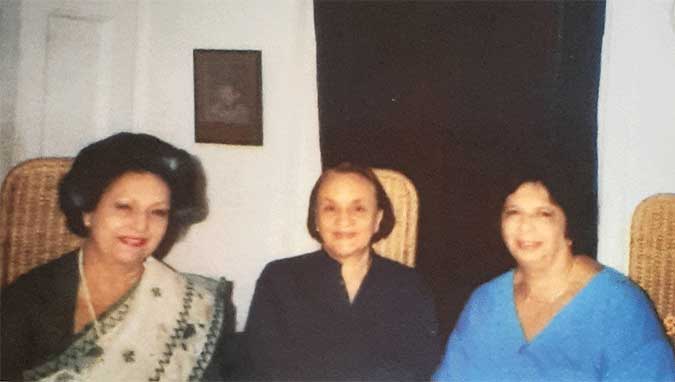
(Excerpted from Chosen Ground: The saga of Clara Motwani by Goolbai Gunesekera)
Having British and American mothers also meant that we were spared much of the meaningless ritual of the East. Our parents protected us from prejudice, since caste and creed were not matters of high priority to them. Their Theosophical backgrounds ensured that we grew up with eclectic beliefs, as far as religion was concerned. What was stressed was ethical behaviour.
We read about all the faiths, and they were discussed in our homes. Buddhism and Hinduism were our Father’s leanings, but as far as we remember there was no `must’ about religious observances. From Father I learnt Hinduism and Sikhism, from Mother, Christianity and Buddhism. I can say the prayers of all religions, and am quite happy in any place of religious worship.
At my Ooty convent in the Nilgiri Hills of India, I won the Catechism prize two years in a row, even though I was not a Christian at the time. Our parents encouraged us to mingle with everybody. It mattered little to them who our friends were, just so long as they came from educated and cultured backgrounds. I attended eight schools altogether, while Suriya easily topped my record by attending 11 – 13, if she counted repetition in the same school. She finished her secondary school career at Ladies’ College, and I at Bishop’s.
Unlike the normal run of Asian mothers, ours were not busy collecting jewelry for us to be worn when we ‘grew up’ – a euphemism for our first menstruation. Kumari received her first set of gold bangles from her future mother-in-law before she married. She promptly lost them all. My own mother-in-law left me a lot of good jewelry in her will.
I loved her and remember her daily, but not because of that jewelry. Mother would have rather spent the money on books, and it says much for us that we never felt deprived. Our classmates may have worn their gold bangles to school, but we simply did not notice. Our ears were not pierced till we were ready to marry, but then again, who cared ? No one, except gossipy, but good natured, family friends who worried about our futures in a traditional society.
On one never-to-be-forgotten day I had taken my Indian cousin (a boy) to the Women’s International Club for a game of tennis. Boys were tolerated there on a one-day-a-week basis, but we were not expected to know any young boys. Our mothers did the inviting if necessary.
Anyway, the ladies of the Club were treated to the sight of me cheerfully playing singles without a chaperone in sight. Unable to concentrate on so mundane a matter as bidding a hand, they hurried to the phone and collectively informed Mother of my goings-on on the tennis court. Such freedom, such laxity, such license boded no good for my matrimonial hopes, they told Mother.
And this brings me to marriage: such an important milestone in the lives of Asian girls. In point of fact, all four of us made ‘good’ marriages; which is to say, they were socially commendable, although here again, our parents only checked on whether the boy was ‘nice’… an adjective that covered a multitude of qualities to which traditional parents would not have given much thought.
Kumari married Lal Jayawardene, son of the Governor of the Central Bank of Ceylon. Naturally I wanted to know how romance had blossomed. Kumari had been studying at the London School of Economics while Lal was at Cambridge. Dining one night with an Indian friend at a restaurant in Russell’s Square, Kumari was introduced to a young man (Lal) who must have been smitten instantly, for they married a year later.
All four of us ‘sisters’ are much fairer of skin than our contemporaries. All of us are dark-haired, except for my sister who had hair that was almost golden at birth. Certainly, we do not display the conventional looks of the average Sinhalese or Tamil girl. What was amazing to us was that Lai had not noticed this far from usual Sinhalese colouring, and was surprised when Kumari mentioned later on in their relationship that she had an English mother.
Relating this story, Kumari told me in amused tones: “You might have thought that Lal should have realized something was wrong!” Blinded by love he did not. and, anyway, ‘wrong’ is not the word we would have used on ourselves.

Maya Kularatne
Suriya married Desmond Fernando, a distinguished lawyer, scion of a well known Sri Lankan family and at the time of my writing, President of the Sri Lanka Bar Association. Theirs was a typical ‘boy-next-door’ romance which blossomed in idyllic surroundings, since they lived on opposite sides of a tree-lined road in a beautifully quiet and shady residential area.
Maya married Stanley Senanayake, who ended his career as Inspector General of Police of Sri Lanka, and I married ‘Bunchy’ Jayampati Gunasekara, son of a Judge, Mr. P.R. Gunasekara who was subsequently Ambassador to England, France and Australia.
I met my husband when I was 15: it was a standard case of opposites attracting. My mother had made sure that I had imbibed her own stand-offish doctrine and attitudes vis-a-vis boys. Bunchy, on the other hand came from a gregarious, highly sophisticated Sinhalese family who entertained a great deal, and loved ballroom dancing. (I need hardly say here that I did not know how to dance at the time.)
At my classmate Malinee Samarakkody’s birthday party, my friends were twirling around happily while I just twiddled my thumbs on the sidelines. Bunchy asked me to dance. I often wondered why he came up to me and asked me to do the foxtrot but ask he did. “I don’t know how,” I told him forlornly.
Bunchy was all bright, breezy and confident. “Oh, that’s no problem, ” he said airily. “I’ll teach you.”
To this day I swear he added the words “I’m very good at it” but he denies this so vehemently that I’m getting confused myself. For the sake of family peace I shall go along with his story…..and it was never in any doubt that he was then, and still remains, a superlative dancer.As I said earlier, we met when I was just 15, and he 18. When I went away to University, Bunchy left for England to study the tea business. By all accounts, he had a marvelous time in London, and can still find his way from pub to pub if need be, while I had a pretty boring time in University being faithful to an absentee boyfriend.
The four of us found our own partners in spite of our parents’ attitudes, and not because of them. They were concerned with teaching us how to live our own lives as fulfillingly as possible, rather than telling us that such fulfillment for women lay only in marriage.
The lives of these eight people shaped and moulded the lives of young Sri Lankan children for years to come. While it is true that the medical doctor and politician fathers were busy with their patients and constituents, the others headed schools like Visakha Vidyalaya, Colombo; Sri Sumangala in Panadura, Sujatha Vidyalaya in Matara, Musaeus College, Colombo, Ananda College in Colombo for boys, Ananda Balika in Colombo for girls, Hindu Ladies’ College, Jaffna, Buddhist Ladies’ College, Colombo, and Sujatha Vidyalaya in Colombo.
My own father went back to India as Professor of Sociology and was a visiting lecturer in countries all over the world. But Sri Lanka was his base and he frequently gave a series of lectures at the Colombo University campus when Sir Ivor Jennings was the Vice Chancellor.
Both Mother and Hilda Kularatne were Principals of their schools at the age of 23. Both began teaching their students to be Sri Lankans and not just good little British colonials. Accordingly, Hilda began teaching temple art and native art forms to her pupils. Mother began the teaching of Buddhism as a subject, and encouraged her Visakhians to look to their own culture for inspiration.
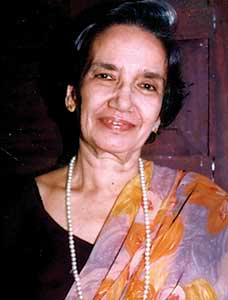
Chitra Malalasekera
All these ladies had been brought up with rather iconoclastic views by their own parents who had questioning and insightful minds. All four of them were pioneers of the Rotherfield Society – the first of its kind – founded by Dr. Ratnavale, the well-known psychiatrist. All four were members of the Theosophical Society and this is perhaps a good place to mention again that when India gained Independence, most of Nehru’s first Cabinet were likewise members of the Theosophical Society and had been influenced by that great Englishwoman, Annie Besant.
There was another aspect of this blend of East and West that is rarely highlighted. Much of their student life and some of the working life of these eight people had been spent abroad. Ergo, their contacts abroad were also many. Their personal friends are now regarded as being among the world’s greatest personalities.
Mahatma Gandhi, a friend of Doreen and her husband, gave Suriya a cotton sari that he had woven. The sage, Jiddu Krishnamurti, often had dinner in our home as we were one of the rare vegetarian families in Colombo. Krishna Menon, India’s great Foreign Minister, had been Doreen’s teacher and she kept up her ties with him. Harold Laski, the renowned political scientist, had been my father’s professor briefly at Yale.
Rukmani Arundale, the Minister of India’s Cultural Affairs and the founder of Kalashetra Dance School, was a family friend. Beautiful Rukmani taught me how to wear the sari when I was 11-years old ! J. B. Priestley was yet another literary acquaintance. The famous Indian dancer Uday Shankar was a guest in our home, as was Rabindranath Tagore in Suriya’s.
He visited Sri Lanka, and spoke at Ananda Balika when Doreen was its Principal. Doctors A.P de Zoysa and S.A. Wickremesinghe were members of the Buddhist Union in England, and were friends of Anagarika Dharmapala whom they worked with in London.
In the USA, Father had met Pearl Buck, the Nobel Prize winner in Literature. She autographed a set of her books for him, which he donated along with an entire library to the University of Colombo. They must be still there if anyone cares to trace them.
Through the Theosophical Society, Father was introduced to Henry Wallace, the Vice President of America during the Roosevelt administration. Wallace’s interest in Theosophy and Buddhism was well known, and the writer Gore Vidal makes mention of this incident in his book The Golden Years.
George Santayana, the philosopher, was yet another acquaintance with whom Father corresponded for much of his life, as was the famous author and co-Theosophist, Aldous Huxley.
Encouraged and supported by their husbands, the four ladies not only had significant roles to play in the emerging Sri Lanka but also left an indelible mark on the island. Writing an article titled “Heroes Day – Here are the Heroines” in 1977, the well-known journalist and Gratiaen Prize-winner, Vijitha Fernando, included Mother and Doreen in her round up of the island’s outstanding women.
Eleanor de Zoysa came from a family that had been socialist in their views for four generations. Small wonder, then, that Kumari followed suit. Suriya was Head of Amnesty International for five years (the only Sri Lankan to have had this honour) and during her tenure of office has had occasion to accept awards and citations in various countries for her work. Maya has just retired after leaving her mark on Sri Lanka’s Police Department, where as the wife of the IGP, she headed the Seva Vanitha.
She also founded and ran a handicraft village which was a showpiece for visitors who wanted a quick glimpse into the culture of the land. And I, trailing behind the headline-grabbing careers of my ‘sisters’ – I run the Asian International School in Colombo – the only one of the four of us to continue the educational careers of our mothers.
As could be expected, these four mothers had a very liberal outlook; an outlook that today would be positively dangerous. Kumari was allowed to explore Colombo freely, and she swept Suriya along in her wake as she wandered at will. The two girls would picnic (alone) on the beaches of Modera, cycle along unfrequented pathways and examine whatever took Kumari’s interest.
Assuming all was well, Doreen never asked where Suriya had been. She trusted that Kumari was doing her duty, and looking after the younger girl. In actual fact they were travelling by bus, and doing the sort of things girls from more traditional families rarely did. But our families were-not traditional, and Colombo was an unusually safe city. We were so lucky. This unorthodox upbringing has made us self reliant, independent and confident, and well able to handle our world.
To this day, Kumari and Suriya are generally regarded as the brains of the quartet. Kumari is now Dr. Kumari Jayawardena, former Associate Professor of Political Science at the University of Colombo and the author of a string of books on the role and position of women in this island. When her husband was appointed to a job in Helsinki, she had to retire as professor although she still keeps up lecturing engagements at the University on a freelance basis.
She has written in detail of the impact women, and especially Western women, have made on our society, and anything I might say here on the subject would be not only superfluous but rather banal.
And so Kumari, Suriya, Maya and I –sisters under the skin’ – the offspring of these wonderful parents, have remained friends all our lives. It has been one of the great plus points of our unorthodox heritage.



When discussions turn to Sri Lanka’s freshwater fish diversity and the urgent need to conserve it, attention is often focused on rivers, streams, reservoirs and water quality.
Yet scientists are increasingly finding that what happens on the land surrounding these waterways can be just as important as what happens in the water itself.
A recent study led by researcher Janamina Bandara of the Wildlife Conservation Society, Galle, together with researchers Sudath Nanayakkara and Sahan Randeniya, highlights how changes in forest cover caused by human activities can significantly influence freshwater fish populations in the hill streams surrounding the Sinharaja rainforest.
Their research sheds light on a relatively understudied aspect of tropical freshwater ecosystems—how alterations to vegetation cover, particularly through commercial cultivation such as tea and cardamom plantations, affect fish communities inhabiting headwater streams.
Hidden Riches of Tropical Streams
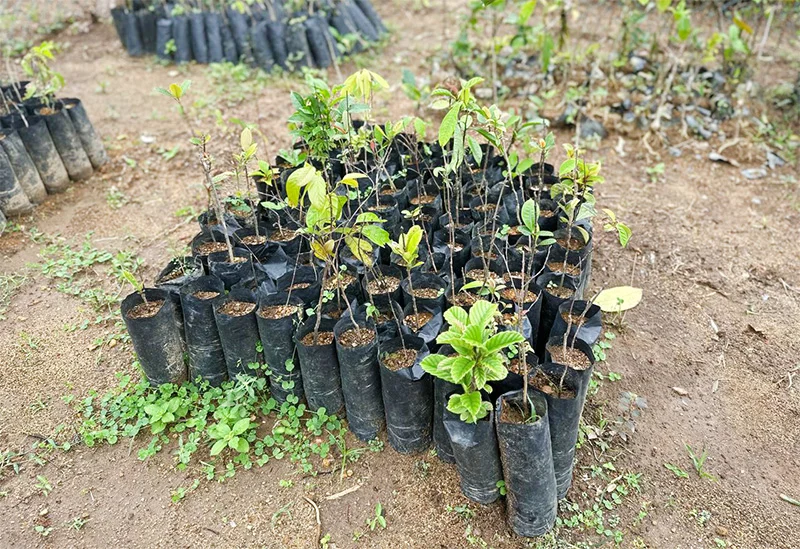
Forest plant saplings
Sri Lanka’s freshwater ecosystems are globally recognised for their remarkable biodiversity and high levels of endemism. However, despite their ecological significance, many ecological processes operating within these habitats remain poorly understood.
“Freshwater ecosystems in the tropics harbour extraordinary biodiversity, but many of the ecological relationships within these systems are still not fully documented,” researcher Janamina Bandara told The Island.
The study focused on sub-montane streams in the Sinharaja landscape, examining how varying levels of forest cover influence freshwater fish assemblages.
Researchers investigated whether fish communities differed between streams flowing through relatively undisturbed forests and those surrounded by modified vegetation resulting from agricultural activities.
Spotlight on a Critically Endangered Species
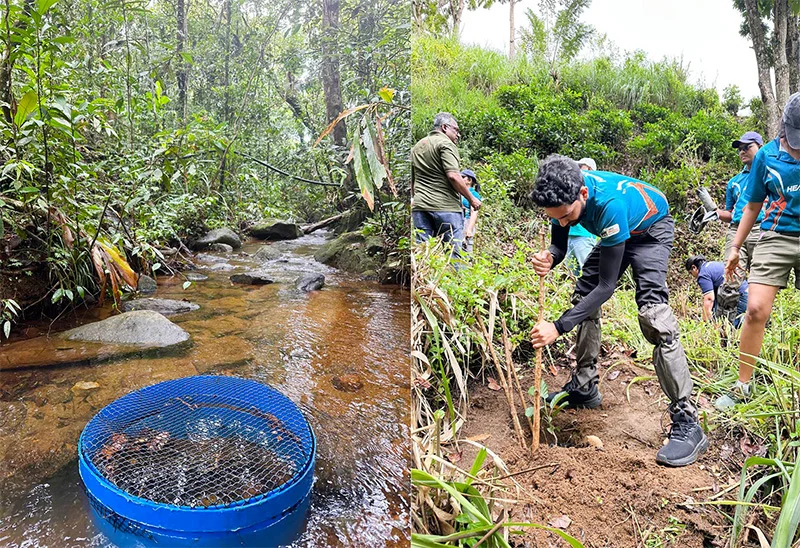
Leaf litter bay / Restoration activities
Particular attention was given to the critically endangered Rakwana loach (Schistura madhavai), a highly restricted endemic fish species first described from the Suriyakanda-Rakwana region.
Commonly referred to as a hill-stream loach, the species inhabits clear, fast-flowing streams and is considered highly sensitive to environmental disturbances.
According to Bandara, while broad community-level analyses did not reveal dramatic differences across all fish populations, species-specific responses painted a very different picture.
“Our findings show that Schistura madhavai exhibits a clear preference for streams flowing through intact forest habitats,” he explained. “The species becomes less common in areas where surrounding vegetation has been altered by human activities.”
Why Forests Matter to Fish
Forests bordering streams play multiple ecological roles. They regulate water temperature by providing shade, contribute organic matter that supports aquatic food webs, stabilise stream banks and help maintain water quality.
When these forests are removed or replaced with plantation crops, the resulting environmental changes can cascade through freshwater ecosystems.
Bandara noted that altered forest cover can influence water chemistry, microclimatic conditions, stream-bed composition and the availability of food resources.
“As riparian vegetation changes, a series of environmental conditions within the stream also change. Sensitive species such as Schistura madhavai appear particularly vulnerable to these shifts and may gradually disappear from modified habitats,” he said.
The research suggests that even subtle changes in habitat structure can have disproportionate impacts on species with narrow ecological requirements.
The Importance of Looking Beyond Numbers
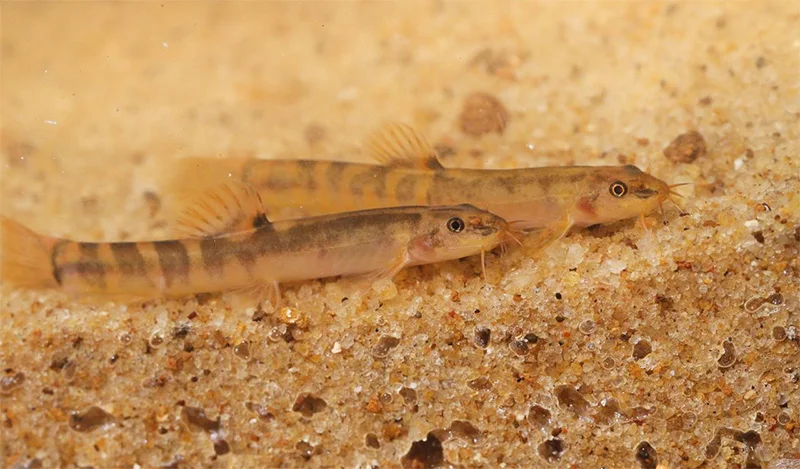
Schistura madhavai
One of the most intriguing findings of the study is that ecosystem degradation may not always be apparent when scientists assess entire fish communities collectively.
In some instances, environmental variables appeared to have little effect on overall fish abundance or diversity. However, when individual species were examined separately, clear patterns emerged.
For example, variations in the amount of detritus—organic matter that accumulates on stream beds and serves as a vital food resource—did not significantly affect the overall fish assemblage. Yet for certain species, including habitat specialists, such changes proved critically important.
“This highlights a key conservation challenge,” Bandara said. “If we only look at total fish numbers or community-wide patterns, we may overlook serious declines occurring among environmentally sensitive species.”
Indicator Species as Ecological Sentinels
The findings underscore the importance of using so-called “indicator species” in environmental monitoring programmes.
Indicator species are organisms whose presence, absence or abundance reflects the health of an ecosystem. Because they respond rapidly to environmental change, they can provide early warnings of ecological degradation.
The Rakwana loach appears to fit this role exceptionally well.
“Species with narrow habitat requirements often act as ecological sentinels,” Bandara observed. “Monitoring them can provide a much clearer picture of ecosystem health than relying solely on broad biodiversity assessments.”
For conservation practitioners, this means that protecting sensitive endemic species may also help safeguard entire freshwater ecosystems.
Restoring Streamside Forests
Perhaps the study’s most important conservation message concerns the restoration of degraded riparian forests—the vegetation growing alongside streams and rivers.
Researchers argue that restoring these streamside habitats should be a priority in freshwater biodiversity conservation efforts.
Healthy riparian vegetation provides shade, reduces erosion, filters pollutants, enhances habitat complexity and supports the intricate ecological interactions upon which aquatic life depends.
“The restoration of degraded riparian forests is likely to be one of the most effective conservation measures for protecting freshwater biodiversity,” Bandara emphasised.
Such efforts could prove particularly valuable in landscapes where agricultural expansion has fragmented natural habitats.
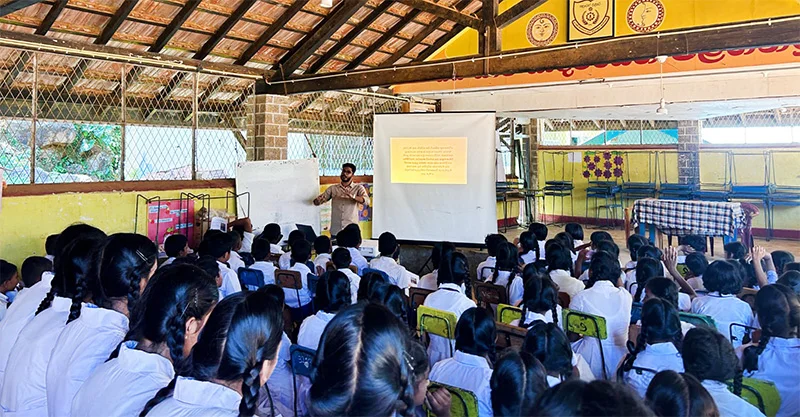
Awareness sessions
A Broader Lesson for Conservation
The study offers a timely reminder that freshwater conservation cannot be achieved by focusing exclusively on water bodies themselves. The surrounding landscape matters immensely.
From the mist-laden streams flowing down the Sinharaja foothills to the countless rivulets nourishing Sri Lanka’s river systems, the fate of freshwater biodiversity is intimately linked to the health of adjacent forests.
As conservationists grapple with accelerating habitat loss and climate-related pressures, the research demonstrates that protecting and restoring forest cover may be just as important as safeguarding the streams themselves.
In the case of the elusive Rakwana loach, the message is clear: save the forest, and you may save the fish.
For Sri Lanka’s unique freshwater biodiversity, that lesson could not be more important.
By Ifham Nizam
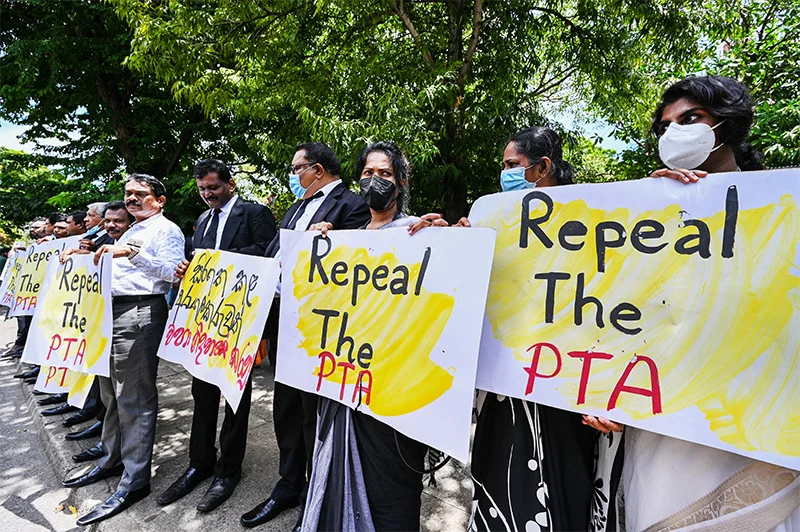
Sri Lankans have reason to take satisfaction in their country’s latest international achievement. Sri Lanka has climbed 14 places in the 2026 Global Peace Index to rank 67 in the world out of 163 countries that were assessed. At a time when global peacefulness is reported to be at its lowest level since the inception of the Index, and when more countries are experiencing deterioration than improvement, Sri Lanka’s progress stands out. The ranking reflects the country’s recovery from nearly three decades of war, its efforts to strengthen political stability and public security, and its resilience in overcoming the economic and political crises of recent years. The Global Peace Index assesses the strength of institutions, societal safety and security, and the capacity of societies to manage conflict peacefully.
The challenge is to consolidate the gains that have been made and address those unresolved issues that continue to cast a shadow over the country’s future. It is in this context that two recent announcements by the government assume particular significance. Foreign Minister Vijitha Herath has announced that the Prevention of Terrorism Act (PTA), one of the most controversial laws in the country, will be repealed and replaced within two months. A report prepared by a committee appointed to make recommendations has already been handed over to him. According to the minister, the new legislation, to be known as the State Prevention of Terrorism Act, incorporates recommendations from civil society and is intended to comply with international standards on counter terrorism.
At the same time, Justice and National Integration Minister Harshana Nanayakkara has reaffirmed the government’s commitment to uncovering the truth about missing persons. During a visit to the Chemmani mass grave excavation site in Jaffna, he stated that the excavations should be completed expeditiously so that justice can be done and assured that the necessary resources have been allocated for the task. The excavations are taking place under judicial supervision with the participation of forensic experts, archaeologists, lawyers and representatives of the Office on Missing Persons. These commitments made by the government address two of the most contentious issues that have troubled Sri Lanka for decades. They also suggest that the government believes the country is now in a position to deal with difficult questions from its past rather than postpone them indefinitely.
After Breakthroughs
The timing of the pledge to repeal the PTA is particularly noteworthy. For many years successive governments promised to replace the law but failed to do so. Sri Lanka undertook to repeal it in 2017 as part of its commitments linked to retaining GSP Plus trade concessions by the European Union. Yet despite repeated assurances the law remained in force. The question therefore arises as to why the government now appears determined to act. One possible explanation is that the Easter Sunday investigations have reached a decisive stage. The investigation into the bombings that killed more than 260 people in 2019 appears to have made significant breakthroughs. If these investigations continue along their present course, it is possible that accountability will extend beyond those who directly carried out the attacks to those who may have facilitated, enabled or been part of a wider criminal conspiracy.
There is broad agreement within society that those who masterminded the dastardly Easter bombing must be held accountable and that the victims deserve the truth and justice. However, it is important that the process by which responsibility is determined is seen by the public to be fair, lawful and impartial. If those accused are convicted following a transparent judicial process that respects due process and the rule of law, the outcome is far more likely to gain acceptance across society. This is where the repeal of the PTA becomes important. A transition from a law associated with prolonged detention and exceptional powers to one that is more consistent with human rights standards would strengthen rather than weaken the legitimacy of the investigations. Accountability obtained through a process that is visibly fair will be more durable and less vulnerable to allegations of political motivation or selective justice.
The Chemmani excavations may also provide an example of how such credibility can be built. The process is taking place under judicial supervision and in full public view with the participation of independent experts. Whatever conclusions emerge, and follow up action is decided on, the process itself should command respect because it is transparent and accountable. The same principles can be applied to the Easter Sunday investigations. Public confidence is strengthened when investigations are conducted openly, when legal safeguards are respected and when the rights of both victims and accused persons are protected. The significance of these investigations may extend beyond the tragedy itself. There is likely to be an overlap between those who are eventually found responsible for the Easter Sunday conspiracy and elements of the state apparatus that exercised power during the final stages of the war.
Setting Precedent
For many years Sri Lanka has struggled to address allegations of wartime abuses. The issue has remained politically sensitive because it touches upon the conduct of those who were regarded by many as wartime heroes. Yet if the Easter Sunday investigations establish that senior officials can be investigated and held accountable when evidence warrants it, an important precedent will have been set. Once the deck is cleared through the Easter Sunday investigations and the judicial process that follows, it may become less difficult to address allegations relating to wartime abuses, including those connected to sites such as Chemmani where evidence is now being painstakingly uncovered. This would also strengthen Sri Lanka’s position internationally.
Since the end of the war in 2009, the country has remained under varying degrees of scrutiny by the United Nations Human Rights Council. In October 2025, the Council renewed the mandate of the Office of the High Commissioner for Human Rights to continue collecting and preserving evidence relating to past violations. The next review of Sri Lanka is due in September this year. The government now has an opportunity to demonstrate that Sri Lanka is capable of addressing difficult issues through its own institutions and according to its own democratic values. The commitments to repeal the PTA and to pursue investigations into missing persons can be seen in that light. Those who were victimized query as to what happened to their loved ones and to the information they know full well they entrusted to the government authorities and to the commissions of inquiry that were appointed. These are opportunities to show that accountability and national ownership can go hand in hand.
Reconciliation requires the difficult task of remembering truthfully. Too often Sri Lanka has sought stability by postponing difficult questions. Yet unresolved grievances do not disappear. They persist across generations and continue to shape political attitudes and communal relationships. Sri Lanka’s rise in the Global Peace Index is an achievement worth celebrating. But the true measure of peace is not only the absence of conflict. It is the presence of justice, trust and confidence in public institutions. The government’s commitments on PTA repeal, the Easter Sunday investigations and the search for truth regarding the disappeared suggest an awareness that old approaches have run their course. The government has an opportunity to break with the patterns of the past. The test now lies in implementation.
by Jehan Perera

 The biggest part of the challenge of a critical scholar in the humanities is having to engage critically with the very realities that define her existence as a social being. She cannot even begin to comment on the focus of her study without creating shock waves that would hit her own self in some form. One could argue that the scholars in the field of the humanities are part of what is being studied in one way or another. Critical scholarship in those fields entails destabilising the ground beneath their own feet.
An essential part of scholarly inquiry is being able to objectify what is being studied and examine it closely but at a distance, that, too, in a manner that scholar’s personal biases do not affect the judgement. Any failure to comply with this requirement immediately brands the study as unscientific. To try to understand this using an example situation, I would assume that a scientist who experiments with sodium and chlorine as chemical elements have the privilege of entering the experiment without any personal and emotional ties to either of the elements, placing one element in contact with the other without having to raise questions about her own existence, and observing and recording the outcome of the experiment without having to simultaneously examine what sort of implications the outcome has had for her as a person. The findings of the experiment may certainly advance her/him in the domain of science, but it is unlikely that the outcome of the study would result in any transformation within her as a social being.
The same privilege is not available for the (critical) scholars in the humanities. What chemical elements are for the scientist, the different social, political, cultural, gender, ethnic, racial, and religious identities are for those in the humanities. What the controlled, and also largely predictable, laboratory environment is for the scientist, the uncontrolled, even erratic, society is for those in the humanities. What the scientific experiments where the composition and behaviour of the individual chemical elements are explored is for the scientist, a close examination of phenomena and topics that cut across the categories of the social, the political, the cultural, and the religious is for those in the humanities.
The relatively clear differentiation or separation that is there between the scientist’s personal space and the laboratory setting where she conducts her research is not there in the case of her counterpart in the humanities. The latter does not have a separate laboratory setting that she can step into from her personal space, as the social space, which is her site of research, has her personal space already embedded in it. The freedom that the scientist has to cut herself off from what shapes her existence as a social and political being, as she enters her laboratory, is not available for her counterpart in the humanities, for the simple reason that the social and the political, which define her life outside her research, is also at the core of what they engage with in their research. Even in a setting where the latter locks herself up in a room and cuts herself off from the rest of society, the social and the political continue to define both her perspective and the object of study. Even the most effective scientist (but may not be the ideal scientist) has the option of taking her life, defined by the social, the political, the cultural and the religious, for granted, as her success is measured purely on the basis of her scholarly output; however, even the most ineffective scholar in the humanities would have to acknowledge the nexus between her personal life and her scholarly life, explicitly or implicitly, and her engagement with the chosen object of study will entail some sort of an engagement with her existence.
To use an example from the field of language studies which my work is primarily in, New Varieties of English, like what is called Sri Lankan English, is a topic that I try to engage with in both my teaching and research. Approached from a critical point of view, Sri Lankan English as a New Variety of English is more a political category than a linguistic one. The claims that you make may be based on linguistic evidence, but the conceptualisation of a separate form of English as Sri Lankan English even on the basis of objective linguistic evidence is primarily a political claim. The creation of such a category invariably results in a reconfiguration of the linguistic terrain of the country. Every claim that is made in favour of Sri Lankan English as a category results in a certain destablilisation of Sinhala and English, which are my first language and second language respectively, and the tense relations between which two languages have shaped my identity in a fundamental way. It is not only the two languages that get shaken; the broader ethnic identities that are associated with the two languages also undergo transformation, and this transformation certainly has an impact on who/what I am.
Even when I find the case for Sri Lankan English to be convincing, I feel compelled to word the arguments carefully. This feeling of compulsion to word the arguments carefully is certainly in recognition of the need to make academically-sound arguments; however, in addition to that, it has also to do with my position outside the social class which has traditionally been seen as having proprietary rights over the language. In that setting, I am less of an academic with an objective mindset than of a strategist who is enmeshed in the ethnic and class relations that define the topic of Sri Lankan English. At the same time, in a context where one’s knowledge of English is a primary determiner of her success in society and what is predominantly valued is the so-called proper forms of English, I have had to ask myself if any claims, including the most convincing, academically-sound ones, in the direction of legitimising Sri Lankan English should not be with caution.
I have also had to reconcile between two seemingly contradictory positions involved in making a case for Sri Lankan English, especially in the context of an English Honours programme, that, too, at a leading university in the country. On the one hand, making a case for Sri Lankan English entails encouraging deviation from the established norm/s of the language; on the other hand, considering the nature of the programme, the need to require the students to make that case using a normative form of English that would be recognised internationally could not be overlooked. At one level, this seeming contradiction could easily be dismissed as hypocrisy, but a closer and more serious reading of the situation would see in it a certain “maneuvering” and “negotiating” that the scholars in the discipline of English Studies stationed in peripheral contexts like ours are constrained to undertake in their engagement with the topic at hand. Although the arguments that get made have the appearance of truth, a close analysis of those arguments would indicate a certain identity politics that is being played. This identity politics has a direct bearing on the identity of the scholar who engages with the topic.
Accordingly, to make a claim in the humanities from a critical point of view is also to question in some form what defines one’s own identity, and this may not be the most comfortable undertaking for many of us in the field. This explains, at least to a certain extent, why some scholarly engagements with history results in mere glorifications of the mainstream historical narratives; why some scholarly engagements with literature and language results in a mere celebration of the mainstream literary traditions and hegemonic languages; how some scholarly engagements with the idea of culture directly subscribe to the position that culture should always be preserved and celebrated. Such approaches leave the status-quo largely untouched, and therefore the amount of unsettling that the scholars have to deal with is minimal. How much value that they are in a position to add to the existing scholarship, of course, is a question.
Any act of critical scholarship in the field of the humanities entails the scholar having to challenge in some form what defines her personal existence. This may not be the most comfortable move to make, but that is the only way the scholar could try to make a contribution of value to the field. It is important that this dilemma that the critical scholars in the humanities have to go through is recognised for what it is.
(Nandaka Maduranga Kalugampitiya is attached to the Department of English, University of Peradeniya.)
Kuppi is a politics and pedagogy happening on the margins of the lecture hall that parodies, subverts, and simultaneously reaffirms social hierarchies.
by Nandaka Maduranga
Kalugampitiya

Unbeaten England and West Indies eye semi-final berth

UNICEF to take over Lord’s when England play West Indies

Iran’s President Pezeshkian lands in Pakistan for talks after US deal

Secretary General of South Asian Association for Regional Cooperation (SAARC) pays farewell call on PM

Sharp, Halliday blunt Scotland to keep New Zealand’s semi-final hopes alive

Commander of U.S. Pacific Air Force meets with Commander of the Sri Lanka Navy

‘Dates have the highest sugar content to fight Coronavirus’

Sunday Island 27 December – Headlines

#SundayIsland 17th December – Headlines

Sunday Island – 28th March

Sunday Island Headlines – 21 March

Sunday Island – 21st February – Headlines
-

 Features7 days ago
Killing of Colombo’s ancient trees — a warning on UN’s World Desertification Day – 17 June
-

 News5 days ago
Creditor receives USD 2.5 mn as Lankan public bears loss from theft of Treasury funds
-

 News4 days ago
Creditor not yet paid
-
 News4 days ago
Consumers bearing 22% tax burden despite 18% VAT claim: Dr. Harsha de Silva
-

 Opinion6 days ago
Beyond diagnosis: A strategic design for 7% growth by 2029 (Part I)
-
 News7 days ago
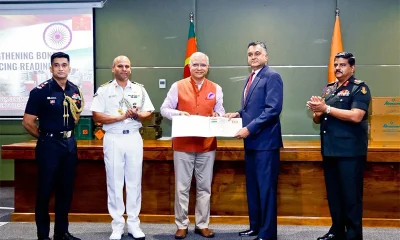
India provides military stores worth USD 5.5 mn to SL
-

 Opinion5 days ago
SriLankan Airbus struck by lightning
-

 Latest News2 days ago
Sooryavanshi thumps fastest List A fifty as India A win tri-series