
News
MONLAR urges govt. to drop contradictory policies if serious about banning agrochemicals

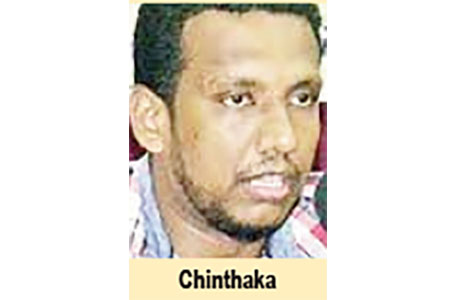
The Movement for Land and Agricultural Reform (MONLAR) has written to President Gotabaya Rajapaksa, urging him to put in place a mechanism to coordinate various institutions that are needed to to make Sri Lanka the first nation to ban the use of toxic agrochemicals.
Given that there is no systematic government programme to promote carbonic agriculture among farmers, it is quite likely that many obstacles and challenges, in the short, medium, and long term to implement the programme will arise. The government must come up with a plan that addresses these challenges and mechanism that can lead to a change in attitudes and grassroot realities, MONLAR says.
“MONLAR commends the decision taken by the Cabinet of Ministers, on 27 April 2021, to ban the import of all agrochemicals with immediate effect. We are also grateful for your decision to approve the said Cabinet decision on 29 April 2021,” Chinthaka Rajapakshe, Moderator – MONLAR said in the letter to the President.
He says that the use of agrochemicals has had disastrous consequences in the past decades. The widespread use of these chemicals has contaminated soil and water, which has directly led to the increase in cancers and kidney diseases. This has not only negatively affected public health but also led to the overuse of agrochemicals besides undermining food sovereignty, unraveling the ecological balance, and causing the extinction of many animal and plant species.
“Since almost all agricultural inputs, used by Sri Lankan farmers are imported, it has allowed certain companies to build oligopolies. Currently, agriculture accounts for about 7% of the GDP but about 26% of the workforce are involved in agriculture. Often these workers are poor and receive government welfare assistance; most of them are malnourished and in the clutches of microcredit companies. MONLAR believes that promoting environmentally friendly agricultural practices can be a solution to all these problems.”
If the government is serious about banning agrochemicals and promoting environmentally friendly agriculture, it needs to convince the people that the decision to ban agrochemicals will not change when the political and economic context changes, MONLAR has said, pointing out that since coming into power the government has taken several contradictory decisions on agriculture.
“For example, the government initially announced that agrochemicals would be given to farmers free of charge and now it has banned them. Last year, the government said it would not allow fertiliser with heavy metals to enter the market but then it released 18,000 metric tons of fertiliser containing high amounts of heavy metals. These are only some of the policy contradictions.
Rajapakshe says in the MONLAR letter to the President that in the recent past, the government has given large tracts of land and water to companies and investors to expand large scale monoculture crops such as maize and sugarcane. These cultivations do require significant volumes of agrochemicals.
“A few months later, a decision has been taken to ban the import of agrochemicals. The government must clearly tell the public how it plans to rectify these contradictions,” he said.
Rajapakshe adds that if given an opportunity the MONLAR is ready to share with the government its experience with environmentally friendly agricultural practices.

Latest News
Cabinet Subcommittee on the Development of 25 Technical and Vocational Colleges meets under the Chairmanship of the Prime Minister

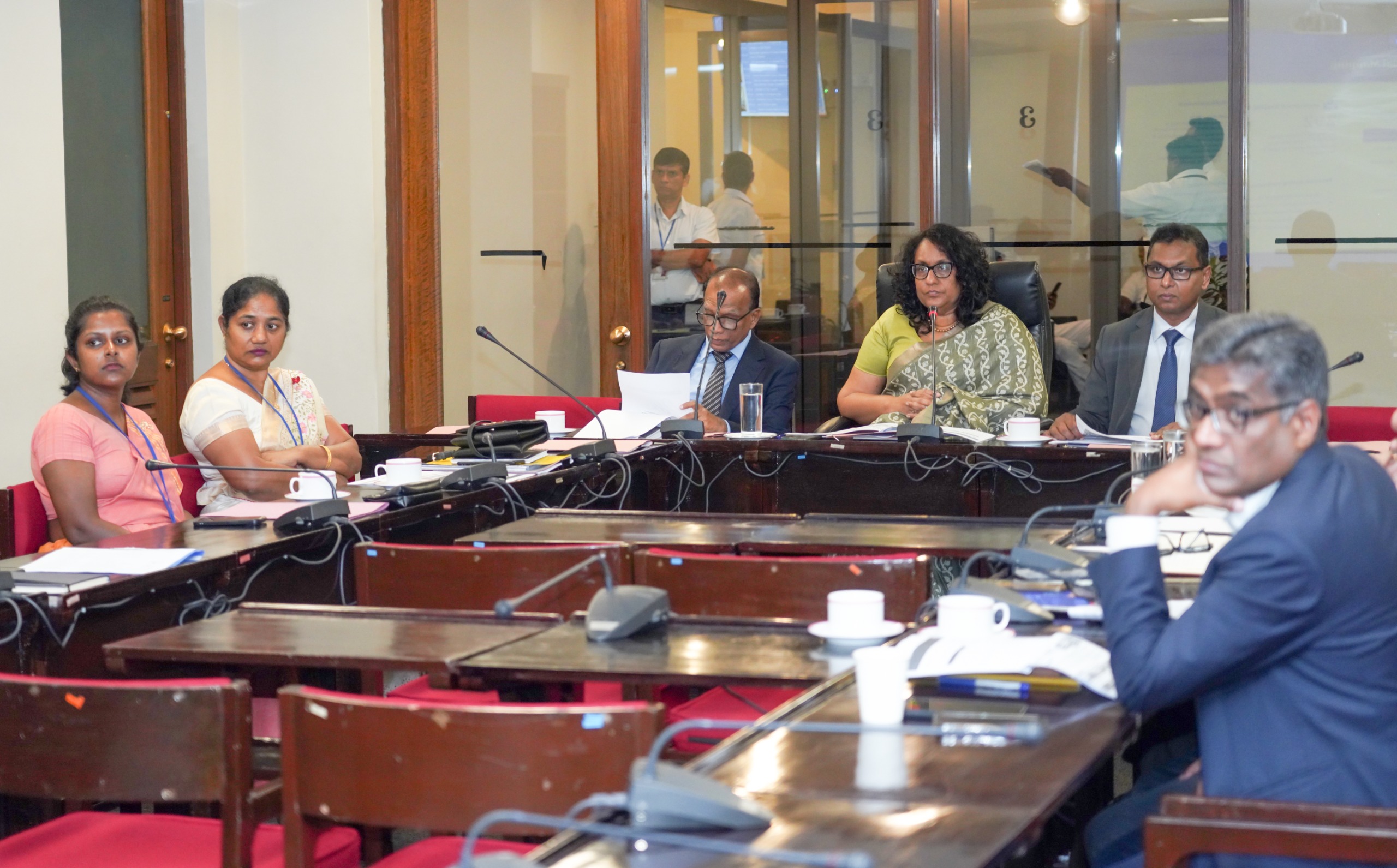
The third meeting of the Cabinet Subcommittee appointed to oversee the development of 25 Technical and Vocational Colleges under the Department of Technical Education and Training was held today (09) at the Parliament Complex under the chairmanship of Prime Minister Dr. Harini Amarasuriya.
The meeting focused on the proposed development programme for the 25 Technical and Vocational Colleges as a key step towards expanding access to vocational education, implementing plans to strengthen infrastructure, and creating new pathways for technical and vocational education in Sri Lanka. Members held detailed discussions on the measures required to advance these objectives.
The meeting was attended by the Minister of Ports, Civil Aviation and Energy, Anura Karunathilaka,the Minister of Labour and Deputy Minister of Economic Planning, Dr. Anil Jayantha, the Minister of Rural Development, Social Security and Community Empowerment, Dr. Upali Pannilage, as well as senior officials from the Ministries of Education, Higher Education, and Vocational Education.
[Prime Minister’s Media Division]
News
Representatives of the Organization of Professional Associations (OPA) of Sri Lanka meet the Prime Minister
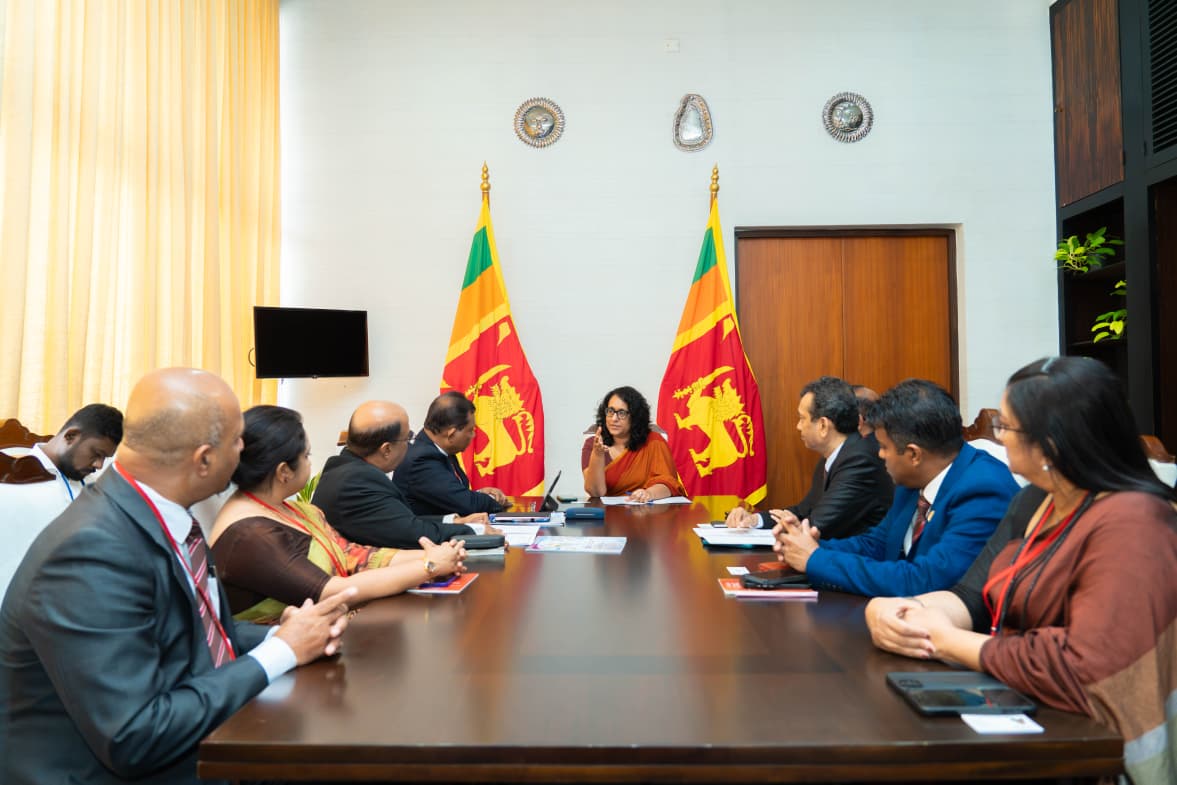
Representatives of the Organization of Professional Associations (OPA) of Sri Lanka met with Prime Minister Dr. Harini Amarasuriya on Wednesday (08) at the Parliament premises.
During the discussion, the OPA representatives stated that the organization intends to establish a mechanism to provide direct professional advice to members of the public facing issues across various sectors. They also noted that OPA plans to implement special programmes to offer pre-advice and guidance through its member professional associations to people encountering issues in fields such as agriculture, construction, medicine, and law.
The Prime Minister commended the contribution made by professionals towards enhancing professional standards in the country and advancing national development. The Prime Minister further stated that the Government is ready to support efforts aimed at strengthening professionalism and fostering the sense of national service in the country.
The meeting was attended by the President of OPA, Vice President, and other office bearers of the Organization of Professional Associations of Sri Lanka.
[Prime Minister’s Media Division]
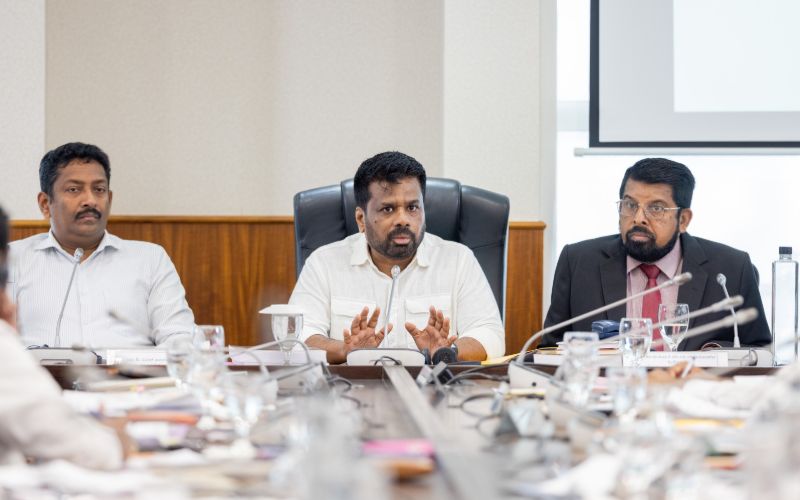
President Anura Kumara Dissanayake stated that the Government plans to allocate a separate contingency fund for every district under the forthcoming Budget, enabling District Secretaries to carry out urgent repairs to bridges, roads and public buildings identified at District Coordination Committee meetings without having to wait for approval from the Central Government.
The President also emphasised that the Government’s foremost priority is to address the basic needs of the people without delay.
President Anura Kumara Dissanayake made these remarks while attending the District Secretaries’ Conference held this morning (09) at the Colombo District Secretariat.
The conference was convened with the objective of strengthening coordination among relevant stakeholders to ensure the more efficient and effective delivery of public services, while promoting district-level economic development by discussing local issues and identifying appropriate solutions.
The discussions also focused on reviewing the progress of district development projects, enhancing coordination between ministries and government institutions, identifying issues at the district level, proposing practical solutions, and assigning responsibilities and follow-up actions.
It was further emphasised that, in the interest of public safety, Divisional Secretaries should prevent people from resettling in areas identified as high-risk and refrain from approving basic utility services, including electricity and water, for such locations.
The President also reviewed the progress of efforts to establish a special authority with statutory powers to manage environmentally sensitive land in the Central Hills. It was noted that the relevant draft legislation has already been prepared and that the new authority is expected to commence operations next year.
The President further stressed that resolving the housing issues faced by war-displaced communities remains a Government priority, adding that plans are in place to resettle 13,000 war-displaced families during the coming year.
He also highlighted the need to systematically implement a programme to relocate people living in areas that are repeatedly affected by floods and landslides to safe and secure housing.
The President also drew attention to housing projects that had been initiated in an unplanned manner for various reasons, including political considerations, and subsequently abandoned midway. He stated that the Government intends to conduct a rapid survey to identify only those projects that are genuinely required by the public and implement a housing assistance programme to provide financial support for the completion of those houses.
The President further emphasised the importance of carrying out housing and other construction projects in accordance with a proper planning framework. He pointed out that numerous issues had arisen as a result of unplanned construction in the Southern Province and stressed that development in the Northern and Eastern Provinces should be undertaken in line with a systematic development plan.
He also noted that, while taking public needs into consideration, the Government is focusing on releasing privately owned land currently under the control of military camps. At the same time, attention is being given to making other large tracts of land available for investment. The President further stressed that, when allocating land for cultivation, measures must be taken to safeguard forest reserves and wildlife protection zones.
Reiterating the need for comprehensive public sector reforms to deliver a high-quality public service, the President stated that plans are in place to abolish non-productive institutions in order to improve the efficiency of the public service.
He further noted that steps have already been taken to fill vacancies in essential sectors, including health and education. The President also pointed out that measures are being taken to urgently fill vacancies in the Department of the Government Analyst in order to address delays in the issuance of Government Analyst reports, which have contributed to prison overcrowding.
Minister of Public Administration, Provincial Councils and Local Government Professor Chandana Abeyratne, Deputy Minister of Provincial Councils and Local Government Ruwan Senarath, Secretary to the President Dr Nandika Sanath Kumanayake, Chief of Presidential Staff Prabath Chandrakeerthi, Secretary to the Ministry of Public Administration, Provincial Councils and Local Government Aloka Bandara, Ministry Secretaries, all District Secretaries, Heads of Departments and other senior government officials were also present.
[PMD]

Cabinet Subcommittee on the Development of 25 Technical and Vocational Colleges meets under the Chairmanship of the Prime Minister

Representatives of the Organization of Professional Associations (OPA) of Sri Lanka meet the Prime Minister

District Secretaries’ Conference Chaired by the President

ICC contacts ECB over Stokes retirement video

Greater focus must be placed on strengthening primary healthcare

Morocco dealt huge blow as injured Saibari out of World Cup quarterfinal

‘Dates have the highest sugar content to fight Coronavirus’

Sunday Island 27 December – Headlines

#SundayIsland 17th December – Headlines

Sunday Island – 28th March

Sunday Island Headlines – 21 March

Sunday Island – 21st February – Headlines
-
 News5 days ago
Singapore-based Buddhist monk marks nearly four decades of humanitarian service
-

 News7 days ago
CIABOC to question Harak Kata on Rs. 200 mn bribery allegation
-

 News6 days ago
Freedom 250: US Embassy celebrates America’s 250th Independence Day through magic of American cinema
-

 Business7 days ago
‘Dialog Air Fibre powers a new era of Ultra Fast Home WiFi’
-
 News7 days ago
SLAF conducts successful rescue mission under UN command in Central African Republic
-

 News4 days ago
AI concerned over proposed SL military deployment in Haiti
-
 News7 days ago
UNEP support pledged to strengthen Sri Lanka’s Environmental Priorities
-

 Midweek Review2 days ago
Unexpected focus on ‘pieces of tin’ worn by military men