
News
MONLAR blows whistle on another land grab in wetland sanctuary


By Rathindra Kuruwita
Only a few wetlands remain in Colombo, and they are in danger, Sajeewa Chamikara of the Movement for Land and Agricultural Reform (MONLAR) says.
Chamikara said that Urban Development Authority (UDA) and Sri Lanka Land Development Corporation (SLLDC) have recently begun developing the wetlands around the Sri Mahindaramaya Temple, Ethul Kotte.
“The two institutions started reclaiming the wetlands within the Sri Jayawardenepura Kotte Sanctuary without following any environmental laws. The decision to develop the wetlands was given by President Gotabaya Rajapaksa in March. Although the Wildlife Conservation Department initially opposed the development project, it has chosen to remain silent,” Chamikara said.
The MONLAR head said that during the last two decades SLLDC and UDA had destroyed a large number of wetlands in areas such as Sri Jayawardenepura Kotte and Bellanwila and Attidiya.
“The two institutions have no idea about the importance of these wetlands. Because of their activities, part of Colombo is prone to floods, and the government has to spend colossal amounts of public funds on flood prevention initiatives. The reclamation and alienation of wetlands and their conversion into lakes have taken their toll on the environment. Wetlands have a remarkable capacity to hold water, but they lose that capacity when they are turned into lakes.
Chamikara said migratory bird species that arrive at the wetlands too had been affected by haphazard development projects. When the wetlands in the lowlands close to the sea are excavated, salt water travels inland and salifies the soil.
“The main reason is that the SLLDC and UDA do not have any idea about the Ramsar Convention on Wetlands of International Importance Especially as Waterfowl Habitat of 1971 or the National Wetland Policy and Strategy for Sri Lanka of 2006,” Chamikara said.
Sri Jayawardenepura Kotte Sanctuary is home to a large number of animal species, Chamikara said. “There are 147 indigenous and migratory bird species in this wetland. There are also 18 species of indigenous fish in the canals in the wetlands.
“There are also eight amphibian species besides 67 butterfly species in this sanctuary. Among the butterflies are Tailed Jay, Crimson Rose, Lime Butterfly, Blue Mormon, Lemon Emigrant, Common Jezebel, and Plain Tiger.”
Chamikara said the area was declared a sanctuary on 09 January 1985 by gazette no 331/8. It encompasses 1,110 acres. Anyone who harms the integrity of the wetlands can be produced before a Magistrate as per the Fauna and Flora Protection Ordinance.
“The Magistrate can fine anyone found guilty, send the perpetrator to prison, or both. The Department of Wildlife Conservation has the power to take action against those who violate the provisions of the Ordinance. Therefore, the Department is responsible for putting an end to illegal actions inside the sanctuary,” Chamikara said, adding that Sri Lanka had been a party to the Ramsar Convention since 1987.
Sri Lanka has 198,172 hectares of wetlands under the Convention.
“In 2018, Colombo was declared the first capital to be accredited as an International Wetland City by Ramsar. However, it is estimated that in the last few decades 40% of the wetlands in Colombo have been lost. The World Bank says each year Colombo loses 1.2% of its wetlands, and if it were to lose all its wetlands, the city would be flooded annually costing as much as 1% of its GDP in flood damage. Despite all this we continue to destroy our wetlands,” Chamikara said.



News
Introduction of Flora and Fauna (Regulation of actions of the Indigenous Community within the nominated areas) Regulations


With the objective of securing the traditional livelihood and the eco system of the indigenous community, it has been recognized the necessity of introducing a formal regulation methodology to secure their engagement in livelihood activities by being more sensitive to the existing laws.
Thereby, the Fauna and Flora (regularizing) regulations under the Fauna and Flora Protection Ordinance (Authority 469) have been prepared so that nominated activities within the prescribed area to a member of the indigenous community
who has been registered for securing the rights acquired from law or custom or usage or traditional stance to execute an act within a certain state land that is fundamental to the survival of the indigenous community permission can be granted
Accordingly, the Cabinet of Ministers granted approval to the resolution furnished by the Minister of Environment to publish the said regulations in the government gazette notification and thereby submit to the Parliament for its concurrence.
Latest News
M. M. D. J. Senarathne, appointed Director General of the Department of National Botanical Gardens
The Cabinet of Ministers approved the resolution furnished by the Minister of Environment to appoint M. M. D. J. Senarathne, who is the senior most officer in Grade I of Sri Lanka Scientific Service se
President Anura Kumara Dissanayake has appointed Air Chief Marshal Kolitha A. Gunathilake (Retd.) as the new Chancellor of General Sir John Kotelawala Defence University.
The letter of appointment was presented to Air Chief Marshal Kolitha A. Gunathilake (Retd.) by Secretary to the President Dr Nandika Sanath Kumanayake at the Presidential Secretariat on Monday (05) afternoon.
Air Chief Marshal Kolitha A. Gunathilake(Retd.) has served as Commander of the Sri Lanka Air Force and as Chief of Defence Staff.
(PMD)

Introduction of Flora and Fauna (Regulation of actions of the Indigenous Community within the nominated areas) Regulations
M. M. D. J. Senarathne, appointed Director General of the Department of National Botanical Gardens

Harmanpreet Kaur steps down as India captain

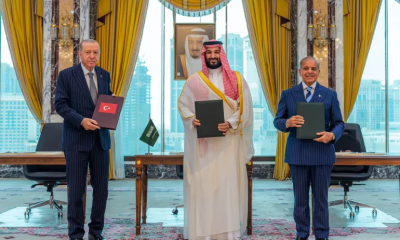
Turkiye, Pakistan agree Saudi Arabia military deployment under Mecca pact

Rumesh Tharanga among nominees announced for World Athlete of the Year 2026
New Chancellor appointed to General Sir John Kotelawala Defence University

‘Dates have the highest sugar content to fight Coronavirus’

Sunday Island 27 December – Headlines

#SundayIsland 17th December – Headlines

Sunday Island – 28th March

Sunday Island Headlines – 21 March

Sunday Island – 21st February – Headlines
-

 Latest News7 days ago
Gold winner Tharanga gets brand-new Honda Vezel from SLAAJ
-

 News6 days ago
US-assisted ‘Ice’ detection: NPC to examine IGP’s move to transfer drug-busting team
-

 Features7 days ago
Why Sri Lanka needs an Inclusive Civic Nationalism – urgently
-

 Editorial5 days ago
Colombo Port drug bust: The plot thickens
-

 News7 days ago
Civil society activist accuses govt. of favouring Ven. Gnanasara
-
 Midweek Review7 days ago
Dappula’s Easter Sunday ‘grand conspiracy’ claim demolished
-

 Editorial7 days ago
When crime bosses rise above law and shrines
-
Editorial6 days ago
Drug busting, transfers and trust deficit