
News
MONLAR accuses govt. of allowing India to play bigger role in country’s agriculture


By Rathindra Kuruwita
The government has allowed India to play a bigger role in Sri Lankan agriculture due to its recent actions regarding agrochemicals, moderator of Movement for National Land and Agricultural Reform (MONLAR,) Chinthaka Rajapakshe alleged yesterday.
Rajapaksa told The Island that the government had banned agrochemicals to break the existing cartel that controlled fertiliser imports and thereby help its business associates.
Rajapakshe said that the actions of successive governments had greatly undermined the country’s food security and sovereignty.
“The government’s impotence was shown during the rice issue. It put out a number of gazette notifications to control the price of rice and the mill owners ignored these gazettes and created a shortage. The government finally allowed mill owners to determine prices. This shows that the government does not understand the ground realities, i. e. that it can’t influence the market because all the tools it has at its disposal are ineffective, and it has no plan.”
Rajapakshe said that since banning the import of agrochemicals, the government had not held any discussions with stakeholders involved in organic agriculture in the country.
“It is now obvious that the government has no intention of going green. All it wants is to ensure that its associates will control the agrochemical market in the future. However, the government is bungling that up, too,” he claimed.
Rajapakshe added that if the government held discussions with those already involved with organic farming, it would have learnt that the first thing to do was to restore the microbes in the soil biodiversity. A healthy soil had a variety of living organisms.
“Plant roots can also be considered as soil organisms in view of their symbiotic relationships and interactions with other soil components. These diverse organisms interact with one another and with the various plants and animals in the ecosystem, forming a complex web of biological activity. Because we have been overusing agrochemicals for decades, most of our soil is dead. While supplying compost is a component of this, it is not everything that we can do. There are so many other things we could have done.”
The government was compelled to ban the import of fertilizers because it faced a dollar shortage, Rajapakshe said. If the government was serious about reducing the cost of importing fertiliser it could have worked with farmers and introduced easy compost making methods, he said. “Instead, the government tried to give their associates an opportunity to mass produce compost and when that failed it resorted to importing organic fertiliser,” he said.
“This has also allowed India to come into our agriculture. Adani is already working in Sri Lanka and he plays a major role in Indian agriculture. I don’t think he is here only for the West Container Terminal,” he said.
MONLAR worked with a large number of farmers and most of them were ready to switch to organic farming if a transparent and feasible path was made available, he said. The ground reality was that the government’s actions were increasingly driving out small scale farmers and those lands were being taken over by large companies.
“This has been happening for a while and farmers are highly suspicious. The government keeps on transferring land owned by small farmers to large companies. These companies are export oriented. During the first phase of shifting to organic agriculture, there has been a drop in the yield. We must take that into account and increase the area of farmlands but we are doing quite the opposite,” he said.
On the other hand, the government had done nothing to educate the farmers on how to engage in organic farming. Those who planted tea used compost the way they used agrochemicals, which is not an effective way of using compost, he said. MONLAR had introduced certain practices used in Andhra Pradesh, India, to some Sri Lankan farmers on recovering lost soil diversity. Those practices have been embraced by farmers with great enthusiasm, he said.
“There are ways of boosting soil biodiversity within days. They have not been explored. Having TV programmes on organic agriculture is not enough, the government has to go to the farmers,” he said.
Moreover, compost is only one component of organic agriculture. There are a number of specialised equipment and machinery needed to successfully engage in organic agriculture. We also need things, like cutters and crushers, to make compost on a large scale. There are a number of Sri Lankan companies that produce these machines, but they have not been given the necessary support to expand production, he said.
Rajapakshe said that Sri Lanka also needed to gear its waste management system towards compost making. Although a large quantity of biodegradable waste was collected daily, most of it was thrown into dump sites. Compost could be created with the biodegradable waste and systems should be introduced to prevent heavy metal contamination.
“Heavy metals can come from things like batteries, bulbs and e-waste. We need to establish protocols to prevent such items from mixing with biodegradable waste,” Rajapakshe added.

Latest News
Ms. U. L. Mathisha Jinanjalie Jayathilake, appointedto the post of Commissioner, Department of Probation and Child Protection Services


The Cabinet of Ministers approved the resolution furnished by the Minister of Women and Child Affairs to appoint Ms. U. L. Mathisha Jinanjalie Jayathilake, the officer in Grade I of Sri Lanka Administrative Service to the post of the Commissioner at the Department of Probation and Child Protection Services with immediate effect.
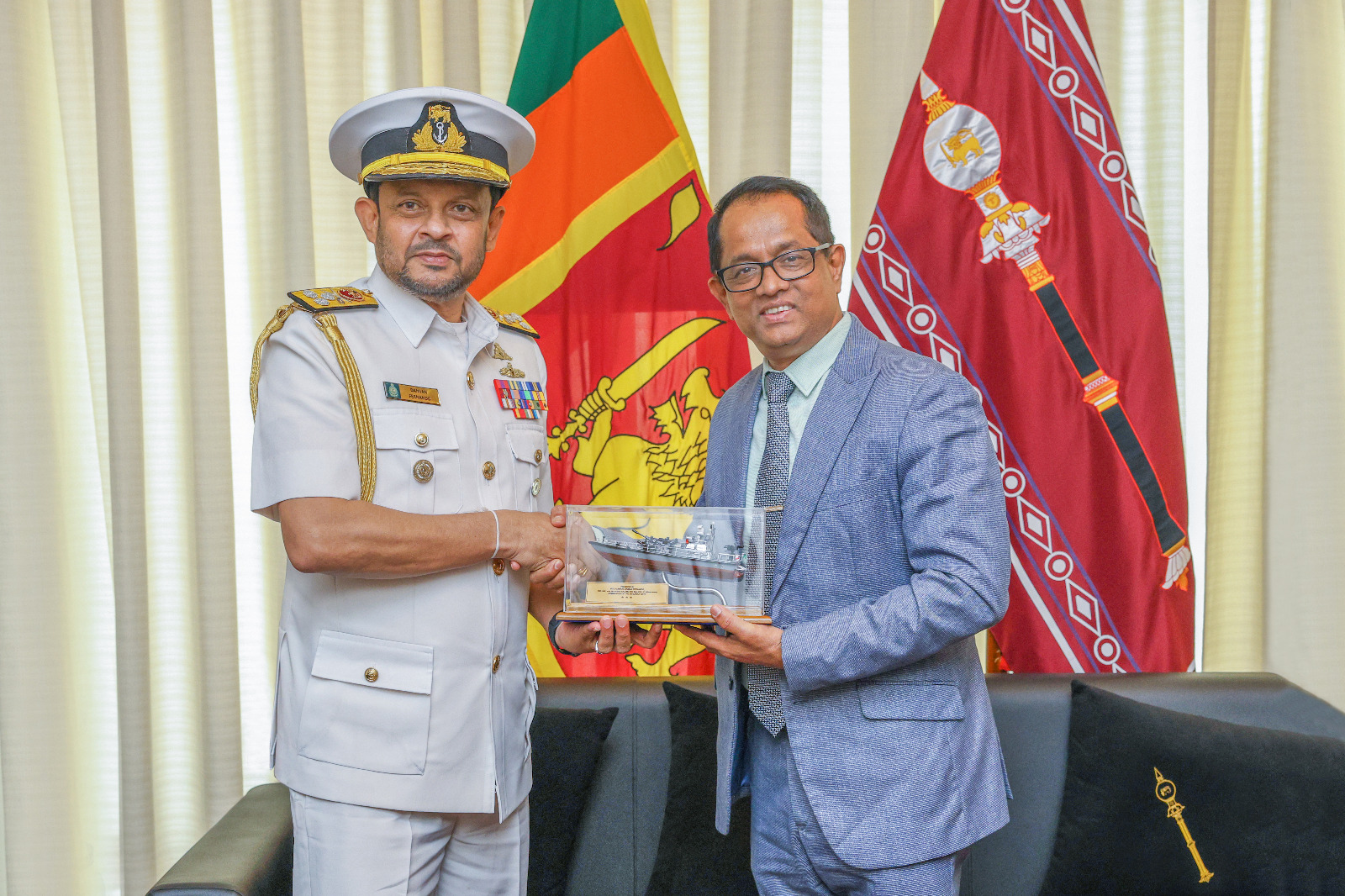
The Commander of the Navy, Vice Admiral Damian Fernando paid a courtesy call on the Speaker of the Parliament, Dr Jagath Wickramaratne at the Office of the Speaker, today (7 July
2026).
The meeting marked the Commander of the Navy’s first official interaction with the Speaker following his assumption of command of the Sri Lanka Navy. During the cordial discussion, they exchanged views on the Navy’s role in matters of national importance.
The formal meeting drew to a close with an exchange of mementoes, signifying the importance of the occasion.

At least 26 people, including five prison officers and 20 inmates, have been confirmed dead following violent unrest at Negombo Prison, hospital sources said yesterday, as authorities struggled to restore full control over the facility.
According to unconfirmed reports the prison officers were killed by rioters yesterday morning, in retaliation, and weapons carried by those officers were grabbed by them.
Negombo General Hospital Director Consultant Dr. Pushpa Gamlath said nearly 100 injured persons had been admitted, following the clashes, and eight of the critically wounded had been transferred to the National Hospital, in Colombo, for further treatment.
The violence, which initially broke out on Sunday (5) between remand prisoners and convicted inmates, left two inmates dead and 38 others injured before being temporarily brought under control.
However, tensions flared again on Monday (6), with prison officials reporting renewed unrest inside the facility despite earlier assurances that the situation had stabilised.
Police said the initial confrontation was triggered by a dispute linked to the exposure of an alleged drug trafficking network, operating within the prison, and was reportedly orchestrated by a drug trafficker, identified as Suresh, who is said to have links to an underworld figure known as ‘Booru Moona’.
The violence rapidly escalated, with female inmates staging a protest on the Prison roof in support of those involved in the clashes, while relatives gathered outside demanding information on detainees. Police later facilitated visits for selected family members to hospitalised inmates.
The Negombo Prison, which houses around 1,800 remand and convicted inmates, descended into widespread disorder as rival groups clashed, with reports indicating that the violence later spread beyond the initial confrontation.
Authorities said rioting inmates had allegedly seized firearms during the renewed unrest on Monday, prompting heightened security measures.
The Sri Lanka Air Force deployed drones for aerial surveillance and a Bell 412 helicopter to monitor the situation, while additional military personnel were sent to reinforce security around the prison.
Prisons Department spokesperson A.C. Gajanayake said a special investigation team had been appointed, under the direction of the Commissioner General of Prisons, to probe the incident, while a separate police investigation is also underway.
Justice Minister Harshana Nanayakkara told The Island that he had called for a detailed report on the disturbances.
By Norman Palihawadane

Ms. U. L. Mathisha Jinanjalie Jayathilake, appointedto the post of Commissioner, Department of Probation and Child Protection Services

Argentina stage stunning late comeback to beat Egypt in World Cup last 16

Commander of the Navy pays courtesy call on Speaker of the Parliament

Woman suspected of Monaco bomb attack found dead in Ukraine

Balogun reprieve in vain as Belgium beat USA to set up Spain quarterfinal

Trump confirms he asked Fifa to review Balogun ban

‘Dates have the highest sugar content to fight Coronavirus’

Sunday Island 27 December – Headlines

#SundayIsland 17th December – Headlines

Sunday Island – 28th March

Sunday Island Headlines – 21 March

Sunday Island – 21st February – Headlines
-

 News3 days ago
Singapore-based Buddhist monk marks nearly four decades of humanitarian service
-

 News4 days ago
Freedom 250: US Embassy celebrates America’s 250th Independence Day through magic of American cinema
-

 News5 days ago
CIABOC to question Harak Kata on Rs. 200 mn bribery allegation
-
 News5 days ago
SLAF conducts successful rescue mission under UN command in Central African Republic
-

 Midweek Review7 days ago
H’tota port’s strategic status remains focal point of geopolitical scrutiny
-

 News2 days ago
AI concerned over proposed SL military deployment in Haiti
-
 News5 days ago
UNEP support pledged to strengthen Sri Lanka’s Environmental Priorities
-

 Business5 days ago
‘Dialog Air Fibre powers a new era of Ultra Fast Home WiFi’