
News
Monetary Board increases interest rates drastically to tackle runaway inflation; highest levels in 21 years


The Monetary Board on Wednesday (06) increased the Standing Deposit Facility Rate (SDFR) and the Standing Lending Facility Rate (SLFR) of the Central Bank by 100 basis points to 14.50 per cent and 15.50 per cent, respectively.That had been done to tackle rising domestic inflation, the Central Bank of Sri Lanka (CBSL) said, explaining the reasons for the Monetary Board decision, adding that these rates are at the highest in 21 years.
he Bank said it had noted a higher-than-expected increase of headline inflation recently.The high inflation is expected to remain in the period ahead, thus the Monetary Board was of the view that a further monetary policy tightening would be necessary to contain any build-up of adverse inflation expectations.The CBSL said that the policy adjustments would help Sri Lanka stabilise its inflation to between 4 and 6 percent in the medium term.
The Bank said that they considered the impact of tighter monetary conditions on overall economic activity, including the micro, small, and medium scale businesses, and the financial sector performance, among others, against far reaching adverse consequences of any escalation of price pressures across all sectors of the economy in the near term.
The Bank raised rates by 700 basis points in April but made no further moves at its previous policy meeting in May.
Excerpts of the CBSL statement: “Central banks have become increasingly hawkish across the globe Central banks from around the world continue to tighten their monetary policies to counter sustained inflationary pressures, exacerbated by high petroleum and food prices arising from geopolitical tensions, and destabilising inflation expectations.
“Nevertheless, the outlook for the global economy has deteriorated recently amidst the global spread of inflation, substantial interest rate hikes, and escalation of geopolitical tensions. The unfolding of these events could have large negative spillover effects on emerging markets and developing economies in the period ahead.
“Domestic economic activity is expected to record a notable downturn in the near term As per the GDP estimates published by the Department of Census and Statistics (DCS), the Sri Lankan economy is estimated to have recorded a contraction of 1.6 per cent, year-on-year, in the first quarter of 2022. Domestic economic activity during the second quarter of 2022 is expected to have been severely affected by the continued supply side disruptions, primarily due to the shortages of power and energy.
“Amidst adverse developments on the domestic front, geopolitical tensions in Eastern Europe that have affected global commodity markets and supply chains could pose further risks to domestic economic growth in the near term.
“The trade deficit narrowed significantly in May 2022 over the corresponding period of last year, largely supported by the policy measures that were aimed at discouraging non urgent imports, alongside the constrained foreign exchange liquidity in the domestic foreign exchange market.
“Foreign exchange inflows in the form of workers’ remittances and tourism earnings remain lower than expected, impacted by unfavourable conditions both domestically and globally. The exchange rate, which underwent a severe bout of depreciation in March 2022, remains broadly stable with the introduction of market guidance from mid-May 2022.
“Gross official reserves, as at end June 2022, are estimated at US dollars 1.9 billion, including the swap facility from the People’s Bank of China equivalent to around US dollars 1.5 billion, which is subject to conditionalities on usability. Significant progress has been made with respect to negotiations with the International Monetary Fund (IMF) towards reaching a staff-level agreement on the Extended Fund Facility (EFF) arrangement in the near term, while negotiations with several bilateral and multilateral partners are ongoing to secure bridging financing. Moreover, expeditious arrangements are being made with regard to the external debt restructuring process.
“Ensuring external sector stability and overall macroeconomic stability requires commitment from all stakeholders of the economy, given the unprecedented balance of payments pressures and severe stresses experienced at present across all sectors of the economy.
The measures introduced by the Central Bank to ensure domestic monetary stability and external stability of the Sri Lanka rupee, need to be supported by coherent and consistent actions on the part of the Government, state-owned enterprises, private sector corporates, and banking and non-banking financial institutions, among others. Such co-ordinated response to crisis management would ensure public support and eventually help bring about normalcy to economic activity in the period ahead.”


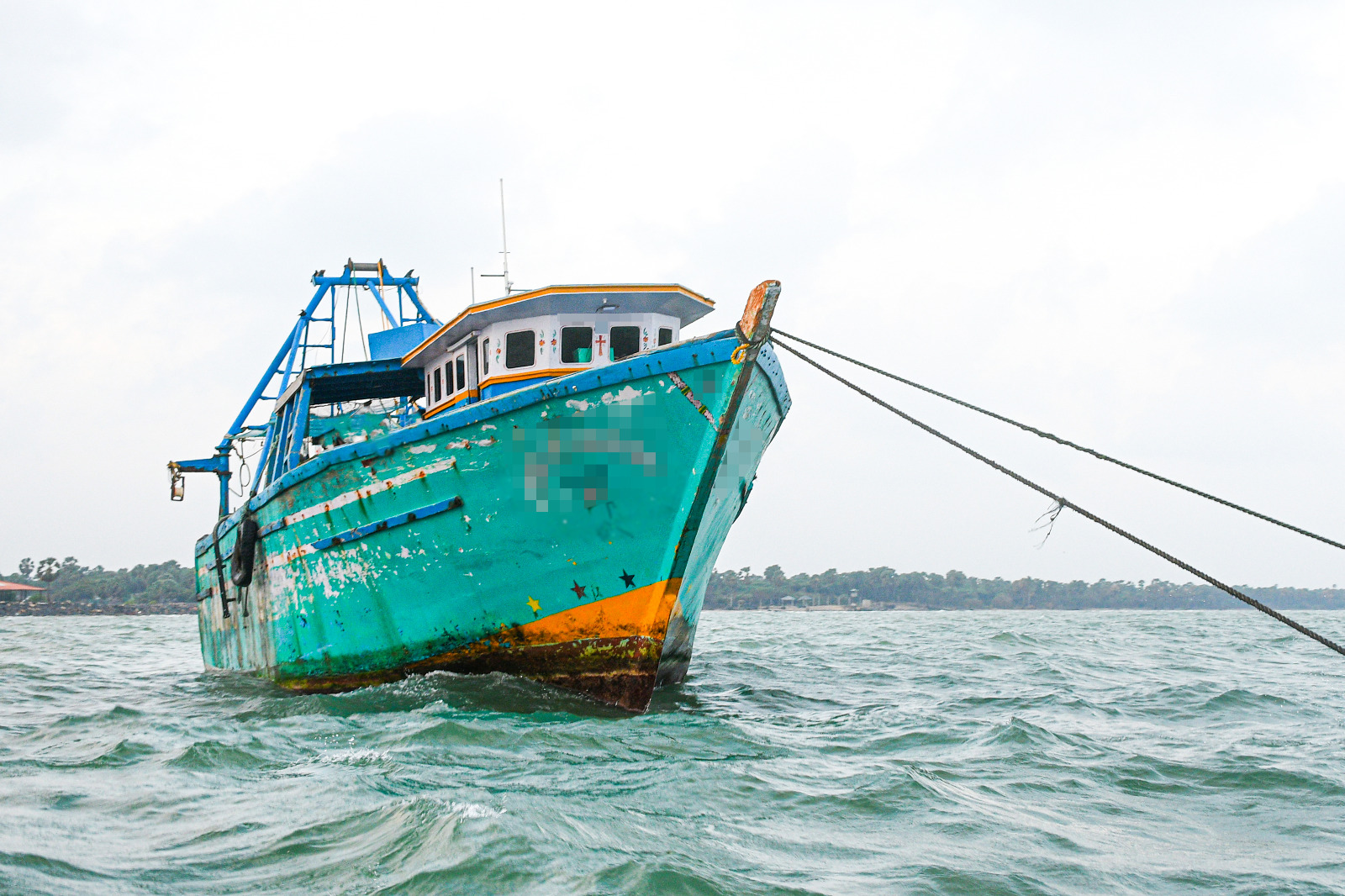
During an operation conducted in the wee hours of Tuesday (23 Dec 25), the Sri Lanka Navy seized an Indian fishing trawler and apprehended 12 Indian fishermen, while they were poaching in Sri Lankan waters north of Talaimannar.
Recognizing the detrimental effects of poaching on marine resources and the livelihoods of local fishing communities, the Sri Lanka Navy continues to conduct regular operations as
proactive measures to deter such activities. These efforts underscore the collective robust approach steadfast commitment to safeguarding the nation’s marine ecosystems while ensuring the economic security and wellbeing of its citizens.
The fishing trawler along with the fishermen held in this operation was handed over to the Fisheries Inspector of Mannar for onward legal proceedings.


India’s External Affairs Minister, Dr. Subramaniam Jaishankar, met with the Prime Minister of Sri Lanka, Dr. Harini Amarasuriya, on 23 December at Temple Trees, during his visit to Sri Lanka as the Special Envoy of Indian Prime Minister Shri Narendra Modi.
The meeting took place as part of the official visit aimed at holding discussions with Sri Lanka’s top leadership, at a time when the nation commenced reconstruction efforts following the devastation caused by Cyclone Ditwah.
During the discussions, the Minister of External Affairs of India reaffirmed readiness to extend support for Sri Lanka, including assistance in rebuilding railways, bridges, and strengthening of the agricultural sector in the country. He also highlighted the importance of having effective systems in place to respond to disaster situations, supported by strong legislative, administrative, and institutional frameworks. Both sides reviewed ongoing relief efforts and explored avenues to further strengthen bilateral cooperation in disaster response and recovery.
The Prime Minister commended the Government of India for the continued support, noting that the recovery process following the devastation caused by Cyclone Ditwah include beyond immediate relief efforts to long-term measures such as resettlement, and reconstruction of habilitation and infrastructure.
The Prime Minister further stated that steps have been taken to reopen schools as part of the process of restoring normalcy, with close monitoring in place. The Prime Minister emphasized the need to ensure stability, reduce vulnerability, and strengthen protection mechanisms highlighting the solidarity of the people, their strong spirit of volunteerism, and collective action demonstrated during the emergency situation.
The event was attended by the High Commissioner of India Santosh Jha, Additional Secretary (IOR), MEA Puneet Agrawal, Joint Secretary (EAMO), MEA Sandeep Kumar Bayyapu, Deputy High Commissioner Dr. Satyanjal Pandey, and representing Sri Lankan delegation, Secretary to the Prime Minister Pradeep Saputhanthri, Additional Secretary to the Prime minister Ms.Sagarika Bogahawatta, Director General (South Asia), Ministry of Foreign Affairs Samantha Pathirana, Deputy Director, South Asia Division, Ministry of Foreign Affairs Ms.Diana Perera.
[Prime minister’s media division]


Sri Lanka is standing on the edge of a coastal catastrophe, with the nation’s lifeline rapidly eroding under the combined assault of climate change, reckless development and weak compliance, Director General of the Department of Coast Conservation and Coastal Resource Management (DCC&CRM) Dr. Terney Pradeep Kumara has warned.
“This is no longer an environmental warning we can afford to ignore. The crisis is already unfolding before our eyes,” Dr. Kumara told The Island, cautioning that the degradation of Sri Lanka’s 1,620-kilometre coastline has reached a point where delayed action could trigger irreversible damage to ecosystems, livelihoods and national security.
He said accelerating coastal erosion, rising sea levels, saltwater intrusion and the collapse of natural barriers, such as coral reefs and mangroves, are placing entire coastal communities at risk. “When mangroves disappear and reefs are destroyed, villages lose their first line of defence. What follows are floods, loss of homes, declining fisheries and forced displacement,” he said.
Dr. Kumara stressed that the coastline is not merely a development frontier but the backbone of Sri Lanka’s economy and cultural identity. “More than half of our tourism assets, fisheries and key infrastructure are concentrated along the coast.
If the coast fails, the economy will feel the shock immediately,” he warned.
Condemning unregulated construction, illegal sand mining and environmentally blind infrastructure projects, he said short-term economic interests are pushing the coastline towards collapse. “We cannot keep fixing one eroding beach while creating three new erosion sites elsewhere. That is not management—it is destruction,” he said, calling for science-driven, ecosystem-based solutions instead of politically convenient quick fixes.
The Director General said the Department is intensifying enforcement and shifting towards integrated coastal zone management, but warned that laws alone will not save the coast. “This is a shared responsibility. Policymakers, developers, local authorities and the public must understand that every illegal structure, every destroyed mangrove, weakens the island’s natural shield,” he added.
With climate change intensifying storms and sea surges, Dr. Kumara warned that Sri Lanka’s vulnerability will only worsen without urgent, coordinated national action. “The sea has shaped this nation’s history and protected it for centuries. If we fail to protect the coast today, we will be remembered as the generation that allowed the island itself to be slowly eaten away,” he went on to say.
By Ifham Nizam

Navy seizes an Indian fishing trawler poaching in Sri Lankan waters north of Talaimannar

Several spells of showers may occur in Central, Uva and Eastern provinces and in Polonnaruwa and Mullaittivu districts

India’s External Affairs Minister meets Sri Lanka PM

Shafali 69 not out , spinners lead India’s rout of Sri Lanka

Sri Lanka’s coastline faces unfolding catastrophe: Expert

SOC examines proposed amendments to the Microfinance and Credit Regulatory Authority Bill

‘Dates have the highest sugar content to fight Coronavirus’

Sunday Island 27 December – Headlines

#SundayIsland 17th December – Headlines

Sunday Island – 28th March

Sunday Island Headlines – 21 March

Sunday Island – 21st February – Headlines
-

 News1 day ago
Members of Lankan Community in Washington D.C. donates to ‘Rebuilding Sri Lanka’ Flood Relief Fund
-

 News6 days ago
Pope fires broadside: ‘The Holy See won’t be a silent bystander to the grave disparities, injustices, and fundamental human rights violations’
-

 News6 days ago
Pakistan hands over 200 tonnes of humanitarian aid to Lanka
-

 Business5 days ago
Unlocking Sri Lanka’s hidden wealth: A $2 billion mineral opportunity awaits
-

 News5 days ago
Army engineers set up new Nayaru emergency bridge
-

 News6 days ago
Officials of NMRA, SPC, and Health Minister under pressure to resign as drug safety concerns mount
-

 News6 days ago
Expert: Lanka destroying its own food security by depending on imported seeds, chemical-intensive agriculture
-

 Editorial6 days ago
Flawed drug regulation endangers lives