
News
Migration can boost South Asia’s recovery– World Bank


KATHMANDU, November 7, 2022 — As South Asia reels from the impacts of unprecedented economic shocks, migration can boost its recovery and support long-term development, says the World Bank in its latest regional economic update. Coping with Shocks: Migration and the Road to Resilience is the subject of a two-day conference, organized by the Institute for Integrated Development Studies and the World Bank. The conference provides academics and researchers a platform to discuss the current situation, challenges and advancements related to migration in South Asia.
Migration drives economic growth as it allows people to move to where they are more productive. International migrants from Bangladesh, Nepal, Pakistan, and Sri Lanka who work in the Gulf states, for example, earn up to five times what they would at home and help generate some of the largest remittance inflows in the world. Nepal derives an estimated 20 percent of its income from remittance inflows, and in Bangladesh and Pakistan, remittance revenue accounts for 6 and 8 percent of GDP, respectively. Migration also allows people to adjust to local economic shocks, such as extreme-weather disasters, to which South Asia’s rural poor are highly vulnerable.
“While migration has numerous economic benefits, the costs of moving, such as credit constraints, lack of information, and labour market frictions, prevent them from being fully realized,” said Eaknarayan Aryal, Secretary, Ministry of Labour, Employment, and Social Security in Nepal. “Nepal and countries across South Asia must work to facilitate labour mobility as doing so is vital to the region’s recovery and resilience to future shocks.”
Poor South Asian migrants, many of whom hold temporary jobs in the informal sector, face several challenges such as precarious labour market conditions, visas tied to employment, and limited access to social protection. The COVID-19 pandemic exposed their long-standing vulnerabilities as they were disproportionately affected by restrictions to movement. However, the later phase of the pandemic has highlighted the crucial role migration can play in facilitating recovery. Survey data from the report suggests that in late 2021 and early 2022, migration flows are associated with movement from areas hit hard by the pandemic to those that were not, thus helping equilibrate demand and supply of labor in the aftermath of the COVID-19 shock. In Nepal, by late 2021, migrants were 13 percentage points more likely to be employed than those who did not migrate after facing job loss during the early months of the pandemic.
“Migration is picking up again in South Asia, but remains slow and uneven, raising concerns that the pandemic shock has had long-term impacts on the costs and frictions associated with it,” said Hans Timmer, World Bank Chief Economist for South Asia. “Policymakers must address these often-prohibitive costs and frictions and incorporate measures to de-risk migration.”
The report offers several recommendations on cutting the high costs of migration, including drawing bilateral and multilateral agreements, strengthening the remittance infrastructure, and offering information and training programs to help potential migrants make better decisions about moving. It also offers recommendations on de-risking migration through means such as more flexible visa policies, mechanisms to support migrant workers during shocks, and social protection programs.
“South Asia is the largest beneficiary of remittance in the world. Remittance has played a central role in alleviating poverty, coping with economic shocks, and making substantial progress toward sustainable development goals in Nepal,” said Dr. Biswash Gauchan, IIDS Executive Chair. “However, the socioeconomic and political cost of migration is also very high in the country where a substantial number of the working-age population has gone abroad in search of employment. IIDS is happy to host this regional conference on this crucial theme in Nepal in collaboration with the World Bank, particularly in the aftermath of the COVID-19.”

News
AgriConnect Sri Lanka’ to be launched on 30 October to Modernise the Agricultural Sector Through Digitalisation

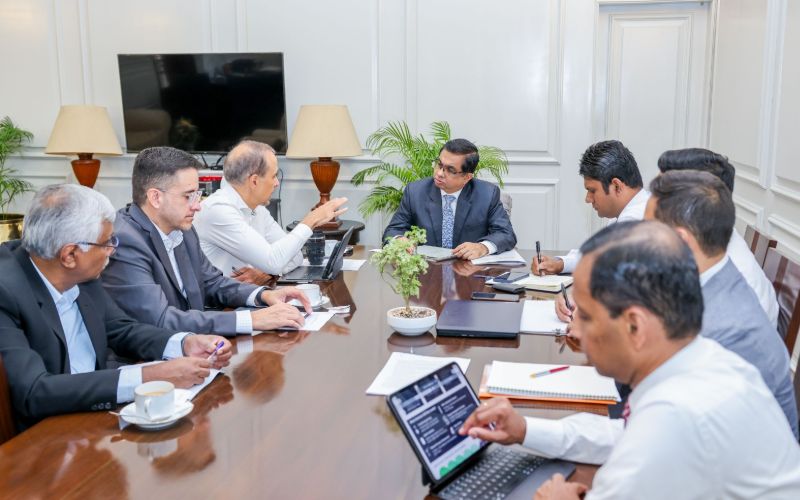
A discussion on the official launch of the ‘AgriConnect Sri Lanka’ programme was held at the Presidential Secretariat on Tuesday (13) morning between Secretary to the President Dr. Nandika Sanath Kumanayake and a delegation led by Gevorg Sargsyan, World Bank Group Manager for Sri Lanka and the Maldives.
The discussion focused on the official launch of the ‘AgriConnect Sri Lanka’ programme, scheduled to take place on 30 October at TRACE Expert City.
The World Bank delegation provided a comprehensive briefing on the programme and emphasised that Sri Lanka is set to become the first country in South Asia to join this global initiative of the World Bank Group, marking a significant milestone.
Victor Anthonypillai, Senior Country Officer of the International Finance Corporation (IFC), Tomas Ricardo Rosada Villamar Practice Manager at the World Bank, Felipe F. Dizon, Senior Economist and Athula Senaratne, Senior Agriculture Specialist, also attended the meeting. The Presidential Secretariat was represented by Senior Assistant Secretary to the President Dr Danushka Perera and Assistant Secretary to the President R. A. Ruwanpathirana.
President’s Media Division (PMD)
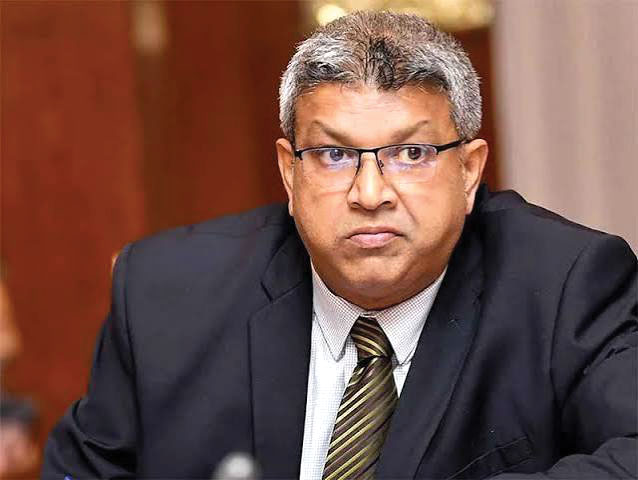
Appointment of committee eyewash, says UNP
The government is considering changes to prison regulations pertaining to the treatment of Buddhist monks serving jail terms, including their right to wear monastic robes when taken outside prison.
Justice and National Integration Minister Harshana Nanayakkara announced the proposed changes yesterday (14) following the submission of an interim report by a committee appointed to review the rules and procedures governing prisons.
The report was handed over to Secretary to the President Dr Nandika Sanath Kumanayake at the Presidential Secretariat.
One of the key recommendations is to amend Prison Standing Order 356 by introducing a new provision, 356(A). The proposed revision would require prison authorities to consult the Department of Buddhist Affairs on the removal of a monk’s robes upon admission to prison. The Commissioner of Prisons would be allowed 10 days to notify the department and take the necessary steps.
A separate amendment to Departmental Order 550 would allow Buddhist monks to wear their robes whenever they are taken outside prison, unless their respective Nikaya formally requests that the privilege be withdrawn.
The committee has also recommended extending similar arrangements, with suitable modifications, to members of other religious clergy who are imprisoned.
The proposals follow concerns raised over the treatment of Ven. Galagoda Aththe Gnanasara Thera after he was taken into custody. President Anura Kumara Dissanayake subsequently held discussions with representatives of the three main Buddhist Nikayas and appointed the committee to examine the existing legal framework.
Nanayakkara said the interim report had been forwarded to the Acting Commissioner General of Prisons, along with instructions to revise the relevant standing orders in accordance with its recommendations.
The proposed amendments have yet to be confirmed as formally implemented.
Meanwhile, the UNP yesterday criticised the government’s decision to appoint a committee to make recommendations on the attire to be worn by imprisoned Buddhist monks and other religious leaders when taken outside prison, describing the move as unnecessary.
In a statement issued yesterday (14), the UNP said the procedures governing the matter were already clearly set out in the Department of Prisons’ Standing Orders, making the appointment of a separate committee unwarranted.
The party cited remarks by Professor G.L. Peiris, Convenor of the Janathawadi Joint Opposition, who had described the committee’s appointment as a
“complete eyewash” and questioned the need for such a move.
Referring to Standing Order 550 of the Prisons Department, the UNP said convicted prisoners appearing before court for legal proceedings should not be required to wear prison uniforms.
It further stated that the regulations allowed prisoners to wear civilian clothing consistent with what they wore before imprisonment, including attire appropriate to their cultural and religious backgrounds.
The UNP accused the government of unnecessarily prolonging the issue by appointing a committee, despite the existence of regulations governing prisoners’ attire.
The party also called on the government to seek forgiveness from the Mahanayake Thera and the Sangha Council of the Kotte Sri Kalyani Samagri Dharma Maha Sangha Sabha of the Siyam Maha Nikaya over the decision concerning the religious attire of Ven. Galagoda Aththe Gnanasara Thera.
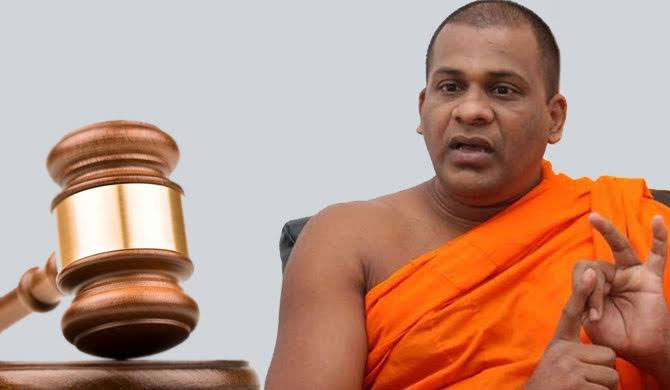
Court of Appeal President Justice Rohantha Abeysuriya yesterday withdrew from the bench hearing petitions challenging the decision by prison authorities to require Ven. Galagoda Aththe Gnanasara Thera to wear prison attire following his imprisonment.
The decision was announced when the petitions seeking to invalidate the prison authorities’ decision were taken up for consideration on October 14.
Following his withdrawal, a three-judge bench was appointed to hear the petitions.
The petitions relate to the prison authorities’ decision to require Gnanasara Thera to wear prison attire after he was taken into custody to serve the remainder of his sentence for contempt of court.
In September this year, the Supreme Court annulled the presidential pardon granted to Gnanasara Thera by former President Maithripala Sirisena in May 2019.
Following the ruling, the Court of Appeal directed the Commissioner General of Prisons to take the necessary steps to enforce the remainder of the monk’s prison sentence.
Gnanasara Thera had originally been sentenced to six years’ imprisonment for contempt of court but had served only around nine months before receiving the presidential pardon in 2019.

AgriConnect Sri Lanka’ to be launched on 30 October to Modernise the Agricultural Sector Through Digitalisation

57th Annual Saints’ Quadrangular Tournament on Saturday and Sunday

Showers or thundershowers will occur at most parts of the island

Prison rules to be revised over monks’ attire

AC President recuses himself from hearing prison attire case pertaining to Gnanasara Thera

Court orders steps to obtain INTERPOL Red Notice against Basil

‘Dates have the highest sugar content to fight Coronavirus’

Sunday Island 27 December – Headlines

#SundayIsland 17th December – Headlines

Sunday Island – 28th March

Sunday Island Headlines – 21 March

Sunday Island – 21st February – Headlines
-

 News7 days ago
NDB fraud Rs 60mn more than reported
-

 News7 days ago
Removing monk’s robes matter for Sangha to decide: Mahanayake Theras
-

 News6 days ago
NPP govt. reminded of its responsibilities as US warship leaves Colombo
-

 News5 days ago
Sri Lanka escalates anti-graft drive with Shiranthi’s jailing
-

 Latest News6 days ago
Farhan, Sadaqat help Pakistan ace 183 chase to go 1-0 up
-
 News7 days ago
BHC, Colombo: “LTTE remains a proscribed org. in the UK”
-

 Latest News4 days ago
Farhan and Sadaqat help Pakistan seal series in style
-

 News5 days ago
Iranian ships stranded, Lanka fears US sanctions