
Business
Microsoft to help 25 million people worldwide acquire new digital skills


Microsoft recently announced a new global skills initiative aimed at bringing more digital skills to 25 million people worldwide by the end of the year.
The announcement comes in response to the global economic crisis caused by the COVID-19 pandemic. To date, the pandemic has put close to 75 million people out of work.
With a labor force of close to 8.9 million, the unemployment rate in Sri Lanka increased to 5.7 percent in the first quarter of 2020 from 4.5 percent in the fourth quarter of 2019 (CEIC). Expanded access to digital skills is an important step in accelerating economic recovery, especially for the people hardest hit by job losses.
“COVID-19 has created both public health as well as an economic crisis,” said Hasitha Abeywardena, Country Manager, Microsoft Sri Lanka and Maldives. “As we move from the initial emergency response phase to the recovery phase to the reimagine phase, determining what should be rebuilt, what should be redefined, we need to ensure that no one is left behind, and address the needs of those most impacted by this crisis.”
This initiative includes immediate steps to help those looking to reskill and pursue an in-demand job and brings together every part of the company, combining existing and new resources from LinkedIn, GitHub and Microsoft.
“Today, we’re bringing together resources from Microsoft inclusive of LinkedIn and GitHub to reimagine how people learn and apply new skills—and help 25 million people facing unemployment due to COVID-19 prepare for the jobs of the future,” he said.
Connecting skills to opportunities. Providing low-cost access to industry-recognized certifications through the end of the year and free access to powerful job-seeker tools that will help people get hired once they have the skills and certifications.
These resources can be accessed at a central location, opportunity.linkedin.com, and will be broadly available online in four languages: English, French, German and Spanish.
Microsoft is backing the effort with cash grants to help nonprofit organizations worldwide assist those who need it most, including people with lower income, lower educational attainment and underrepresented minorities.
Recently, Microsoft and Sarvodaya-Fusion saw to the training of 200 Ministry of Youth trainers and Microsoft Innovative Education Experts in Sri Lanka. The partnership will see 150 youth participate in the Hour of Code and Make What’s Next campaign events.
The company is also pledging to make stronger data and analytics—including data from the LinkedIn Economic Graph—available to governments around the world so they can better assess local economic needs.
Microsoft will use its voice to advocate for public policy innovations that will advance skilling opportunities needed in the changed economy.
Later this year, Microsoft will preview a new learning app in Microsoft Teams designed to help employers skill and upskill new and current employees as people return to work and as the economy adds jobs.


By Ifham Nizam
Sri Lankan brands are standing at a strategic inflection point. Digital budgets have surged, social platforms have multiplied, and artificial intelligence has moved from novelty to necessity. Yet, despite unprecedented access to data, many organisations remain trapped in reactive decision-making—looking backwards rather than anticipating what lies ahead.
That contradiction was sharply articulated at a industry forum on Tuesday night bringing together global platform experts and local practitioners, where the central question was not whether Sri Lankan brands should adopt AI-powered intelligence, but whether they are prepared to own it.
Angel Calinisan, a global social intelligence leader working across emerging markets from Southeast Asia to South Asia, offered a compelling metaphor that framed the discussion.
“Brands are no longer using social intelligence as a rear-view mirror,” Calinisan said.
“They are starting to use it as a GPS. A rear-view mirror tells you what has already happened. A GPS tells you where you are headed—and warns you before you take the wrong turn.”
According to Calinisan, the most advanced brands are deploying AI-driven listening tools to spot anomalies in real time—early signals that indicate shifts in consumer behaviour, emerging reputational risks, or nascent trends before they peak.
“These anomalies could be negative sentiment during a brewing crisis, or they could be the first signs of a behavioural change,” he explained. “AI does what humans cannot do at scale—monitor conversations 24/7, identify what has changed, where it is happening, and who is driving it.”
Crucially, Calinisan stressed that prediction—not reporting—is where competitive advantage now lies. “You need to know whether a trend is just a fad or whether it has velocity and longevity. That predictive layer is what separates leaders from followers.”
For Sri Lankan companies operating in volatile economic and reputational environments, this ability to anticipate rather than react could be the difference between resilience and decline.
One of the most striking insights from Calinisan was her assertion that data is no longer the currency—time is.
“If you read about an issue in the newspaper or see it trending publicly on social media, you are already late,” he warned. “Conversations move across platforms at incredible speed. The brands that survive are the ones that detect signals early and buy themselves time to respond.”
This shift has significant business implications. Early detection allows organisations to protect brand equity, manage crises proactively, and even capitalise on emerging opportunities before competitors are aware they exist.
Calinisan pointed to metrics increasingly used by global brands, such as share of voice, which he said is “highly correlated with market share,” and net sentiment, a measure closely linked to digital brand equity. “These metrics are no longer for reporting decks—they are guiding business decisions.”
Beyond vanity metrics to boardroom relevance
That evolution from surface-level engagement to boardroom relevance was echoed by Anubhav Khanduja, who works closely with enterprise clients across India, South Asia, APEC and global markets.
“Likes and shares are no longer what boards care about,” Khanduja said. “Leadership teams want to see intent and revenue. They want to know how social media contributes to the funnel—from intent creation to conversion and attribution.”
According to Khanduja, enterprise measurement frameworks are rapidly shifting toward metrics that can be directly linked to business outcomes. “Attribution is critical. If you can connect intent and conversion back to your social platforms, that’s when digital earns its seat at the board table.”
This shift reflects a broader maturation of digital marketing—from a communications function to a revenue and growth driver.
As brands juggle five to seven platforms simultaneously, another challenge has emerged: how to centralise operations without flattening the unique culture of each platform.
Khanduja cautioned against the old model of pushing uniform content everywhere. “Content creation has become easy—anyone can do it. What matters now is not missing the essence of what each platform is built for.”
He argued that AI should be used to improve marketer productivity, not replace human judgment. “You can centralise research, workflows and optimisation, while keeping the authentic voice intact and respecting platform-specific nuances.”
The goal, he said, is “doing more with less—without losing relevance.”
A recurring theme throughout the discussion was the danger of outsourcing intelligence entirely to agencies and consultancies.
Calinisan was blunt: “The brands pulling ahead are bringing these capabilities in-house. They have management support, clear KPIs, and training programmes that allow teams to experiment, fail, learn and iterate.”
This internalisation of intelligence allows organisations to respond faster, protect institutional knowledge, and build long-term strategic muscle—rather than “renting insight” on a project-by-project basis.
Khanduja reinforced this view, noting that as trust deficits grow in an age of AI-generated content and saturated advertising, credibility increasingly comes from authentic voices—especially employees.
“Employees are becoming central to brand amplification,” he said. “People trust people more than ads. When organisations activate employees responsibly, they gain reach, credibility and resilience—especially during times of change or crisis.”
For Sri Lanka’s corporate sector, the message was clear. Digital transformation is no longer about spending more on ads or adopting the latest tool. It is about owning intelligence, embedding predictive thinking into decision-making, and aligning technology with culture.
As Calinisan summed it up: “It’s not about having more data. It’s about knowing sooner than everyone else—and having the time to act.”
In an increasingly competitive and uncertain environment, that early insight may well become Sri Lankan brands’ most valuable asset.
By Ifham Nizam

Dialog Axiata PLC, Sri Lanka’s #1 connectivity provider, reaffirms its commitment to preserving national heritage by sponsoring the Gangaramaya Navam Maha Perahera for the fourteenth consecutive year, supporting a revered religious celebration while advancing cultural patronage, community stewardship, and corporate responsibility that strengthens shared values and continuity across Sri Lanka.
The annual Gangaramaya Navam Maha Perahera, one of Sri Lanka’s most significant religious and cultural expressions, was held on 31st January and 1st February, drawing thousands of devotees and visitors to the historic Gangaramaya Temple in Colombo. As a long-term patron, Dialog’s continued sponsorship enables the seamless conduct of this eminent Perahera while reinforcing its role as a leading corporate advocate of Sri Lankan culture and heritage.
Beyond the Gangaramaya Navam Maha Perahera, Dialog has been a long-term patron of many significant national events including the Kandy Esala Perahara, Kelaniya Duruthu Festival, Katharagama Esala Perahara and Gatabaru Esala Perahara. These efforts align with the company’s broader heritage preservation initiatives, which include constructing the vestibule for the Dimbulagala Aranya Senasanaya, launching a website and directory of Amarapura Maha Nikaya Temples, and restoring the Anuradhapura Maha Vihara Sannipatha Shalawa.

Sri Lanka’s renowned open-air art fair, Kala Pola, is set to bring alive the streets of Colombo with colour, creativity, and conversation as Kala Pola returns for its 33rd edition on Sunday, 8th February, along Ananda Coomaraswamy Mawatha (Green Path), Colombo 07.
Conceptualised and introduced by The George Keyt Foundation in 1993, and sponsored and co-presented by the John Keells Group through an unbroken patronage since 1994, Kala Pola has grown into a cultural landmark that continues to reshape how visual art is showcased and experienced in Sri Lanka. Remaining true to its founding philosophy, the event is proudly uncurated, providing participating artists and sculptors with the opportunity to showcase their talent, connect with art enthusiasts, learn from and network with other artists, and expand their clientele.
Kala Pola displays a broad variety of forms and styles, ranging from intricate sculptures, humorous caricatures, and abstract paintings to modern and traditional Sri Lankan art. Attracting art lovers, collectors, connoisseurs, and students from all parts of the country and tourists from various parts of the world, the event creates a vibrant, welcoming, and wholesome atmosphere spurred by music, camaraderie, art discussions, children’s art workshops, and an array of cultural performances.
As a longstanding and iconic visual art flagship amidst Sri Lanka’s vibrant calendar of arts and cultural events, Kala Pola continues to stand as a unique open-air platform for visual expression. By bringing together both established and emerging artists in an inclusive, uncurated setting in the heart of Colombo, the event fosters meaningful connections between creators and audiences, offering accessibility, diversity, discourse and a shared appreciation for art among a wide cross-section of the public, while spurring the creative economy of the country. Nations Trust Bank (NTB) also supports Kala Pola as its official banking partner.
Arts falls within the focus area of Social Health and Cohesion which is one of the four focus areas of John Keells Foundation (JKF) – the CSR entity of John Keells Holdings PLC (JKH), Sri Lanka’s largest listed conglomerate in the Colombo Stock Exchange operating over 80+ companies in 7 diverse industry sectors. With a history of over 150 years, John Keells Group provides employment to over 18,000 persons and has been ranked as Sri Lanka’s ‘Most Respected Entity’ for 20 Years by LMD Magazine. Whilst being a full member of the World Economic Forum and a Participant of the UN Global Compact, JKH drives its CSR vision of “Empowering the Nation for tomorrow” through JKF.

‘Our flight is booked, we’re going’: Suryakumar on India vs Pakistan

Captain’s knock helps Petes

Delhi Capital’s fourth shot at elusive trophy as Royal Challengers Bengaluru look to make winning a habit

Gunmen kill nearly 200 people in Nigeria’s Kwara and Katsina states

SLAF men’s Judo team crowned overall champs at 62nd National Judo Championship

Showers above 75 mm are likely at some places in the Uva province and in Batticaloa, Ampara, Hambantota and Nuwara-Eliya districts

‘Dates have the highest sugar content to fight Coronavirus’

Sunday Island 27 December – Headlines

#SundayIsland 17th December – Headlines

Sunday Island – 28th March

Sunday Island Headlines – 21 March

Sunday Island – 21st February – Headlines
-
 Opinion7 days ago
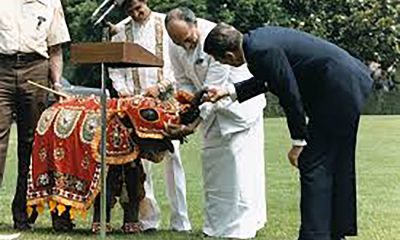
Sri Lanka, the Stars,and statesmen
-

 Business6 days ago
Hayleys Mobility ushering in a new era of premium sustainable mobility
-
 Business3 days ago
SLIM-Kantar People’s Awards 2026 to recognise Sri Lanka’s most trusted brands and personalities
-

 Business6 days ago
Advice Lab unveils new 13,000+ sqft office, marking major expansion in financial services BPO to Australia
-
 Business6 days ago
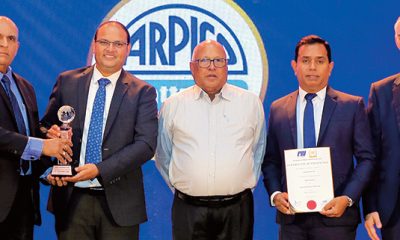
Arpico NextGen Mattress gains recognition for innovation
-

 Business5 days ago
Altair issues over 100+ title deeds post ownership change
-

 Editorial6 days ago
Govt. provoking TUs
-

 Business5 days ago
Sri Lanka opens first country pavilion at London exhibition