
Latest News
Mexico elects Claudia Sheinbaum as first woman president

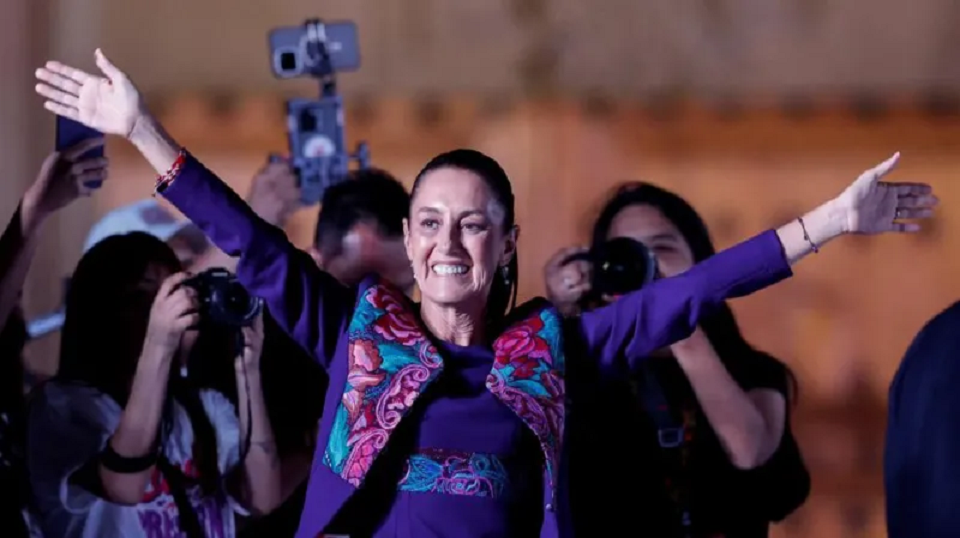
Claudia Sheinbaum has been elected as Mexico’s first woman president in an historic landslide win.
Mexico’s official electoral authority said preliminary results showed the 61-year-old former mayor of Mexico City winning between 58% and 60% of the vote in Sunday’s election.
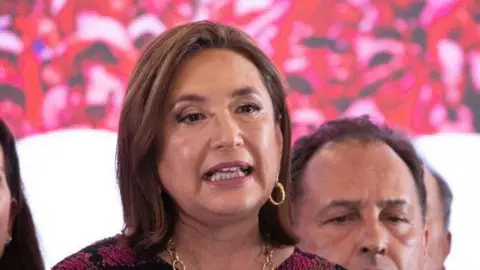
That gives her a lead of about 30 percentage points over her main rival, businesswoman Xóchitl Gálvez.
Ms Sheinbaum will replace her mentor, outgoing President Andrés Manuel López Obrador, on 1 October.

The election of a woman to the highest office was an emotional moment for some [BBC]
Ms Sheinbaum, a former energy scientist, has promised continuity, saying that she will continue to build on the “advances” made by President López Obrador, further building on the welfare programmes which have made the outgoing president very popular.
But in her victory speech she also highlighted what has set this Mexican election apart from previous ones. She told cheering voters: “For the first time in the 200 years of the [Mexican] Republic, I will become the first woman president of Mexico.”
She said it was an achievement not just for her but for all women. “I’ve said it from the start, this is not just about me getting [to the top office], it’s about all of us getting here.”
She added: “I won’t fail you.”
Ms Sheinbaum also thanked her rival, Xóchitl Gálvez, who has conceded victory.
Prior to running for president, Ms Sheinbaum was mayor of Mexico City, one of the most influential political positions in the country and one that is seen as paving the way for the presidency.
Ms Sheinbaum, whose Jewish maternal grandparents immigrated to Mexico from Bulgaria fleeing the Nazis, had an illustrious career as a scientist before delving into politics. Her paternal grandparents hailed from Lithuania.
Both of her parents were scientists and Ms Sheinbaum studied physics before going on to receive a doctorate in energy engineering. She spent years at a renowned research lab in California studying Mexican energy consumption patterns and became an expert on climate change.
That experience and her student activism eventually earned her the position of secretary of the environment for Mexico City at the time when Andrés Manuel López Obrador was mayor of the capital. In 2018 she became the first female mayor of Mexico City, a post she held until 2023, when she stepped down to run for president.

The election, which pitted Ms Sheinbaum against Ms Gálvez, has been described as a sea change for women in Mexico.
Edelmira Montiel, 87, said that she was grateful to be alive to see a woman elected to the top office. “Before, we couldn’t even vote, and when you could, it was to vote for the person your husband told you to vote for. Thank God that has changed and I get to live it,” she told Reuters news agency, referring to the fact that women were only allowed to vote in national elections in 1953.
While the fact that the two front-runners were women was widely celebrated, the campaign was marred by violent attacks.
As well as a new president, voters were also electing all members of Mexico’s Congress and governors in eight states, the head of Mexico City’s government, and thousands of local officials.
And it was local candidates in particular who were targeted in the run-up to the vote. The government says more than 20 were killed across Mexico, although other surveys put the total at 37.
Ms Gálvez harshly criticised the government and her rival in the presidential race for the violence which blights large parts of Mexico.
She promised to be “the bravest president, a president who does confront crime” if elected, but failed to provide many details about how she would tackle the powerful criminal cartels which are behind much of the violence.
After Ms Sheinbaum’s lead became unassailable, Ms Gálvez called her. “I told her I saw a Mexico with a lot of pain and violence. I wished that she could solve the severe problems our people have,” Ms Gálvez said of the call.
How to tackle Mexico’s violent cartels is going to be one of the many challenges facing Ms Sheinbaum when she takes up office. She has said that it is important to tackle what she says are the roots of the violence and has promised to invest in welfare programmes to prevent poor young Mexicans from being recruited by criminal groups.
On relations with Mexico’s northern neighbour, the United States, which at times have been testy under her predecessor in office, she said she would ensure there would be “a relationship of friendship, mutual respect and equality”.
But in a reference to the many Mexicans living and working in the US, she promised to “always defend the Mexicans who are on the other side of the border”.
Relations between the US and Mexico suffered under Mr López Obrador, who has been in power since 2018. The outspoken leader was barred from running for a second term under Mexico’s constitution, which limits presidents to a single six-year-term.
He threw his weight behind Ms Sheinbaum instead.
Having the backing of the popular president, who has an approval rate of close to 60%, gave Ms Sheinbaum’s campaign a huge boost. Many of those voting for her said they backed Morena’s programme to alleviate poverty and wanted to see it continued.
[BBC]










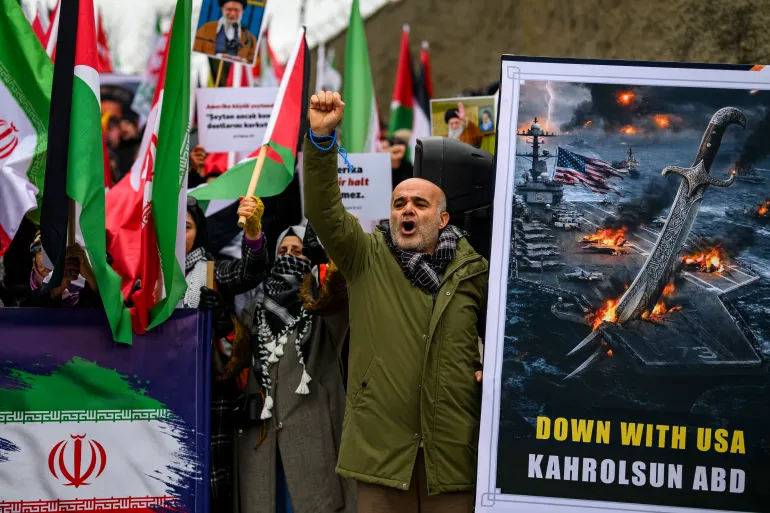
United States President Donald Trump has confirmed that talks with Iran are continuing to try to de-escalate tensions in the Gulf, even as the US military announced shooting down an Iranian drone that approached its aircraft carrier in the Arabian Sea.
Trump told reporters at the White House on Tuesday that Washington was negotiating with Iran “right now”, but declined to say where the talks were taking place.
“[The talks] are all over. But they are negotiating. They’d like to do something, and we’ll see if something is going to be done,” he said.
“They had a chance to do something a while ago, and it didn’t work out. And we did ‘Midnight Hammer’, I don’t think they want that happening again,” he added, referring to the operation last June in which the US Air Force and Navy struck three Iranian nuclear facilities.
Trump, who has been pushing Teheran to agree to talks over its nuclear programme, has repeatedly threatened to attack the country again over a recent crackdown on antigovernment protests. The US president sent the USS Abraham Lincoln to the Gulf last week, leading to fears of a possible military confrontation.
The carrier strike group, which brought roughly 5,700 additional US troops, joined three destroyers and three littoral combat ships that were already in the region.
Tensions have been easing in recent days amid a push by regional powers for a resolution.
Iranian President Masoud Pezeshkian said earlier on Tuesday that he had instructed the country’s foreign minister to “pursue fair and equitable negotiations, guided by the principles of dignity, prudence, and expediency”, provided that a “suitable environment exists”.
“These negotiations shall be conducted within the framework of our national interests,” Pezeshkian added
[Aljazeera]
Seven million people’s cancer could be prevented each year, according to the first global analysis.
A report by World Health Organization (WHO) scientists estimates 37% of cancers are caused by infections, lifestyle choices and environmental pollutants that could be avoided.
This includes cervical cancers caused by human papilloma virus (HPV) infections which vaccination can help prevent, as well as a host of tumours caused by tobacco smoke from cigarettes.
The researchers said their report showed there is a “powerful opportunity” to transform the lives of millions of people.
Some cancers are inevitable – either because of damage we unavoidably build up in our DNA as we age or because we inherit genes that put us at greater risk of the disease.
But researcher Dr Isabelle Soerjomataram said “people are surprised to hear” that nearly four in 10 cancers can be prevented as it is “a substantial number”.
The International Agency for Research on Cancer, part of the WHO, analysed 30 preventable factors known to increase the risk of cancer.
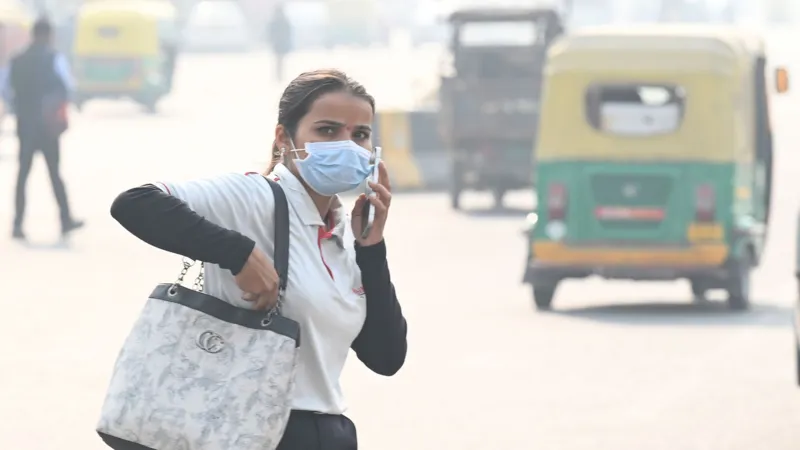
These include smoking and ultraviolet (UV) radiation which can directly damage our DNA; obesity and too little physical activity which alter inflammation and hormones in the body to raise cancer risk; and air pollution which can wake up dormant cancer cells.
The agency’s report also looked at nine cancer-causing infections including HPV, hepatitis viruses which lead to liver cancer and the stomach bug H. pylori.
The team used data on cancer cases from 2022 and from the 30 risk factors a decade earlier – across 185 countries – to perform their statistical analysis.
The big three contributors to more than 18 million cancer cases around the world were found to be:
- smoking tobacco which caused 3.3 million cancers
- infections causing 2.3 million cancers
- alcohol use leading to 700,000 cancers

However, the overall figures mask a nuanced picture of cancer risk around the world.
There is a stark sex-divide with 45% of men’s cancers being preventable compared with 30% in women, partly down to higher levels of smoking among men.
In women living in Europe, the top three preventable causes of cancer are smoking, closely followed by infection and then obesity.
While in sub-Saharan Africa, infections dominate and account for nearly 80% of preventable cancers in women.
This means any measures to tackle these cancers would need to be tailored to each region or country.
“This landmark study is a comprehensive assessment of preventable cancer worldwide, incorporating for the first time infectious causes of cancer alongside behavioural, environmental, and occupational risks,” said Soerjomataram, the deputy head of the IARC Cancer Surveillance Unit.
“Addressing these preventable causes represents one of the most powerful opportunities to reduce the global cancer burden.”
The report, published in the journal Nature Medicine, showed lung cancer (linked to smoking and air pollution) stomach cancer (linked to H. pylori infection) and cervical cancer (linked to HPV infection) made up nearly half of all preventable cases of cancer.
Dr Andre Ilbawi, team lead for cancer control at WHO, said the study was “good news” as it showed something could be done and he pointed to the success of countries that have introduced policies to tackle smoking or vaccinate against HPV.
“The percentage of preventable cancers can change over time and our goal is to get it as close to zero as possible,” he said.
[BBC]
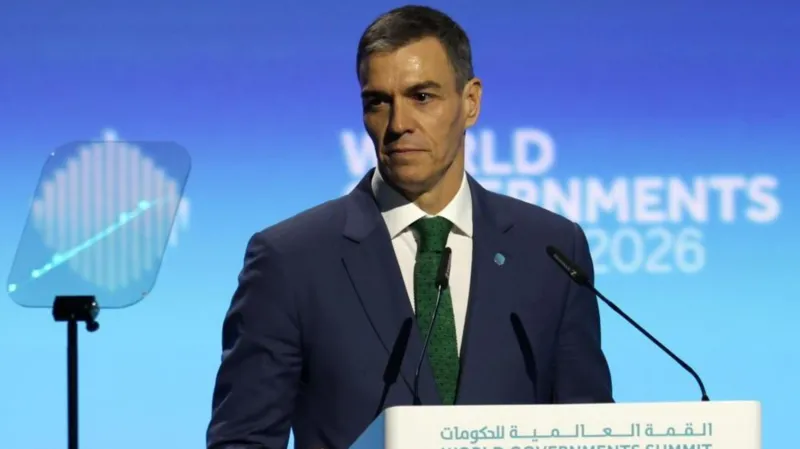
Spain has become the latest European country to make plans to ban social media for children under the age of 16.
“We will protect them from the digital Wild West,” Prime Minister Pedro Sánchez said at the World Governments Summit in Dubai on Tuesday.
The ban, which still needs parliamentary approval, is part of a raft of changes that include making company executives responsible for “illegal or harmful content” on their platforms.
Australia became the world’s first country to bring in a ban last year, with others watching – and judging – its success.
France, Denmark and Austria have also announced that they are considering their own national age limits.
The UK government has launched a consultation on whether to implement a ban for under-16s.
Social media companies have argued that the bans would be ineffective, difficult to implement and could isolate vulnerable teenagers. Reddit is challenging Australia’s ban in the High Court.
“Today, our children are exposed to a space they were never meant to navigate alone,” Sánchez said, describing social media as a place of “addiction, abuse, pornography, manipulation [and] violence. “We will no longer accept that. We will protect them.”
Sánchez first mooted a possible ban in November, but on Tuesday, the plan was fleshed out.
Under the changes, social media platforms would be required to have effective age verification systems, “not just check boxes, but real barriers that work,” the prime minister explained, in a possible reference to the loopholes Australian children use to bypass checks – including simply using a photo of an adult.
The new laws would also criminalise manipulating algorithms to amplify illegal content.
“This is something created, promoted, and disseminated by certain actors whom we will investigate, as well as the platforms whose algorithms amplify disinformation in exchange for profit,” Sánchez said.
“Hiding behind code and claiming that technology is neutral is no longer acceptable.”
There would also be a new system designed to track “how digital platforms fuel division and amplify hate”. No further details were given on how this would work.
Another measure, Sánchez said, would be to “investigate and prosecute the crimes committed by Grok [X’s AI tool], TikTok, and Instagram”.
The European Commission has launched an investigation into Grok over concerns it was used to create sexualised images of real people.
The UK has announced its own investigation into Grok and on Tuesday in France, the offices of X were raided by the Paris prosecutor’s cyber-crime unit as it looked into allegations of offences including unlawful data extraction and complicity in the possession of child pornography.
X is yet to respond to either investigation – the BBC has approached it for comment. It has previously characterised the French investigation as an attack on free speech.
[BBC]

Trump confirms talks with Iran as US military shoots down Iranian drone

Shower will occur in the Northern, North-central, Eastern and Uva provinces and in Nuwara-Eliya and Matale districts

House erupts over suspension of Deputy Secretary General

78th Independence Day celebrations at Bogambara Stadium

Colombo-Kandy railway line to be fully restored this year – Minister Bimal

FCID records statements from Shiranthi and Namal

‘Dates have the highest sugar content to fight Coronavirus’

Sunday Island 27 December – Headlines

#SundayIsland 17th December – Headlines

Sunday Island – 28th March

Sunday Island Headlines – 21 March

Sunday Island – 21st February – Headlines
-

 Opinion5 days ago
Sri Lanka, the Stars,and statesmen
-
 Business6 days ago
Climate risks, poverty, and recovery financing in focus at CEPA policy panel
-

 Business4 days ago
Hayleys Mobility ushering in a new era of premium sustainable mobility
-

 Business1 day ago
SLIM-Kantar People’s Awards 2026 to recognise Sri Lanka’s most trusted brands and personalities
-

 Business4 days ago
Advice Lab unveils new 13,000+ sqft office, marking major expansion in financial services BPO to Australia
-
 Business4 days ago
Arpico NextGen Mattress gains recognition for innovation
-

 Business3 days ago
Altair issues over 100+ title deeds post ownership change
-

 Business3 days ago
Sri Lanka opens first country pavilion at London exhibition