
Features
Meditation, mindfulness and thoughtfulness


By Dr Upul Wijayawardhana
Two recent articles in The Island extolled the virtues of thoughtfulness, the second supporting piece largely reproducing passages from the first (“Thoughtfulness or Mindfulness” on 5th June and “In favour of Thoughtfulness” on 14 June). Whilst agreeing with the learned writers that the world is what it is today due to thoughtfulness, the creative aspect of the human mind, I was rather taken aback by some comments slighting mindfulness, the main reason for doing so being the commercialisation of mindfulness, as typified by the comment: “All human progress is indebted to people who observed, experimented, invented, created and above all used their imagination with hardly any guidance from mindfulness gurus”!
Science has advanced to produce AI, and some have even started writing articles using AI tools, though only an honest few admit to doing so! In spite of all these advancements, mind and brain remain enigmatic there being no consensus on what the functions of the mind are or what the relationship of the mind to the brain is. It was the Buddha who analysed the mind long before modern scientists did so, or even the Greek philosophers, and it was unfortunate that Buddhism, the religion that evolved subsequently, has submerged the great intellectual achievements of the Buddha. What psychologists now call metacognition is what Buddha described as Sathi: ‘awareness and understanding of one’s own thought process’.
Mindfulness is being misused as much as thoughtfulness. In addition to all the constructive aspects referred to in the articles, thoughtfulness has heaped misery and destruction, too, in spite of the other meaning of the word being ‘consideration towards others’. We do not have to look to the past replete with many instances but just looking at the misery imparted on the innocents in Gaza illustrate what mindless thoughtfulness can do!
Leaving aside misuse, mindfulness and thoughtfulness are interrelated, perhaps serving different purposes at times but working in tandem at other times. Apples, and indeed many other objects, have fallen to the ground but no one cared a hoot or gave any thought to it till, on a summer’s day in 1665 an apple fell beside Isaac Newton seated contemplatively under an apple tree in the garden of Woolsthorpe Manor, seven miles from where I pen this, as Cambridge University had closed in August due to the Great Plague. Mindfulness of the event triggered thoughtfulness in Newton and gravity was discovered!
No one denies exercise is of benefit to the body, multitude of costly Gyms cropping all over being testimony enough. That walking, the best exercise, is free but not fashionable, is another matter! Less emphasis is given to the fact that the brain also needs exercise though Indian sages realised this three millennia ago. Predating the Buddha, Samatha meditation is calming and increases concentration. Perhaps, this helps with thoughtfulness. The Buddha introduced the concept of Vipassana, insight and Vipassana meditation, mindfulness as a concept and Mindfulness meditation evolving from these. The spread of these in modern times is an interesting story.
How intractable migraine led to the spread of mindfulness meditation across the world is the fascinating story of Satya Narayan Goenka. It is well worth listening to him on YouTube, which has many programmes of his, the best being, “The Buddha – Super Scientist – Discourse at IIT Bombay”. S N Goenka was born in Rangoon, Burma to a rich Indian Sanatana Hindu family in January 1924. He was a successful businessman and leader of the Hindu community in Burma, delivering lectures on Hinduism regularly. In 1955, he started getting debilitating attacks of migraine which were resistant to all the drugs available at the time, needing regular injections of Morphine. In desperation, on the recommendation of a friend, he sought the help of a reputed Vipassana teacher, Sayagyi U Ba Khin (1899 – 1971), who also happened to be the first Accountant General of Independent Burma. Ba Khin had studied Vipassana under the great teacher, Saya Thetgyi.
Goenka met with a refusal from Ba Khin, who said: “I do not want to belittle a technique that helps you overcome all suffering by treating your migraine. If you want to do it, do it fully and I can teach you”. Goenka replied “But sir, I cannot do it as I am a devoted Hindu. I respect the Buddha as an avatar of Vishnu but cannot embrace Buddhism”. Ba Khin had then questioned Goenka whether Hinduism is against ‘Seela’, Samadhi and Panna. Goenka had to admit that it was not. Ba Khin has replied “That is all the Buddha taught and, therefore, you can practice Vipassana. Anyway, we do not believe in conversion to Buddhism”. Prior to starting the ten-day course of Vipassana meditation, Ba Khin had given a little book and turning the first page itself changed Goenka’s attitude. It said “Do not believe” which took him by surprise as he was brought up in a tradition ‘to believe in the words of the gurus’. At the end of the ten-day course of meditation migraines were easing off but, more importantly, he realised what an ego-centric person he was.
After training with his teacher for 14 years and having realised the value of the technique, Goenka came to India in 1969, after handing over his business to the family, to reintroduce Vipassana, which had been lost for over 2000 years. Shortly before his death in 1971, Ba Khin authorised Goenka to teach and his ten-day courses attracted many around India and abroad. When a course was held at the ashram of Mahatma Gandhi, some participants who had been associated with Gandhi suggested he sees Vinoba Bhave, considered to be the spiritual successor to Mahatma Gandhi. When he told Vinoba Bhave that Vipassana purified the mind, Vinoba Bhave replied: “I do not believe it as the purity of mind can be achieved only by the mercy of God” and challenged Goenka to prove by changing the behaviour of unruly schoolchildren and prisoners.
He demonstrated convincing results with school children but no prison would allow him to conduct a course, as he insisted he should live with the prisoners for the ten days of the course. No one was prepared to imprison him, even though he requested them to do so! He persevered and finally in 1975, Ram Singh, Home Secretary of the Rajasthan government, who had taken part in one of his programmes, gave him special permission to conduct a programme in Jaipur jail.
When he went for the programme, he was horrified to find that the prisoners were brought in chains, as they were murderers. When he insisted that shackles be removed it was done but jailers armed with guns were stationed during the sessions, with strict orders to shoot to kill if any suspicious movement occurred. Guns were not fired and two courses were conducted with convincingly good results. Since then, prison Vipassana programmes have spread far and wide and two excellent films, based on these, are available on YouTube: “Doing Time, doing Vipassana, a film made in 1997 by two women filmmakers from Israel focussing on the Vipassana programmes done in Tihar Jail, New Delhi, one of the harshest jails in India, where one programme was conducted for 1000 prisoners and “The Dhamma Brothers”, a film made in 2007 about the Vipassana programme in a high-security prison in Alabama, USA.
With the widespread of Mindfulness Meditation, scientists got interested, encouraged by the dynamism of the Dalai Lama. Professor Jon Kabat-Zinn started the Centre for Mindfulness in Medicine in Massachusetts General Hospital and subsequently Mindfulness Based Cognitive Therapy (MBCT) got acceptance as therapy for depression. We still do not know much about depression and most drugs like Prozac, which were prescribed widely in the past, were pushed on the basis of scanty data produced by random clinical trials.
One of the first publications on anatomical changes was in Psychiatry Research in January 2011 by Sara Lazar’s group titled “Mindfulness practice leads to increases in regional brain grey matter density”. MRI studies showed increases in grey matter concentration within the left hippocampus and other regions involved in learning and memory processes, emotion regulation etc. in the MBSR group compared with the controls.
However, these results were thrown into question by a paper titled “Absence of structural brain changes from mindfulness-based stress reduction: Two combined randomized controlled trials” by Tammi and others in Science Advances, in May 2022. Contradicting this was a publication which reported on meta analysis using 11 trials, published in Scientific Reports of October 2023 titled, “Mindfulness-based randomised controlled trials led to brain structural changes: an anatomical likelihood meta-analysis” by Savannah Siew and Junhong Yu which came to the conclusion “Mindfulness interventions have the ability to affect neural plasticity in areas associated with better pain modulation and increased sustained attention. This further cements the long-term benefits and neuropsychological basis of mindfulness-based interventions.”
Elizabeth Blackburn, who was awarded the Nobel Prize in Medicine in 2009 with Carol W. Greider for their discovery of telomerase, the enzyme that replenishes telomeres, the protective caps at the ends of chromosomes to prevent their degradation, with her team published in Annals of the New York Academy of Sciences in 2009, a significant paper titled, “Can Meditation Slow Rate of Cellular Aging?” which concluded that “we propose that some forms of meditation may have salutary effects on telomere length by reducing cognitive stress and stress arousal and increasing positive states of mind and hormonal factors that may promote telomere maintenance. Aspects of this model are currently being tested in ongoing trials of mindfulness meditation.” However, a paper by Nirodhi N. Dasanayaka, Nirmala D. Sirisena and Nilakshi Samaranayake, titled “The effects of meditation on length of telomeres in healthy individuals: a systematic review, meta analysis of 5 studies” published in Systematic Reviews in May 2021 concluded the effect of meditation on telomere length per se is still unclear. Strictly designed and well-reported RCTs with larger sample sizes are required to provide evidence of higher quality.
More work needs to be done but Mindfulness Meditation may prolong life, too!


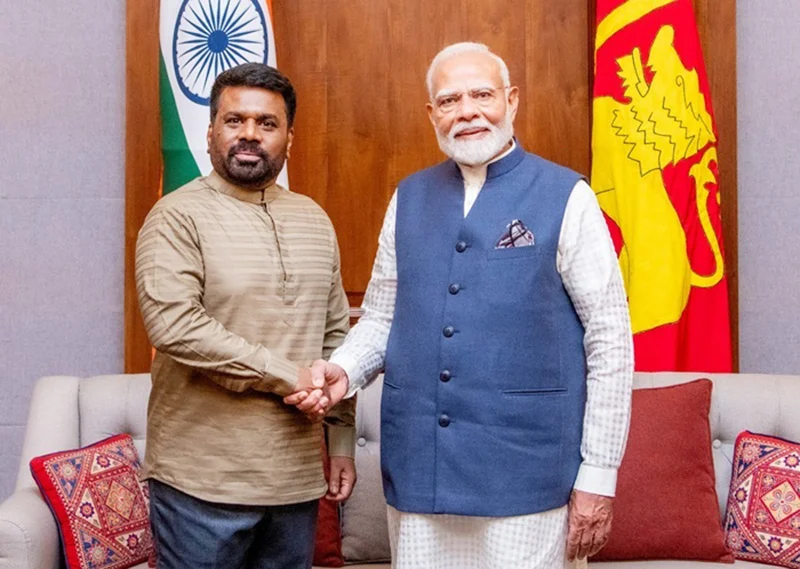
Indian Prime Minister Narendra Modi once again signaled the priority India places on Sri Lanka by swiftly dispatching a shipload of petrol following a telephone conversation with President Anura Kumara Dissanayake. The Indian Prime Minister’s gesture came at a cost to India, where there have been periodic supply constraints and regional imbalances in fuel distribution, even if not a countrywide shortage. Under Prime Minister Modi, India has demonstrated to Sri Lanka an abundance of goodwill, whether it be the USD 4 billion it extended in assistance to Sri Lanka when it faced international bankruptcy in 2022 or its support in the aftermath of the Ditwah cyclone disaster that affected large parts of the country four months ago. India’s assistance in 2022 was widely acknowledged as critical in stabilising Sri Lanka at a moment of acute crisis.
This record of assistance suggests that India sees Sri Lanka not merely as a neighbour but as a partner whose stability is in its own interest. In contrast to Sri Lanka’s roughly USD 90 billion economy, India’s USD 4,500 billion economy, growing at over 6 percent, underlines the vast asymmetry in economic scale and the importance of Sri Lanka engaging India. A study by the Germany-based Kiel Institute for the World Economy identifies Sri Lanka as the second most vulnerable country in the world to severe food price surges due to its heavy reliance on imported energy and fertilisers. Income per capita remains around the 2018 level after the economic collapse of 2022. The poverty level has risen sharply and includes a quarter of the population. These indicators underline the urgency of sustained economic recovery and the importance of external partnerships, including with India.
It is, however, important for Sri Lanka not to abdicate its own responsibilities for improving the lives of its people or become dependent and take this Indian assistance for granted. A long unresolved issue that Sri Lanka has been content to leave the burden to India concerns the approximately 90,000 Sri Lankan refugees who continue to live in India, many of them for over three decades. Only recently has a government leader, Minister Bimal Rathnayake, publicly acknowledged their existence and called on them to return. This is a reminder that even as Sri Lanka receives support, it must also take ownership of its own unfinished responsibilities.
Missing Investment
A missing factor in Sri Lanka’s economic development has long been the paucity of foreign investment. In the past this was due to political instability caused by internal conflict, weaknesses in the rule of law, and high levels of corruption. There are now significant improvements in this regard. There is now a window to attract investment from development partners, including India. In his discussions with President Dissanayake, Prime Minister Modi is reported to have referred to the British era oil storage tanks in Trincomalee. These were originally constructed to service the British naval fleet in the Indian Ocean. In 1987, under the Indo Lanka Peace Accord, Sri Lanka agreed to develop these tanks in partnership with India. A further agreement was signed in 2022 involving the Ceylon Petroleum Corporation and the Lanka Indian Oil Corporation to jointly develop the facility.
However, progress has been slow and the project remains only partially implemented. The value of these oil storage tanks has become clearer in the context of global energy uncertainty and tensions in the Middle East. Energy analysts have pointed out that strategic storage facilities can provide countries with greater resilience in times of supply disruption. The Trincomalee tanks could become a significant strategic asset not only for Sri Lanka but also for regional energy security. However, historical baggage continues to stand in the way of Sri Lanka’s deeper economic linkage with India. Both ancient and modern history shape perceptions on both sides.
The asymmetry in size and power between the two countries is a persistent concern within Sri Lanka. India is a regional power, while Sri Lanka is a small country. This imbalance creates both opportunities for partnership and anxieties about overdependence. The present government too has entered into economic and infrastructure agreements with India, but many of these have yet to move beyond initial stages. This has caused frustration to the Indian government, which sees its efforts to support Sri Lanka’s development as not being sufficiently appreciated or effectively utilised. From India’s perspective, delays and hesitation can appear as a lack of commitment. From Sri Lanka’s perspective, caution is often driven by domestic political sensitivities and concerns about sovereignty.
Power Imbalance
At the same time, global developments offer a cautionary lesson. The behaviour of major powers in the contemporary international system shows that states often act in their own interests, sometimes at the expense of smaller partners. What is being seen in the world today is that past friendships and commitments can be abandoned if a bigger and more powerful country can see an opportunity for itself. The plight of Denmark (Greenland) and Canada (51st state) give disturbing messages. Analysts in the field of International Relations frequently point out that power asymmetries shape outcomes in bilateral relations. As one widely cited observation by Lord Parlmeston, a 19th century prime minister of Great Britain is that “nations have no permanent friends or allies, they only have permanent interests.” While this may be an overly stark formulation, it captures an underlying reality that small states must navigate carefully.
For Sri Lanka, this means maintaining a balance. It needs to clearly acknowledge the partnership that India is offering in the area of economic development, as well as in education, connectivity, and technological advancement. India has extended scholarships, supported digital infrastructure, and promoted cross border links that can contribute to Sri Lanka’s long term growth. These are tangible benefits that should not be undervalued. At the same time, Sri Lanka needs to ensure that it does not become overly dependent on Indian largesse or drift into a position where it functions as an appendage of its much larger neighbour. Economic dependence can translate into political vulnerability if not carefully managed. The appropriate response is not to distance itself from India, but to broaden its partnerships. Engaging with a diverse range of countries and institutions can provide Sri Lanka with greater autonomy and resilience.
A hard headed assessment would recognise that India’s support is both genuine and interest driven. India has a clear stake in ensuring that Sri Lanka remains stable, prosperous, and aligned with its broader regional outlook. Sri Lanka needs to move forward with agreed projects such as the Trincomalee oil tanks, improve implementation capacity, and demonstrate reliability as a partner. This does not preclude it from actively seeking investment and cooperation from other partners in Asia and beyond. The path ahead is therefore one of balanced engagement. Sri Lanka can and should welcome India’s partnership while strengthening its own institutions, fulfilling its domestic responsibilities, and diversifying its external relations. This approach can transform a relationship shaped by asymmetry into one defined by mutual benefit and confidence.
by Jehan Perera
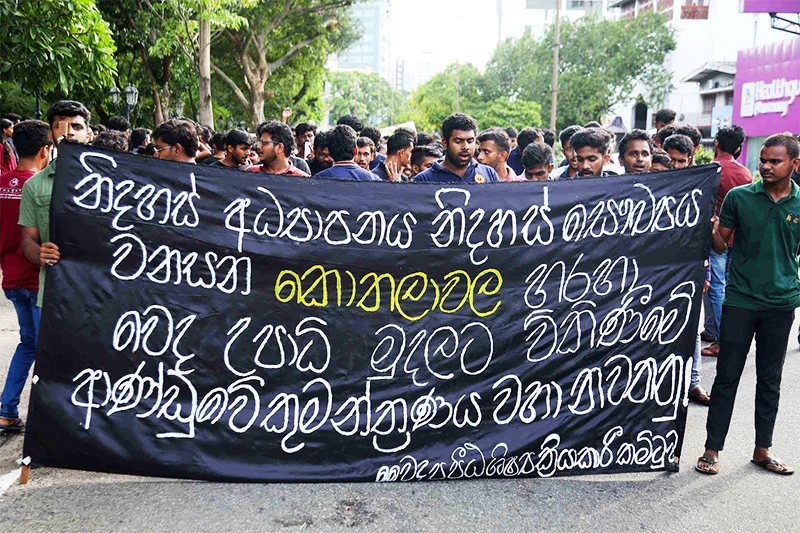
 This Article is formed from listening to university students from across the country for two research initiatives, one on academic freedom and another on higher education policy. In speaking with students, the fears they carry could not be ignored. Students navigate university education, with anxieties about their future and fears that they and their university education are inadequate, all while managing their families’ daily struggles. I explore students’ anxieties and the extent to which we, the public, and higher education policies must take responsibility for their experiences.
The Neoliberal University
For decades, universities have been transforming. Neoliberal policies, promoted by the World Bank, have reduced public education expenditure and weakened the State’s commitment to public institutions. These policies frame individuals as responsible for their success and failure, minimising structural realities, such as poverty and precarity. They instrumentalise education, treat students as “products” for a “competitive’ job market, while education markets feed on students’ insecurities. Students are made to feel lacking in “soft skills”, or skills seemingly necessary to navigate classed-corporate structures, and lacking in technical skills, or those needed to operate technologies used within the private sector.
Student activists and, sometimes teachers, have challenged this worldview, demanding State commitment to free education. Governments sometimes yield but also fear the consequences of student politics and have long waged campaigns to discredit student activism. It is within this context that students pursue education.
Portrayal of students
A Peradeniya student told me student-organised events must meet “high standards”, because of the negative public perceptions of university students. I understood what she meant; I had heard of our ‘ungrateful’, ‘wasteful’, ‘unemployable’, and ‘entitled’ students. The media and decades of government propaganda have reinforced these depictions.
About 10 years ago, when government moves to privatise higher education were strong, a corporate executive, complaining about traffic caused by “yet another useless protest”, was unable to explain why they protested. News coverage, I realised, framed these protests as public inconveniences, rarely addressing students’ demands. A prominent advocate, of neoliberal educational policy, reinforced this narrative, saying “state university students make up just 10 percent of their cohorts”, gesturing dismissively as if to say their concerns were insignificant. Such language belittles student activists and youth, renders them voiceless and allows their concerns, such as classed worldviews, and access barriers to and privatisation of education, to be easily dismissed.
It is in this environment that the conception of the useless university student, fighting for no reason, has developed. Students must carry this misrepresentation, irrespective of their own involvement in activism.
Not being good enough
Attacks on free higher education and the absence of meaningful reforms designed to address students’ problems, now weigh on students’ minds. Students question whether their education is relevant and current, pointing to outdated equipment, software, and curricula. University administrators acknowledge these constraints, which reflect Sri Lanka’s ranking as one of the lowest in the world for the public funding of education and higher education.
Rarely has the World Bank, so influential in driving educational policy, highlighted the public funding crisis and, instead, emphasises technological deficiencies, the public sector’s “monopoly” of higher education and limited private sector involvement. It downplays the reality that few families can privately afford such funding arrangements.
Students are also bombarded with fee-levying programmes, promising skills and access to jobs, preying on students’ insecurities. Many, while struggling to make ends meet, enrol in off-campus pricy professional courses, such as in accountancy, marketing, or English.
The arts student
Some students worry their education is too theoretical and “Arts-focused.” A student from the University of Colombo described having to justify her decision to pursue an arts degree. The public, she said, saw this as a waste of her time and the country’s resources. She courageously wore this identity, yet questioned if she was, in fact, unemployable as she was being led to believe.
She does not, however, draw on the fact that arts education has long been the “cheap” option that governments have offered when pressured to expand higher education. While arts education may need fewer laboratories and equipment, they require adequate investments on teachers, strong on content and pedagogy, to closely engage with individual students; aspects of arts education which have systematically been disregarded.
As access broadens, particularly in the arts, more students from marginalised backgrounds have entered universities; students who may feel alien in systems aligned with corporate interests. Thus, students quite different from the classed conception of the “employable graduate,” whose education has systematically been under-funded, graduate from arts programmes frustrated, diffident, and ill-suited for jobs to which they are expected to aspire.
The dysfunctional university
Students voice criticisms of their teachers, as myopic, unworldly, and unfair. Their perspective reflects the universities’ culture of hierarchy and its intolerance of difference, on the one hand, and the weak institutional structures on the other. They are symptoms of years of neglect and attempts by governments to delegitimise universities, to shed themselves of the burden of funding higher education through anti-public sector rhetoric.
Some students, marginalised for being anti-rag, women, or ethnic minorities, feel an added layer of burdens. Anti-rag students, or more often, students who do not submit to university hierarchies, whether enforced by students or staff, are ostracised, demeaned and sometimes subjected to violence. Students unable to speak the institution’s dominant language face inadequate institutional support. Women describe being ignored and silenced in student union activities and left out of student leadership positions.
Furthermore, quality assurance processes rarely prioritise academic freedom or students’ right to exist as they wish, except when they complement the process of creating a desirable graduate for the job market. These processes focus on moulding professionals and technicians, as one would form clay, disregarding students’ anxieties from being alienated from themselves by such efforts.
Problems at home
Beyond the campus, parents face debt, illness, and precarious work. Students are acutely aware of these struggles. Some describe parents collapsing from the strain and sometimes leaving them to carry the family’s difficulties. A student described feeling guilty for being at the University while his family struggled to survive. To ease the burden on their families, students earn incomes by providing tuition, delivering food, and carrying out microbusinesses.
Tied to their concerns over having to depend on their families, is their fear of being “unemployable”, a term that places the blame of unemployment on students’ skill deficiencies. Little in this discourse connects the lack of decent work and jobs for them and their parents to the weak economy and job markets into which successive batches of graduates must transition. Much of the available jobs in the country are those that require little in the form of education, and those, too do little to provide a living wage. Students must, therefore, compete for a limited number and breadth of frankly not very desirable work. Yet, it is they who must feel the weight of unemployability.
Committing to students
Universities frequently fail to recognise students’ worries. Instead, we, coopt neoliberal discourses, telling students to become more marketable and competitive, do and learn more, be confident, improve English, learn to inhabit those classed spaces with ease; often without the support that should accompany these messages.
We expect these students, insecure and anxious, to think critically, and demonstrate curiosity and higher-order analyses. When they collapse under the pressure, universities respond by providing mental health services. While such services are needed, they risk individualising and pathologising systemic problems. They represent yet again the inherent flaws with solutions that emerge from neoliberal ideological positions that treat individuals as the source of all success and failure. Such perspectives are likely to reinforce students’ anxieties, rather than address them.
As Sri Lanka revisits education policy reforms, there is an opportunity to change our framings of education and to recognise these concerns of students as central to any policy. The state must renew its commitment to free education and move from the neoliberal logic that has guided successive reform efforts; we, as the public, must restore our hope and expectations from free education. Education across disciplines, the arts, as well as STEM (science, technology, engineering and mathematics), must be strengthened. Students’ freedom to inhabit university spaces as they wish, must be respected and protected by institutions. Education policies must be tied to broader economic and labour reforms that ensure families can safely earn a living wage and graduates can access a rich range of decent meaningful work.
(Shamala Kumar teaches at the University of Peradeniya)
Kuppi is a politics and pedagogy happening on the margins of the lecture hall that parodies, subverts, and simultaneously reaffirms social hierarchies.
by Shamala Kumar

 Mihiri Chethana Gunawardena is certainly on the right track, in the music scene.
The plus factor, where Mihiri is concerned, is that she has music deeply rooted in her upbringing, and is now doing her thing in the Maldives.
Her father, Clifton Gunawardena, was a student of the legendary Premasiri Kemadasa and former rhythm guitarist of the Super 7 band.
Mihiri took to music, after her higher studies, and her first performance was with her father, while employed.

Mihiri Chethana Gunawardena
After eight years of balancing both worlds – working and music – she chose to follow her true calling and embraced music as her full-time profession.
Over the years, Mihiri has worked with some of the top bands in the local scene, including D Major, C Plus from Negombo, Heat with Aubrey, Mirage, D Zone Warehouse Project and Freeze.
In fact, she even put together her own band, Faith, in 2017, performing at numerous events, and weddings, before the Covid pandemic paused their journey.
What’s more, her singing career has taken her across borders –performing twice in Dhaka, Bangladesh, with the late Anil Bharathi and the late Roney Leitch, and multiple times in the Maldives, including a special New Year’s Eve performance with D Major.

In the Maldives, on a one-month contract
Last year, Mihiri was in Dubai, along with the group Knights, for the Ananda UAE 2025 dance.
She continues to grow as a solo artiste, now working closely with the renowned Wildfire guitarist Derek Wikramanayake, and performing, as a freelance musician, travelling around the world.
Right now, she is in the Maldives, on a one-month contract, marking a new chapter in her evolution as a solo vocalist.
On her return, she says, she hopes to create fresh cover songs and original music for her fans.
Mihiri believes in spreading joy and positivity through her singing, and peace and happiness for everyone around her, and for the world, through music.

Steps are taken to accelerate the recovery efforts following Cyclone Ditwah despite Global Economic Challenges

Qalandars fine Afridi for violating security protocols

Sooryavanshi, Archer, Burger demolish Chennai Super Kings

Showers may occur at a few places in the Western and Sabaragamuwa provinces and in Galle and Matara districts after 2.00 pm

Burning of low-grade coal at N’cholai plant increases pollution: Parliament

Tariff shock from 01 April as power costs climb across the board

‘Dates have the highest sugar content to fight Coronavirus’

Sunday Island 27 December – Headlines

#SundayIsland 17th December – Headlines

Sunday Island – 28th March

Sunday Island Headlines – 21 March

Sunday Island – 21st February – Headlines
-

 News6 days ago
Senior citizens above 70 years to receive March allowances on Thursday (26)
-

 Features3 days ago
A World Order in Crisis: War, Power, and Resistance
-

 News4 days ago
Energy Minister indicted on corruption charges ahead of no-faith motion against him
-

 News5 days ago
US dodges question on AKD’s claim SL denied permission for military aircraft to land
-

 Business5 days ago
Dialog Unveils Dialog Play Mini with Netflix and Apple TV
-

 News6 days ago
CEB Engineers warn public to be prepared for power cuts after New Year
-

 Sports4 days ago
SLC to hold EGM in April
-
 Latest News5 days ago
A strong Technical and Vocational Education and Training (TVET) system equips individuals with practical, relevant, and future-oriented skills helping to innovate responsibly towards a greener and sustainable future – PM