
News
Media, Civil Society and Trade Union Collective calls for defeating repressive laws

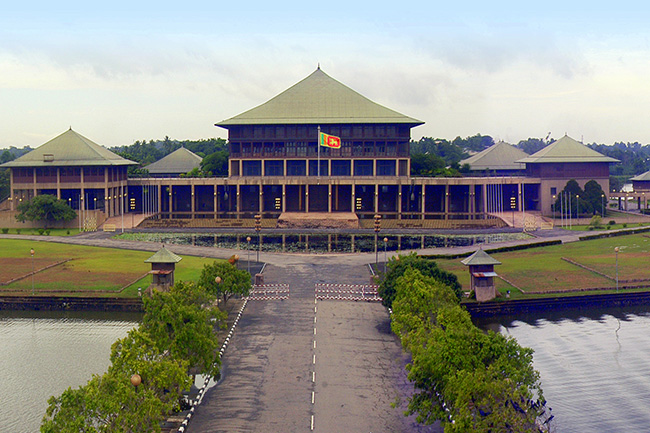
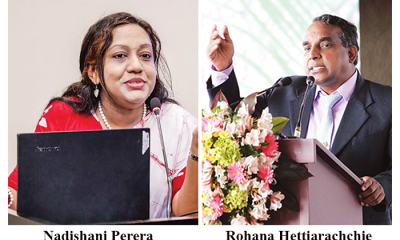
The Media, Civil Society and Trade Union Collective to Rise against Oppressive Laws has called upon the public to join forces to defeat the government’s attempt to suppress democratic rights by restricting freedom of speech and expression of the people. The government’s plan to pass the Online Safety Bill next week, tabling the Anti-Terrorism Bill in Parliament and other repressive demonstrate that attempts are being made to suppress the people’s right to expression as a narrow effort with the aim of winning the upcoming elections at any cost, says the Media, Civil Society and Trade Union Collective:
We, as citizens who are expecting a good and profound change in the socio-political system, express our grave concern about the attempts by the government led by President Ranil Wickremesinghe to take the country into a dictatorship by bringing repressive laws restricting the public’s right to expression, right to organize and space for civil activities quite contrary to the basic values of democracy.
The government’s plan to pass the Online Safety Bill next week, tabling the Anti-Terrorism Bill in Parliament and other repressive laws show us that attempts are being made to suppress the public’s right to expression as a narrow effort with the aim of winning the upcoming elections at any cost.
We, as signatories to this statement as citizens, civil activists and trade unionists that hold the sovereignty of the country, firmly believe a President who was not elected through a public mandate and a Parliament consisting of rejected public representatives does not have a moral right to pass repressive legislation and impose new laws.
The forthcoming election is crucial for the country as it’s going to be held following the people’s struggle, which was triggered due to unbearable pressure mounted on the public, to demand a system change and democratic governance that is not corrupt and people-friendly. It is essential to ensure that the next election is free and fair and provide a public platform for debate and discussion without any censorship to access to information, which is accurate, balanced, impartial and non-partisan. All opportunities should be guaranteed for the ruling party as well as for the opposition parties to inform their ideas and policies to the public.
Laws that are silencing and terrifying citizens are causing harm to the people’s friendly environment and democracy. A country which has been brought to the brink of destruction by some politicians and corrupt officials for a long time no longer needs dictatorial rulers sitting above the law. Therefore, as a citizens’ collective force, we urge the President and the government, Opposition and all political parties representing the parliament to create a democratic environment.
The Online Safety Bill presented by the government was challenged before the Supreme Court by 45 petitioners. At the outset of the hearing, the Attorney General’s Department submitted over 32 amendments to the Bill. Following the hearing, the Supreme Court determined that 31 clauses needed to be amended.
The Asian Internet Coalition, consisting of world-renowned companies, pointed out to the subject minister in two long letters; one before the Supreme Court determination and another followed by, that the principles of international regulation had been violated by the Bill. The validity of the Bill was completely annulled following the Supreme Court ruling. A civilized government should have thrown it into the dustbin. However, the government, led by the President has made a shameful attempt to pass the Bill with amendments by presenting it to the parliament again on 23 January.
The Attorney General’s Department was disgraced on the first day itself as the Attorney General had to propose amendments to the Bill when it was challenged before the Supreme Court. It indicated that the AG had cleared and presented the draft bill, prepared by someone else without doing a proper study of it. In our opinion as a collective, it is that the Attorney General should resign in order to compensate for the disgrace caused to the department. Our stand is that the government should immediately withdraw this defect Bill without causing further disgrace to the country internationally.
We believe that there is no requirement for a draft bill to control the internet as the country has enough legislation in place to counter crimes occurring on the internet.
Legal experts have pointed out that the amendments recommended by the Supreme Court to the Online Safety Bill were not taken appropriately by the Public Security Minister for the second reading of the Bill in the parliament. They are of the view that it’s a serious situation. We urge the government to immediately withdraw the Bill without being presented for the second reading. If the government still wants a Bill, it can be decided upon through a lengthy consultation with stakeholders as requested by the Asian Internet Coalition, embassies and the United Nations.
Acting Inspector General of Police Deshabandu Tennakoon was convicted by the Supreme Court for torture and cruel treatment. However, the President and the government continue to keep him in the position of ignoring and undermining the judiciary, a basic pillar of sovereignty. This shows the government’s desire to move towards a dictatorship. Meanwhile, the government is also attempting to bring a single act named the Employment Bill replacing 13 acts including the Trade Unions Ordinance, Industry Dispute Act and Wages Council Ordinance affecting over 3.6 million private sector employees and without reaching an agreement with trade unions.
We recognize it as another sign of the dictatorship through the various repressive actions by the government against trade unions and civil society against their right to organize and the Bill on Non-Governmental Organizations. We demand the government to withdraw all these Bills immediately and enter a consultation process with stakeholders.
If the government still attempts to present the bills by ignoring all these factors, we respectfully urge the progressive MPs of the ruling party as well as all MPs in the opposition to defeat them at the Second Reading. We emphasize as a citizens’ collective; we won’t hesitate to take all measures through democratic means to defeat all the MPs who will vote in favor of the Bills without responding to people’s voice.
We condemn the President’s attempt to become a dictator using executive powers amidst all these developments. We urge all political parties and also propose all public representatives to commit to building a democratic country where all citizens can live with respect and dignity by abolishing the executive presidential system before the next election or in a very short period of time.
The following organisations have signed the statement in addition to about 60 prominent persons including university teachers, artistes, journalists and civil society activists.: Free Media Movement, Sri Lanka Working Journalists’ Association, Young Journalists’ Association of Sri Lanka, Media Law Forum, Law and Society Trust, National Cooperative Development Fund, Hashtag Generation, Association of Health Professionals, Sri Lanka Postal and Telecommunication Service Union, All Ceylon Management Service Officers’ Union, South Asia Free Media Association, Ceylon Teachers’ Union, Ceylon Trade Union Federation, United Postal Trade Union Front.
Savisthri National Women’s Moment, Uva Wellassa Women’s Organization, Movement for the Defence of Democratic Rights (MDDR), Free Media Movement Tarde Union (FMMTU) , Ceylon Teachers’ Union, Moment for Land and Agriculture Reform (MONLAR), National Fisheries Solidarity Movement (NAFSO), Shramabhimani Center, Dabidu Collective, Women’s Action for Social Justice (WASJ), United Federation of Labour (UFL), Federation of Media Employees Trade Unions (FMETU), Muslim Media Forum, Jaffna Press Club, Tamil Women Journalists Association, Tamil Media Alliance, Transparency International Sri Lanka, Free Trade Zone Union, South Asian Women in Media Network- Sri Lanka, Ceylon Bank Employees Union (CBEU), South Asian Free Media Association, People’s Commission of Women in Sri Lanka, The Voice of Truth, Stand Up Movement in Sri Lanka, Trade Union to Upliftment of Sri Lanka Railway, Freedom Trade Union Center (FTUC), Prabha Abhilasha Network, People’s Alliance for Right to Land (PARL), Voice of the plantation people organization (VoPP), Sri Lanka All Telecommunication Employees’ Union, Unite – Trade Union and Mass Organization Collective, Media.LK, RED Organization, Nature Foundation, Media Pro-Tech, PEN Sri Lanka, National Movement for Social Justice, Standup Workers Union, Asian Media and Cultural Association, Women Center Sri Lanka, Protect Union and Human Rights Documentation Center (INFORM).








… ex-Public Security Minister says lives of MP and bodyguard could have been saved
The Gampaha High Court Trial-at-Bar yesterday (11) sentenced 12 persons to death by hanging over the May 9, 2022, killing of former Polonnaruwa District SLPP MP Amarakeerthi Athukorala and his police bodyguard. They were among altogether 39 persons tried by the High Court for the double murder. Of the remaining accused, four persons were handed six-month sentences, suspended for five years, and 23 others acquitted by the Gampaha High Court Trial-at-Bar, consisting of High Court Judges Sahan Mapa Bandara Rashmi Singappuli and A.D. Ruwan Pathirana.
Of the 12 sentenced to death, one continues to evade the law.
The verdict was to be announced on January 14.
Sri Lanka suspended implementation of the death penalty in 1976. The EU has repeatedly warned that resumption of judicial executions would result in consequences.
The new entrant to Parliament, and his bodyguard, were lynched by a ‘Aragalaya’ mob, in broad daylight. They were on their way back to Polonnaruwa when the gang intercepted the MP’s car, in the Nittambuwa town, during violence unleashed in the aftermath of SLPP goons’ attack on those camping at the Gotagohome site at Galle Face.
Footage secured from a nearby CCTV camera showed MP Amarakeerthi Athukorala fleeing the scene with his security officer, who was armed with a gun. Dozens of suspects had been subsequently arrested on several occasions on suspicion of involvement in the MP’s murder. The MP and police officer were killed in a garment store where they took refuge.
Earlier, the case caused major controversy over the Gampaha High Court Trial-at-Bar granting bail to all suspects. The Attorney General appealed to the Supreme Court (SC) to cancel the bail granted by the High Court Trial-at-Bar. The AG argued that releasing the accused on bail would impede a fair trial. The AG asked that the SC cancel the bail order and requested that the accused be placed in remand custody till the conclusion of the trial.
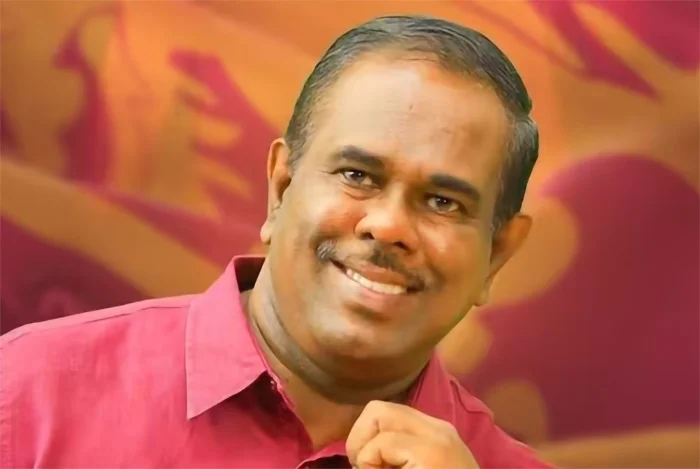
One-time Law and Order Minister Rear Admiral (retd) Sarath Weerasekera told The Island that the lives of the parliamentarian and his police bodyguard could have been saved if the military swiftly responded to the then developing situation. Former Colombo District MP said that he told Parliament that the Army, in spite of having troops at Nittambuwa, didn’t intervene. The powers that be never inquired into the lapses on the part of those responsible for maintaining law and order, the ex-Minister said, alleging that successive governments conveniently neglected that responsibility.
by Shamindra Ferdinando
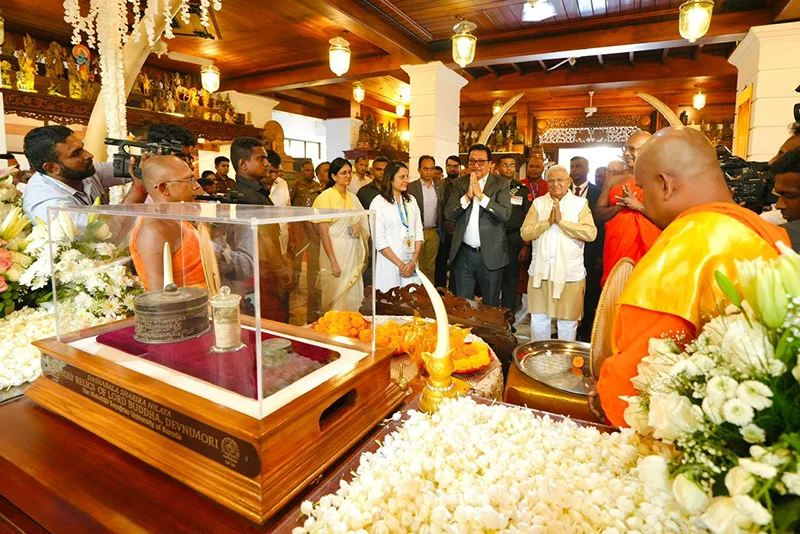
The Devnimori Relics of Lord Buddha, brought to Sri Lanka on February 04, 2026, departed for India on February 11, 2026, after the successful conclusion of the Exposition at the Gangaramaya Temple in Colombo. The Relics were accompanied by the Governor of Madhya Pradesh Mangubhai C. Patel, and Deputy Chief Minister of Arunachal Pradesh, Chowna Mein, on their return journey.
At the ceremonial departure, at the Bandaranaike International Airport, Minister of Buddhasasana, Religious and Cultural Affairs (Dr.) Hiniduma Sunil Senevi, Deputy Minister of Buddhasasana, Religious and Cultural Affairs Gamagedara Dissanayake, and High Commissioner of India Santosh Jha, were present to see off the Buddha Relics.
IHC spokesperson: ” During the visit, the delegation led by Governor of Madhya Pradesh, and Deputy Chief Minister of Arunachal Pradesh met Minister of Foreign Affairs, Foreign Employment and Tourism Vijitha Herath, Deputy Minister of Environment Anton Jayakody, and Governor of North Western Province Tissa Kumarasiri Warnasuriya. In addition, the dignitaries interacted with members of the Indian-origin community in Sri Lanka.
The Exposition was inaugurated by President Anura Kumara Dissanayaka from the Sri Lankan side, and Governor of Gujarat Acharya Devvrat, and Deputy Chief Minister of Gujarat Harsh Sanghavi from the Indian side, in the presence of the Chief Incumbent of the Gangaramaya Temple Ven. Dr. Kirinde Assaji Thera at the Gangaramaya Temple, Colombo, on February 04, 2026. The week-long Exposition saw over a million devotees paying their respects. Prime Minister of Sri Lanka (Dr.) Harini Amarasuriya and several Cabinet Ministers, as well as the Speaker, the Leader of Opposition, former Presidents and numerous other Members of Parliament paid their respects during the course of the Exposition.
The Exposition marked the first public veneration of these Holy Relics outside of India. Complementing the exposition, two exhibitions titled “Unearthing the Sacred Piprahwa” and “Sacred Relic and Cultural Engagement of Contemporary India” were also held to showcase the shared Buddhist heritage of India and Sri Lanka.
The Exposition was announced by Prime Minister Narendra Modi during his State Visit to Sri Lanka in April 2025. The Exposition further reinforced the spiritual and cultural linkages between the two civilizational partners. India remains committed to deepening the linkages between both countries through continued bilateral initiatives and regular exchanges between the monastic and scholarly communities.”
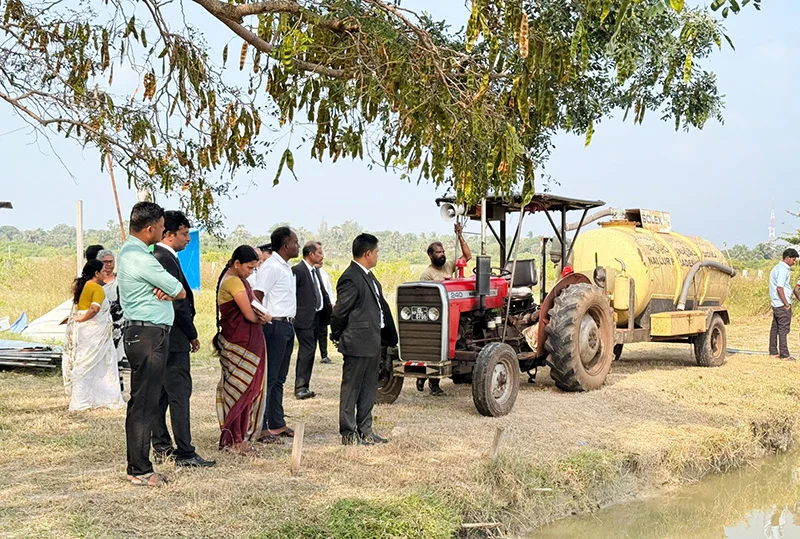
Action was taken on Monday (9) to drain rainwater from the Chemmani mass graves as preparations continued for the next phase of excavation, Tamil Guardian has reported.
During the first and second phases of excavation at Chemmani, a total of 240 sets of human skeletal remains were identified. Of these, 239 sets have so far been exhumed under court supervision.
Although funds had already been allocated and preliminary arrangements were in place to begin the third phase of excavation, persistent heavy rainfall, in Jaffna, since November last year, resulted in rainwater stagnating within the burial site, bringing the process to a halt.
In response, steps were taken on Monday to remove the accumulated water with the assistance of the Nallur Pradeshiya Sabha. However, despite the drainage, the site remains heavily waterlogged and muddy, making immediate excavation unsafe, Tamil Guardian reported.
As a result, it has been decided that a determination on when the next phase of excavation can commence will be made on 16 March, when the case is due to be taken up again. The matter has been adjourned to that date.
The drainage operation was inspected on site by a team that included Jaffna Magistrate S. Lenin Kumar, Judicial Medical Officer Sellaiyah Pranavan, and Attorneys-at-Law Niranjan and G. Rajitha.
Tamil Guardian disclosed that funds allocated last year by the Ministry of Justice for the third phase of excavation have lapsed and been returned, as the work could not proceed within the allocated timeframe. As a result, a fresh budget proposal must now be submitted for the current year in order to secure the necessary funding.
The Judicial Medical Officer has taken steps to submit a new cost estimate to the court, so that the excavation process can resume once conditions at the site permit.

Namibia look to make a splash with India battling injury and illness

Powerful cyclone kills at least 31 as it tears through Madagascar port

US House votes to overturn Trump’s tariffs on Canada

Buoyed by strong support, Paudel’s Nepal search for two points against Italy

Bangladesh election 2026: Polls to open amid heavy security

Sri Lanka, minus Hasaranga, take on Oman at bogey venue

‘Dates have the highest sugar content to fight Coronavirus’

Sunday Island 27 December – Headlines

#SundayIsland 17th December – Headlines

Sunday Island – 28th March

Sunday Island Headlines – 21 March

Sunday Island – 21st February – Headlines
-
 Features4 days ago
My experience in turning around the Merchant Bank of Sri Lanka (MBSL) – Episode 3
-

 Business5 days ago
Zone24x7 enters 2026 with strong momentum, reinforcing its role as an enterprise AI and automation partner
-

 Business4 days ago
Remotely conducted Business Forum in Paris attracts reputed French companies
-
 Business4 days ago
Four runs, a thousand dreams: How a small-town school bowled its way into the record books
-
 Business4 days ago
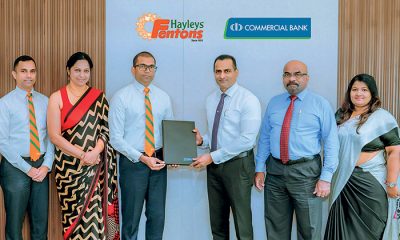
ComBank and Hayleys Mobility redefine sustainable mobility with flexible leasing solutions
-

 Business1 day ago
Autodoc 360 relocates to reinforce commitment to premium auto care
-
 Business5 days ago
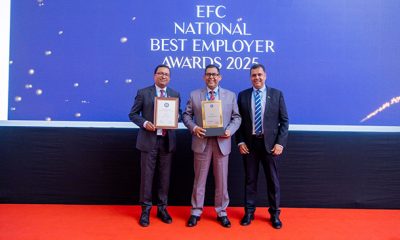
HNB recognized among Top 10 Best Employers of 2025 at the EFC National Best Employer Awards
-

 Business5 days ago
GREAT 2025–2030: Sri Lanka’s Green ambition meets a grid reality check