
Features
Mastering Hospitality Promotions

CONFESSIONS OF A GLOBAL GYPSY
Dr. Chandana (Chandi) Jayawardena DPhil
President – Chandi J. Associates Inc. Consulting, Canada
Founder & Administrator – Global Hospitality Forum
chandij@sympatico.ca
Resorts Vs. Business Hotels – Key Adjustments
Two useful lessons I learnt early in my hotel career were ‘Creating a Buzz’ for the operation/department/hotel I was leading and ‘Making a Name’ for myself as an innovative hospitality professional. In addition, I learnt that it is essential to quickly understand the local culture and adjust the manner in which I communicate to blend in with the key market segments important to the business.
As Colombo was my birth place, it was easy for me to do this at Le Galadari Meridien Hotel in Colombo. However, predominantly as a resort hotelier up to 1986, I was new to the five-star market in Colombo. I learnt a few things quickly with an aim to blend in well for success.
Unlike smaller resort hotels managed by local companies, operating large five-star business hotels managed by international hotel corporations were usually complex. In terms of committees, large numbers of meetings, detailed reports and lengthy budgeting processes, management of internationally branded hotels was more challenging and time consuming. I always believed that managing by walking around and being seen in action would be essential for hospitality managers. At Le Galadari Meridien, I had to balance these two aspects to be productive.
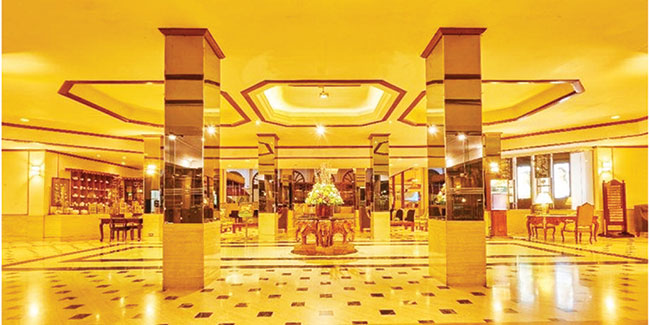
I made sure that I did all my meetings and office work during non-busy times of the banqueting, restaurants, bars and the night club operations. That allowed me to spend extra time interacting with our customers. I found the elegant lobby of Le Galadari Meridien a wonderful place for me to do ‘Meet and Greet’ and valuable Public Relations (PR) with our in-house guests, as well as, with non-resident customers.
Self-Marketing
Having done ‘Creating a Buzz’ and ‘Making a Name’ fairly effectively at Le Galadari Meridien, I was invited to give a guest lecture on ‘Self Marketing and Career Planning’ to the fourth-year management students of the Ceylon Hotel School.
At the end of my lecture, I simply suggested to the students, to ask themselves three questions as the basis for planning their careers:
1. Where am I? (Current position, personal and professional strengths and weaknesses);
2. Where do I want to go? (Ideal future positions I would like to target);
3. How do I get there? (Action plan for career development to reach the identified goal).
When I said to that group of students that on January 1 every year, I ask myself these three questions and then do a one-page revised career plan for seven years, they were surprised. This is something I continued to do annually like a rolling plan until I reached the age of 58, and set up my consulting firm.
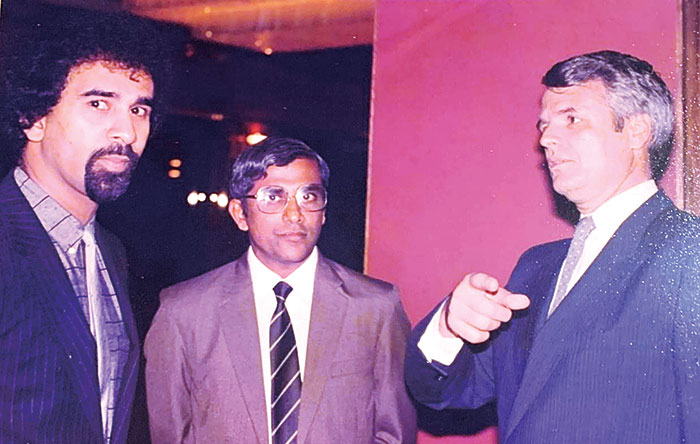
Within six months of joining Le Galadari Meridien, towards the end of the year 1986, I was confirmed as the Food & Beverage Manager. After completing my performance review and before confirming my promotion, the General Manager, Jean-Pierre Kaspar took me to lunch at a competitor hotel – Ramada Renaissance. “Chandi, all Food & Beverage Managers of Le Meridien around the world are French. Are you 100% sure that you can do this job?” he asked. I said, “Just look at the Profit and Loss account. In the last six months, we have doubled the Food and Beverage departmental profits since I succeeded a Frenchman! You have no choice, but to confirm me.” He laughed and handed over my new letter of appointment.
Another six months later I was promoted again, as the Director of Food & Beverage, a job title unique at that time for any Sri Lankan hotelier. After promoting me, Mr. Kaspar asked me, “What is your career goal in seven years’ time?” Having already done my rolling seven-year plan, I boldly said that, “I would like to succeed you as the General Manager of Le Galadari Meridien!”. After a pause he said, “Chandi, that’s a realistic goal. I think that you could do that, but let’s make a plan.”
Over lunch, Mr. Kaspar wrote a plan for me on a paper napkin and gave it to me. He suggested that I work as the Director of Food & Beverage of Le Galadari Meridien for two more years. Then ideally, move to a Le Meridien in the Far East or the Middle East for three years at the same level, but on an expatriate contract. “Then you should aim to come back here as the number two or Executive Assistant Manager for two years. In seven years from today, at age 39, it would be a good time for you to get promoted as a Le Meridien General Manager.” We shook hands.
After laying out a very attractive career plan for me, Mr. Kaspar said: “First, let’s work on the next steps. In the coming year I will arrange for you to shadow the Directors of Food & Beverage of two busy Le Meridien hotels in Singapore. After that, I will try my best to fully sponsor you to attend Le Meridien Management Development program at Meridien Management Institute in France, followed by two management observer placements in Paris and London.”
All those steps worked out as per our plan, for which I am most grateful to Mr. Kaspar. To ensure career progress, in addition to ambition, a good plan and hard work, one needs great mentors and some luck. “You market yourself very well!” Mr. Kaspar remarked. He then said, “Next week the new Regional Vice President for Le Meridien, Mr. Ducray will be visiting us for the first time. He is my immediate boss. You need to impress him.” Mr. Kaspar planted some seeds in my mind. I did exactly that and my official trip to Singapore was confirmed.
Additional Duties – Advertising (Ad) and Promotions
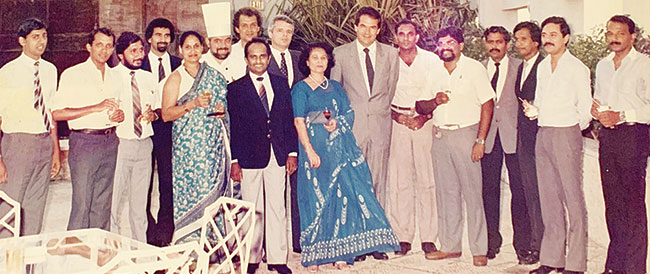
In 1987, I told Mr. Kaspar that I had studied Marketing as a part of my graduate studies in Sri Lanka and England, and I now wished to embark on studies to graduate from the prestigious Chartered Institute of Marketing (CIM), in the United Kingdom. He then delegated a couple of his duties to me. I was put in charge of leading all local media ads and handling special promotions. In performing these new tasks, I coordinated with the Public Relations (PR) Manager and the Director of Sales.
I enjoyed these new duties outside the scope of the Food and Beverage Division. On behalf of the General Manager, I chaired the weekly, advertising meetings with the hotel’s advertising agency – Creative Services Limited — led by a childhood friend and neighbour from Bambalapitiya Flats, Herman Gunasekara. His uncle, Anandatissa de Alwis, who was an ad and promotions guru, had founded this agency. I also worked with them to produce the monthly, promotional newsletter of the hotel and the colourful, event promotional posters.
I was given a free rein and I generously promoted Food and Beverage products and events to our local customers. The first, festive season events I led in organizing at Le Galadari Meridien, including three New Year’s Eve dances, were highly successful and profitable. I was able to combine three of my skills (Food & Beverage Management, Marketing and Art) into this task. I used the Le Meridien ad manual with hundreds of beautiful illustrations done by artist Ken Maryanski.
The Magic of Ken Maryanski
Le Meridien launched the worldwide career of famous Artist, Ken Maryanski by choosing his instantly, identifiable Gallic images. After graduating from the New England School of Art, he began his career as an Art director and designer, while doing occasional posters for Le Meridien Boston. According to the artist, it took the unique vision, a refreshing spirit, and the French personality of Le Meridien, to fine-tune his style. Maryanski’s work has been showcased in Vanity Fair, The New Yorker, The Wall Street Journal and several other English, French and German publications. Over the years Ken Maryanski had visited most of Le Meridien properties around the world, to find creative inspirations for new artwork.
Ten years later, by the time I opened Le Meridien Jamaica Pegasus Hotel as its General Manager, Maryanski’s amusing caricatures had clearly become the trademark image for all Le Meridien hotels around the world. In 1997, Le Meridien head office in Paris initiated a series of travelling exhibitions of Ken Maryanski’s artwork, in selected five-star hotels. I was happy to organize Le Meridien – Ken Maryanski art exhibition in Jamaica, as a part of the 25th anniversary celebrations of Le Meridien. As a semi-professional visual artist and a former curator of an art gallery in South America, a few years prior to that, I took a personal interest in mounting this exhibition in Kingston, Jamaica.
Although I never had the privilege of meeting Ken Maryanski, when he passed away in early 2022, I was saddened. Since 1987, when I first used his illustrations for ads of Le Galadari Meridien, I felt a creative connection to him. I considered him a creative genius, and I was an ardent fan of his work. Ken’s quick wit, sarcasm and complex imagination, will live on through his art.
New Professional Focus on Marketing
My involvement in ads, PR and promotions during my time at Le Galadari Meridien, opened several new doors for me. Since I first did an Interactive Marketing course at the University of Colombo in 1981, taught by one of the greatest Marketers in Sri Lanka – Mr. Stanley Jayawardena (then Chairman of Unilever, Sri Lanka), I was fascinated with the concept of Marketing. That inspired me to study Marketing further with the Chartered Institute of Marketing (CIM) in the United Kingdom and I eventually became a graduate of the CIM.
Although, I loved Ken Maryanski illustrations, when Le Meridien produced a detailed ad manual, I had a few challenges. The hotel company insisted that all their hotels around the world use similar ads when promoting events such as Christmas, New Year’s Eve, Valentine’s Day, Mother’s Day etc. At that point, I began having doubts that it was a good idea.
I felt it was clever to maintain a broad theme for the corporate image. However, hoteliers operating Le Meridien hotels in different parts of the world should be given some flexibility in ads to promote events popular with locals. As different market segments have different likes, dislikes, attitudes, beliefs, cultures and customs, flexibility in ads and communication is important. When I studied advanced, hotel management at Meridien Management Institut in France, I debated this point. Although our French professors did not agree with me, the participating managers from around the world agreed with my viewpoint.
Those discussions I had in France sparked my interest in further investigating this aspect. I embarked for a MPhil/PhD in International Hotel Marketing at the University of Surrey, in England, in 1990. The working title of my doctoral thesis was ‘Effectiveness of Advertising – An Analysis in the context of International Five-star Hotels’.
In later years, I taught Hospitality and Tourism Marketing as a Professor/Visiting Professor in England, Sri Lanka, Switzerland, Guyana and Canada. In Jamaica, at the University of the West Indies, as a Senior Lecturer in Tourism Management, I coordinated Marketing courses for over 2,000 students in their Department of Management Studies.
When I migrated to Canada, I worked as the Vice President – Market Development of the Canadian School of Management and as the International Vice President of the parent company – IMCA Socrates Limited in England. My long journey in promotions, sales and marketing stemmed from that initial, practical experience at Le Galadari Meridien in the late 1980s. Thank you Mr. Kaspar and Le Meridien!
Promoting Banquets
I was fortunate to get opportunities to lead a series of exciting and large banquets at Le Galadari Meridien Hotel. I led a large, outside catering event when the new building of Lake House was opened by the President of Sri Lanka J. R. Jayewardene in 1987. Soon after that event, I received a very, nice letter from Mr. Kaspar.
He stated, “I would like to thank you, personally, for having successfully organized the outside catering at Lake House. It has been brought to my attention that this is the first outside catering for over 1,000 persons handled by our hotel since its inception. Congratulations for your accomplishment! I am proud to have you on my team!” I was motivated by that letter and issued letters with the same ending sentence, to members of my management teams in the five hotels I managed in later years.
In 1987, a new trend in Colombo was to have large coffee mornings as fund raisers. These were cocktail reception type events, but with iced coffee, snacks and sweets, mainly for ladies who walked around the booths of many sponsors. We made a name as an ideal venue for coffee mornings for over 1,000 participants. Other hotels could not match our package, which included special rates by top bands we had under contract at Le Meridien.
We also made good profits from large Biriyani (popular Mughlai cuisine) lunch and dinner weddings for rich Muslim families. As the hotel was owned by a Middle Eastern family – Galadari, by contract we had to serve halal food and it was prohibited to serve pork, ham or bacon. Although that was a challenge in our menu planning for an international clientele, I started to publicize it in order to get more bookings for Biriyani weddings from Muslim families.
We also allowed free tasting of the Biryani menus for ten, close family members about a month before each wedding and before the full payment was made. That gesture was popular. We were willing to change the dishes slightly to suit the culinary traditions of each family. Our Banquet Chef understood the importance of being flexible to please the customers.
“How many people were invited by my cousin Hameed for his son’s wedding that he hosted at the Bougainville Ballroom, last month?” a rich gem merchant asked me and Ananada Warakawa, the new Banquet Manager I recruited. I remembered the number as 1,050 but shrewdly, I rounded up the figure. I knew that holding the largest wedding was a status symbol for some competitive rich families. “Mr. Ahamed, your cousin hosted nearly 1,100” I said. He looked at his son and then said, “We need to do better than that. Mr. Jayawardena, can you cater for 1,200?” We agreed, but in addition to the ballroom, we had to use all private dining rooms closer to the ballroom.
The next wedding was booked for 1,250 persons and Ananada Warakawa was getting very nervous. Eventually, when I pushed him to take a booking for a Biriyani dinner wedding of 1,500 persons, he told me, “Boss, even if we use all corridors between the ballroom and private dining rooms, we cannot accommodate that number!” I said, “Don’t worry. I have already spoken with Mr. Chandra Mohotti, the Director of Rooms Division, and my flexible peer. He is allowing us to use a section of the hotel lobby for the wedding. We have to cover that section well with screens, so that our room guests will not be disturbed while checking in.”
We broke the all-time record with a wedding of 1,500 and the food and service were well coordinated. However, Mr. Kaspar was very unhappy when he saw an overflow of 150 people eating Biryani in a section of the lobby. “Chandi, never do that again. The lobby is out of bounds for banquets! Remember, we run a five-star French hotel!” he said. “OK, boss!” I agreed with him and stopped trying to set new banquet records in Colombo!



 Going forward, it is hoped that a reported ceasefire agreement between the US and Iran would provide a basis for a degree of stability in the Middle East and pave the way for substantive peace talks between the powers concerned. The world is compelled to fall back on hope because there is never knowing when President Donald Trump would change his mind and plans on matters of the first importance. So erratic has he been.
Yet, confusion abounds on who has agreed to what. The US President is on record that a number of conditions put forward by him to Iran to deescalate tensions have been accepted by the latter, whereas Iran is yet to state unambiguously that this is so. For instance, the US side claims that Iran has come clear on the point that it would not work towards acquiring a nuclear weapons capability, but there is no official confirmation by Iran that this is so. The same goes for the rest of the conditions.
Accordingly, the peace process between the US and Iran, if such a thing solidly exists, could be said to be mired in uncertainty. Nevertheless, the wider publics of the world are bound to welcome the prospects of some sort of ceasing of hostilities because it would have the effect of improving their economic and material well being which is today under a cloud.
However, questions of the first magnitude would continue to bedevil international politics and provide the breeding ground for continued tensions between East and West. Iran-US hostilities helped highlight some of these divisive issues and a deescalation of these tensions would not inevitably translate into even a temporary resolution of these questions. The world community would have no choice but to take them up and work towards comprehending them better and managing them more effectively.
For example, there are thorny questions arising from the Treaty on the Non-Proliferation of Nuclear Weapons (NPT). Essentially, this treaty bans the processing and use of nuclear weapons by states but some of the foremost powers are not signatories to it.
Moreover, the NPT does not provide for the destroying of nuclear arsenals by those signatory states which are already in possession of these WMDs. Consequently, there would be a glaring power imbalance between the latter nuclear-armed states and others which possess only conventional weapons.
Such a situation has grave implications for Iran’s security, for instance. The latter could argue, in view of the NPT restrictions, that the US poses a security threat to it but that it is debarred by the Treaty from developing a nuclear arms capability of its own to enable it to match the nuclear capability of the US. Moreover, its regional rival Israel is believed to possess a nuclear weapons capability.
Accordingly, a case could be made that the NPT is inherently unfair. The US would need to help resolve this vexatious matter going forward. But if it remains, US-Iran tensions would not prove easy to resolve. The same goes for Iran-Israeli tensions. Consequently, the Middle East would remain the proverbial ‘powder keg’.
Besides the above issues, the world has ample evidence that it could no longer speak in terms of a united NATO or West. Apparently, there could be no guarantee that US-NATO relations would remain untroubled in future, even if the current Iran-US standoff is peacefully resolved. US-NATO ties almost reached breaking point in the current crisis when the US President called on its NATO partners, particularly Britain, to help keep open the Hormuz Straits for easy navigation by commercial vessels, militarily, on seeing that such help was not forthcoming. Such questions are bound to remain sore points in intra-Western ties.
In other words, it would be imperative for the US’ NATO partners to help pull the US’ ‘chestnuts out of the fire’ going ahead. The question is, would NATO be willing to thus toe the US line even at the cost of its best interests.
For the West, these fractious issues are coming to the fore at a most unpropitious moment. The reality that could faze the West at present is the strong opposition shown to its efforts to bolster its power and influence by China and Russia. Right through the present crisis, the latter have stood by Iran, materially and morally. For instance, the most recent Security Council resolution spearheaded by the US which was strongly critical of Iran, was vetoed by China and Russia.
Accordingly, we have in the latter developments some marked polarities in international politics that could stand in the way of the West advancing its interests unchallenged. They point to progressively intensifying East-West tensions in international relations in the absence of consensuality.
It is only to be expected that given the substance of international politics that the West would be opposed by the East, read China and Russia, in any of the former’s efforts to advance its self interests unilaterally in ways that could be seen as illegitimate, but what is sorely needed at present is consensuality among the foremost powers if the world is to be ‘a less dangerous place to live in.’ Minus a focus on the latter, it would be a ‘no-win’ situation for all concerned.
It would be central to world stability for International Law to be upheld by all states and international actors. Military intervention by major powers in the internal affairs of other countries remains a principal cause of international mayhem. Both East and West are obliged to abide scrupulously with this principle.
From the latter viewpoint, not only did the West err in recent times, but the East did so as well. Iran, for instance, acted in gross violation of International Law when it attacked neighbouring Gulf states which are seen as US allies. Neither Iran nor the US-Israel combine have helped in advancing international law and order by thus taking the law into their own hands.
Unfortunately, the UN has been a passive spectator to these disruptive developments. It needs to play a more robust role in promoting world peace and in furthering consensual understanding among the principal powers in particular. The need is also urgent to advance UN reform and render the UN a vital instrument in furthering world peace. The East and West need to think alike and quickly on this urgent undertaking.
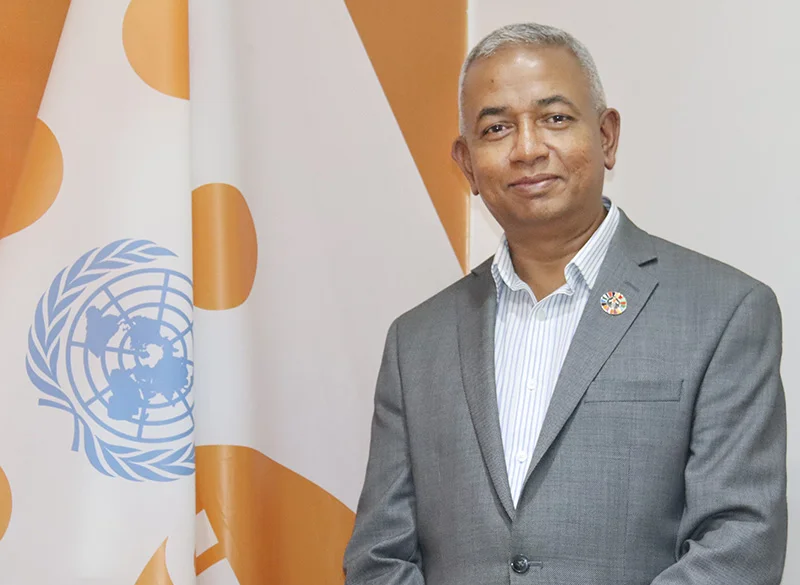
Marking World Health Day on April 7, health experts have called for a stronger commitment to science-based decision-making to address increasingly complex and evolving health challenges in Sri Lanka and beyond.
Dr. Dayanath Ranatunga, Assistant Representative of the United Nations Population Fund, stressed that health is no longer confined to hospitals or traditional medical systems, but is shaped by a broad spectrum of social, environmental, and technological factors.
“This year’s theme, ‘Together for Health. Stand with Science,’ reminds us that science is not only for laboratories or policymakers. It is a way of thinking and a tool that shapes everyday decisions,” he said.
Dr. Ranatunga noted that modern health challenges are increasingly interconnected, ranging from infectious diseases such as COVID-19 to climate-related risks, demographic shifts, and emerging forms of online violence.
He warned that maternal and newborn health continues to demand urgent attention despite progress. Globally, an estimated 260,000 women died from pregnancy and childbirth-related causes in 2023 alone—many of them preventable through timely, science-based interventions.
“In countries like Sri Lanka, where fertility rates are declining and survival rates improving, every pregnancy carries greater significance—not just for families, but for the future of communities and economies,” he said.
The UNFPA official also highlighted the growing threat of Technology Facilitated Gender-Based Violence (TFGBV), including cyber harassment and online abuse, noting that these forms of violence can have deep psychological consequences despite lacking visible physical harm.
He emphasised the need for multidisciplinary, science-informed approaches that integrate mental health, digital safety, and survivor-centered care.
Turning to demographic trends, Dr. Ranatunga pointed out that increasing life expectancy is bringing new challenges, particularly the rise of non-communicable diseases such as diabetes, cardiovascular illnesses, and cancers.
In Sri Lanka, nearly 13.9% of mothers develop diabetes during pregnancy, a trend attributed to obesity and unhealthy lifestyles, underscoring the urgent need for preventive healthcare strategies.
“Are we investing enough in prevention?” he asked, noting that early intervention and healthier lifestyles could significantly reduce long-term healthcare costs, especially in a country with a free public healthcare system.
He underscored the importance of data-driven policymaking, stating that scientific research and analytics enable governments to identify gaps, anticipate future needs, and allocate resources more effectively.
The UNFPA, he said, is already leveraging tools such as Geographic Information Systems (GIS) to improve access to maternal healthcare, including mapping travel times for pregnant women to reach health facilities.
Digital innovation is also transforming healthcare delivery, from telemedicine to real-time data systems, improving efficiency and ensuring continuity of care even during emergencies.
In Sri Lanka, partnerships between the government and development agencies are helping to modernise training institutions, including facilities in Batticaloa, equipping healthcare workers with both clinical and digital skills.
However, Dr. Ranatunga cautioned that technology alone is not a solution.
“It must be guided by evidence and grounded in equity,” he said, pointing out that women’s health remains significantly underfunded, with only about 7% of global healthcare research focusing on conditions specific to women.
He also drew attention to the growing health impacts of climate change, including extreme weather, food insecurity, and displacement, describing it as an emerging public health crisis.
“Health does not begin in hospitals. It is shaped by the environments we live in, the choices we make, and the systems we build,” he said.
Calling for renewed commitment, Dr. Ranatunga urged stakeholders to invest in prevention, embrace innovation, and ensure that science remains central to policy and practice.
“Science is not just about knowledge—it is about ensuring that everyone has the opportunity to live healthy, dignified lives, and that no one is left behind,” he added.
By Ifham Nizam

 Melantha Perera is well known as a very versatile musician.
He was involved with the band Mirage, as their keyboardist/vocalist, and was also seen in action with other outfits, as well, before embarking on a trip to Australia, as a solo artiste.
I now hear that he has plans to operate as a trio.
However, what has got many talking about Melantha, these days, is his awesome work with the visually impaired Bright Light Band.
They have worked out a special song for the Sinhala and Tamil New Year, aptly titled ‘Awurudu Kaale.’
Says Melantha: “This song has been created to celebrate the spirit of the Sinhala and Tamil New Year and to share the joy of the Awurudu season with all Sri Lankans”.
Yes, of course, Melantha composed the song, with the lyrics written collaboratively by Melantha, Badra, and the parents of the talented performers, whose creative input brought the song to life during moments of inspiration.
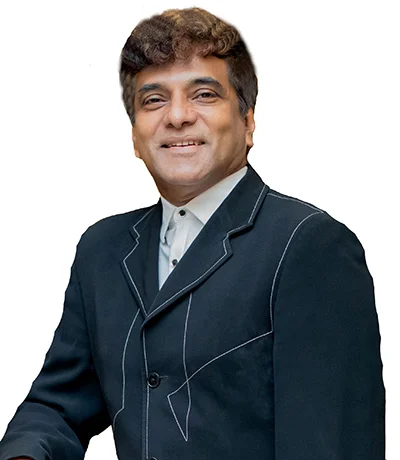
Melantha Perera: Awesome work with Bright Light Band
This meaningful collaboration reflects the strong community behind the Bright Light Band.
According to Melantha, accompaning the song is a vibrant video production that also features the involvement of the parents, highlighting unity, joy, and togetherness.
Beyond showcasing their musical talents, the visually impaired members of Bright Light Band deliver a powerful message, through this project, that their abilities extend beyond singing, as they also express themselves through movement and dance.
Melantha expressed his satisfaction with the outcome of the project and looks forward to sharing it with audiences across the country during this festive season.
He went on to say that Bright Light Band extends its sincere gratitude to Bcert Australia for their generous Mian sponsorship, the CEO of the company, Samath Fernando, for his continuous support in making such initiatives possible, and Rukshan Perera for his personal support and encouragement in bringing this project to completion.
The band also acknowledges Udara Fernando for his invaluable contribution, generously providing studio space and accommodating extended recording sessions to suit the children’s availability.
Appreciation is warmly extended to the parents, whose unwavering commitment from ensuring attendance at rehearsals to supporting the video production has been instrumental in the success of this project.
Through ‘Awurudu Kaale’, Bright Light Band hopes to spread festive cheer and inspire audiences, proving that passion and talent know no boundaries.

PSL 2026: Iftikhar’s all-round show seals last-ball win for Zalmi

BCCI curbs movement of benched IPL players in latest rules

Prasidh trumps Miller in last-ball finish as Gujarat Titans clinch thriller

Greece to ban social media for under-15s from next year

Showers will occur at a few places in the Western, Sabaragamuwa and North-western provinces and in Galle, Matara, Kandy, Nuwara-Eliya and Mannar districts after 2.00 p.m.

Sun directly overhead Chilaw, Bingiriya, Halmillawewa, Panduwasnuwara, Gokarella, Kawudupelella, Koppaveli and Kirankulam about 12:12 noon. today (09)

‘Dates have the highest sugar content to fight Coronavirus’

Sunday Island 27 December – Headlines

#SundayIsland 17th December – Headlines

Sunday Island – 28th March

Sunday Island Headlines – 21 March

Sunday Island – 21st February – Headlines
-

 Features5 days ago
Ranjith Siyambalapitiya turns custodian of a rare living collection
-

 News5 days ago
Global ‘Walk for Peace’ to be held in Lanka
-

 News3 days ago
Lankan-origin actress Subashini found dead in India
-

 Features5 days ago
Beyond the Blue Skies: A Tribute to Captain Elmo Jayawardena
-
 Opinion7 days ago
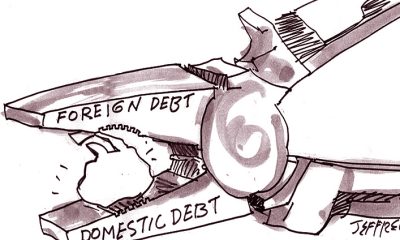
Hidden truth of Sri Lanka’s debt story: The untold narrative behind the report
-

 Features5 days ago
Aspects of Ceylon/Sri Lanka Foreign Relations – 1948 to 1976
-

 Business21 hours ago
Hayleys Mobility introduces Premium OMODA C9 PHEV
-

 Editorial6 days ago
Brouhaha over a book