
Opinion
Many questions have gone unanswered

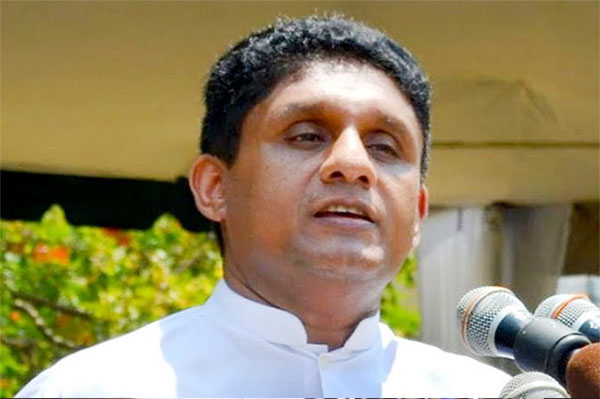
Statement of Leader of the Opposition Sajith Premadasa made under Standing Order 27(2) made in Parliament on 24.02.2022
The government, which is unable to manage the country’s foreign exchange deficit, has now plunged the country into a serious energy crisis. In the past few months, people have had to wait in queues for hours on end to buy a domestic gas cylinder even while gas cylinders were exploding in the kitchen. Nowadays, people have to line up in front of petrol sheds to refuel their vehicles. In addition, some filling stations have already started refueling on their own ration schemes. I would like to draw the attention of the Minister to the fact that a large number of factory owners called me yesterday and today and told me that the factories have become inactive due to the non-operation of buses which are unable to transport employees working in those factories. Also, there is no fuel today to operate the generators in those factories.
Hon Speaker, there has been no significant increase in the demand for electricity in Sri Lanka in recent times and the main reason for the power crisis is the inability to supply fuel required to generate 2700 MW per day. A / L students have to face their exams in the midst of power outages – in the dark. Absence of an uninterrupted power supply is having a serious impact on small and medium scale industries and the emerging tourism industry. With the exception of the competitive media statements made by Chairman of the Public Utilities Commission, the Ministers of Energy and Power, the government is still keeping most parts of the country in darkness for about five hours a day.
Hon. Speaker, further complicating the crisis, the Governor of the Central Bank has issued a notification to the Commercial Banks to be mindful of credit limits in disbursing funds to the Ceylon Petroleum Corporation. The price of a barrel of crude oil has reached around US $ 97 in the world market by now, and today it has crossed $ 100, and there is a risk that it will rise further.
Hon. Speaker, I would like to mention that at this moment Russia has declared war on Ukraine and activated that aggressive process. I would like to ask if this government has a plan, what are the possible economic, social, political and diplomatic implications for our country in this emerging situation? How to avoid them? I would also like to know if there is any plan for this. Also, Hon. Speaker, I would like to specifically mention that according to the Tea Board, our tea exports to Ukraine last year amounted to 4.8 million kilograms. We exported 427.3 million kg to Russia – 1.49% of exports to Ukraine and 9.57% to Russia. Also, a situation has been created today where various countries impose sanctions on Russia. In this context, I would like to ask Hon Gammanpila, in particular, whether this Government has a solution to the problem that has already become a serious issue in our country.
The Ministers who fail to find solutions to these problems are holding ceremonies to welcome an oil tanker when it arrives at the port. They also blame the public for their own inability to raise enough foreign exchange to buy fuel, claiming that they – the general public – consume too much electricity and drive too much.
Now some people are using this time to say that cycling is more eco-friendly than using automobiles. I accept that, as a matter of policy, there are some positive aspects to it. But I would like to remind you, Hon. Speaker, I would like to ask you, do you remember the guys who came to this Parliament on bicycles a few years ago when the price of oil went up by a paltry sum? Today no one has the backbone to at least come to this House and talk about the problems facing this country. They marketed themselves as a group of people consisting of scholarly, heroic, talented, patriotic and devoted personalities. We can see how this patriotism is overflowing now.
If priority or even minimal management knowledge was to be put into the country’s energy security, it should have led the way to a planned fuel purchase based on a proper forecast for the country’s energy needs.
Hon Minister, you stated yesterday that there is no shortage of diesel, no shortage of petrol, no shortage of kerosene and no shortage of milk powder in this country and the only shortage available is the Dollar shortage. So I would like to ask you, what is the root cause of all of this? Tax concessions ranging from 600 to 800 billion rupees were provided to millionaires as soon as they came to power. Considering the poor financial management in the country against this backdrop, Fitch Ratings, Moody’s and Standard & Poor’s downgraded the country further in their ratings. Following that downgrading, our country lost the opportunity to go to international capital markets and obtain low interest loans – dollar loans. This is the vicious circle! This government should be responsible for creating this vicious circle. You also remember very well that they, then, said that they need 20th Amendment to build this country well – to do well. Now the 20th Amendment is the law. But with this 20th Amendment, a shortage of dollars has also been created. I ask you please use the powers given to you through the 20th Amendment to rule this country properly. Today this country is wandering. Today this country is in darkness.
Accordingly, considering this as a matter of national importance, I expect specific answers and explanations from the Government to following questions:
1) Does the government accept that the country is in a serious crisis without fuel due to lack of foreign exchange? If so, please tell the country and people the steps you expect to take without continuing your ‘Eda Wela Tours’. Sometimes you go to India and bow down, sometimes go to Pakistan and bow down. And then go to the state of Qatar and bow down. Begging, wanting dollars, pinching! In this way you also sell our self-esteem for a pittance. I would like to ask what is your national policy to address this serious crisis?
2) How many metric tons of petrol and diesel do we have today for use in vehicles? How many days is it enough for? Can the Hon Minister ensure that the required quantities of fuel for vehicles can be supplied continuously without any shortage in future? Although this is not your scope, I would like to remind you, there is a serious shortage of drugs in the country today. Minister ,there are no medicines for cancer, no medicines for heart diseases, no medicines for kidney diseases, no medicines for diseases in thyroid gland. Such a situation did not exist when the Hon. Rajitha Senaratne, who made a constructive change in the health sector of our country, was the Minister of Health.
3) How much diesel and fuel oil do you need daily to run thermal power plants? How much longer can the Petroleum Corporation provide fuel out of those quantities?
4) Have you predicted how much money the country will need to get the fuel it needs at least for the next 3 months? How much is that? How to get the required foreign exchange for that? What is the program? How do you raise dollars?
5) If there is no plan to provide uninterrupted power supply, does the government, in the least, have a definite plan to disconnect power supply for the next month? So, what is it? Now the headline today is, Hon. Minister, ‘Electricity will be provided for 18-19 hours today’. Not for 24 hours. Only 18 or 19 hours. Shameful!
6) Is the government unaware that the tourism industry, which was plunged into the abyss with the Covid epidemic, and the small and medium enterprises (SMEs) could collapse further due to the lack of uninterrupted power supply? What is the government’s plan to provide uninterrupted power supply to sustain those industries? How much longer will people have to stay in the dark?
Asking these questions, I would like to remind the Hon Minister in particular that you said that you would provide scholarly solutions. You said that you would provide them out of the Oracle. You pledged that it would be provided by the Internet of Things, by Biotechnology, and by Artificial Intelligence. I kindly request you to present the solution you propose for this problem to the country and to this House.


by Geewananda Gunawardana,Ph.D.
The modern nation-state is often viewed as a crucial foundation for economic development, social cohesion, and political stability. A nation is a cultural or social community bound by shared identity, memory, and heritage. A state, by contrast, is an independent political entity with a defined territory, a permanent population, and a sovereign government.
By most major measures of economic development, Sri Lanka ranks below many comparable countries. For a new generation that has learnt from the past and is striving to head in a new direction for the first time since independence, this raises a difficult question: is the problem primarily a weakness of the state, a weakness of shared national identity, or a combination of both?
The Central Question
Global benchmarks such as the Fragile States Index place Sri Lanka in the ‘High Warning’ category while still classifying it as a functioning state. If the state is not entirely broken, and if the country possesses natural resources, arable land, a favourable climate, and a strategic geographic position, then the deeper difficulty may lie elsewhere: in the collective mindset through which Sri Lankans understand nationhood. This essay explores that mindset and asks why a stronger sense of shared national purpose has not taken root in our country.
A Historical Pattern of Division
If a nation is understood as a community bound by shared identity and heritage, Sri Lanka’s history suggests that this quality has often been weak or incomplete. At certain moments, islandwide unity has emerged, but rarely as a durable political and social mentality. The ideal of one nation, indivisible, with liberty and justice for all did not become the dominant organising principle of public life.
K. M. de Silva’s A History of Sri Lanka, widely regarded as a major single-volume historical synthesis of the island, helps explain how a divisive mentality became deeply embedded. If prominent events—royal lineages, invasions, the introduction of Buddhism, colonial rule, and independence—are set aside, one recurring theme emerges from this account, that is the persistence of particularism. In this context, particularism means placing the interests of a limited group, region, class, or community above the wider common good. In other words, it represents a disregard for ‘equal justice for all’, a principle crucial to nationhood.
The rulers of the Anuradhapura kingdom aspired to unify the island, but their success was limited. Vijaya’s clan, traditionally said to have come from northeastern India, was not the island’s only early settler group. Communities from other regions also settled in different parts of the island and formed their own administrative units. Because these groups had distinct identities and interests, they often resisted unification when it threatened their autonomy. Over time, invasions, succession struggles, mercenary settlements, and colonial interventions deepened these divisions.
Sri Lanka did not fight colonialism in complete unison. Some segments of society benefited from existing arrangements and saw little advantage in ending colonial rule. After independence, political competition intensified these divisions. The country increasingly became a collection of individuals and groups protecting narrow interests rather than a people collectively committed to national development. This, more than any single policy failure, has become a major obstacle to progress. Even honest leadership and sound policies cannot succeed without a population that shares a strong “one nation” mentality.
Why Fragmented Societies Struggle
When a society becomes fragmented, several interconnected dynamics tend to reinforce one another:
Particularism over universalism. When broader institutions such as the state, the rule of law, and the social contract lose credibility, people retreat into narrower circles of trust. Universal principles—what is fair for everyone—are replaced by local survival strategies: what protects me, my family, or my group.
The tragedy of the commons. In a high-trust society, individuals make short-term sacrifices—paying taxes, obeying rules, volunteering, and respecting shared obligations—because they believe others will do the same. Once trust collapses, people fear being exploited and begin placing private interest above public responsibility.
Patronage and clientelism. When access to resources, opportunities, or justice depends on personal connections (andurana kama), political affiliation, or group identity rather than equal rights, citizens learn to navigate society through factional loyalty instead of national solidarity.
The need to rebuild civic identity. A fragmented society cannot be repaired by moral preaching alone. The social contract must be renewed so that serving the common good also advances the well-being of individuals and communities.
Such renewal requires trustworthy institutions, impartial governance, and a rule of law that treats all citizens equally. It also requires shared national goals—economic transformation, institutional reform, and social justice—that transcend subgroup identities.
Civic engagement is essential in this process. When diverse groups collaborate on practical community problems, they rebuild social capital from the ground up and learn to see one another as partners in a shared national project.
Elitism, Governance, and the Failure of Nation-Building
Post-independence developments helped produce a new elite class. Elitism is not inherently harmful; societies need capable, principled leadership. It becomes destructive when privilege is preserved through corruption, inherited status, manipulation, or indifference to the national interest—especially when elites exploit social divisions for personal gain. That, in fact, is precisely what has been happening: competitive democratic politics encouraged major parties to appeal to ethnic majorities for electoral gain. Many political leaders, drawn from elite circles, have prioritised short-term majoritarian advantage over inclusive nation-building. This majoritarian nationalism has weakened the nation, while fiscal mismanagement and institutional decay weakened the state. Furthermore, we have failed to understand that they have curtailed access to growth opportunities, wealth, and information so that their followers can be kept in the dark. (See Figure 1)
Continued efforts to maintain divisions
Despite these deep-rooted tendencies, young Sri Lankans often look beyond such divisions in daily life. They have repeatedly shown a willingness to set aside historical differences in moments of national crisis, including after the tsunami and the devastation caused by Cyclone Ditwah. More importantly, it appears that people have united against rampant corruption and inept governance. Yet a powerful counterforce, led by remnants of the old elite who have lost their ill-gotten privileges, is desperately struggling to weaken that civic spirit.
The elite had maintained undue influence over the judiciary and law enforcement, enabling unlawful exploitation to continue with impunity. Whenever their power is threatened, they have colluded with like-minded allies to retain control and shield one another. As changes to the old system begin to emerge, these interests have become even more active in spreading division. They have done so for no reason other than their own survival. Society, too, bears responsibility for tolerating such conduct. Venerable S. Mahinda was right to ask whether we are blind.
Since independence, elites, political or otherwise, have repeatedly used nationalist rhetoric to consolidate voting blocs, distract from corruption and economic mismanagement, and unite factions against perceived threats for their own political benefit. Most unfortunately, the institutionalisation of religion has contributed to this process by giving political agendas sacred or cultural cover. Today, the country is largely united, better informed and moving in a new direction, and that is threatening the old, entrenched and corrupt order, which is now gasping for survival.

Cultural Habits That Must Change
To move forward, Sri Lankans must confront deeply ingrained cultural habits and social attitudes that sustain division and prevent reform. These include blind veneration of elites, dependence on personal connections and political allegiances, and a feudal mindset that discourages meritocracy. When family networks or partisan loyalty matter more than talent and integrity, capable people are pushed aside, young professionals become disillusioned, and brain drain accelerates.
Education and social life must also change. Too often, traditional schooling rewards deference, rote memorisation, and obedience rather than critical thinking, original inquiry, and analytical debate. Constructive dissent is often mistaken for disrespect or opposition. This weakens institutions, prevents innovation, and makes reform difficult. At the same time, deeply rooted ethno-religious identity politics continue to fragment society, shaping voting patterns, appointments, economic decisions, and most importantly the foundation of nationhood – equal justice for all by prioritising communal gains over the national interest.
The weaponisation of tradition must be recognised for what it is. Political actors often co-opt culture and religion to inflame insular nationalism or resist necessary economic and social reforms under the guise of protecting heritage.
A related problem is excessive dependence on ancient glory. Pride in the past can be valuable, but when historical achievements, sometimes exaggerated or fictionalised, become a substitute for present responsibility, it encourages complacency rather than progress. In this respect, history education must be tailored to students’ age and level of understanding, and facts must be presented at a stage when students are able to analyse them objectively. Unfortunately, some educational materials promote divisions rather than eliminate them.
Nationhood as a Shared Commitment
Until now, our post-independence leaders, not just the political ones, have pandered to our ingrained divisions and, at times, inflamed our primal instincts for their own betterment rather than for the advancement of the country. Although they have now been rejected and are out of power, the remnants of that elite are desperately trying to convince the people that they know better. Sri Lankans must learn to understand reality through a critical examination of history and not by listening to their divisive rhetoric and baseless slogans. The truth is that history has produced a fragmented society rather than a fully unified nation, but we cannot simply blame the past and continue as before.
Nationhood cannot be created by law alone; it requires a shared mindset and commitment. For Sri Lanka to become prosperous and just, nation-building must move beyond elites with vested interests and become a grassroots effort rooted in civic responsibility, common purpose, and the public good. We must confront the divisions we have created and sustained—religious, ethnic, linguistic, political, geographic, economic, caste-based, and others. Should we choose leaders for their ties to our group or for forward-looking policies that benefit the whole country? Should our decisions be guided by evidence or by simply following others? Recent events offer hope: people increasingly recognize that Sri Lanka has no future without equal justice for all—a significant achievement given its long history.

by Sumanasiri Liyanage
If I were asked whether economic science, as it stands today, could play a positive role in an era of global uncertainty and structural crisis, my answer would be that it is unlikely to do so in its present form. Why do I say this? Let me begin with an anecdote.
In 2008, at the height of the global financial crisis, Queen Elizabeth II visited the London School of Economics (LSE), an institution widely regarded as one of the leading centres of modern economic thought. The Queen reportedly asked a group of distinguished economists: “What actually caused this crisis?” Their answer was that the crisis had been caused by a stochastic shock. The Queen’s response was reportedly one of bewilderment: “What?”
This anecdote captures something fundamental about the crisis of contemporary economic science. If economists cannot adequately explain a major crisis of capitalism in terms that are both intelligible and theoretically meaningful, can we reasonably expect their discipline to play an affirmative role in addressing the structural crises of our time?
Several leading economists have attributed this predicament to the excessive use of mathematics in economic analysis. Let us consider the criticisms of a few prominent economists.
Richard G. Lipsey, author of one of the most widely used economics textbooks, observed:
“To get an article published in most of today’s top-ranked economic journals, you must provide a mathematical model, even if it adds nothing to your verbal analysis.”
Milton Friedman, a leading figure in monetarism, was also critical of the direction taken by modern economic theory. He argued:
“Economics has become increasingly an archaic branch of mathematics rather than dealing with real economic problems.”
Mark Blaug offered an even more devastating assessment:
“Modern economics is sick. Economics has increasingly become an intellectual game play for its own sake and not for its practical consequences for understanding the economic world. Economists have converted the subject into a social mathematics in which analytical rigor is everything and practical relevance is nothing.”
Can the crisis of contemporary economic theory be attributed simply to the excessive mathematization of the discipline? Or is this tendency a necessary consequence of the social sciences’ persistent attempt to emulate the methods of physics—a phenomenon often described as physics envy? Although these tendencies reinforce one another, I would argue that the fundamental problem lies in the mistaken ontological assumptions underlying mainstream economics—in other words, its conception of the social world that it seeks to explain.
How, then, does mainstream economics conceptualize the social realm?
Let us turn to Frank Hahn, one of the leading contributors to general equilibrium theory, alongside Kenneth Arrow and Gérard Debreu. In his Jevons Memorial Lecture, Hahn acknowledged the centrality of three fundamental propositions in the dominant tradition of economic theory. The first is an atomistic conception of the individual, grounded in methodological individualism, in which individuals are understood as rational agents pursuing their objectives. The second is the proposition that interactions among rational individuals can generate an optimal solution. The third is that, although such an optimum may rarely be realized in practice, the commitment to it remains theoretically essential.
This framework makes it relatively easy for economic theory to emulate the methods of physics. From within this perspective, mathematization is not merely possible; it becomes almost imperative. Once the economy is conceptualized in terms of individual agents, their optimizing behaviour, and the equilibrium outcomes of their interactions, mathematical modelling appears to offer the most appropriate means of analysis.
The problem, however, is not mathematics itself. It is the nature of the assumptions upon which mathematical models are constructed and the relationship between those assumptions and the real world.
From this perspective, the Queen’s reported question becomes particularly revealing. What, precisely, does the concept of a stochastic shock explain? In standard neoclassical modelling, stochastic shocks can encompass a range of disturbances that are not generated endogenously within the model. These may include market imperfections, policy interventions by the state, and natural or human-made disasters. The crucial point is that such disturbances are often treated as external to the model’s underlying economic mechanisms. Consequently, the dominant neoclassical framework struggles to provide a satisfactory account of crises that emerge endogenously from the normal operation of capitalism itself. Its limitations become particularly evident when we seek to explain recurrent financial crises, structural instability, and the contradictory dynamics of capitalist accumulation.
How, then, can we overcome these limitations and make economic science a more useful instrument for understanding and addressing the crises of our time?
I would argue that this requires a Kuhnian paradigm shift in economics, understood as a human and social science. In this presentation, I shall identify two proposed theoretical turns that could contribute to such a transformation: the ontological turn advocated by the British economist Tony Lawson and the classical turn advanced by the late Anwar Shaikh. Let me briefly discuss each in turn.
1. The Classical Turn
Anwar Shaikh describes his intellectual journey away from mainstream economic theory in the following terms:
“[T]he standard theory made no sense to me. Utility maximizing, optimizing, rational expectations, perfect competition just didn’t seem to me explain or even represent the world.
So, I became involved in trying to consider some other foundations. And that lead me to read Joan Robinson and then Luigi Pasinetti, both Cambridge economists, and then from there, to go back to Marx and Smith and Ricardo. And as I did that I began to see that there was in this alternate tradition a way forward, one that began from a completely different beginning, which is how people actually behave, and from that one could derive all the basic tools of micro, and then talking about how economies behave, and having a macro story. But all the story had to be fit together and be consistent from one level to the other. And had to be consistent with empirical evidence and observations on capitalism. That took me a long time, a long, long time. It was a long time because I had to fill gaps.”
The outcome of this intellectual journey was his magnum opus, Capitalism: Competition, Conflict, and Crises.
Shaikh’s work seeks to develop a coherent account of capitalism by grounding microeconomic analysis in the actual behaviour of economic actors and deriving macroeconomic outcomes from the competitive dynamics of the system as a whole. His approach challenges the conventional opposition between microeconomics and macroeconomics by insisting that the two must be theoretically consistent and empirically grounded.
A central element of this framework is his conception of real competition, which differs fundamentally from the idealized model of perfect competition. As Shaikh puts it:
“[Real competition] is completely different from the fiction of perfect competition. Real competition is a war, and competitors use whatever means they can.”
Competition in the real world is therefore not a harmonious process through which markets automatically converge towards an optimal equilibrium. It is a dynamic, conflictual process in which firms struggle for survival, profitability, market share, and competitive advantage.
Through this process, economic actors generate outcomes that cannot be adequately understood by treating the economy as a system tending towards equilibrium under conditions of perfect competition.
The classical turn, as developed by Shaikh, thus offers an alternative way of conceptualizing the social realm. Rather than beginning with an abstract,
hypothetical world of optimizing individuals and perfectly competitive markets, it seeks to explain capitalism through the actual behaviour of economic actors, the dynamics of competition, and the systemic tendencies that emerge from their interactions.
This approach also provides a stronger foundation for understanding the endogenous generation of economic crises. Instability and crisis are not necessarily external disturbances imposed upon an otherwise harmonious system. They can emerge from the ordinary workings of capitalist accumulation and competition themselves.
2. The Ontological Turn
Tony Lawson’s ontological turn begins from a different, although potentially complementary, point of departure. His primary concern is methodological, but his argument rests on the principle that ontology—the study of the nature of reality—must take precedence over epistemology, the study of how we acquire knowledge of reality.
For Lawson, the central methodological problem in mainstream economics arises from its reliance on mathematical-deductive methods that presuppose closed systems, stable regularities, and specific forms of atomistic interaction. Such methods may be appropriate under certain conditions, but they are inadequate for explaining an open, complex, and changing social reality.
Lawson therefore argues that economic inquiry must begin by examining the nature of the social world itself. This world consists not merely of isolated individuals but also of social relations, institutions, structures, and practices that emerge historically and shape human action. These structures are real, even though they are not always directly observable, and they possess causal powers that cannot be reduced to the actions or intentions of individual agents.
Drawing on Roy Bhaskar’s philosophy of critical realism, Lawson understands social reality as layered and structured. What we observe at the empirical level does not exhaust the reality that generates observable events. A proper explanation must therefore move beyond appearances to investigate the underlying structures, mechanisms, and relations that produce them. As Marx famously observed, if the essence of things and their appearance directly coincided, science would be superfluous.
Critical realism consequently challenges the idea that knowledge can be developed through induction or deduction alone. Instead, it emphasizes retroduction: a mode of reasoning that asks what underlying structures, mechanisms, or relations must exist for a particular phenomenon to occur. Through this process, researchers move from observed events towards an explanation of the deeper causal mechanisms that generate them.
The ontological turn therefore calls for a fundamental reorientation of economic science. Rather than imposing predetermined mathematical structures upon the economy, economists must investigate the nature of the economic reality they seek to explain and select their methods accordingly. The objective is not to abandon mathematics, but to ensure that mathematical techniques serve substantive explanation rather than dictate its terms.
3. Towards a Synthesis: Making Economic Science Relevant Again
I propose that integrating Shaikh’s classical turn with Lawson’s ontological turn could provide a fruitful foundation for reconstructing economic science as a more powerful instrument for understanding the social world.
Shaikh’s contribution lies in his reconstruction of classical political economy, particularly its account of competition, accumulation, conflict, and crisis. By grounding economic theory in the actual dynamics of capitalism, he offers an alternative to the idealized assumptions of mainstream neoclassical economics.
Lawson’s contribution lies in his insistence that economic explanation must be grounded in an adequate understanding of social reality. His ontological approach draws attention to the structures, institutions, relations, and causal mechanisms that shape economic processes and cannot be reduced to the interactions of isolated individuals.
These two approaches are not identical, and their integration would require further theoretical work. Nevertheless, they share an important commitment: economic theory must be answerable to the nature of the real world rather than to the internal requirements of abstract models alone.
In an era characterized by global uncertainty, recurrent economic crises, growing inequalities, ecological breakdown, and geopolitical instability, economic science cannot fulfil its social responsibility if it remains confined within an abstract framework that struggles to explain the dynamics generating these problems.
What we need is an economic science that combines theoretical rigour with empirical adequacy; that recognizes the historically specific and structurally complex nature of capitalism; and that seeks to explain not only how economic systems function, but also why they generate instability, conflict, and crisis.
I therefore conclude that bringing together Shaikh’s classical turn and Lawson’s ontological turn could make a significant contribution to the reconstruction of economic science. Such a reconstruction would help transform economics from an increasingly self-referential mathematical discipline into a socially relevant science capable of explaining the complex realities of our time—and, ultimately, of informing efforts to transform them.
Sumanasiri Liyanage is a retired teacher in Economics. This is a text of the speech presented at the Peradeniya International Economic Research Symposium (PIERS) 2016
Opinion
Matrimony in crisis: Economic volatility, youth outflow, and changing fabric of Sri Lankan families – II

by Prof. M. W. Amarasiri de Silva
(Continued from yesterday)
Waves of youth migration
Parallel to economic distress, unprecedented waves of outward youth migration and brain drain have drastically altered the local marriage market. Hundreds of thousands of prime-working-age professionals, university graduates, and skilled workers have left the country for employment or higher education opportunities abroad. This mass departure has physically depleted the eligible partner pool within Sri Lanka. When young adults migrate individually, relationships are often delayed or dissolved, while those remaining domestically find reduced prospects for finding partners with comparable educational and socio-economic backgrounds.
The economic downturn has also reshaped household labour dynamic choices and long-term family structures. An increasing number of married and single women have entered the overseas labour market to send remittances home, resulting in long-term physical separation of couples and extended delays in childbearing. Combined with elevated female educational attainment and career participation, the opportunity cost of early marriage has risen sharply. As a consequence, demographic data demonstrates a marked shift where young Sri Lankans prioritise personal economic survival, skill development, and financial stability over immediate family formation.
The compound effects of delayed marriage, economic strain, and youth outward migration have pushed Sri Lanka’s total fertility rate well below the natural replacement level of 2.1 children per woman. National census updates and international demographic indicators show the fertility rate dropping toward 1.93 births per woman, with recent localized census estimates indicating even sharper declines in urban districts. This drop in fertility marks a historic transition for Sri Lanka, transforming its population structure from a steady growth model into a contracting youth demographic.
As a direct consequence of low birth rates and expanding life expectancy, Sri Lanka is experiencing one of the fastest aging demographic profiles in South Asia. The proportion of citizens over the age of 60 is rapidly expanding toward 20 percent of the total population, while the relative size of the under-15 population continues to shrink. This shifting ratio creates a growing elder dependency burden, placing mounting pressure on state pension mechanisms, social welfare networks, and public healthcare infrastructure that were historically structured to support a younger labor force.
Economically, the combined effect of diminished fertility and ongoing skilled labour migration is shrinking Sri Lanka’s domestic working-age population. Industries reliant on young entrant labour—including technology, agriculture, health services, and manufacturing—face structural workforce shortages. Over the long term, this demographic squeeze limits tax revenue generation, constrains domestic market consumption, and forces state planners to re-evaluate economic policy to maintain productivity despite a contracting native labor base.
To address rapid population aging, Sri Lanka must pursue comprehensive economic, legal, and social reforms that transition the country from treating aging solely as a welfare concern to integrating it into broader national economic strategy. A central priority involves reforming the social security architecture to ensure long-term financial security for senior citizens. Expanding pension coverage beyond civil servants to include informal sector workers, agricultural labourers, and self-employed individuals through contributory micro-pension schemes can reduce reliance on direct state subsidies while providing stable old-age income safety nets.
Need for reforms
Alongside financial security, structural overhauls in healthcare and formal elder care infrastructure are crucial. Sri Lanka’s healthcare system, historically built around acute care and maternal-child health, needs to pivot toward geriatric medicine, chronic disease management, and community-based care models. Establishing certified professional caregiving programs, supporting home-based care networks, and incentivising public-private partnerships for senior living and day-care facilities can relieve the mounting domestic burden on families. These measures also help address the growing shortfall of family caregivers caused by youth emigration.
From an economic perspective, policymakers can harness the experience of healthy older adults by fostering a “silver economy” and adapting labour market policies. Raising mandatory retirement ages across state and private sectors, offering flexible working arrangements, and creating targeted re-skilling programmes enable willing seniors to remain in the workforce longer. Simultaneously, long-term policy must focus on boosting female labour force participation—which remains low—and creating high-skilled domestic opportunities to retain working-age talent and cushion the fiscal pressure of a contracting labor supply.
Examining how other Asian nations adapt to demographic aging offers clear benchmarks for Sri Lanka, with Singapore and India providing two distinct structural approaches. Singapore demonstrates a high-income, state-directed system relying on mandatory self-funding and structured social safety nets, whereas India represents a lower-middle-income nation managing a vast informal labour force through a hybrid model of contributory schemes and targeted welfare pensions.
Singapore handles rapid population aging primarily through its Central Provident Fund (CPF), a mandatory, multi-tiered retirement scheme where workers and employers co-contribute throughout their careers. To ensure lifelong retirement income, the state automatically enrolls citizens into CPF LIFE, an annuity scheme providing monthly payouts for life. Healthcare and long-term care are integrated into this framework via dedicated sub-accounts, such as MediSave for medical treatments, MediShield Life for major medical expenses, and for long-term severe disability payouts. For lower-income seniors, the government supplements this self-funded model through targeted welfare transfers like the Silver Support Scheme and the Matched Retirement Savings Scheme. Complementing financial measures, Singapore actively invests in community-based senior centers, home caregiving grants, and legal measures that encourage older adults to remain in the workforce voluntarily.
India faces challenges closer to Sri Lanka’s structural realities, as over 80 percent of its workforce operates in the unorganized or informal sector without employer-provided benefits. To address this, the Indian government established the , a voluntary, micro-contributory scheme designed specifically for informal workers to secure a guaranteed monthly pension after age 60. For formal sector employees, the mandatory and Employees’ Provident Fund fulfill a similar function to Singapore’s CPF. For the destitute elderly and those living below the poverty line, non-contributory welfare programs like the Indira Gandhi National Old Age Pension Scheme deliver monthly cash transfers co-funded by central and state governments. Healthcare infrastructure is similarly subsidized through Ayushman Bharat, a national public health insurance initiative offering free tertiary hospital care to low-income households.
Actionable insights into policy response
Both models offer actionable insights for Sri Lanka’s policy response. Singapore’s framework illustrates how mandatory savings combined with national long-term care insurance can safeguard public budgets against skyrocketing healthcare costs. Meanwhile, India’s micro-pension and direct-benefit transfer mechanisms show how a developing state can extend basic social protection to agricultural and informal workers who fall outside formal pension structures. Adopting hybrid elements from both approaches—encouraging voluntary co-contributions while expanding basic non-contributory safety nets—can help Sri Lanka build a resilient support system for its aging population.
Adapting micro-pension framework presents a clear structural model for Sri Lanka, where nearly sixty percent of the domestic workforce operates in the informal economy across agriculture, fisheries, transportation, and small-scale trade. Currently, informal workers in Sri Lanka rely on fragmented social security programs administered by the and Agricultural and Agrarian Insurance Board. While these existing schemes—such as the Farmers’ and Fishermen’s Pension Schemes—were designed to offer voluntary retirement benefits, they suffer from irregular contributions, fiscal deficits, and low coverage due to fixed payment schedules that do not match the seasonal income of informal workers.
To successfully adapt the Indian micro-pension model, Sri Lanka would need to implement automatic co-contributions from the state to incentivize early enrollment among low-income workers. Under India’s APY, the central government co-contributes a portion of the subscriber’s annual contribution for a set period, significantly lowering the financial threshold for self-employed individuals to join. Applying a similar co-contribution mechanism in Sri Lanka would make micro-savings attractive to young informal workers, creating a self-sustaining pool of long-term capital while reducing the state’s eventual burden of providing direct welfare relief to destitute seniors.
Another vital feature to adopt is micro-payment flexibility backed by digital financial infrastructure. India’s program succeeds by linking micro-pension accounts directly to bank accounts with automated small deductions that can occur monthly, quarterly, or seasonally. Sri Lanka could leverage its high mobile phone penetration and digital banking systems to allow informal workers to make flexible, micro-amount deposits that align with fluctuating daily wages or harvest cycles. By removing rigid payment deadlines and enabling seamless digital contributions, compliance rates among daily wage earners and agricultural workers would increase significantly.
Need for health, disability insurance
Lastly, integrating basic health and disability insurance into the pension architecture is crucial for long-term retention. Informal workers frequently drop out of pension plans during personal health crises or periods of temporary disability because they must divert savings toward emergency medical care. Just as Sri Lanka’s public sector benefits from health schemes like the Agrahara insurance scheme administered by the , coupling informal micro-pensions with basic health and disability coverage would shield vulnerable households from sudden poverty. This holistic approach would transform informal pension enrollment from a luxury into an essential safety net for Sri Lanka’s working population.
Leveraging mobile banking and digital finance offers Sri Lanka a transformative pathway to scale micro-pension coverage across its vast informal sector. Traditional pension delivery models fail informal workers because physical branch visits, manual paperwork, and rigid payment intervals create friction for daily-wage earners. By utilizing the country’s high mobile penetration rate, the state can transition micro-pension enrollment to simple, USSD-based mobile menus and smartphone applications. This allows self-employed individuals, such as three wheel drivers, street vendors, and tea puckers and harvesters, to register using their National Identity Card (NIC) numbers and manage retirement savings directly from their phones without stepping into a bank.
Digital payment rails can solve the fundamental problem of income volatility by enabling micro-deductions. Through partnerships between the central bank, commercial banks, and telecommunication providers, informal workers can configure automated, small-scale contributions tied to digital transactions. National digital payment standards like make it seamless for small merchants and daily-wage earners to route small sums—such as 50 or 100 rupees—into a pension account whenever a customer pays them digitally. Integrating auto-deductions into mobile money platforms like eZ Cash and mCash allows workers to set flexible contribution schedules that mirror their seasonal or weekly earnings cycles.
Financial technology can also address low trust and retention through real-time transparency and behavioral nudges. In traditional paper-based schemes, contributors often lose track of their accumulated balance, leading to missed payments and high drop-out rates. Digital micro-pension platforms overcome this by sending automated SMS notifications whenever a deposit is credited, along with projected monthly payout calculators that demonstrate how small daily savings accumulate over time.
Gamified incentives, such as matching micro-bonuses funded by the state or development partners for consistent monthly contributions, can further reinforce positive saving habits among young informal workers.
Finally, integrating digital micro-pensions into Sri Lanka’s broader digital public infrastructure ensures systemic efficiency and fraud prevention. Linking mobile pension accounts to a centralized digital database—such as the national Unified Social Registry—prevents duplicate accounts, lowers administrative overhead for fund managers, and speeds up payout distributions when workers reach retirement age.
By embedding micro-pensions into everyday digital financial touchpoints, Sri Lanka can turn mobile phones into accessible wealth-building tools, converting informal sector workers into financially secure citizens in their old age.
Structural transformation of marriage market
The structural transformation of Sri Lanka’s marriage market is not merely a collection of isolated domestic choices, but a profound demographic shift with far-reaching consequences for the nation’s future. What appears on the surface as an exceptionally low divorce rate in official statistics masks a far more complex reality characterized by informal separations, financial hardship, and prolonged delays in family formation. As economic instability and the accelerated outflow of young talent continue to shrink the domestic partner pool and depress fertility rates, Sri Lanka stands at a critical juncture where the traditional institution of marriage can no longer be viewed in isolation from broader socio-economic policy.
Navigating this transition requires moving beyond passive observation toward proactive national planning. Adapting to an aging population, shrinking labor force, and shifting family dynamics will demand bold reforms, including modern social safety nets for informal workers, flexible micro-pensions, and updated legal and caregiving frameworks. Whether through the pages of Sunday newspaper classifieds or digital matchmaking platforms, the aspirations of young Sri Lankans reflect a desire for stability, security, and mutual progress. Safeguarding the social fabric of the island will ultimately depend on building an economic and institutional landscape where young adults can confidently plan their futures, raise families, and find long-term security at home.

Showers above 100 mm are likely at some places in the Western, Sabaragamuwa, Central, North-western, Northern and Southern provinces and in Anuradhapura district.

Low-quality coal causes power cuts: Ex-LECO Chief

Power cuts continue

GL stresses importance of post-war Shangri-La investment after CIABOC questions him

Coal inquiry gets extension until 16 December

Dilshan, Hirupama named best athletes at All Island Schools Games Athletics Championships

‘Dates have the highest sugar content to fight Coronavirus’

Sunday Island 27 December – Headlines

#SundayIsland 17th December – Headlines

Sunday Island – 28th March

Sunday Island Headlines – 21 March

Sunday Island – 21st February – Headlines
-

 Features3 days ago
Kotahena:A Small Enclave, An Extraordinary Legacy
-
 News4 days ago
Asgiri Mahanayake calls for immediate release of Gnanasara Thera
-

 News3 days ago
Record 1,600 students take Russian Classical Ballet examination in Sri Lanka
-
 News6 days ago
AC President recuses himself from hearing prison attire case pertaining to Gnanasara Thera
-
 News5 days ago
Naval officer testifies Yoshitha received Rs. 5.15 mn in salaries during SLN service
-

 News3 days ago
Karannagoda pushed for £24,536 for Yoshitha’s UK training, Court told
-

 News6 days ago
CID informs Fort Magistrate’s Court investigation into money laundering case against Namal completed
-

 News5 days ago
Monks brave heavy rains to press for Gnanasara Thera’s release