
Business
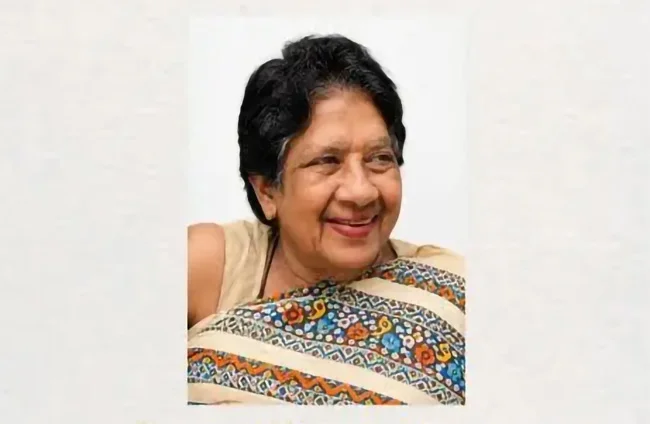
Manel Abeysekara: Sri Lanka’s first female diplomat

By Chenuka Elwitigala
Manel Abeysekera was a trailblazing figure in Sri Lankan history, best known as the country’s first female career diplomat. In a field that was once the exclusive domain of men, she broke the glass ceiling in 1958 and went on to serve in some of the most sensitive and high-profile roles in the Foreign Service.
Early Life and Education
She was born Irangani Manel Kannangara on August 14, 1933, into a family shaped by public service. She was the eldest daughter of Senator E.W. Kannangara, a titan of the pre-independence administration, who served as the Clerk of the State Council and later as a Senator. She received her primary and secondary education at Methodist College, Colombo, one of the island’s premier girls’ schools. She was a brilliant student, securing 2nd place in the entire island at the Senior School Certificate (SSC) examination. She also studied for the London External Exam and got a first division in the Intermediate Arts Exam.
She originally gained admission to the University of Ceylon (Peradeniya) to read History. Encouraged by her family, she applied to the prestigious Somerville College, University of Oxford. She read Modern History at Oxford, graduating in 1957. It was during this time that her difficult surname “Kannangara” led British students to nickname her “Miss Kangaroo,” a moniker that affectionately stuck with her in diplomatic circles.
After joining the service, the government sent her to New Hall (now Murray Edwards College), University of Cambridge, to study modern languages. She specialized in Italian, which led to her first posting in Rome. This unique educational path made her one of the few Sri Lankans to have attended both Oxford and Cambridge universities.
The Pioneer: First Woman
Career Diplomat
Manel Abeysekera’s entry into the Foreign Service was historic. Until the late 1950s, women were effectively debarred from the Ceylon Overseas Service. When Prime Minister S.W.R.D. Bandaranaike opened the service to women, Upon returning to Ceylon, Manel saw a government Gazette notification that changed history. The notice for the Ceylon Overseas Service (Diplomatic Service) invited applications. The government Gazette notification contained a stern warning: “Married women must obtain special permission from the Public Service Commission.” Manel, who was unmarried, spotted that the notice did not explicitly ban unmarried women. She applied on this technicality.
At the time, the Foreign Service was an exclusively male domain. When she showed up for the exam, she was the only woman among hundreds of male applicants. She applied and faced a formidable interview board of three Permanent Secretaries. When asked why a woman should be hired for such a tough job, she famously retorted that women have “more resilience and patience” which were qualities essential for diplomacy. She was the only woman selected in the 1958 batch of eight cadets, making history as the first female career diplomat in the country. Prior to overseas assignment, she rotated through Sri Lankan government departments such as Immigration and Emigration, Commerce, and Tourism to gain practical insight into national functions, supplemented by protocol training on etiquette and foreign affairs conduct
When she arrived in Bangkok in 1970 as the Chargé d’Affaires, the local staff had never seen a female boss. Her driver, confused by the protocol of addressing a woman in a position of male authority, famously greeted her as “Welcome, Madame-Sir.” She loved the title so much that she later used it as the name of her memoirs: “Madame-Sir.” as it perfectly encapsulated her career: she had to command the authority of a “Sir” while navigating the world as a “Madame.”
Key Diplomatic Postings
Her career spanned 35 years, during which she held several critical posts. Her inaugural posting was as Attaché at the Sri Lankan Embassy in Rome, where probationers were required to pass the First Efficiency Bar Examination and achieve proficiency in an assigned language within three years. Abeysekera completed these milestones two years ahead of schedule, securing promotion to Third Secretary, though embassy budget constraints prompted her recall to the Ministry of Foreign Affairs in Colombo She was often the first Asian female diplomat many Italians had ever met. She used this to her advantage, noting that Italian men were “gallant” and eager to help her while enjoying the spicy food she served, which allowed her to build a vast network of contacts that her male colleagues struggled to access.
She then served as Second Secretary and later First Secretary in London. Having been educated at both Oxford and Cambridge, she navigated the British establishment with ease. It was here she solidified her reputation as a “writer,” drafting high-level speeches for visiting Sri Lankan dignitaries that were praised for their perfect Oxford English.
Thailand was the defining country of her career. She served there twice. Manel Abeysekera was appointed Sri Lanka’s first resident Ambassador to Thailand in 1980, serving until 1983 and establishing a permanent diplomatic presence in Bangkok during a period when such postings were typically non-resident. Her tenure there followed an earlier stint as Chargé d’Affaires in the same mission in 1970, where she effectively led operations as the youngest and first female to hold that role in Sri Lankan diplomacy. Her tenure here was legendary for one specific event: the Alitalia Hijacking. On June 29, 1982, a Sri Lankan named Sepala Ekanayake hijacked an Alitalia Boeing 747 with 340 passengers mid-air, demanding to see his Italian wife and son and asking for a ransom. The plane landed in Bangkok and for 38 hours, Manel Abeysekera acted as the primary negotiator. The hijacker refused to speak to the Italians or Thais, trusting only “the Sri Lankan lady.” Manel spent two sleepless nights in the Alitalia office at the airport, speaking to Ekanayake over the radio. She eventually persuaded him to release the hostages in exchange for safe passage to Colombo. She was criticized by some for guaranteeing a criminal’s safety, but she maintained that her priority was saving the 340 lives on board. Her swift handling of the crisis prevented a massacre.
When Queen Elizabeth and Prince Philip came on an official visit, on seeing Manel lined up with all the other Heads of Mission, the Chief Photographer of the royal yacht “Britannia” thought she must be the wife of the Indian Ambassador next to whom she was standing, and checked on her with HM herself, since wives were not supposed to be in the photograph which was disregarded by the Queen. Later, when the Thai PM held a reception for the Queen and once again the Diplomatic Corps was presented to her, the Queen had told Manel that she understood she was the sole female Head of Mission in Bangkok and had inquired whether “the men were treating her well.”. Manel had replied that they were, in fact, spoiling her, to which the Queen had laughingly responded with, “Good! See that they keep it up”.
Her final major posting was as Ambassador to the Federal Republic of Germany (with accreditation to Austria and Switzerland). She was in Germany during the historic period when the Berlin Wall fell (1989) and Germany was reunified. Her diplomatic dispatches during this time provided the Sri Lankan government with a front-row analysis of the collapse of Communism in Europe. Recognizing that a unified Germany would be an economic powerhouse, she aggressively promoted Sri Lankan tea and tourism, laying the groundwork for Germany becoming one of Sri Lanka’s top export markets in the 1990s.
Chief of Protocol (The 1976
NAM Summit)
Her most grueling and significant role was serving as Sri Lanka’s Chief of Protocol from 1974 to 1980. She holds the record for the longest-serving officer in this high-pressure job. She had the good fortune to be picked by Mrs. Bandaranaike to accompany her to Geneva where Mrs. B. was to address the annual ILO Conference, and thence to Mexico where, as the world’s first female Head of Government, she had been invited to grace the UN 1st World Conference on Women.
She was responsible for the protocol arrangements of the 1976 Non-Aligned Movement (NAM) Summit in Colombo. She had to personally manage the arrival, accommodation, and diplomatic sensitivities of 92 Heads of State (including Tito, Indira Gandhi, and Castro). During the summit arrivals, a Head of State landed at Katunayake airport every 7 minutes. Manel had to welcome each one, present them to the Prime Minister, and ensure the correct national anthem and flag were ready without a single error. She had later recalled living on “black coffee and sandwiches” for days, running up and down the gangplank in a saree without a break. When Prime Minister Sirimavo Bandaranaike worried that she might collapse from exhaustion, Manel famously quipped: “Madam, if I collapse on the tarmac, you will need a crane to remove me!”
Libyan leader Muammar Gaddafi was the most difficult guest to handle, and Manel had to manage his unpredictable behavior personally. Gaddafi arrived late, missing the grand opening ceremony. The reception committee, led by Minister Badiudin Mahmud, was sweating on the tarmac waiting for him. Upon landing, Gaddafi refused to inspect the Guard of Honour, a major breach of protocol that could have insulted the Sri Lankan military. She realized that if Gaddafi got into the car too quickly, the Minister wouldn’t have time to officially welcome him. She shouted in Sinhala to the Sri Lankan driver of Gaddafi’s Rolls Royce: “Don’t open the door yet! Drive to the red carpet!”
To be Concluded

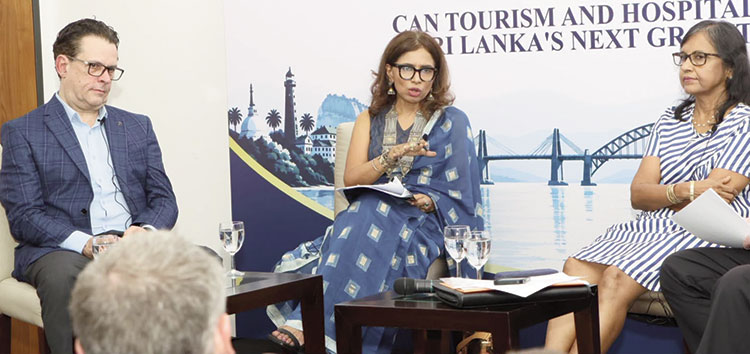
The Australian High Commission in Sri Lanka recently hosted the latest edition of its ConnectED Thought Leadership Series at the Australian High Commissioner’s Residence in Colombo, bringing together senior leaders from Sri Lanka’s tourism, hospitality, travel, events, education and related sectors.
The discussion, themed “Beyond Arrivals: Can Tourism and Hospitality Power Sri Lanka’s Next Growth Phase?”, focused on the role of tourism and hospitality beyond visitor arrival numbers, examining how the sector could contribute to Sri Lanka’s broader economic development.
The distinguished panel comprised Shiromal Cooray, Chairman and Managing Director of Jetwing Travels; Angeline Ondaatje, Chairperson of Tangerine Beach Hotels PLC, Royal Palms Beach Hotels PLC and Tangerine Tours; and Grant Dreher, Chief Executive Officer of William Angliss Institute Australia.
The discussion was moderated by Wayne Crosbie, Director – International and Business Development, William Angliss Institute Australia, who facilitated the conversation around the evolving needs of the tourism and hospitality industry and the importance of connecting education, skills development and workforce readiness with industry demand.
Adding a practical and experiential dimension to the evening, students from the Colombo Academy of Hospitality Management (CAHM) played an active role in delivering the cocktail reception for the distinguished guests.

A high-level discussion on the implementation of Sri Lanka’s Global Destination Marketing and Communication Campaign, supported by the World Bank, was held at the Ministry of Foreign Affairs, Foreign Employment and Tourism. The initiative marks a significant step towards strengthening Sri Lanka’s position as a competitive and attractive destination in the global tourism marketplace.
The meeting focused on the importance of adopting a long-term, data-driven approach to destination marketing, underpinned by comprehensive analysis of tourism demand and supply trends, visitor behaviour, destination branding, and international marketing strategies. Discussions also highlighted the need for a transparent procurement process and institutional capacity-building to ensure the successful implementation and sustainability of the campaign.
Participants welcomed the technical expertise and strategic guidance to be provided by MTI Consulting and Skift Inc./JD, whose support will contribute to the development and execution of a globally competitive destination marketing programme. Through strong collaboration between public and private sector stakeholders, the initiative seeks to establish a sustainable roadmap to guide Sri Lanka’s tourism promotion efforts and enhance the industry’s competitiveness in key international markets.
The campaign is expected to play a vital role in strengthening Sri Lanka’s tourism sector, supporting increased visitor arrivals, generating economic opportunities, and contributing to broader national economic growth.
The discussion was attended by Aruni Ranaraja, Secretary to the Ministry of Foreign Affairs, Foreign Employment and Tourism; Chairpersons and Chairmen of tourism institutions under the Ministry; representatives of SLAITO, TAASL, the Tourism Advisory Committee, the World Bank, MTI Consulting, and Skift Inc./JD; as well as H.P. Somathilaka, Director General of National Planning.
Business
Labour shortages are pushing Plantation Companies towards machines, data and a different kind of worker


Sri Lanka’s plantation sector is entering a new phase of transformation, as technology and innovation reshape how estates operate, manage resources and sustain productivity. Across the country’s tea estates and other plantations, machines are increasingly complementing skilled workers in tasks once done almost entirely by hand, while software and data bring new precision to decisions traditionally guided by experience.
Automated harvesters, pruning machines and drones are being deployed alongside GIS mapping, digital weighing systems and enterprise software. Though the technologies vary, they point to a common shift: plantations are finding smarter ways to meet rising demands with a changing workforce.
Mechanisation, however, is not without challenges. Sloping terrain, fragmented fields and crop variability limit where machinery can be effectively deployed. Still, as operating costs rise and labour availability tightens, the ability to combine human expertise with technology is becoming essential to sustaining productivity, competitiveness and the long-term viability of the industry.
Addressing the labour shortage
Sri Lanka’s plantation companies face a labour market that has changed from the one on which the industry was built. Migration, demographic changes and attraction from other sectors have made it increasingly difficult to retain workers for plantation work.
That is why mechanization is spreading beyond the most obvious applications. At Bogawantalawa Tea Estates PLC, machinery is being used for land preparation, pruning, weeding, harvesting, and agrochemical application. Selective machine harvesting and mechanical pruning have been introduced in tea, while mechanized and semi-mechanized methods are being extended to other crops.
Agarapatana Plantations PLC has taken a similar approach. Fuel-powered and battery-operated harvesters are being used in the field, while backhoes assist with uprooting and levelling new clearings. Drones are being deployed for foliar spraying. In factories, automation and energy efficient machineries are being introduced where production volumes justify the investment.
The changing face of plantation technology
Beyond mechanisation, plantations are steadily evolving into data-driven businesses, with RPC’s increasingly adopting technologies that are reshaping day-to-day operations. Agarapatana Plantations is rolling out automated green-leaf weighing systems with facial recognition and planning fertigation-based irrigation. Ten factories already operate on solar power, with six of them being carbon neutral.
Likewise, Elpitiya Plantations PLC has introduced Ballotronix tea-leaf readers to assess leaf composition, supported by iHarvest and Microsoft Dynamics 365 Business Central, giving managers real-time visibility across thousands of hectares.
Talawakelle Tea Estates PLC has similarly pursued transformation since 1992, introducing hot-water boilers across all factories from 2008, electronic weighing with real time data collection since 2015, as well as tablets, computers and a new payroll system for employees. Rooftop solar along with three in-house hydro power plants located in Palmerston, Radella and Somerset estates provide renewable energy. State of the art, modern colour separators have been provided to its Low Grown factories. Since 2025, drones are been used for chemical/ foliar spraying. These developments highlight how the plantation sector has steadily embraced technology for greater efficiency and sustainability.
The technological shift does not stop at the edge of the field as factories are becoming increasingly automated, giving special emphasis to energy efficient equipment. At Elpitiya, more than 80% of their factories are mechanized with state of the art machineries, with the intention to raise both capacity and efficiency.
On the other hand, Malwatte Valley Plantations PLC illustrates another possibility. After expanding its cinnamon cultivation, the company encountered a shortage of skilled peelers. Its engineers responded by developing and patenting cinnamon-peeling machinery.
That is more than a labour-saving exercise. It shows how a constraint can encourage technological innovation- and potentially allow an industry to expand beyond the limits imposed by the supply of specialised labour.
The company is also investing in automated factory systems and machinery for “matcha” production. Technology, in this case, is being used not merely to reduce costs but to strengthen value addition to products.
Machines will not make workers obsolete
Workers are being trained to use harvesters, pruning equipment and spraying machinery, while new roles are emerging around upkeep, data collection and digital reporting.
Horana Plantations PLC, for instance, has introduced machine plucking to address labour shortages. The company reports improvement in yields, consistency and labour productivity, while technology-driven harvesting has also been used to make plantation work more attractive to younger workers.
“Technology has become a prerequisite requirement for the plantation sector as we deal with labour shortages and the need to improve productivity,” Secretary General of the Planters’ Association of Ceylon, Lalith Obeyesekere stated. He noted that priority should be given to technologies suited to Sri Lankan conditions, supported by training and enabling workers to use them effectively. “That is a more useful way of thinking about mechanisation than simply counting the jobs a machine might replace”, Obeyesekere went on to note. He is confident that these changes will raise the productivity and profitability in the sector.
The next harvest
The direction of travel is becoming clearer. Precision agriculture, digital crop forecasting, automated weather monitoring, smart irrigation, digital traceability and further mechanisation are likely to become more common.
That does not mean the end of the plantation worker, nor the disappearance of generations of agricultural knowledge. It means that both will increasingly operate alongside technology.
For an industry whose competitiveness has long depended on its ability to extract value from land and labour, the new imperative is simpler: create more avenues, waste less and make each worker- and each hectare- more productive.

Review of progress in reforms and modernisation of key state revenue-collecting institutions

Rose Bowl expanded to include Australia vs New Zealand T20Is

Trump claims US Navy blockade stops Iranian ships in Hormuz

Showers above 75 mm are likely at some places in the Western, Sabaragamuwa, Central and North-central provinces and in Trincomalee and Mullaitivu districts

Cut power bills by 3-5%, don’t hike them, consumers demand

Asgiri Mahanayake calls for immediate release of Gnanasara Thera

‘Dates have the highest sugar content to fight Coronavirus’

Sunday Island 27 December – Headlines

#SundayIsland 17th December – Headlines

Sunday Island – 28th March

Sunday Island Headlines – 21 March

Sunday Island – 21st February – Headlines
-

 News6 days ago
Sri Lanka escalates anti-graft drive with Shiranthi’s jailing
-

 News6 days ago
Iranian ships stranded, Lanka fears US sanctions
-

 Latest News5 days ago
Farhan and Sadaqat help Pakistan seal series in style
-

 Latest News4 days ago
Nissanka’s return headlines Sri Lanka’s Test squad against Pakistan
-

 Features5 days ago
Intake 16: 45 years of duty and honour
-

 News5 days ago
Malwathu Chapter issues statement on talks with President over Gnanasara Thera’s robes
-

 News6 days ago
Navi Pillay’s Lankan affairs in focus as she wins 2026 Nobel Peace Prize
-

 News5 days ago
CP alleges NPP has taken the blame for illegal US sanctions on Iranian vessels