
Latest News
Mandhana, Amanjot, Rana power India to tri-series title


India posted the highest women’s ODI score in Sri Lanka, and their fourth-highest total in the format, which set them up for a statement win in the tri-series final in Colombo. After piling on the runs, they dismissed Sri Lanka for 245 to underline their dominance over a side they have only lost to three times in 34 completed ODIs.
Smriti Mandhana scored her 11th ODI century, and first against Sri Lanka, and was the senior partner in the two stands that formed the spine of the Indian batting effort. She put on 70 for the first wicket with Pratika Rawal and 120 for the second with Harleen Deol as India raced to 190 inside 33 overs. Deol, Harmanpreet Kaur and Jemimah Rodrigues all contributed scores in the 40s and India scored 90 runs off the last ten overs to top 340.
That meant Sri Lanka had to complete the highest successful chase in women’s ODIs – a record they already hold – and had to score at a shave under seven runs an over from the get-go. Although the surface and outfield were suited to run-scoring, the task was too tough. They had three half-century stands and one individual fifty from Chamari Athapaththu but could not keep up with the required run rate. Seamer Amanjot Kaur picked up three wickets and offspinner Sneh Rana bagged 4 for 38 to finish as the series’ leading wicket-taker.
But India did not have it all their way early on. Rawal could have been out third ball when she flicked Malki Madara into the leg side, where Harshitha Samarawickrama got hands to the ball but could not hold on. Mandhana was aggressive in the powerplay but she could have been out immediately afterwards when Inoka Ranaweera was brought on. Mandhana, on 21, hit her straight to mid-off where Piumi Wathsala palmed the chance over her head. In her next over, Ranaweera drew both Mandhana and Rawal’s edge but in the first instance, the ball flew through point for four and in the second, it fell short of backward point. Sri Lanka eventually broke through when Rawal handed a catch to Wathsala at mid-on and she made no mistake.
The fall of the wicket prompted Athapaththu to bring herself on and it did not take long before Mandhana got stuck in. She sent the first ball of Athapaththu’s second over back over her head for six. In the next over, Mandhana brought up fifty with a sweep for four through backward square leg in what became a favourite scoring area for her. She scored 34 runs in that section of the ground, exactly the same as the number of runs she scored through the covers and an indication of how well she used her feet to open up areas on the off and on side.
Mandhana dominated the second-wicket partnership, and scored 80 runs to Deol’s 37 and was particularly severe on Vihanga and Athapaththu. She scored 33 runs from the 23 balls she faced from Athapaththu, including 17 runs from Athapaththu’s seventh over. Her runs came with four successive sweeps for four and the third brought up Mandhana’s century, off 92 balls.
Just when Sri Lanka may have wondered where they would get a wicket from, Mandhana sliced Vihanga to backward point where Samarawickrama took a simple catch. Four overs later, Vihanga also removed Deol, whom she caught off her own bowling, to collect her 11th wicket of the series and put her level with Rana at the top of the bowling charts albeit temporarily.
Harmanpreet and Rodrigues were energetic at the crease and shared a 48-run stand in 32 balls, and both fell trying to play big shots off Sugandika Kumari. Harmanpreet top-edged an attempted sweep and was caught at short fine and Rodrigues was caught at long-on. Deepti Sharma added the finishing touches with 20 off 14 balls.
India’s defence got off to a perfect start when Amanjot bowled Hasini Perera with her third ball and Sri Lanka were 0 for 1. Athapaththu came in at No. 3 and announced herself when she smashed Amanjot through point and then hooked her over fine leg; it was clear India would have something of a fight on their hands. But Athapaththu struggled to sustain her fluency and though her stand with Vishmi Gunaratne grew 68, the required run rate climbed to 7.5 an over. When Amanjot returned for a second spell, Gunaratne was bowled as she moved too far across her stumps and missed a flick.
Athapaththu was on 25 off 39 balls then and upped her tempo to reach a 19th ODI half-century off 63 balls but had already offered India a chance. She was on 43 when she smashed the ball back at Rana and it burst through the Indian offspinner’s hands. Rana also appeared to injure herself attempting the catch but returned to get her own back. She lured Athapaththu forward with a full ball that snuck under the bat and bowled her. Sri Lanka were 121 for 3 in the 24th over and still needed 222 runs from 26.4 overs and it seemed only a matter of time before India would get their hands on the trophy.
Sri Lanka put up some late resistance through Samarawickrama, who scored 26 off 32 balls before sending Amanjot to backward point. Rana picked up a second when Nilakshika Silva was caught at long-off. Sri Lanka’s eighth-wicket pair of Sanjeewani and Kumari frustrated India’s attack and put on 47 in 53 balls. It took a run-out and a double-strike from Rana in her final spell to finish things off. Still, India sounded a warning ahead of this year’s World Cup, where they are among the favourites. Sri Lanka, who don’t have any more matches scheduled before the tournament, have some work to do.
Brief scores:
India Women 342 for 7 in 50 overs (Pratika Rawal 30, Smriti Mandhana 116, Harlene Deol 47, Harmanpreet Kaur 41, Jemimah Rodrigues 44, Deepti Sharma 20*; Malki Madara 2-74, Dewmi Vihanga 2-69, Sugandika Kumari 2-59) beat Sri Lanka Women 245 in 48.2 overs (Vishmi Gunaretne 36, Chamari Athapaththu 51, Nilakshika Silva 48, Harshitha Samarawickreme 26, Anushka Sanjeewani 28, Sugandika Kumari 27; Sneh Rana 4-38, Amanjot Kaur 3-54) by 97 runs
[Cricinfo]

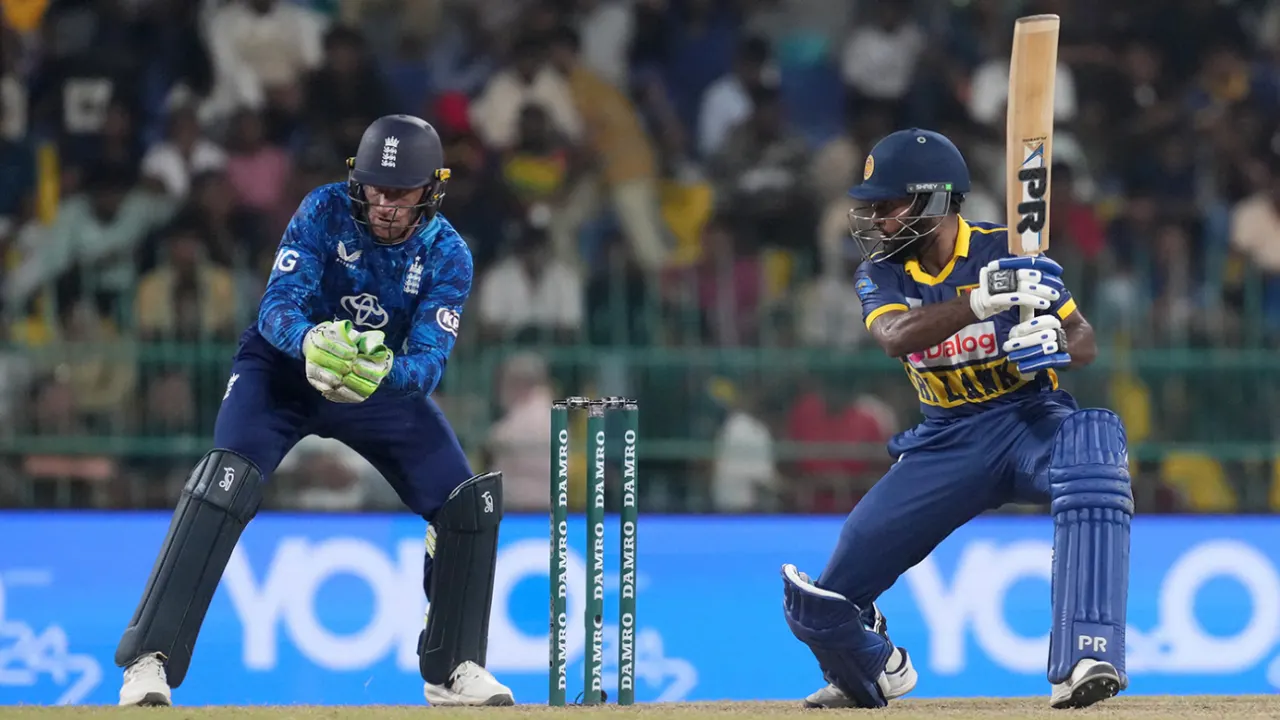
Pavan Rathnayake has re-entered Sri Lanka’s T20I squad following his 121 off 115 balls in the third ODI against England. Omitted from the squad to play England in three T20Is, however, are fast bowler Nuwan Thushara and batting allrounder Kamindu Mendis. Legspinner Dushan Hemantha has also been left out.
Left-arm-spinning allrounder Dunith Wellalage retains his place in the T20I squad, though he hasn’t played a T20I since September. Maheesh Theekshana and Wanindu Hasaranga are the two other frontline spinners. Dhananjaya de Silva and Charith Asalanka – who both bowl fingerspin – are in the squad too.
On the seam-bowling front, Eshan Malinga and Pramod Madushan are in the squad, in addition to Dushmantha Chameera and Matheesha Pathirana. Thushara had been a consistent presence in Sri Lanka’s T20I squads over the past two years, but his omission comes after several modest performances since September.
Aside from Rathnayake’s inclusion, the batting is largely as expected, with Kusal Perera coming back in the only format he now plays.
Sri Lanka are yet to announce their squad for the T20 World Cup, which will start on February 7. Teams have time till January 31 to make changes to squads, following which they will have to get the approvals from the ICC to make changes.
Sri Lanka squad for England T20Is:
Dasun Shanaka (capt.), Pathum Nissanka, Kamil Mishara, Kusal Mendis, Kusal Perera, Dhananjaya de Silva, Charith Asalanka, Janith Liyanage, Pavan Rathnayake, Dunith Wellalage, Wanindu Hasaranga, Maheesh Theekshana, Dushmantha Chameera, Pramod Madushan, Matheesha Pathirana, Eshan Malinga
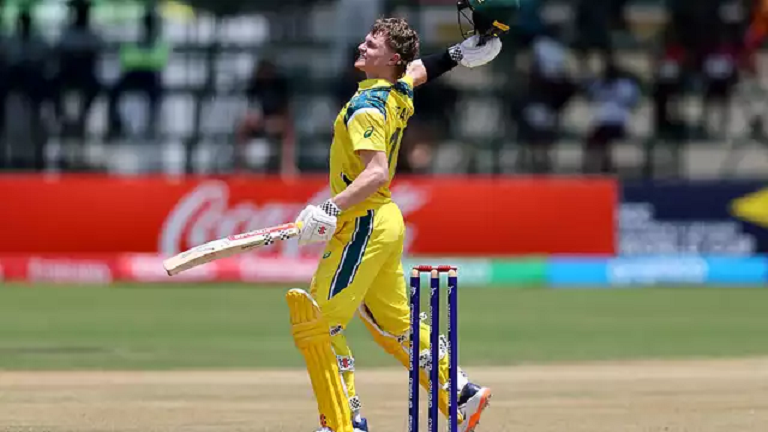
Australia Under 19s 314/7 in 50 overs (Oliver Peake 109, Nitesh Samuel 56; Jakeem Pollard 2-37, R’Jai Gittens 2-45) beat West Indies Under 19s 292/9 in 50 overs (Zachary Carter 64, Joshua Dorne 62; Charles Lachmund 4-66, Aryan Sharma 2-47) by 22 runs
Latest News
The National Strategic Action Plan to monitor and combat human trafficking (2026-2030) officially launched

The Prime Minister Dr. Harini Amarasuriya participated in the official launch of the National Strategic Action Plan to monitor and combat human trafficking (2026-2030) held on 28th of January at the Cinnamon Life Hotel, Colombo. The event was jointly organized by the Ministry of Defence, National Anti Human Trafficking Task Force ( NAHTTF), International Organization for Migration (IOM).
This five-year Action Plan was unveiled under the leadership of the Ministry of Defence, in its capacity as Chair of the NAHTTF and with the technical support from the International Organization for Migration (IOM). The National Strategic Action Plan 2026-2030 establishes a unified national framework to prevent human trafficking, protect and assist victims, strengthen law enforcement responses, and enhance accountability.
Addressing the event, the Prime Minister reaffirmed the Government’s commitment to strengthening national efforts to prevent and address human trafficking and stated that the Action Plan must transcend its symbolic launch into concrete, coordinated, and sustained implementation.
The Prime Minister also noted that the launch of the National Strategic Action Plan is timely, as it operationalizes the four internationally recognized pillars of the anti-trafficking framework namely prevention, protection, prosecution, and partnership.
The Prime Minister further stated,
“Caring for trafficking survivors in Sri Lanka requires a holistic, gender-sensitive, and survivor-centered approach that addresses both immediate protection and long-term recovery. This includes safe shelter, medical care, and trauma-informed psychological support, with particular attention to women and girls who experience more severe and gendered forms of violence, alongside legal assistance, economic empowerment, and skills development to prevent re-trafficking.
Human trafficking is a structural and social challenge that requires sustained, multi-sectoral action. Ministries and government agencies must embed anti-trafficking priorities into their core strategies and day-to-day operations, ensuring institutional integration and professional accountability”.
The event was attended by Parinda Ranasinghe Jnr, PC, Attorney General of the Democratic Socialist Republic of Sri Lanka, the Secretary to the Ministry of Defence and Chair of the NAHTTF, Air Vice Marshal Sampath Thuyacontha; and Kristin Parco, IOM Chief of Mission in Sri Lanka and Maldives. Members of the NAHTTF representing 23 key government entities, along with representatives of the diplomatic community, United Nations entities and Civil Society Organizations (CSOs).
(Prime Minister’s Media Division)

Rathnayake in Sri Lanka squad for England T20Is; Thushara, Kamindu left out

U19 World Cup: Peake ton fires Australia into the semis

The National Strategic Action Plan to monitor and combat human trafficking (2026-2030) officially launched

Seifert, Santner headline New Zealand’s massive win despite Dube’s 15-ball fifty

Dry weather will prevail inmost parts of the island.

No changes to IMF agreement despite Cyclone Ditwah impact

‘Dates have the highest sugar content to fight Coronavirus’

Sunday Island 27 December – Headlines

#SundayIsland 17th December – Headlines

Sunday Island – 28th March

Sunday Island Headlines – 21 March

Sunday Island – 21st February – Headlines
-
 Business3 days ago
ComBank, UnionPay launch SplendorPlus Card for travelers to China
-
 Business4 days ago
ComBank advances ForwardTogether agenda with event on sustainable business transformation
-
 Opinion4 days ago
Conference “Microfinance and Credit Regulatory Authority Bill: Neither Here, Nor There”
-

 Opinion6 days ago
A puppet show?
-

 Opinion3 days ago
Luck knocks at your door every day
-
 Business5 days ago
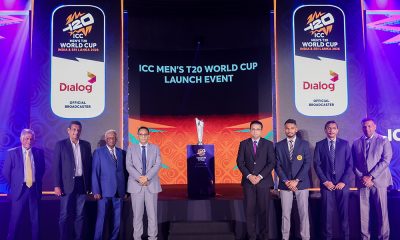
Dialog Brings the ICC Men’s T20 Cricket World Cup 2026 Closer to Sri Lankans
-
 Features6 days ago
‘Building Blocks’ of early childhood education: Some reflections
-
 News4 days ago
Rising climate risks and poverty in focus at CEPA policy panel tomorrow at Open University