
Business
Managing investor perception of business confidence seen as vital for Sri Lanka

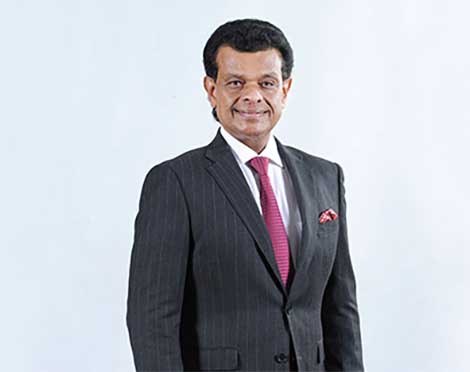
Interview with Dr. Parakrama Dissanayake, Deputy Chairman and Managing Director Aitken Spence PLC
By Lynn Ockersz
A priority for the Sri Lankan economy is to gain monetary, financial and fiscal stability and to gradually implement policy changes rather than to expect swift changes overnight, especially for key export industries that bring forex earnings into the country. Going forward, a concerted effort should be made to improve our ranking on the Ease of Doing Business and the Logistics Performance Index (LPI). What matters in the short term is to manage investor perception of business confidence, Deputy Chairman and Managing Director, Aitken Spence PLC Dr. Parakrama Dissanayake told The Island Financial Review in the course of an interview.
The Aitken Spence Group has performed remarkably well in the 1st Quarter of this year. What are the main keys to your success?
Aitken Spence PLC made an impressive comeback in the first quarter by recording a 145% increase in Profit Before Tax (PBT) and it was driven by the non-tourism companies of the Group that includes maritime and freight logistics, renewable energy, elevator agency, money transfer services, printing and packaging, plantations, apparel, insurance and maritime education and management. The diversification of business and our international presence in eight countries, has been a main contributing factor to achieve a compelling performance amidst many setbacks particularly impacting the tourism sector.
From the onset, we have demonstrated purposeful leadership through team effort, we have relied on our collective knowledge, innovation and insight which has helped us to navigate and will continue to rise above this tumultuous environment.
Going forward, what would you recommend as the main ways in which the Sri Lankan economy could be revived?
A priority for the Sri Lankan economy is to regain the monetary, financial, fiscal stability and gradually implementing policy changes than expecting swift changes overnight especially for key export industries that bring forex earnings into the country.
In addition, to expand our export products and services. When we look at the past two decades, we notice that Sri Lanka has a low growth of exports and lack of export-oriented investment, particularly FDI when compared to other countries in the region. We must reduce red-tape, build our infrastructure, innovativeness and make crucial technology transitions as these will determine our ability to compete with other countries in the region. The success of this will also depend on proper educational and training efforts.
A concerted effort should be made to improve our ranking on Ease of Doing Business and the Logistics Performance Index (LPI). What matters in the short term is to manage investor perception on business confidence.
From a private sectors perspective, Aitken Spence is embracing business transformation and upgrading skills of our employees to better equip them for the future.
What is the current status of your palm oil sector? Have the issues surrounding this sector been cleared up?
The issues remain unresolved. We are confident that the Government will find a pragmatic solution.
What are the keys to the success of your Strategic Investments sector?
The key success has been our strategy to cautiously diversify and balance investments to be less dependent on one or few businesses which has proven to be successful especially when facing the ongoing pandemic.
Our significant investments in renewable energy which were recent additions to the portfolio has been a key success to the Group’s strategic investments sector. We introduced Sri Lanka’s first waste to energy plant that was launched this year. This project came about with a sustainable solution to the waste management problem which is a complex and long-running issue in the Colombo city. Further investments were made this year to expand our portfolio in hydropower and in line with the collective efforts of the Government and the private sector to produce clean energy sustainably.
The printing arm of Aitken Spence was the first green printing facility in South Asia and continues to raise the benchmark in the industry.
Moreover, the plantations segment provided a substantial boost to the Group’s strategic investments sector by recording its highest ever profit from inception due to its balanced portfolio of diversification. The segment commenced commercial production of four varieties of berries under the brand “Berry Much”. Another first in Sri Lanka to cultivate and market the full range of berries. The plantations segment also entered into a shareholder agreement with SIM Leisure Group to develop and operate a world-class ESCAPE adventure theme park.
What would be your main priorities in your Tourism Sector once a degree of normality has been established in the country?
To improve resilience in Sri Lanka Tourism, priority should be given to urgent matters such as working towards a recovery plan and better coordinated efforts between all stakeholders to achieve this common goal. With this in mind, a main priority for us is to ensure that our employees across four countries in the Group’s tourism sector have completed the inoculation (both doses) and even those indirectly linked to the industry. This is critical and one of the ways to restore traveller confidence.
We are also revisiting our product offerings in line with the changing thinking pattern of international tourists centred on their safety and well-being. We will focus on a more differentiated, experiential product offering and direct engagement for customers as compared to the traditional accommodation offering. In this business transformation process, we are embracing technology that captures customer needs that would further elevate customer experience and support destination Sri Lanka.
With our hotels presence not just in Sri Lanka but in the Maldives, Oman and India; we will continue to strengthen our operations in those countries and look for greater opportunities. Our hotels in the Maldives did relatively well and has certainly cushioned the blow on the Group’s tourism sector.
We are also concerned with sustaining the trained human resources within the tourism industry as with the current situation many are moving out of the industry and new entrants to the industry have substantially dropped. When the situation has improved, our concerted efforts would be to attract people into the tourism industry.






The recent announcement of Wealth Trust Securities Ltd.’s Rs. 500.8 million Initial Public Offering -IPO- comes at a moment when Sri Lanka’s interest-rate environment is gradually easing, allowing well-capitalised primary dealers to expand their trading portfolios and secure long-term positions in government securities.
Company chairman Senaka Weerasooria told journalists in Colombo that the IPO is not merely a capital-raising exercise, but a reinforcement of the disciplined structure that has defined the company since its inception.
He noted that WTS enters the public market with what is already one of the most robust capital bases in the industry, and with “absolute confidence that investors are joining a journey that has consistently returned value.”
Weerasooria said the capital infusion will further solidify WTS’s ability to absorb volatility, particularly amid cyclical movements in Treasury yields.
Despite maintaining a conservative trading outlook, the company has managed to average a 31% ROE over the past twelve years — a figure management repeatedly highlighted as evidence of resilience across both tightening and loosening rate cycles.
Managing Director and CEO Romesh Gomez said that in recent months the direction of policy rates and market liquidity has begun shifting favourably, creating clear value-accretion opportunities for disciplined portfolio expansion. With additional capital, he noted, WTS has greater room to capture advantageous auction positions, broaden secondary market activity and align its investment scale to emerging market windows.
Gomez acknowledged that FY25 reflected compressed performance due to systemic realignment, with revenue at Rs. 4.6 billion and PAT at Rs. 1.2 billion. However, he pointed out that profit sustainability, even through a difficult cycle, speaks to strong operational controls. The A- rating with a Positive outlook continues to stand, reinforcing the company’s position as a stable counterparty in a specialised sector.
Asia Securities Advisors, managing the IPO, pointed out that the offer price of Rs. 7 presents meaningful upside when benchmarked against underlying valuation metrics. The move into the listed environment, they noted, enhances governance visibility — a point increasingly valued among institutional investors participating in the Government securities market.
By Ifham Nizam
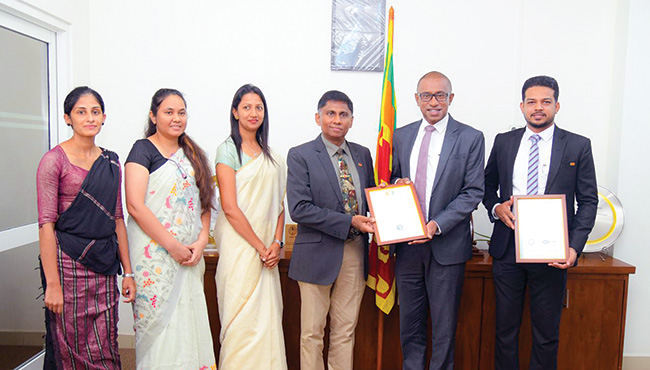
BoardPAC, the global leader in digital board meeting automation, has secured the Carbon Neutral Certification for 2024, marking the fourth consecutive year the company has achieved this milestone. The certification, awarded by the Sri Lanka Climate Fund (SLCF) under the Ministry of Environment in October 2025, underscores BoardPAC’s commitment to environmental sustainability and responsible corporate governance.
BoardPAC’s operations, spanning over 40 countries, were assessed against the ISO 14064 – 1:2018 standard, and the company’s organization-level Greenhouse Gas (GHG) emissions were successfully offset, reflecting its ongoing commitment to reducing its environmental impact.
Business
Uber marks 10 years in Sri Lanka: Moving People, Powering Livelihoods, Impacting Communities

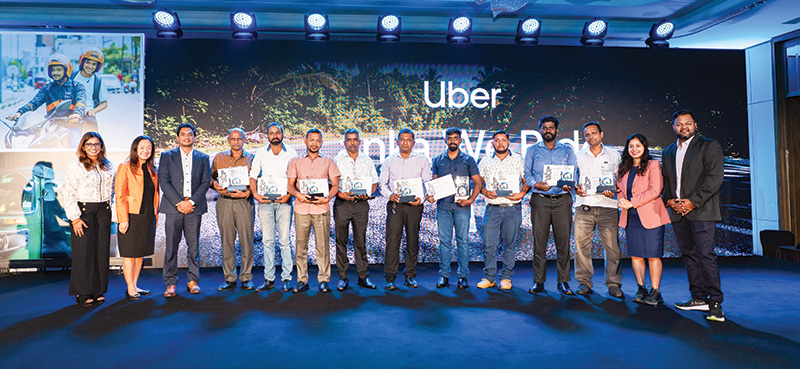
Uber today marked ten years of operations in Sri Lanka, a decade in which the platform has reshaped how people commute, and how thousands of Sri Lankans earn a livelihood. Over the past decade, ride-hailing has become one of the most transformative shifts in Sri Lanka’s urban mobility landscape, providing safe, reliable and affordable transport at scale.
Chathuranga Abeysinghe, Deputy Minister for Entrepreneurship, Ministry of Industries and Entrepreneurship Development, Government of Sri Lanka, graced the milestone event as the Chief Guest. U.S. Ambassador Julie Chung attended as the Guest of Honor, joined by Akanksha Singh, Head – South Asia Markets, Uber, and Kaushalya Gunaratne, Country Manager – Mobility, Uber Sri Lanka.
As per the 2024 Sri Lanka Economic Impact Report, compiled by global policy research firm – Public First, Uber and Uber Eats together generated over LKR 160 billion in economic activity in Sri Lanka within a single year. Since its entry in Sri Lanka in 2015, Uber rides have covered over 1.15 billion kilometers – equivalent to nearly 3000 trips from Earth to the moon! Over 320,000 Sri Lankans have earned through the platform as drivers.
Uber has also supported the tourism ecosystem, enabling more than 700,000 airport trips, connecting visitors seamlessly to their destinations. Over the last year, we’ve further intensified our service in the Western and Central provinces and expanded our offerings in the Southern and Northern provinces – bringing its services closer to more communities across the country. Uber has emerged as one of the most preferred ride-hailing platforms across the island, offering affordable, reliable, and safer rides at different price points.
Deputy Minister for Entrepreneurship, Ministry of Industries and Entrepreneurship Development, Government of Sri Lanka, Chathuranga Abeysinghe, said, “Over the past decade, Uber has become part of the fabric of daily life in Sri Lanka – not only by helping people get where they need to go, but by enabling thousands to earn an income with dignity and flexibility.

Level III landslide early warnings issued to the Districts of Kandy, Kegalle, Kurunegala and Matale extended

“We cannot allow flooding to become a part of the daily lives of the people in the Colombo District” – PM

Russia gifts 35 tonnes of Humanitarian Aid to Sri Lanka

Sri Lanka squad named for ACC Men’s U19 Asia Cup

Hospital CCTV helps clear long jumper of doping

Tickner and Rae bowl West Indies out for 205 to give New Zealand the edge

‘Dates have the highest sugar content to fight Coronavirus’

Sunday Island 27 December – Headlines

#SundayIsland 17th December – Headlines

Sunday Island – 28th March

Sunday Island Headlines – 21 March

Sunday Island – 21st February – Headlines
-

 News3 days ago
Over 35,000 drug offenders nabbed in 36 days
-
 News7 days ago
Level III landslide early warning continue to be in force in the districts of Kandy, Kegalle, Kurunegala and Matale
-

 Business5 days ago
LOLC Finance Factoring powers business growth
-

 News5 days ago
CPC delegation meets JVP for talks on disaster response
-
 News2 days ago
Cyclone Ditwah leaves Sri Lanka’s biodiversity in ruins: Top scientist warns of unseen ecological disaster
-
 News5 days ago
A 6th Year Accolade: The Eternal Opulence of My Fair Lady
-

 News3 days ago
Rising water level in Malwathu Oya triggers alert in Thanthirimale
-
 Features4 days ago
The Catastrophic Impact of Tropical Cyclone Ditwah on Sri Lanka: