
Latest News
Maldives bans smoking for younger generations


The Maldives has banned young people born on or after 1st January 2007 from smoking tobacco, becoming the only country in the world to enforce a nationwide generational tobacco prohibition.
The archipelago’s health ministry announced on Saturday that it would be illegal for younger generations to use, buy or sell tobacco within the country.
The ban “reflects the government’s strong commitment to protecting young people from the harms of tobacco”, the ministry said.
Ahmed Afaal, vice chair of the archipelago’s tobacco control board, told BBC World Service’s Newshour programme that the country’s general vaping ban last year had been a “good step towards a generation of tobacco-free citizens”.
The new ban “applies to all forms of tobacco, and retailers are required to verify age prior to sale”, the health ministry said, adding that it aligned with the Maldives’ obligations under the World Health Organization Framework Convention on Tobacco Control.
According to the UN’s health body, this convention “provides a global response to a global problem – namely, the tobacco epidemic”.
Mr Afaal said the country’s crackdown on vaping had been an important first step because “these new stylish gadgets are tactics of the industry to approach the younger generations to uptake addictive processes, which definitely harms their health”.
Last year, the Maldives made it illegal for anyone to import, sell, possess, use or distribute electronic cigarettes and vaping products, regardless of age.
Tourists coming to visit the Maldives’ islands will also have to adhere to the law, but Mr Afaal argues the smoking ban will not have a detrimental impact on tourism.
“People don’t come to the Maldives because they’re able to smoke. They come for the beaches, they come for the sea, they come for the sun, and they come for the fresh air,” he added.
Quoting tourism data, Mr Afaal argued that despite the new regulations there had been no tourist cancellations and the number of arrivals had grown in the past year.
“We’re projecting more than 2m [tourists] in the next year,” he said.
Plans by New Zealand to pass a generational smoking ban were scrapped in 2023 after a new government took power.
The move was seen as a blow to many health experts and Maori people in particular, who have one of the highest smoking rates.
Last year, the UK’s then-Prime Minister, Rishi Sunak, had hoped to introduce a law that would ban young people born on or after 2009 from smoking.
A new version of the legislation, introduced by the current government, has passed through the Commons and is now at the committee stage at the House of Lords – nearing its last hurdles before it gets royal assent.
(BBC)

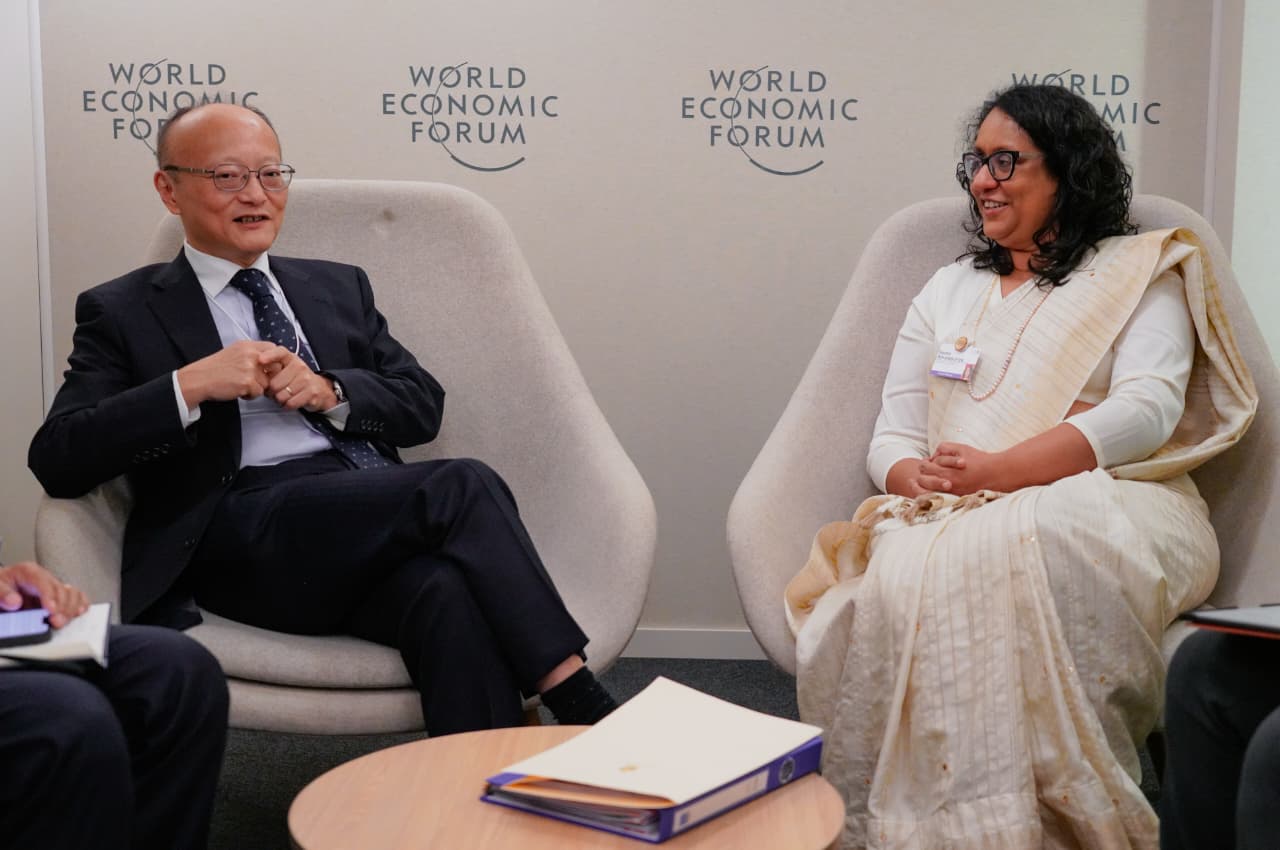
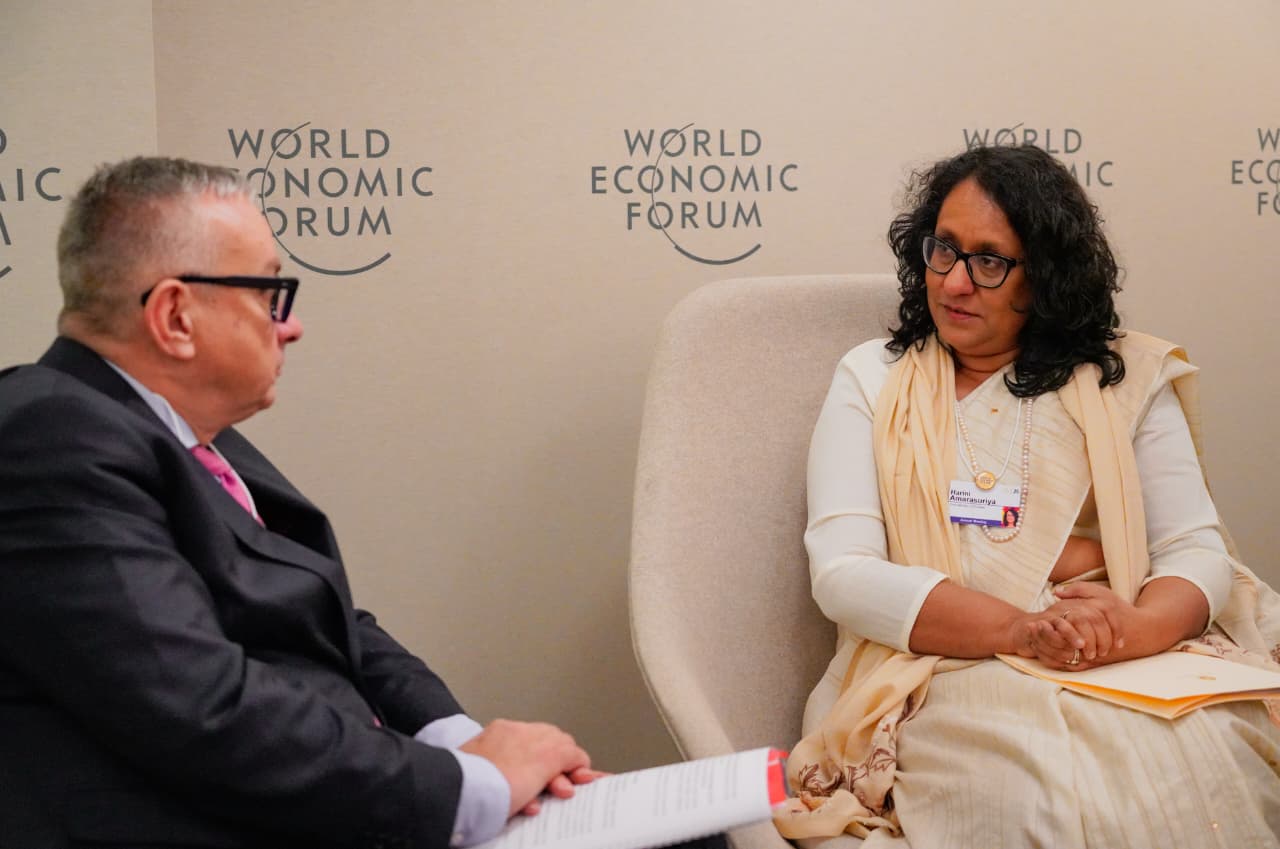
Prime Minister Dr. Harini Amarasuriya participated in a series of high-level bilateral meetings on January 20 on the sidelines of the 56th Annual Meeting of the World Economic Forum in Davos-Klosters, Switzerland.
The Prime Minister attended a productive bilateral meeting with Mr. Jozef Síkela, European Commissioner for International Partnerships. During the discussion, both sides focused on strengthening Sri Lanka–EU cooperation and advancing mutual interests.
Prime Minister Amarasuriya also met with Mr. Masato Kanda, President and Chairperson of the Board of Directors of the Asian Development Bank (ADB), at the WEF Congress Centre. The meeting provided an opportunity to discuss ongoing engagement and future collaboration between Sri Lanka and the ADB.
In addition, the Prime Minister held discussions with Mr. Hassan El Houry, Chairman of Menzies Aviation, where opportunities for collaboration in aviation services and connectivity were explored.
The Prime Minister also participated in a high-level dialogue at the Global Tourism Forum held at the Euronews Hub, Piz Buin, Davos, as part of the World Economic Forum engagements.
Dr. Anil Jayantha, Minister of Labour, and the Deputy Minister of Finance were also present at these meetings.
[Prime Minister’s Media Division]
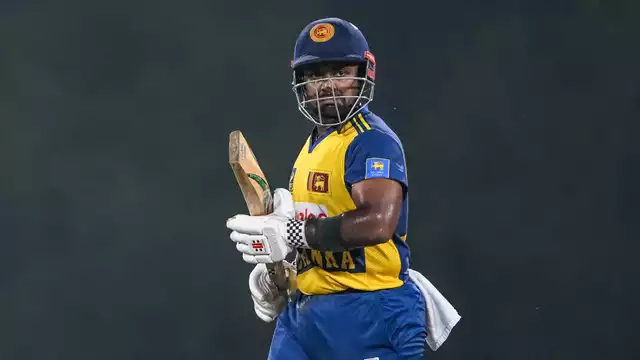
Charith Asalanka (Captain), Pathum Nissanka, Kamil Mishara, Kusal Mendis, Sadeera Samarawickrama, Pavan Rathnayake, Dhananjaya de Silva, Janith Liyanage, Kamindu Mendis, Dunith Wellalage, Wanindu Hasaranga, Jeffrey Vandersay, Maheesh Theekshana, Milan Rathnayake, Asitha Fernando, Pramod Madushan, Eshan Malinga.

On Tuesday, a day before the ICC is expected to take a final call on Bangladesh’s participation at the 2026 men’s T20 World Cup, the PCB wrote to the governing body stating that it supports the BCB’s stance on not wanting to play in India at a time of political turmoil in the neighbourhood. ESPNcricinfo has learned that that PCB also copied the members of the ICC Board in it.
It is understood that the ICC has called a Board meeting on Wednesday to address the matter of the BCB asking for Bangladesh’s matches to be shifted to Sri Lanka because of security concerns in India. It could not be ascertained if the PCB’s email led to the Board meeting being called.
The timing of the PCB email could raise eyebrows, but it is understood that it will not impact the ICC’s stance so far, of not changing the World Cup schedule and allowing Bangladesh to play in Sri Lanka, co-hosts of the tournament with India. The ICC has been firm on this and has conveyed the same to the BCB during its interactions last week.
The BCB, with the Bangladesh government’s support, has refused to travel to India for the team’s group-stage games.
The ICC and the BCB have met several times to discuss the issue, most recently in Dhaka last weekend. But neither side has shifted their stances – the ICC insisting matches must go ahead as planned and the BCB that it cannot send its team to India. January 21 – Wednesday – had been set as a deadline for a decision, less than three weeks before the start of the tournament.
The PCB’s late involvement in the matter comes on the back of a week of speculation around their possible ways out of the impasse. There were unverified reports that the PCB had offered to stage Bangladesh’s games in Pakistan and, more dramatically, that the PCB was reviewing Pakistan’s participation in the World Cup, contingent on what happens with Bangladesh.
The PCB has not commented publicly on the matter, or responded to ESPNcricinfo’s queries.
The stand-off began when the BCCI instructed Kolkata Knight Riders (KKR) to remove Mustafizur Rahman from their squad for IPL 2026. The reasons for that have never been fully explained, though a worsening of political ties between Bangladesh and India has been cited. That prompted the Bangladesh government to formally state that the Bangladesh team would not play its matches in India.
The situation has spiralled since then, even leading to a player boycott in Bangladesh, which affected the ongoing BPL, after a senior BCB official spoke disparagingly of the country’s premier players when asked about the financial implications for the BCB if Bangladesh ended up staying away from the T20 World Cup altogether
(Cricinfo)

Prime Minister participates in high-level bilateral meetings at World Economic Forum

Dushmantha Chameera, Dhananjaya de Silva return for England ODIs

T20 World Cup crisis: PCB writes to ICC supporting Bangladesh’s stance

U – 19 world Cup: Rain disrupts New Zealand vs Bangladesh game in Bulawayo

U – 19 World Cup: Will Malajczuk’s 51-ball century helps Australia blow Japan away

Rodrigues holds nerve as Delhi Capitals hand Mumbai Indians third straight loss

‘Dates have the highest sugar content to fight Coronavirus’

Sunday Island 27 December – Headlines

#SundayIsland 17th December – Headlines

Sunday Island – 28th March

Sunday Island Headlines – 21 March

Sunday Island – 21st February – Headlines
-

 Editorial3 days ago
Illusory rule of law
-
 News4 days ago
UNDP’s assessment confirms widespread economic fallout from Cyclone Ditwah
-

 Business6 days ago
Koaloo.Fi and Stredge forge strategic partnership to offer businesses sustainable supply chain solutions
-

 Editorial4 days ago
Crime and cops
-
 Features3 days ago
Daydreams on a winter’s day
-

 Editorial5 days ago
The Chakka Clash
-
 Features3 days ago
Surprise move of both the Minister and myself from Agriculture to Education
-

 Features2 days ago
Extended mind thesis:A Buddhist perspective