
Editorial
Make killers pay

Monday 18th January, 2021
Health authorities in some parts of the pandemic-hit US are in a dilemma over the prioritisation of risk groups for vaccination. The New Jersey government is reported to have decided to vaccinate smokers on priority basis as they run a higher risk of having Covid-19 complications than others. It has drawn heavy criticism for its decision, which will result in smokers getting the jab before teachers and public transport workers, we are told.
Covid-19 vaccine saves lives, especially those of people afflicted with chronic non-communicable diseases. The opinion of the New Jersey officials is that smokers should be given the jab as early as possible if their lives are to be saved. But others are convinced otherwise; they ask whether smokers who are fully aware of the health risks they expose themselves to when they puff away at ‘coffin nails’ should get the first dibs on the vaccine. This has led to an ethical dilemma of sorts.
The critics of the New Jersey government decision insist that if smokers are a vulnerable group, they must be asked to remain indoors instead of being inoculated before others who actually deserve priority, given the essential services they render to society during the pandemic, risking their lives. Some people argue that smokers should not be discriminated against in saving lives as their right to life must also be respected. There is yet another school of thought, which opines that only those with respiratory diseases, etc., among smokers should be given priority in the vaccination programme just like those with the same health issues. But the problem is that all smokers are at a higher risk than nonsmokers where the pandemic is concerned.
A false claim is being propagated in some quarters—perhaps at the behest of the powerful tobacco industry—that smokers are underrepresented among the Covid-19 patients needing hospitalisation, and, therefore, smoking, which is associated with morbidity and mortality in many diseases, is protective against the pandemic!
Thankfully, the World Health Organisation (WHO) and the US Food and Drug Administration have given the lie to this claim. The WHO has confirmed that available evidence suggests that smoking is associated with increased severity of disease and death in hospitalised Covid-19 patients. New Jersey Health Commissioner Judith Persichilli has told the media, ‘Smoking puts you at a significant risk for and adverse results from Covid-19.” It has thus been established that smoking is a danger, especially during the pandemic, and the question is why no action has been taken against the tobacco industry, which is making huge profits at the expense of public health, the world over.
The WHO has revealed that tobacco kills more than 8 million people a year in the world; more than 7 million of those deaths are the result of direct tobacco use while around 1.2 million are the result of non-smokers being exposed to second-hand smoke. The US Centres for Disease Control and Prevention (CDC) has revealed that cigarette smoking causes more than 480,000 deaths per year in the US. This is about one in five deaths annually, or 1,300 deaths a day, the CDC has said. Covid-19 has killed about two million people globally including about 390,000 Americans during the last 13 months or so. Isn’t the tobacco Mafia more dangerous than coronavirus, and what action has the world taken against it?
Sri Lanka will face the same problem as New Jersey sooner or later when the national vaccination drive gets underway, and risk groups have to be identified. If the current health crisis takes a turn for the worse with the death toll increasing exponentially—absit omen—the high-risk groups including smokers will have to be inoculated before others. The state will have to pay for most of the vaccine doses. It will be a huge financial burden on the cash-strapped government, which will invariably increase its revenue by jacking up indirect taxes. Thus, everyone will have to pay for the vaccine although it is said to be free. It may not be possible to vaccinate everyone, given the huge cost of the vaccine, logistical issues and the sheer number of people to be inoculated although Sri Lanka boasts an efficient healthcare system. How fair will it be to allow smokers to get the shots first at the expense of other citizens while the tobacco industry is earning massive profits without giving anything back for the benefit of its loyal customers?
Let it be suggested that the cost of vaccinating the people who are suffering from smoking-related diseases that predispose them to Covid-19 complications be recovered from the tobacco industry by way of a new tax. Statistics about the number of smokers, etc., are readily available and it is not difficult to determine the cost of vaccinating them. Killers must be made to pay.



Saturday 31st Junuary, 2026
The government has ignored the ultimatum given by the Government Medical Officers Association (GMOA). Its intransigence will only drive the protesting doctors to intensify their trade union action, causing more suffering to patients.
The government has launched a propaganda campaign to turn public opinion against the GMOA by claiming that the doctors are demanding pay hikes with no heed for the economic difficulties caused by Cyclone Ditwah. It has stretched the truth to bolster its claims, suppressing the fact that the protesting doctors have softened their stand and expressed their willingness to give up their trade union action if the government addresses the issues the resolution of which does not cost the state coffers anything. According to media reports, their demands include the establishment of a special service minute for doctors, enhancing the disturbance, availability, and transport allowance, converting the extra duty allowance into a fixed one, and the implementation of a written agreement with the Health Minister on resolving issues regarding a research allowance and transport.
What the government should do to prevent disruptions to the health sector is to bring the GMOA to the negotiating table forthwith and work out a compromise formula. But it has succumbed to the arrogance of power, which drives strong governments to bulldoze their way through. Health Minister Dr. Nalinda Jayatissa has told the doctors that it’s his way or the highway.
The government is apparently cherishing the delusion that since it has a steamroller majority in Parliament, it can do as it pleases, and others have to obey its dictates. Let it be warned that it is inviting trouble. Mandates come with short lifespans, and hubris and downfall are neighbours. Its efforts to neutralise the GMOA have galvanised other health sector trade unions into joining forces; they know that if the government succeeds in flooring the GMOA, so to speak, they will have no chance whatsoever of winning their demands. It is popularly said in this country that “one who lays one’s hands on the gourd does not spare the pumpkin”. In fact, that seems to be the government’s strategy. It is dealing with protesting trade unions in such a way as to deter others from launching labour struggles. It has chosen to ignore a hunger strike by the Development Officers (DOs), attached to the state-run schools; they demanding that they be absorbed into the teacher service. The protesters campaigned hard for the JVP/NPP in the 2024 elections, expecting their fair demand to be met. These graduates have worked as teachers for about seven years, and there is no reason why the government cannot appoint them as teachers; they can be further trained, if need be, after being appointed as teachers. The DOs have received the typical karapincha (curry leaves) treatment from the government they helped elect—they have been used and discarded. The government has shown a callous disregard for not only their career prospects but also their dear lives. The DOs were informed yesterday evening that they could meet President Anura Kumara Dissanayake on Tuesday (03 Feb). But NPP MP Chandna Sooriyaarachchi revealed to the media yesterday that all arrangements had been made for a competitive examination to be held soon!
The GMOA used to give short shrift to other health sector trade unions, and go to the extent of being critical of their labour struggles. It was labouring under the misconception that the state health institutions could operate without other categories of workers. They even sought to establish what may be described as a health sector trade union hierarchy modelled on the four-varna caste system, and place themselves at the top. Now, they have realised the need to cooperate with other trade unions instead of confronting them.
If the health sector trade unions close ranks, they will stand a better chance of winning their demands, and labour unions in other sectors will follow suit to boost their bargaining power. The government continues to provide its political opponents and trade unions with rallying points. Governments intoxicated with power think no end of themselves and behave like aggressive drunkards in shebeens only to receive sobering knocks in elections.
Friday 30th January, 2026
Time was when governments inveighed against the JVP for instigating strikes in vital sectors to further its political interests. Today, a JVP-led government is accusing its political rivals of manipulating trade unions to advance their political agendas on the pretext of championing workers’ rights. Following the 2024 regime change, it was widely thought that the country would at last be free from strikes as the JVP, the main instigator of strikes, had gained state power. During the initial phase of the JVP-NPP rule, all was quiet on the trade union front, but labour disputes began to manifest themselves thereafter.
Development Officers (DOs), attached to the state-run schools, have been protesting near the Presidential Secretariat, Colombo, for four days, demanding that they be absorbed into the teacher service without being made to sit a competitive examination. Some of them were on a hunger strike at the time of writing, claiming that the government had denied them an opportunity to be heard.
The NPP administration is thought to be in a straitjacket where state sector recruitment is concerned. It has to curtail government expenditure in keeping with the IMF bailout conditions. But pressure is mounting on it to fulfil its pledges to the unemployed graduates and the DOs, who campaigned hard for the JVP/NPP in the 2024 presidential and parliamentary elections. In 2024, a few weeks after forming a government, the NPP had a DOs’ protest near the Education Ministry in Battaramulla dispersed by the police!
The state service, bursting at the seams, has become a main source of employment for ruling party supporters over the past several decades. Sri Lanka currently has about 1.5 million public sector employees, with the workforce having doubled over the past one and a half decades. Although there is one public official for every 14 citizens, the efficiency of the state service remains extremely low. Only the UNP-led UNF government (2001-2004) sought to address this issue and curtailed state sector recruitments. But the then President Chandrika Bandaranaike Kumaratunga sacked that government, and the SLFP-led UPFA, which came to power by winning the 2004 general election, upended the UNF’s recruitment policy and resumed making political appointments in the state sector.
By some quirk of fate, the JVP, which pressured all previous governments to employ graduates in the state sector, is now under fire for not recruiting some graduates as teachers.
Opinion may be divided on the protesting DOs’ demand at issue. But it defies comprehension why the government wants them to sit a competitive examination, for they have worked as teachers for years. They have had hands-on experience in schools, and the question is why they are not appointed as teachers straightaway.
The government, which claims to espouse Marxism, ought to talk to protesters and strikers instead of trying to intimidate them into submission. Let it be repeated that in the past, the JVP was behind almost all strikes, demanding solutions to workers’ problems. Unfortunately, it is now riding roughshod over trade unions and workers. It is playing a game of chicken with the Government Medical Officers’ Association (GMOA), and the protesting doctors have given Minister of Health Dr. Nalinda Jayatissa 48 hours to address their problems or face the consequences. It is hoped that he will invite the doctors on the warpath to the negotiating table and try to avert a health sector strike.
There is no way hospitals can function during a doctors’ strike, and it will be a mistake for the government to wait, expecting the GMOA to blink first. It must get protesters, including doctors and the DOs around the table, and have a serious discussion on the unresolved issues that have driven them to resort to trade union action.

Thursday 29th January, 2026
Four Mahanayake Theras have made an intervention, albeit with delay, to reorient government policy towards commonsense and good governance. They have raised concerns about the prolonged delay in appointing the Auditor General. In a letter to President Anura Kumara Dissanayake, they have warned that the continued absence of an Auditor General has created space for various groups to question the state’s financial oversight and fuel debate over public financial management.
Noting that selecting an external officer for a post so central to public audit and oversight could detract from the integrity of the office, the Prelates have voiced support for Dharmapala Gammanpila, a senior official with extensive experience in the National Audit Office, as the most suitable candidate for the post of Auditor General.
The post of Auditor General has remained vacant since the retirement of the former incumbent in April 2025, and three nominations submitted by the President were rejected by the Constitutional Council (CC)––and rightly so. The government is trying to parachute an outsider into the Auditor General’s post to safeguard its interests.
Supermajorities make governments impervious to reason and blind them to reality. Feeding politicians’ autocratic tendencies that are a threat to democracy, steamroller majorities drive governments to embark on risky missions and launch mega projects to boost their leaders’ egos. An SLFP-led government weakened the economy with a disastrous experiment with autarky in the 1970s. A UNP government, elected in 1977, went to the other extreme, ruining profitable state enterprises and institutionalising election malpractices, political violence and corruption. Another SLFP-led government launched a grandiose infrastructure development drive and spent borrowed money on some Ozymandian projects, which have become white elephants. An SLPP administration introduced an ill-planned organic farming drive. The incumbent government has undertaken to reform the education system hastily.
The Dissanayake government is bent on reducing every vital state institution to a mere appendage of the JVP in a bid to perpetuate its hold on power. The Police Department has already become a pliable tool of the JVP. The CID is now a part of the JVP in all but name; it is doing political work for the government. It arrests, harasses and casts aspersions on the political rivals of the government in the name of investigations. Whenever the government paints itself into a corner, the CID makes some high-profile arrests to divert attention. The ruling party propagandists have launched a vilification campaign against the Attorney General, with the JVP/NPP supporters holding protests and calling for his ouster, as part of a government strategy to render the state prosecutor malleable so that the JVP/NPP can have its rivals arrested and prosecuted according to its whims and fancies.
The powerful message in the Mahanayake Theras’ letter to President Dissanayake has resonated with the public, who cherish democracy and good governance. It is being argued in some quarters that going by what Cabinet Spokesman and Minister Dr. Nalinda Jayatissa said about the prelates’ letter, at this week’s post-Cabinet media briefing, the government is likely to go ahead with its plan to appoint an outsider as Auditor General, paying no heed to the Mahanayake Theras’ concerns.
The JVP/NPP is not alone in ignoring the Mahanayake Theras’ concerns and advice. In December 2011, the Mahanayake Theras of the Asgiriya and Malwatte Chapters of Siam Nikaya, the Ramanna Nikaya and the Amarapura Nikaya, intervened to resolve a dispute in the UNP. They wrote to UNP leader Ranil Wickremesinghe, urging him to appoint Karu Jayasuriya as UNP leader, and thereby help strengthen the Opposition. Their letter went unheeded. One of the allegations the JVP and other Opposition parties levelled against President Mahinda Rajapaksa in 2014 was that his sons had held a car race in Kandy, ignoring the Mahanayake Thera’s concerns and protests.
It will be interesting to see whether President Dissanayake considers the prelates’ wise counsel seriously and abandons his efforts to politicise the National Audit Office.

ICC and World Cricketers Association clash over player terms ahead of T20 World Cup

U 19 World Cup: Faisal Khan’s ton helps Afghanistan cruise into semifinals

U19 World Cup: England qualify for semifinals

Curran hat-trick caps England win in rain-shortened series opener

Showers in the Northern, North-Central, North-western, Eastern, Central and Uva provinces

Teacher unions cry foul over muddled educational reforms

‘Dates have the highest sugar content to fight Coronavirus’

Sunday Island 27 December – Headlines

#SundayIsland 17th December – Headlines

Sunday Island – 28th March

Sunday Island Headlines – 21 March

Sunday Island – 21st February – Headlines
-
 Business5 days ago
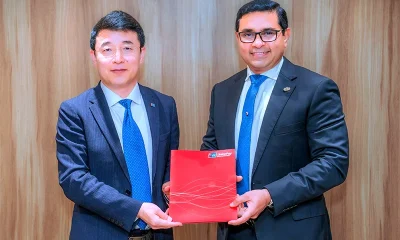
ComBank, UnionPay launch SplendorPlus Card for travelers to China
-
 Business6 days ago
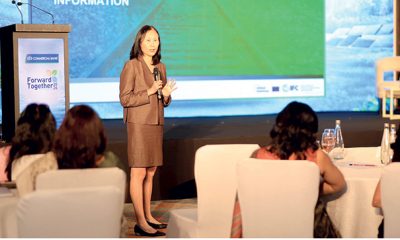
ComBank advances ForwardTogether agenda with event on sustainable business transformation
-
 Opinion6 days ago
Conference “Microfinance and Credit Regulatory Authority Bill: Neither Here, Nor There”
-
 Business2 days ago
Climate risks, poverty, and recovery financing in focus at CEPA policy panel
-
 Opinion1 day ago
Sri Lanka, the Stars,and statesmen
-
 Opinion5 days ago
Luck knocks at your door every day
-
 News6 days ago
Rising climate risks and poverty in focus at CEPA policy panel tomorrow at Open University
-

 Business2 days ago
Bourse positively impacted by CBSL policy rate stance