
Sports
Madara, Samarawickrama and Dilhari lead Sri Lanka’s rout of South Africa


Sri Lanka completed their fourth highest successful run chase in women’s ODIs and subjected South Africa to a second successive defeat in the tri-series in Colombo. A record fourth wicket stand of 128 between Kavisha Dilhari and Harshitha Samarawickrema, both of whom scored half-centuries, ensured Sri Lanka controlled proceedings against a South African side that struggled with the slowness of the pitch and problems with personnel.
Seventeen-year-old wicket-keeper Karabo Meso had to leave the field after 14 overs of the Sri Lankan innings with a heat-related illness and was replaced by Sinalo Jafta while Sune Luus who bowled eight overs and took 1 for 34, jammed her knee into the turf and suffered bruising, forcing her off the field. Ultimately neither of those things hampered South Africa as much as their inability to take wickets on a surface that Sri Lanka’s attack mastered. Debutant offspinner Dewmi Vihanga became the second Sri Lankan to take three wickets on ODI debut while Malki Madara, playing in just her second game, picked up 4 for 50.
South Africa’s total of 235, built largely on Annerine Dercksen’s first ODI half-century, looked competitive at the halfway stage but when Sri Lanka lost Chamari Athapaththu in the third over, it seemed it could be match-winning. Vishmi Gunaratne and Hasini Perera rebuilt steadily for a second-wicket stand of 69 before Dilhari and Samarawickrama kept the required run-rate in control to seal victory with 21 balls to spare.
With slower balls proving far more effective than pace on, Gunaratne and Perera were severe on South Africa’s seamers upfront, forcing spin to be introduced in the first powerplay. But both Luus and Nokululeko Mlaba were unable to maintain pressure in their initial overs as they struggled with their lengths and boundaries came in almost every over. When Mlaba strung three dots together, Gunaratne lost her patience and went for a reverse sweep. She missed and was struck in front of off stump.
Three more boundary-less overs followed before Perera tried to flick Luus legside, where Laura Wolvaardt leapt forward and took the catch low down. Replays confirmed she had her fingers under the ball and Sri Lanka were 90 for 3 after 18 overs.
Given that the middle-order has not always been reliable, there may have been some nerves, especially when Samarawickrama’s first boundary came off the outside edge. Dilhari was more confident and hit Mlaba back over her head. That proved to be a favourite area for her, and was also where she smashed Chloe Tryon for six. When Ayabonga Khaka was brought back for a second spell, both Dilhari and Samarawickrama got stuck in and in an over that cost 12 brought the required run-rate down to under five an over.
Samarawickrama got to fifty off 65 balls with a straight drive and Dilhari followed, off the 61st ball she faced, when she carved Tryon through the covers. By then, Sri Lanka needed 44 runs off 11 overs and the game was all but up. Neither of the two set batters saw it through to the end, with South Africa plucking some late wickets but in the end, they may feel there were around 30 runs short, especially after they staged a decent recovery from 120 for 5.
South Africa lost their openers early when Tazmin Brits was bowled in the fourth over, staying back to a Sugandika Kumari ball that turned past the inside edge, while Wolvaardt was deceived by a slower ball from Madara. Wolvaardt was Madara’s first ODI wicket.
That left Lara Goodall and Meso with the responsibility of stabilising the innings. Goodall was given the length to play two sumptuous cover drives and took it and South Africa ended the powerplay on 40 for 1. Inoka Ranaweera was introduced in the 11th over and created a chance off her fourth ball when Goodall, on 14, mistimed an attempted hit down the ground back to Ranaweera. She got hands to it but could not hold on.
Meso struggled to score runs and she faced 21 dot balls in her innings of 27 and the pressure got too much for her. When Ranaweera tossed one up outside off, Meso drove aerially, straight to Athapaththu at short cover. Ranaweera should have had Luus for a duck two balls later, again off her own bowling. That chance cost Sri Lanka.
Luus and Goodall put on 54 runs for the third wicket in a stand that included some delightful strokes. Goodall hit Ranaweera back over her head for four and pulled out the paddle sweep off Gunaratne but was put down again on 41 when she gave Athapaththu a regulation chance at mid-on, off Vihanga, but the Sri Lankan captain dropped it. She added five more runs to her score and was on 46 when she tried to hit Vihanga over long-on but was caught on the boundary. Goodall’s effort was her highest since her career-best 93 not out against Ireland in Dublin in June 2022, 14 innings ago.
Luus was on 31 at the time, using her feet well and playing aggressively but in the next over, she walked across her stumps and played on to give Vihanga her second. Four balls later, Athapaththu hit Dercksen on the back pad and thought she had her out lbw but the umpire did not agree. The rest of that over cost Sri Lanka nine runs and momentum shifted South Africa’s way. Tryon and Dercksen were energetic in the middle and shared a run-a-ball stand of 62 before a wonder catch from Nilakshika Silva broke their stand. Tryon tried to hit Vihanga over long-on, Nilakshika ran to her left and reached the ball just in time to take the catch one-handed as she hit the ground. South Africa entered the final 10 overs on 182 for 6.
Dercksen got to fifty with a stunning six over Kumari but she did not have much lower order support. Nadine de Klerk was bowled by a Madara yorker and Masabata Klaas and Mlaba both top-edged as they tried to hit Madara out of the ground.
Brief scores:
Sri Lanka Women
237 for 5 in 50 overs (Harshitha Samarawickrama 77, Kavisha Dilhari 61, Hasini Perera 42, Vishmi Guneratne 29; Nonkululeko Mlaba 2-44) beat South Africa Women (Annerie Dercksen 61*, Lara Goodall 46, Sunee Luus 31, Chloe Tryon 35; Malki Madara 4-50, Dewmi Vihanga 3-41) by five wickets




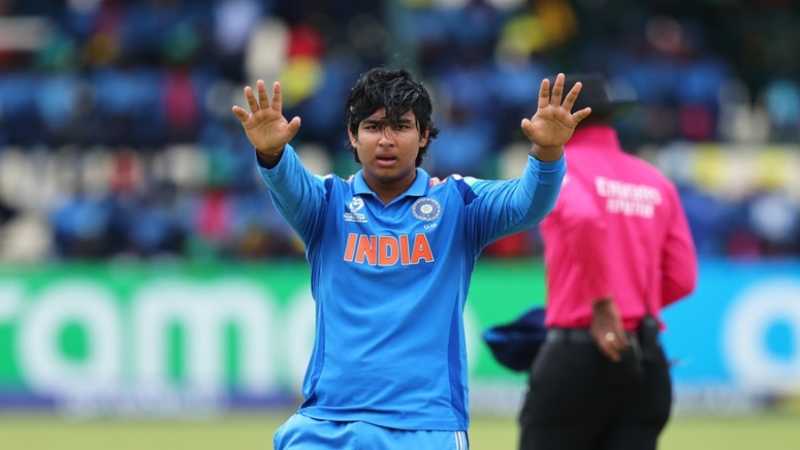
Vaibhav Sooryavanshi gave the latest demonstration of his prodigious talent with a record breaking innings in Harare as India completed a dominant run at the Under-19 World Cup, swatting aside England’s challenge, to lift the trophy for the sixth time.
Sooryavanshi, the 14-year-old opener, showcased his full range of scoring in an audacious knock of 175 off just 80 balls to almost single-handedly extinguish England’s hopes after India had opted to bat. When he was third out, India were 251 for 3 in the 26th over and hypothetically on track to score 500. No one could keep up with Sooryavanshi’s rate, but cameos down the order from Abhigyan Kundu and Kanishk Chouhan did take India past 400 for the first time in a Youth ODI between Full Member nations.
For England, Caleb Falconer struck a scintillating 63-ball hundred in response, but there was too much left to do and he was last out as India regained the Under-19 title, having lost the final to Australia two years ago.
Although England struck early, Aaron George caught at point off Alex Green, the game quickly ran away from them. Sooryavanshi put on 142 in 15 overs alongside India’s captain, Ayush Mhatre, and then 78 out of 89 for the third wicket alongside Vedant Trivedi as the innings went into overdrive.
Having cruised to fifty from 32 balls, he took just 23 more to bring up his first century of the tournament, then another 16 to progress past 150. Sixes rained down around the ground, as England’s spinners, Farhan Ahmed and Ralphie Albert, were treated with disdain – although arguably no shot was more outrageous than the forehand smash off a Green bouncer than somehow went straight back over the bowler’s head into the sightscreen.
He fell completely against the run of play, gloving behind when aiming a slog-sweep at Manny Lumsden, and India’s innings stuttered – at least relative to what had gone before. James Minto bagged three-for as England strove to keep the score below 400, a mark that was breached in the final over.
Mayes struck seven fours and two sixes but fell the ball after retaking top spot from Sooryavanshi on the tournament run-scorers’ list. Thomas Rew, England’s captain, blazed out of the blocks with 31 off 18 and Dawkins notched a 49-ball fifty – but the latter’s dismissal sparked a collapse of 4 for 3 in nine balls as India’s grip tightened.
England were well up with the rate, despite wickets falling, and were given hope by a stand of 92 between Falconer and James Minto. Falconer found the boundary regularly on the way to his maiden hundred, but the requirement had ballooned above 10 an over and England were still 100 runs short when he was finally dismissed.
Brief scores:
India Under 19s 411 for 9 in 50 overs (Vaibhav Sooryavanshi 175, Ayush Mhatre 53, Abhigyan Kundu 40; Sebastian Morgan 2-74, Alex Green 2-49, Ja,es Minto 3-63) beat England Under 19s 311 in 40.2 overs (Caleb Falconer 115, Ben Dawkins 65, Ben Mayes 45; RS Ambrish 3-56, Deepesh Devendran 2-64, Khan8shk Chouhan 2-63) by 100 runs
(Cricinfo)
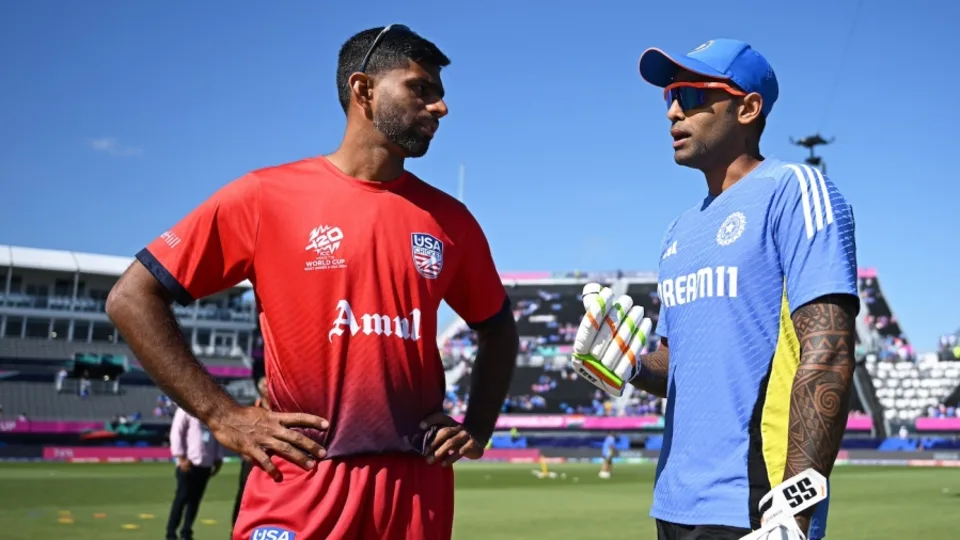
The USA national team has only four players born in the USA, all of them children of immigrants. The other 11 are first-generation immigrants.
Three of those 11 were born in Pakistan. Their captain Monank Patel, and four others, were born in India. Monank recently told PTI there is “no Indian or Pakistani when you represent the USA.”
This team of Indian, Pakistani, South African and Sri Lankan immigrants will get under the star-sprangled banner and start, against India, their campaign in this T20 World Cup, during whose build-up the world has seemed to grow increasingly polarised.
Make of it what you will. Be relieved that cricket still has room for these niceties, or be despondent that this small win is worth celebrating.
Amid all the politicking, what has probably not been celebrated enough is the T20 excellence India have put together. Over nine editions, the T20 world title has neither been defended successfully nor been won at home. On Saturday, in front of a packed Wankhede Stadium where they won the 2011 ODI title, India will begin their campaign promising that both can be achieved in a month’s time.
Fourteen years ago, Ian Chappell wrote that left-arm spinner Harmeet Singh, born in Mumbai and an Under-19 World Cup winner for India, was ready for international cricket. Watching Harmeet, Chappell was put in the mind of Bishan Singh Bedi. Here he is, an international cricketer via a circuitous route, back in his place of birth to take on the team representing his country of birth.
Six months ago, Ishan Kishan was not even on the World Cup radar. Then Shubman Gill got injured and fell short of runs on his T20I comeback. Kishan blasted all comers during the Syed Mushtaq Ali Trophy. So he entered the World Cup squad as the back-up wicketkeeper-batter. Then Sanju Samson fell short of runs. Now, if India’s World Cup warm-up fixture was anything to go by, Kishan is the No. 1 choice to partner Abhishek Sharma at the top. And if he can get off to a good start, he is likely to keep his place for the business end of the tournament.
Washington Sundar, still recovering from a side strain, was not with the squad during their warm-up match against South Africa, but India are going to keep him in their squad. As it is, he is a back-up for Axar Patel, who is the first-choice spin allrounder. Harshit Rana was seen in some discomfort during the warm-up fixture and walked off after bowling just one over. The prognosis for Rana’s participation in this tournament ” doesn’t look good”, India captain Suryakumar Yadav has said, and it is particularly a cause for concern since he is the only genuine fast bowler in the squad who can contribute a few sixes down the order. Tilak Varma has made a successful return to fitness.
India (probable): Abhishek Sharma, Ishan Kishan (wk), Tilak Varma, Suryakumar Yadav (capt), Hardik Pandya, Rinku Singh, Shivam Dube, Axar Patel, Arshdeep Singh, Jasprit Bumrah, Varun Chakravarthy.
Andries Gous, who missed USA’s last T20I, the final of the North America T20 Cup last April, should come back as wicketkeeper and opener. Others could drop down a slot each to make up for the absence of the suspended Aaron Jones.
USA (probable): Saiteja Mukkamalla, Andries Gous (wk), Shayan Jahangir, Monank Patel (capt.), Milind Kumar, Harmeet Singh, Shubham Ranjane, Mohammad Mohsin, Shadley van Schalkwyk, Saurabh Netravalkar, Ali Khan
[Cricinfo]
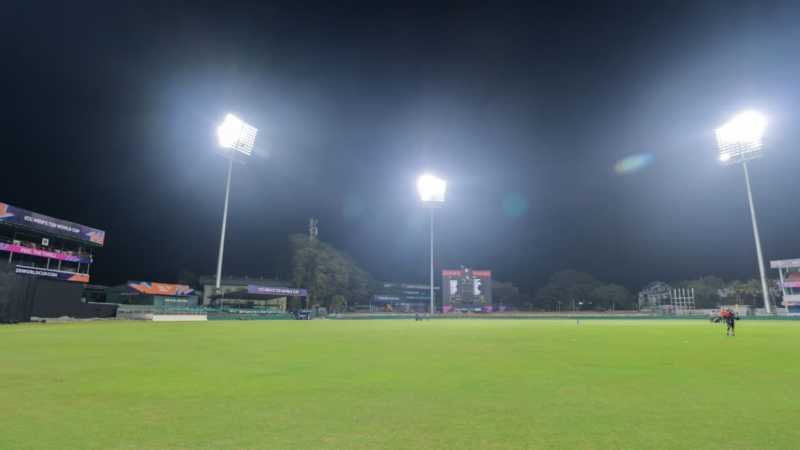
For over a century, the Sinhalese Sports Club (SSC) has been the quiet, dignified heartbeat of Sri Lankan cricket. To walk through its gates is to walk through a gallery of greats, and ghosts. This is where Muthiah Muralidaran turned the ball as if by magic, claiming 166 of his 800 Test wickets – a world record for a single venue to date. It is where Mahela Jayawardene and Kumar Sangakkara built their 624 run monument to patience, and where Chaminda Vaas’ 8 for 19 left Zimbabwe in ruins.
But for all the prestige the SSC had as the ‘Lord’s of Sri Lanka,’ the modern game had begun to grow beyond its reach. For years, the ground was a sanctuary for the traditionalist, a place of white kits and long afternoon shadows. One that has fed more players and captains to the national team than any other. But while the world embraced the floodlit frenzy of T20 cricket, the SSC remained a daytime relic.
The last limited-overs international hosted there was a women’s T20I in 2023, while the last men’s white-ball game was an ODI in 2020. Its T20I history, meanwhile, frozen in time, preserved in the memory of Associate clashes between Canada, Ireland, and Afghanistan in the afternoon heat of 2010.
This Saturday, while the sun will still be high over Colombo, the 16-year drought finally ends. As the rumble of the T20 World Cup curtain-raiser between Pakistan and the Netherlands echoes across the ground, six towering sentinels will stand watch over the turf – an LKR. 1.8 billion crown of LED floodlights waiting to signal the club’s belated arrival to the present. The journey to this moment, though, has been long.
“My God, for the last two decades,” exclaimed SSC cricket committee chairman Samantha Dodanwela, his voice carrying the relief of a man who has finally crossed the finish line.
Since 2009, the dream of floodlights was mired in the complexities of a private members’ club – disputes, corporate hesitancy, and protective instincts of a historic membership. It took the backing of Sri Lanka Cricket and the skills of a legal firm to ensure that this modernisation wouldn’t cost the club its soul or autonomy.
The result is a venue that feels both intimate and international. With a capacity of 12,000, it is a ’boutique’ World Cup experience, though a plan for a 6000-seater three-tier stand is already moving from the boardroom to the western hill.
“This venue is in the heart of the city,” Dodanwela noted, eyeing the urban sprawl of Colombo that surrounds the club. “You will see members patronising the club in the evenings; the crowd will always be there.”For Dodanwela, who joined the club in 1990 and took stewardship of its Cricket Committee in 2011 – albeit with a short gap when Jayawardene took over briefly from 2020-22 – the lights are a guarantee of relevance. While the heritage of the SSC is built on the craft of Test cricket, he knows the future is T20.
“The SSC pitch is the best in Sri Lanka. If you are a good bowler, there is life early on. But if you survive? There are loads of runs. And in T20, what we need is runs.”
As the Oman vs Zimbabwe clash kicks off at 3pm on February 9, and Pakistan vs USA plays out fully under lights the following night, the transition will be complete.
The membership may look back fondly on a past defined by Test cricket, but the SSC’s future is set to begin with the glow of flood-lit mayhem in the heart of Colombo.
(Cricinfo)

Sooryavanshi 175 makes India six-time Under-19 world champions

Mighty India meet multicultural USA in polarised World Cup

At least 31 killed, dozens wounded in Islamabad mosque blast

The SSC finally steps out of the sunshine and into the floodlights

SAARC journalists meet in New Delhi

Governor of Gujarat met with Sri Lanka PM to discuss exposition of Devnimori Relics

‘Dates have the highest sugar content to fight Coronavirus’

Sunday Island 27 December – Headlines

#SundayIsland 17th December – Headlines

Sunday Island – 28th March

Sunday Island Headlines – 21 March

Sunday Island – 21st February – Headlines
-

 Business7 days ago
Hayleys Mobility ushering in a new era of premium sustainable mobility
-

 Business4 days ago
SLIM-Kantar People’s Awards 2026 to recognise Sri Lanka’s most trusted brands and personalities
-
 Business7 days ago
Advice Lab unveils new 13,000+ sqft office, marking major expansion in financial services BPO to Australia
-
 Business7 days ago
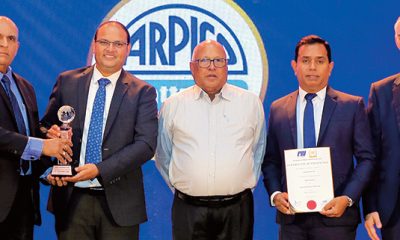
Arpico NextGen Mattress gains recognition for innovation
-

 Business6 days ago
Altair issues over 100+ title deeds post ownership change
-

 Editorial7 days ago
Govt. provoking TUs
-

 Business6 days ago
Sri Lanka opens first country pavilion at London exhibition
-

 Business5 days ago
All set for Global Synergy Awards 2026 at Waters Edge