
Business
‘LOLC Finance poised to fuel economic resurgence’


In one of the most historic mergers in Sri Lanka, LOLC Finance PLC, the largest NBFI in the country merged with its sister company, Commercial Leasing & Finance PLC (CLC), to become the largest Non-Banking Financial Institution (NBFI) in Sri Lanka earlier this year. The market capitalization of the merged LOLC Finance PLC stands at over Rs. 180Bn, placing it among the top 3 companies on the Colombo Stock Exchange by market capitalization.
This strategic amalgamation yet again reflects the far-thinking vision of the LOLC Group, one of the most profitable globally diversified entities in Sri Lanka and the first off the starting blocks in taking strategic initiatives, which gives it a strong growth momentum. Propelled ahead with its powerful synergies, the combined entity delivered a pro forma colossal Profit Before Tax (PBT) of LKR. 25.6 Bn and Profit After Tax (PAT) of LKR. 23.5Bn as at 31st March 2022, which places LOLC Finance PLC among the highest value creating institutions in the country.
The merged entity, LOLC Finance, is boosting investor confidence in the Sri Lankan economy at this critical juncture. As an inclusive financial services provider to the micro, small & medium enterprises providing thrust to many economic sectors such as agriculture, manufacturing, transportation, tourism and exports, LOLC Finance is now ideally placed to empower existing and new businesses to upscale and expand, and drive financial inclusion to uplift living standards and boost entrepreneurism, building on its ethos of non-discrimination and its women entrepreneur empowerment. An idea of the company’s powerful financial standing is evidenced by the fact that while total assets of the NBFI sector stood at LKR. 1,488 Bn by end-2021, representing 21% of Sri Lanka’s financial system, LOLC Finance’s assets stand at LKR.311.6Bn, clearly dominating the NBFI sector with healthy performance risk management indicators across every key parameter including capital, capital adequacy, business performance and thereby maintaining utmost investor confidence. It is further noteworthy that the company maintains a very high standard of integrity, transparency and customer protection principles.
LOLC Finance promises a secure NBFI with a mammoth balance sheet size of LKR.311.60Bn with total advances of LKR.206.83Bn which makes it resilient to economic shocks, thereby encouraging more businesses to avail of loans due to its well capitalized nature and its asset backed products.
The strategic amalgamation by two of the largest NBFIs in the country, both within the LOLC Group, signals the dynamic role the merged entity LOLC Finance will play in supporting the economic recovery of the nation. This historic merger also conforms to The Central Bank of Sri Lanka (CBSL)’s Master Plan for Consolidation of Non-Bank Financial Institutions Sector to stabilize the financial sector even further. The entity is further strengthened with CLC’s takeover of Sinhaputhra Finance PLC (SFL), once again under the consolidation master plan.
The birth of new entity, LOLC Finance, has many beneficial implications for stakeholders in general as it will give rise to massive efficiencies due to the combined expertise, branch network and technology platforms including iPay, LOLC Finance’s digital payment platform, which is winning accolades and fast becoming the number one preferred payment platform and lifestyle fin-tech product. In addition, as the most technologically advanced NBFI, LOLC Finance offers Credit Cards, Online and Mobile Banking Services, and the entire spectrum of Lending and Deposits, earning a reputation for being the largest MSME financier and provider of Islamic Finance, and the leading factoring and agricultural equipment financier in the industry.
LOLC Finance now commands a network of 210 branches, a burgeoning customer base of over 600,000, total lending portfolio of over LKR. 200 Bn, and an impressive deposit base of over LKR. 150 Bn, which accounts for nearly 20% of the entire industry. This amply reflects the trust and confidence placed by depositors in the financial stability and professional management of LOLC Finance.
The prudent financial discipline demonstrated by the Company is evident in the fact that LOFC successfully maintained its Non-Performing Loan (NPL) ratio at 6.69% as at 31st March 2022, which is less than half of the industry average, thus reflecting the healthy portfolio of the company. The merger also implies that the combined technical expertise and goodwill in the industry of LOLC Finance is multiplied many times over.
With industry leadership comes recognition on both local and international platforms. In 2021/22, LOLC Finance was awarded the Most Valuable Consumer Brand 2022 (Financial services) by Brand Finance Sri Lanka; Most Innovative Financial Services Brand Sri Lanka 2021 and Most Trusted Financial Services Brand Sri Lanka 2021 at the Ninth Edition of the Global Brand Awards 2021; Financial Services Brand of the Year at the SLIM-Kantar Peoples Awards 2022; and Gold awards for NBFI of the Year for Financial Inclusivity, NBFI of the Year for Excellence in Customer Convenience, Financial Institution of the Year for Best Digital Payment Strategy, Best Mobile Application for Retail Payments Via Just Pay (Banks and NBFI), Overall Award Excellence in Inter-Bank Digital Payments (NBFI) and a Merit Award for the Most Popular Digital Payment Product (Banks and NBFI-Mobile Payment App) at the 4th edition of the LankaPay Technnovation Awards by Lanka Clear.
One of the highlights of LOLC Finance will be how it leverages on its unique business model and advanced technology platforms to power business growth and profitability. The merger has also boosted capital markets as both are listed entities and some of the blue chip stocks on the Colombo Stock Exchange (CSE).
As the largest NBFI in the country, LOLC Finance is uniquely positioned to drive economic growth by financing grassroots businesses to expand while supporting the nation’s trading and export communities to seize opportunities for growth and diversification.


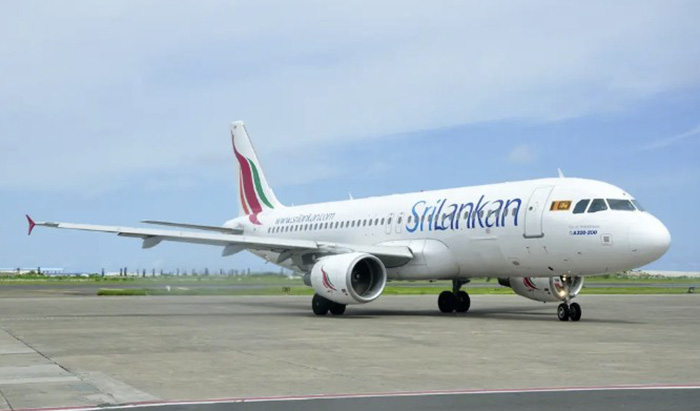
03 March 2026; Colombo – As airspace in certain parts of the Middle East continues to remain closed due to the ongoing conflict, the following SriLankan Airlines flights scheduled to operate today have been cancelled:
Flight Route
UL 225 Colombo–Dubai
UL 226 Dubai–Colombo
UL 231 Colombo–Dubai
UL 232 Dubai–Colombo
UL 229 Colombo–Kuwait
UL 230 Kuwait–Colombo
UL 217 Colombo–Doha
UL 218 Doha–Colombo
UL 253 Colombo–Dammam
UL 254 Dammam–Colombo
UL 265 Colombo–Riyadh
UL 266 Riyadh–Colombo
We sincerely appreciate our passengers’ understanding and patience as these cancellations are implemented in the interest of their safety and wellbeing.
For more information, please contact: 1979 (within Sri Lanka); +94 11 777 1979 (international); WhatsApp +94 74 444 1979 (chat only); your travel agent; or visit www.srilankan.com
Business
Middle East escalation sends oil soaring; Sri Lanka faces price shock despite assurances on supply

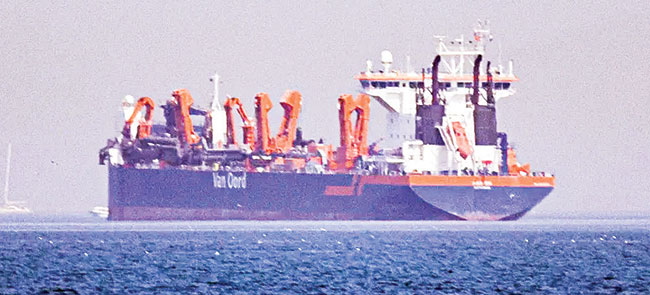
Global oil prices surged sharply yesterday following coordinated US and Israel-backed strikes on Iran, and Tehran’s retaliatory attacks targeting US interests in the region, alongside escalating hostilities involving Hezbollah in Lebanon. The renewed instability in the Middle East – the artery of the world’s energy supply – has sent tremors through financial markets and triggered fresh anxiety in oil-importing nations such as Sri Lanka.
Brent crude climbed steeply in early Asian trading, with traders pricing in the risk of supply disruptions through critical maritime chokepoints, particularly the Strait of Hormuz, through which nearly a fifth of global oil passes. Market analysts say the spike reflects not only immediate supply fears but also the potential for prolonged geopolitical tension that could keep prices elevated for months.
Meanwhile, Asian equities reacted nervously to the unfolding crisis. Major indices across the region retreated as investors fled risk assets, concerned that higher energy costs could dampen growth and reignite inflationary pressures.
Asian oil and gas stocks – the only winner in Asian equity markets – rallied strongly, reflecting expectations of higher revenues amid rising crude prices. This divergence of falling broader markets alongside rising oil shares signals investor anticipation of higher inflation and weaker consumer demand in emerging markets like Sri Lanka.
Meanwhile, reports of increased Chinese crude purchases are further compounding market anxiety. If Beijing accelerates buying to secure strategic reserves in anticipation of supply constraints, global prices could climb even further because China’s procurement strategy has great influence on the world oil price.
“Should Chinese demand rise while Middle Eastern exports face disruption, the supply-demand imbalance could tighten considerably, amplifying volatility in global energy markets”, say global energy market analysts.
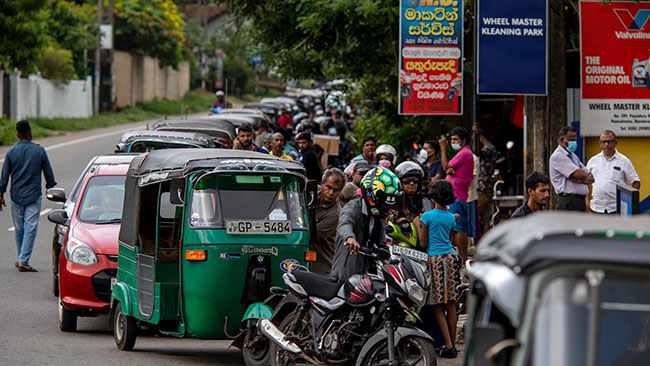
In Sri Lanka, long queues have begun forming at fuel stations amid fears of shortages and higher pump prices once new shipments arrive. The government has sought to calm public nerves, stating that sufficient stocks are available for approximately one month and that fresh supplies are being sourced from India and Singapore.
Deputy Minister of Tourism, Dr. Ruwan Ranasinghe said that as Sri Lanka imports refined products primarily from India and trading hubs such as Singapore, direct disruptions to Middle Eastern sea routes would not immediately interrupt supply chains. He maintained that there is no cause for panic buying.
In an unusual show of political maturity, Prasad Siriwardena, an Opposition MP from the Samagi Jana Balawegaya (SJB) urged the public to remain calm and refrain from hoarding, warning that artificial shortages could emerge if panic-driven stockpiling spreads.
However, former minister Wimal Weerawansa criticised the government for failing to build a strategic reserve of at least three months, arguing that Sri Lanka’s total dependence on imported fuel leaves it dangerously exposed to prolonged geopolitical shocks.
Weerawansa contended that the government failed to anticipate the likelihood of US-Iran tensions escalating into direct confrontation and should have proactively guided petroleum authorities to secure adequate reserves in advance.
Meanwhile, an independent analyst told this reporter on the condition of anonymity that the global economic spillover could have wide-ranging consequences on Sri Lanka, outlining five factors.
Energy costs that feed into transportation, manufacturing and food prices
Tighter monetary policy risks as the Central Bank may hesitate to cut rates if inflation resurges
Slower growth as consumers and businesses reduce spending when energy costs rise
A widening trade deficit as Sri Lanka would face increased import bills
Pressure on the Rupee as increased dollar outflows for fuel imports could strain foreign exchange reserves
In conclusion, he said, “One can only hope that diplomacy prevails before oil’s surge turns into a sustained economic storm for the global economy.”
by Sanath Nanayakkare
The harsh economic realities behind soothing words
Sri Lanka’s fragile economic recovery faces a renewed external threat as escalating conflict involving Iran sends global oil prices sharply higher, raising concerns over inflation, foreign reserves and fiscal stability.
While authorities insist there is no immediate fuel shortage, economists warn that prolonged instability in the Middle East could trigger a familiar and painful chain reaction in an import-dependent economy still recovering from its worst financial crisis in decades.
The state-run Ceylon Petroleum Corporation (CPC) confirmed that the country currently holds sufficient petrol and diesel stocks for more than a month.
Energy Minister Eng. Kumara Jayakody assured that scheduled shipments remain unaffected and urged the public to refrain from panic buying, warning that artificial demand could disrupt smooth distribution.
But behind those reassurances lies a harsher economic reality: Sri Lanka does not need a physical fuel shortage to suffer — a sustained spike in global crude prices alone could be enough.
Market jitters intensified amid fears that any escalation could threaten shipping through the Strait of Hormuz, the narrow maritime corridor through which a significant share of the world’s oil supply passes daily. Even speculation of disruption has historically been sufficient to push prices sharply upward.
Sri Lanka sources refined fuel from multiple markets, including India and Southeast Asia. However, global benchmark prices ultimately determine import costs. If crude prices remain elevated, the country’s monthly fuel import bill could surge — placing fresh strain on dollar reserves.
Higher oil prices would ripple across the entire economy. Transport, electricity generation, manufacturing, agriculture and food distribution are all energy-sensitive sectors. A sustained price increase could reverse recent gains in inflation control.
The Central Bank of Sri Lanka has worked to stabilise inflation and the rupee through tight monetary discipline. Analysts caution that a renewed oil shock could complicate this effort, widening the trade deficit and pressuring the exchange rate.
“Sri Lanka is structurally vulnerable to energy price shocks. Even without direct supply disruption, higher global prices immediately translate into macroeconomic stress, a senior economic analyst said.
The government is currently operating under strict fiscal consolidation targets as part of its recovery programme. A rising fuel bill could expand subsidy pressures or force politically sensitive fuel price adjustments.
Any increase in administered fuel prices would inevitably feed into cost-of-living pressures, testing public tolerance amid ongoing austerity.
Beyond oil markets, instability in the Middle East carries another risk: remittances. The Gulf region remains a key source of foreign employment for Sri Lankans and a crucial inflow of foreign exchange.
Any economic slowdown or labour disruption in the region could dampen remittance flows, reducing one of the country’s most stable dollar lifelines.
An energy expert said for Sri Lanka, the Iran conflict is not merely a distant geopolitical event. It is a potential economic stress test at a moment when stability remains hard-won.
“Whether this turns into a temporary price spike or a prolonged oil shock will determine how severely it tests the country’s recovery trajectory. For now, policymakers are watching global markets closely — aware that in today’s interconnected economy, distant wars can quickly arrive at the domestic pump.”
By Ifham Nizam
Six US soldiers killed in Iranian strike on Kuwait base

Israel attacks presidential office in Tehran as reported death toll in Iran rises to 787

Attorney At Law S K Sangakkara pasess away

SriLankan Airlines Update on Middle East Operations

Trump says Iran war projected to last 4 to 5 weeks, could go ‘far longer’

Qatar downs two Iranian fighter jets as conflict widens

‘Dates have the highest sugar content to fight Coronavirus’

Sunday Island 27 December – Headlines

#SundayIsland 17th December – Headlines

Sunday Island – 28th March

Sunday Island Headlines – 21 March

Sunday Island – 21st February – Headlines
-

 Opinion5 days ago
Jamming and re-setting the world: What is the role of Donald Trump?
-

 Features5 days ago
An innocent bystander or a passive onlooker?
-

 Features2 days ago
Brilliant Navy officer no more
-
 Features6 days ago
Ratmalana Airport: The Truth, The Whole Truth, And Nothing But The Truth
-

 Business7 days ago
Dialog partners with Xiaomi to introduce Redmi Note 15 5G Series in Sri Lanka
-
 Features7 days ago
Building on Sand: The Indian market trap
-

 Opinion7 days ago
Future must be won
-

 Opinion2 days ago
Sri Lanka – world’s worst facilities for cricket fans