
Business
Local stock investors wary in the wake of debt restructuring worries


By Hiran H.Senewiratne
President Ranil Wickremesinghe’s statement on the domestic debt restructuring mechanism in parliament yesterday created some worries for investors, market analysts observed.
Foreign investor participation remained bullish on listed equities with some net buying but locals appeared to be wary judging by the negative run at the Colombo bourse due to domestic debt restructuring speculation, market analysts added.
The All- Share Price Index went down by 33.6 points and the S and P SL20 declined by 9.5 points. Turnover stood at Rs 740 million without any crossings.
In the retail market top seven companies that mainly contributed to the turnover were; Aitken Spence Hotels Rs 87.5 million (1.4 million shares traded), Aitken Spence Rs 80.7 million (597,000 shares traded), Softlogic Capital Rs 44.3 million (4.4 million shares traded), Expolanka Holdings Rs 37.8 million (236,000 shares traded), Softlogic Life Insurance Rs 37.6 million (526,000 shares traded), Lanka IOC Rs 31.9 million (189,000 shares traded) and Windforce Rs 29.6 million (1.6 million shares traded). During the day 34.1 million share volumes changed hands in 11000 transactions.
It is said that high net worth and institutional investor participation was visible among Windforce Ltd., Teejay Lanka and Melstacorp. Mixed interest was noted in Dialog Axiata, Expolanka Holdings and Capital Alliance, while retail interest was noted in Browns Investments, Industrial Asphalts and Blue Diamonds Jewellery Worldwide.
The Capital Goods sector was the top contributor to the market turnover (due to Aitken Spence), while the sector index lost 0.56 per cent. The share price of Aitken Spence increased by Rs. 3 to Rs. 135.
The Food, Beverage & Tobacco sector was the second highest contributor to the market turnover, while the sector index decreased by 0.73 per cent.
Yesterday the Central Bank’s US dollar buying rate was Rs 313.45 and the selling rate Rs 328.67. Food inflation had become stable, which at one time was one of the highest in the world.











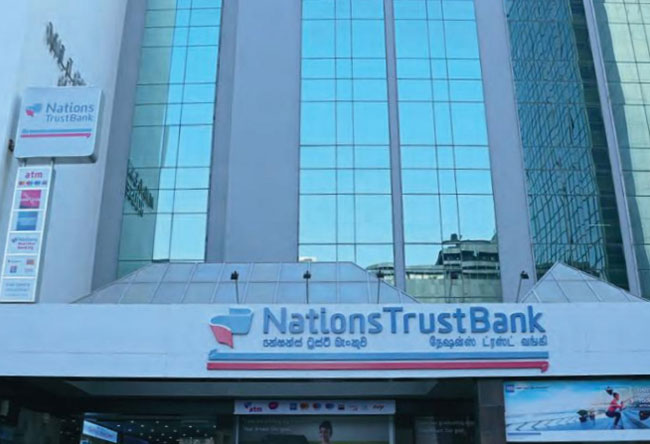
Nations Trust Bank PLC (NTB) is emerging as a well-capitalised bank with cleaner books and a resilient earnings profile, positioning itself for a stronger growth phase in the coming years, according to First Capital Research.At a time when investor confidence in frontier markets is often dictated by balance sheet strength and earnings visibility, NTB appears to be ticking both boxes, according to the research firm’s earnings update of the bank.
The bank closed 2025 with a net profit of LKR 19.3 billion, reflecting a steady recovery trajectory despite residual macroeconomic pressures. More importantly, beneath the headline numbers lies a more compelling story: NTB’s core earnings engine is gaining strength. The distortion caused by one-off impairment reversals in previous periods has now faded, allowing a clearer view of the bank’s underlying performance. On this basis, recurring earnings have expanded sharply, pointing to a structurally improved operating model.
First Capital notes that NTB’s financial position remains robust, underpinned by capital ratios comfortably above regulatory thresholds. With a total capital ratio exceeding 20% and liquidity coverage ratios well above minimum requirements, the bank has built significant buffers to withstand external shocks. This strength is particularly relevant in a post-crisis environment where financial institutions are expected to prioritise resilience over aggressive expansion.
Equally noteworthy is the improvement in asset quality. NTB’s Stage 3 loan ratio has declined to below 1%, reflecting a healthier loan book and prudent risk management practices. This marks a significant turnaround from the stress levels seen during the height of the economic crisis, and suggests that the bank has successfully navigated the most challenging phase of credit deterioration.
While loan growth surged in 2025 as economic activity rebounded, a moderation is expected over the next two years. However, this slowdown should not be interpreted negatively. Instead, it signals a return to more sustainable credit expansion aligned with macroeconomic realities. NTB is still projected to outperform system-wide credit growth, supported in part by strategic initiatives such as the anticipated acquisition of the retail banking operations of HSBC in Sri Lanka.
This acquisition, expected to be completed in 2026, could prove to be a pivotal development. It is likely to strengthen NTB’s position in the premium retail segment while significantly boosting fee and commission-based income streams. In an environment where net interest margins are under pressure due to rising funding costs, diversification into non-interest income becomes increasingly critical.
Indeed, margin compression remains one of the key challenges facing the banking sector. NTB has not been immune, with higher deposit costs, particularly from fixed deposits, outpacing growth in interest income. Yet, the bank’s ability to maintain profitability despite these pressures underscores the resilience of its business model.
Looking ahead, First Capital forecasts NTB’s net profit to rise to LKR 23.9 billion in 2026 and LKR 27.2 billion in 2027. While these projections reflect a more measured macroeconomic outlook, they also point to steady and sustainable earnings growth.
From an investor’s standpoint, the valuation story adds another layer of appeal. NTB continues to trade at relatively low multiples despite delivering returns on equity exceeding 20%. This disconnect between market valuation and underlying performance suggests potential for a re-rating as confidence in the banking sector strengthens.
Hence, NTB’s evolution mirrors the broader recovery of Sri Lanka’s financial system—but with a notable edge. Its strong capital base, improving asset quality, and growing earnings visibility position it as one of the more compelling banking counters in the market today.
By Sanath Nanayakkare

City of Dreams Sri Lanka and John Keells Foundation present a West End Musical, Opening on Friday.
Five members of the international cast of La Bamba! The Song of Veracruz arrived last week at Bandaranaike International Airport in Katunayake, ahead of the highly anticipated West End–licensed production in Colombo.
The visiting performers, Madalena Alberto, Eduardo Enríkez, Joseph Hewlett, Mychele LeBrun, and Charlotte Dos Santos Chabi, are marking their first visit to Sri Lanka and will celebrate the Sri Lankan New Year during their stay.
Following their arrival, the international artists will begin intensive rehearsals alongside the Sri Lankan cast, bringing together a dynamic blend of global and local talent. The collaborative process is expected to add depth and vibrancy to the West End–licensed musical, known for its rich storytelling, Latin rhythms, and high-energy choreography.
The production, directed and produced by London-based theatre producer Paul Morrissey, is a West End–licensed musical that brings together world-class performers, 7 live musicians, and a technical and creative crew of over 40 members. The musical has enjoyed successful runs internationally, delighting audiences across the UK, Europe, and North America with its vibrant blend of music and performances.
La Bamba! The Song of Veracruz is presented by City of Dreams Sri Lanka and John Keells Foundation. Audiences can experience this spectacular production from 24th to 27th April at The Forum, City of Dreams Sri Lanka.
Tickets are available via www.cinnamonboxoffice.com and the hotline +94 71 711 8111, with a 15% early-bird discount for Nations Trust Bank American Express and Mastercard Credit Card holders.
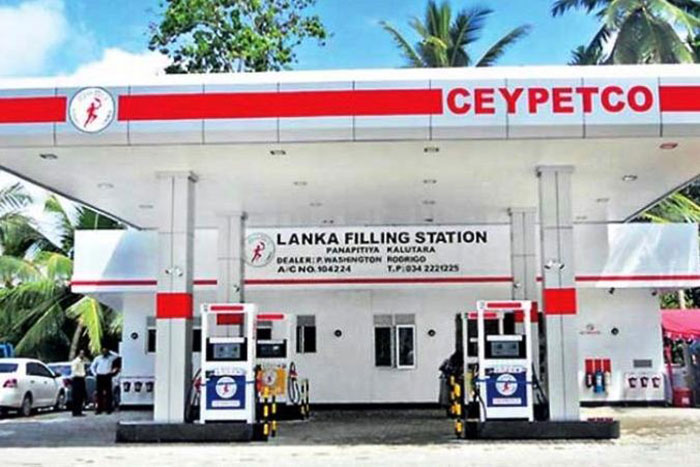
The Petroleum Dealers’ Association has urgently appealed to President Anura Kumara Dissanayake regarding a revised commission structure introduced by the Ceylon Petroleum Corporation (CPC) via Circular No. 1109 on 25 February 2025, effective 1 March 2025. The new system replaces the traditional percentage-based model with a tiered, capped rate per litre.
The Association warns that the reduced income fails to cover staff salaries, loan repayments, and operational costs—threatening the viability of 98% of individually or family-run dealers. Many cooperative-run stations may close, impacting employment and fuel supply networks. The change was made without prior consultation.
A broader structural imbalance exists: CPC operates under a cost-recovery model, retaining margin flexibility, while dealers absorb all costs within fixed earnings. By contrast, private fuel companies in Sri Lanka still pay dealers ~3% of sales, offering more sustainable income. Additionally, dealers must remit VAT on centrally-set fuel prices and purchase stock on a cash basis, increasing working capital needs without corresponding income growth.
The Association requests an expert committee, including their representatives, to develop a fair, sustainable solution. Without policy reform, financial pressure may disrupt the dealer network and national fuel availability.

Heat Index at Caution Level in the Northern, North-central, North-western, Western, Sabaragamuwa, Eastern and Southern provinces and in Monaragala district.

Dasun Shanaka handed one-year PSL ban

Nahid, Tanzid help Bangladesh level New Zealand series

Five UAE cricketers given citizenship through naturalisation

Moni, Sharmin help Bangladesh register maiden ODI win against Sri Lanka

Advisory for Severe Lightning issued for all provinces of Sri Lanka

‘Dates have the highest sugar content to fight Coronavirus’

Sunday Island 27 December – Headlines

#SundayIsland 17th December – Headlines

Sunday Island – 28th March

Sunday Island Headlines – 21 March

Sunday Island – 21st February – Headlines
-

 News5 days ago
PNS TAIMUR & ASLAT set sail from Colombo
-

 Business3 days ago
Harnessing nature’s wisdom: Experts highlight “Resist–Align” path to resilience
-

 News3 days ago
Gratiaen Trust announces longlist for the 33rd Annual Gratiaen Prize
-

 Latest News7 days ago
“I extend my heartfelt wishes to all Sri Lankans for a peaceful and joyous Sinhala and Tamil New Year!” – President
-

 News2 days ago
From Nuwara Eliya to Dubai: Isha Holdings markets Agri products abroad
-

 News3 days ago
Heroin haul transported on 50-million-rupee contract
-

 Latest News4 days ago
Singapore Zoo’s first Sri Lankan leopard cubs make their public debut
-
 Latest News7 days ago
US blockade of Iran would worsen global energy crisis, analysts say