
News
LG polls Bill passed

By Saman Indrajith
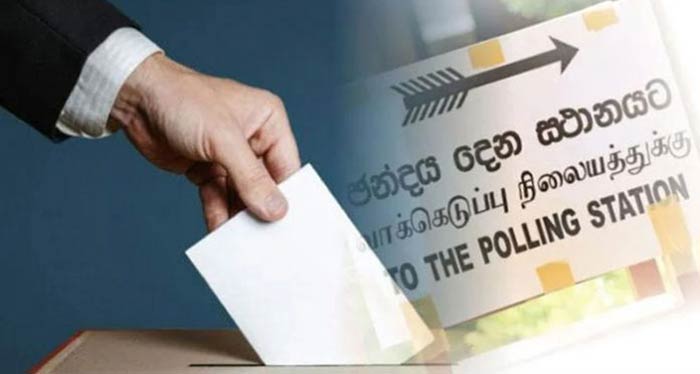
The Local Government Elections (Special Provisions) Bill was passed in Parliament unanimously with all government and opposition MPs present in the House voting for it.
Following the vote taken at 7 pm, Speaker Dr Jagath Wickramaratne announced to the House that the Bill had been passed at the second reading stage with 187 MPs voting for it.
The Bill was passed in its original form.
When the Bill was moved to the committee stage, Opposition MPs were not present in the House, but the government called for a division. Accordingly, it received 158 votes for at the third reading stage.
This is to get the 2nd and 3rd clauses passed by a special parliamentary majority.
The Supreme Court ruled last Friday that two clauses of the Local Authorities Elections (Special Provisions) Bill must be passed by a two-thirds special majority in Parliament.
The Supreme Court concluded that Clauses 2 and 3 of the Bill are inconsistent with Article 12 (1) of the Constitution, and therefore must be passed by a special majority vote in accordance with Article 84 (2) of the Constitution.
Clause 2 empowers the cancellation of nominations called for the Local Government Election that was scheduled to be held on March 9, 2023.
The clause also includes provisions for the return of the deposit money made by political parties or independent groups for the local government elections to the relevant persons.
The third clause states that steps should be taken in accordance with the provisions of the Ordinance to commence the holding of the relevant election.
According to the Supreme Court ruling, a two-thirds approval of the Parliament was required to enact these provisions.
The Local Government Election Special Provisions Bill was debated in Parliament yesterday to obtain approval for these clauses.
The Local Authorities Elections (Special Provisions) Bill approved by the Ministerial Consultative Committee on Public Administration, Provincial Councils and Local Government.
The approval was received when the Ministerial Consultative Committee on Public Administration, Provincial Councils and Local Government met in Parliament last Friday (14) under the chairmanship of Minister Dr Chandana Abayaratne.


The Ceylon Chamber of Commerce (CCC), through its Tax Steering Committee, has actively engaged with stakeholders on the proposed Inland Revenue (Amendment) Bill of 2026, recognising its potential implications for businesses and the broader economy. While acknowledging the importance of updating the tax framework, the Chamber’s efforts have focused on assessing the impact of the proposed amendments, highlighting several provisions that warrant closer attention.
CCC statement: “The Chamber Tax Steering Committee reviewed the proposed amendments and assessed their impact on business continuity, investment, taxpayer rights and Sri Lanka’s competitiveness. The Committee conducted a comprehensive evaluation, focusing on areas that could affect financing, compliance, and the overall business environment.
In addition, the Ceylon Chamber organised a seminar on 12 March 2026 at its auditorium, bringing together members, industry stakeholders, policymakers, and the regulator. The session provided participants with a detailed briefing on the proposed changes, clarified key provisions, and facilitated an open exchange of views between the private sector and authorities, especially on areas of concern raised by the membership.
Building on these engagements, the Tax Steering Committee submitted detailed recommendations to the Ministry of Finance, outlining the potential impact of the proposed amendments and their implications for the Government’s broader policy direction. Key recommendations included the following:
* Amendments to Thin Capitalisation Rules: Maintaining the exclusion of negative reserves in gearing calculations to avoid adding tax burdens on financially distressed companies, and calling for the allowability of finance cost on all genuine commercial borrowings to protect legitimate financing.
* Restrictions on Submission of Evidence: Introducing flexibility in the proposed 6 to 9 month timeline for submitting information to the Commissioner General, allowing taxpayers to provide verified evidence beyond this period to balance administrative efficiency with fairness.
* Penalties for Compliance Lapses: Ensuring that enforcement measures remain proportionate, avoiding stringent penalties that include imprisonment, for minor compliance failures. The Chamber proposed relying on existing recovery mechanisms to safeguard investment confidence and fairness to taxpayers.
* Taxation of Insurance Businesses: Deferring amendments to Section 67 pending further consultation with the insurance industry and the regulator. Avoiding treating policyholder distributions as taxable income of insurers, and greater clarity in the application of adjustment provisions, particularly in light of IFRS 17 implementation.
* Discretionary powers of the Commissioner General: It should be clearly defined and guided by transparent rules to avoid uncertainty. While such powers are important for enforcement, they must be applied fairly, with proper safeguards, to ensure consistency and maintain taxpayer confidence.
The Chamber has also engaged directly with policymakers to ensure that provisions identified as those that could negatively impact business sentiment are either suitably amended during the Committee Stage or deferred for further consultation prior to implementation.
The Ceylon Chamber reiterates the importance of maintaining a stable, predictable, and investment-friendly tax framework, particularly at a time when Sri Lanka is seeking to strengthen economic recovery and attract private investment. It remains committed to a constructive, solutions-oriented engagement with policymakers, working collaboratively to refine and strengthen legislation in the public interest to ensure timely support and effective implementation of reforms. It will continue working closely with the Government and relevant authorities to support the development of a balanced and effective tax policy that promotes growth while safeguarding revenue objectives”.

Dr. Madurangi Ariyasinghe will assume duties as the 5th President of the Sri Lanka College of Emergency Physicians (SLCEP) at their Annual General Meeting scheduled to be held in Colombo tomorrow (02).
This follows Colombo Commercial High Court Judge Chamath Madanayaka yesterday (31) clearing the way for Dr. Ariyasinghe, Consultant Emergency Physician, to assume office as the first female President of SLCEP.
The ruling was delivered following nearly four months of legal proceedings over a dispute concerning the leadership of the College.
An unprecedented legal battle erupted after alleged attempts by the current interim council leadership to remove Dr. Ariyasinghe from the President-elect position, regardless of her having served in that role for nearly a year without an Annual General Meeting (AGM) being convened.
Amidst the alleged bid, Dr. Ariyasinghe, and several other petitioners, sought legal redress, and the court ruled in their favour, directing that legal costs be borne by the respondents.

(Insight) –Sri Lanka’s state-owned fuel retailer Ceylon Petroleum Corporation (CPC) has ordered West Texas Intermediate (WTI) crude as it was unable to secure Murban crude shipment, its chairman said.
This island nation is purchasing WTI for the first time for its 50,000 barrel-per-day refinery in Sapugaskanda in 57 years since it was built by Iran in 1969 to refine Iranian light crudes.
Since the U.S. sanctions imposed on Iran in 2011, the island nation has been unable to import Iran crude and switched to Murban, light crude from the Middle East.
“We in fact changed the crude in our refinery to face such a crisis. We switched WTI (West Texas Intermediate), an American crude,” CPC Chairman D.J.A.S. De S. Rajakaruna told reporters at a media briefing on Saturday (28).
“We brought a (WTI) sample and did all the tests and we are ready to take it. We even have called for two tenders. They could not come because the freight was high,” he said.
As the U.S. Operation Epic Fury expanded in early 2026, the threat of secondary sanctions effectively severed Sri Lanka’s access to its primary feedstock, fearing closure of the refinery and reducing its output to a fraction of its 50,000-barrel-per-day capacity.
This technical mismatch has left the country heavily reliant on the more expensive import of refined fuels rather than crude, further draining foreign exchange reserves.
In tandem with these restrictions, government officials have told Insight that the U.S. has intensified its diplomatic push for Sri Lanka to pivot toward American energy products as a long-term alternative to Middle Eastern and Russian supplies.
While the U.S. Treasury provided a brief 30-day waiver in March 2026 for the purchase of certain stranded shipments, the overarching strategy has been to integrate Sri Lanka into the U.S. energy export network.
However, this transition presents a logistical and financial hurdle; U.S. WTI and other American blends cannot be efficiently processed at Sapugaskanda without a total overhaul of the facility, though the CPC chairman said the refinery was ready to refine WTI.
“The problem is we haven’t refurbished our refinery. So we have limited options of crudes we can refine,” Rajakaruna said.
Sri Lanka is yet to receive a crude shipment since the U.S./Israel attack started on February 28 amid restrictions for ships at Strait of Hormuz.
“We have now floated tenders for WTI including Saharan Blend from Algeria. We are also trying to buy Siberian Crude from Russia. In May, we are getting a WTI shipment. So we don’t have to wait for them (Murban),” Rajakaruna said.
He said Murban crude which is used for the local refinery comes only from Abu Dhabi National Oil Company (ADNOC) in the UAE.
The Sapugaskanda Oil Refinery, Sri Lanka’s only crude oil processing facility, has faced a severe operational crisis due to the tightening of U.S. sanctions on Iranian energy exports.
Architecturally designed to process Iranian Light crude, the refinery’s configuration is incompatible with the sweet or light varieties produced in other regions without significant and costly technical modifications.

A massage from Los Angeles; Social Media and new generation

CCC underscores importance of balanced tax policy

Dialog introduces Samsung Galaxy S26 Series with AI-powered camera and 5G Connectivity

Five-fers by Osanda Herath, George Bhanushanth and Chathuranga Dewapriya highlights on Saturday

The monkey and the razor blade

A Buddhist perspective on ageing and decay

‘Dates have the highest sugar content to fight Coronavirus’

Sunday Island 27 December – Headlines

#SundayIsland 17th December – Headlines

Sunday Island – 28th March

Sunday Island Headlines – 21 March

Sunday Island – 21st February – Headlines
-

 News7 days ago
Senior citizens above 70 years to receive March allowances on Thursday (26)
-

 Features4 days ago
A World Order in Crisis: War, Power, and Resistance
-

 News5 days ago
Energy Minister indicted on corruption charges ahead of no-faith motion against him
-

 News6 days ago
US dodges question on AKD’s claim SL denied permission for military aircraft to land
-

 Business6 days ago
Dialog Unveils Dialog Play Mini with Netflix and Apple TV
-

 News7 days ago
CEB Engineers warn public to be prepared for power cuts after New Year
-

 Sports5 days ago
SLC to hold EGM in April
-

 Latest News6 days ago
A strong Technical and Vocational Education and Training (TVET) system equips individuals with practical, relevant, and future-oriented skills helping to innovate responsibly towards a greener and sustainable future – PM