
News
CCC underscores importance of balanced tax policy


The Ceylon Chamber of Commerce (CCC), through its Tax Steering Committee, has actively engaged with stakeholders on the proposed Inland Revenue (Amendment) Bill of 2026, recognising its potential implications for businesses and the broader economy. While acknowledging the importance of updating the tax framework, the Chamber’s efforts have focused on assessing the impact of the proposed amendments, highlighting several provisions that warrant closer attention.
CCC statement: “The Chamber Tax Steering Committee reviewed the proposed amendments and assessed their impact on business continuity, investment, taxpayer rights and Sri Lanka’s competitiveness. The Committee conducted a comprehensive evaluation, focusing on areas that could affect financing, compliance, and the overall business environment.
In addition, the Ceylon Chamber organised a seminar on 12 March 2026 at its auditorium, bringing together members, industry stakeholders, policymakers, and the regulator. The session provided participants with a detailed briefing on the proposed changes, clarified key provisions, and facilitated an open exchange of views between the private sector and authorities, especially on areas of concern raised by the membership.
Building on these engagements, the Tax Steering Committee submitted detailed recommendations to the Ministry of Finance, outlining the potential impact of the proposed amendments and their implications for the Government’s broader policy direction. Key recommendations included the following:
* Amendments to Thin Capitalisation Rules: Maintaining the exclusion of negative reserves in gearing calculations to avoid adding tax burdens on financially distressed companies, and calling for the allowability of finance cost on all genuine commercial borrowings to protect legitimate financing.
* Restrictions on Submission of Evidence: Introducing flexibility in the proposed 6 to 9 month timeline for submitting information to the Commissioner General, allowing taxpayers to provide verified evidence beyond this period to balance administrative efficiency with fairness.
* Penalties for Compliance Lapses: Ensuring that enforcement measures remain proportionate, avoiding stringent penalties that include imprisonment, for minor compliance failures. The Chamber proposed relying on existing recovery mechanisms to safeguard investment confidence and fairness to taxpayers.
* Taxation of Insurance Businesses: Deferring amendments to Section 67 pending further consultation with the insurance industry and the regulator. Avoiding treating policyholder distributions as taxable income of insurers, and greater clarity in the application of adjustment provisions, particularly in light of IFRS 17 implementation.
* Discretionary powers of the Commissioner General: It should be clearly defined and guided by transparent rules to avoid uncertainty. While such powers are important for enforcement, they must be applied fairly, with proper safeguards, to ensure consistency and maintain taxpayer confidence.
The Chamber has also engaged directly with policymakers to ensure that provisions identified as those that could negatively impact business sentiment are either suitably amended during the Committee Stage or deferred for further consultation prior to implementation.
The Ceylon Chamber reiterates the importance of maintaining a stable, predictable, and investment-friendly tax framework, particularly at a time when Sri Lanka is seeking to strengthen economic recovery and attract private investment. It remains committed to a constructive, solutions-oriented engagement with policymakers, working collaboratively to refine and strengthen legislation in the public interest to ensure timely support and effective implementation of reforms. It will continue working closely with the Government and relevant authorities to support the development of a balanced and effective tax policy that promotes growth while safeguarding revenue objectives”.

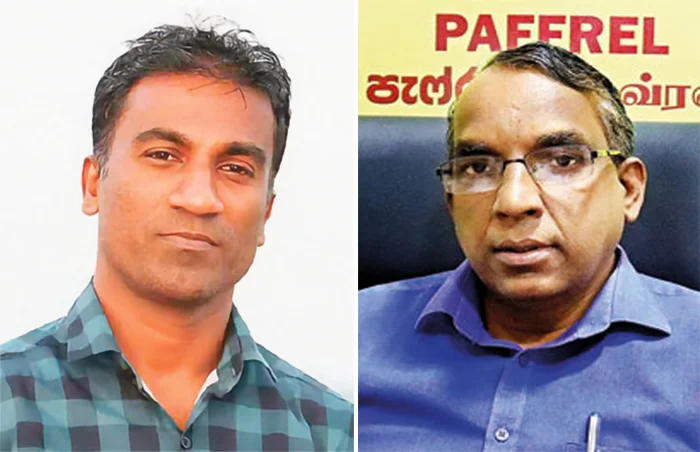
Election monitors have strongly condemned JVP General Secretary Tilvin Silva’s Jaffna declaration that the long-delayed Provincial Council polls couldn’t be held this year due to financial and legal impediments. Silva said so after declaring open a new NPP coordination office, in Jaffna, over the last weekend.
People’s Action for Free and Fair Elections (PAFFREL), and the Institute for Democratic Reforms and Electoral Studies (IRES), said that Tilvin Silva, in his capacity as the General Secretary of the main constituent of the National People’s Power (NPP), couldn’t make such a declaration under any circumstances.
PAFFREL head Rohana Hettiarachchi and IRES Chief Manjula Gajanayake emphasised that the JVP-led NPP government should be ashamed of the developing situation.
Hettiarachchi said that Tilvin Silva’s statement has to be examined against the backdrop of a parliamentary committee, headed by Foreign Minister Vijitha Herath, tasked to determine the electoral system under which PC polls should be conducted.
Alleging that the JVPer had made the parliamentary committee irrelevant, the civil society activist said that the whole exercise of appointing the Herath-led committee now seemed a farce. The JVP’s ruse to put off PC polls further reminded the country of a similar bid made by President Ranil Wickremesinghe, Hettiarachchi said, asserting that a government couldn’t postpone any poll, claiming it didn’t have the wherewithal.
Hettiarachchi emphasised that conducting elections was the responsibility of the government of the day. PC polls have been delayed for nearly one and half decades. Hettiarachchi said that as the NPP won the parliamentary election in November, 2024, it should be held accountable for further delaying the PC polls since then.
Responding to The Island queries, Hettiarachchi said that the JVP’s move couldn’t be justified, under any circumstances. If the NPP felt that the PC system was not required then urgent action must be taken to initiate a dialogue regarding the PC system and remove it through necessary constitutional means, he said.
Hettiarachchi alleged that the JVP, having gained political power, was now following the despicable agenda of the previous political parties which sought to hold onto power at the expense of the democratic rights of the people. The JVP proved that they were not different from those who were routed at the last presidential and parliamentary polls, the PAFFREL chief said.
Tilvin Silva’s unexpected Jaffna statement contradicted their election manifesto that promised to conduct both Local Government and PC polls in 2025.
Gajanayaka said since 1998 there had been several Supreme Court and Court of Appeal rulings regarding the PC polls due to reluctance on the part of some governments to conduct polls for obvious reasons. Referring to Tilvin Silva’s declaration that money allocated for the conduct of elections were utilised for Ditwah relief, Gajanayake emphasised the need to verify such claims. Gajanayake suggested that there should be provision to conduct a forensic study to find out whether Treasury had the required funds or the government lied.
Gajanayaka said that though the JVP was the dominant party, it would be interesting to know the opinion of Dr. Nihal Abeysinghe, General Secretary of the NPP. President Anura Kumara Dissanayake is the leader of both the JVP and the NPP.
The JVP Jaffna declaration couldn’t be accepted, Gajanayake said, adding that the JVP never really backed the PC system, though it contested them later after having waged a bloody insurgency against the Indian introduced set-up. Gajanayaka recalled the violence unleashed by the JVP in the wake of the Indo-Lanka accord of July 29, 1987, under which the then Congress government forced Sri Lanka to enact the 13th Amendment to the Constitution.
By Shamindra Ferdinando
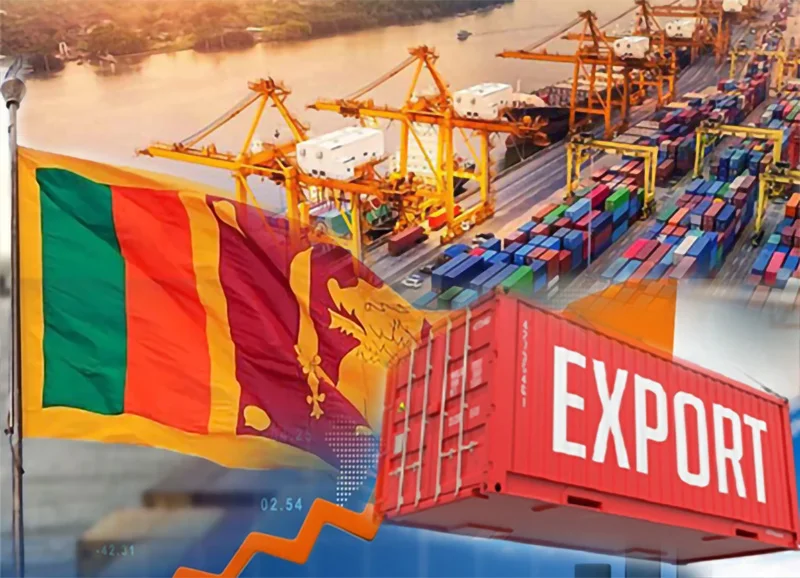
The Sri Lanka Export Development Board (EDB) says Sri Lanka’s total exports, comprising merchandise and services, reached US$ 1,380.93 million in April 2026, recording a year-on-year growth of 6 % compared to the previous year.
The EDB in a statement has said that the positive export performance recorded during the first four months of 2026 highlights the resilience of Sri Lanka’s external sector. Sustained export earnings, supported by stable merchandise trade and the growing contribution of services exports, indicate a steady and encouraging recovery trajectory for the Sri Lankan economy in 2026.
Commenting on the export performance in April 2026, Mangala Wijesinghe, Chairman and Chief Executive Officer of the Sri Lanka Export Development Board (EDB), has said: “Sri Lanka’s export sector continued to demonstrate resilience in April 2026, with total exports reaching US$ 1,380.93 million, recording a year-on-year growth of 6 % compared to April 2025. Merchandise exports recorded a notable increase of 9.87%, while services exports continued to make a significant contribution to overall export earnings, reflecting the growing importance of the services sector within the country’s export portfolio.
News
Easter Sunday carnage: Court told Maulana’s statement cannot be accepted without cross-examination
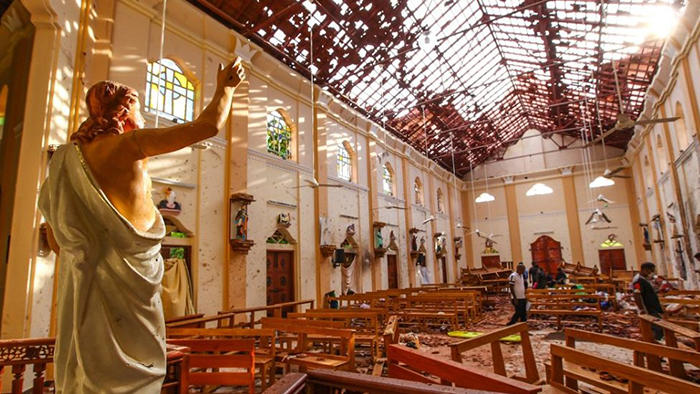
Retired Maj. Gen. Suresh Sallay’s Counsel Shavendra Fernando, PC, recently told Colombo Fort Magistrate Pasan Amarasena that Mohammed Milhilar Mohammed Hanzeer alias Azad Maulana’s statement that implicated his client in the 2019 Easter Sunday carnage couldn’t be accepted as evidence in a court of law without cross-examination.
Fernando also reminded the court that a warrant had been issued in respect of Maulana, one-time aide to Sivanesathureyai Chandrakanthan, alias Pilleyan, over a case of bigamy.
The Criminal Investigation Department (CID) in late February this year arrested Sallay, who served as the Director of State Intelligence Service (SIS)s from Nov. 2019 to early Oct. 2024, just weeks after the National People’s Power (NPP) won a 2/3 majority at the parliamentary election. President Anura Kumara Dissanayake brought in DIG Dhammika Kumara as Sallay’s successor. Sallay previously served as the head of the Directorate of Military Intelligence (DMI) from 2012 to 2016.
Making submissions to the court after Additional Solicitor General (ASG) Dileepa Peiris, Fernando emphasised that a court of law couldn’t act on a statement submitted through a third party as it couldn’t be relied upon.
At the onset of his submissions, the retired officer’s Counsel declared that he was making submissions before the court and not for the media.
The crux of the matter was whether Maulana, a fugitive from Sri Lanka law, whose statement, recorded by a team of CID officers, led by its Director SSP Shanie Abeysekera, at the Sri Lankan mission, in Paris, could be accepted without cross-examination.
The Attorney General’s Department and the suspect’s Counsel explained their position with regard to producing Sallay, detained under the Prevention of Terrorism Act (PTA) in court.
The ASG requested that an order, issued by the Colombo Fort Magistrate court to produce Sallay in court, be vacated. Responding to the ASG’s statement that there was no provision to produce a person detained under PTA, in court, the President’s Counsel pointed out that no existing provision denied such an opportunity. The retired officer’s Counsel said that it was the Magistrate’s prerogative.
Alleging that there was an ongoing attempt to derail the Easter Sunday investigation, the ASG opposed an opportunity for Sallay to make a statement in court in terms of the Section 127 of the Code of Criminal Procedure. Fernando emphasised that Salley should be given the opportunity.
Fernando also strongly opposed the ASG’s move, on behalf of the Attorney General, to have an earlier order issued by court, to ensure Sallay received unhindered access to his lawyers, vacated. He questioned how the Attorney General, who heads the Bar, could deny the right of lawyers to have free access to their clients.
Magistrate Amaraseena told the court that a report on Sallay’s health has been received by the court. Fernando has said that he would respond once he received a copy.
During cross talk among lawyers, President’s Counsel Fernando has asked Rienzie Arsularatne, PC, who appeared for the Archbishop of Colombo, Malcolm Cardinal Ranjith, whether the Cardinal had approved and condoned the inhuman conditions in which Sallay was held in a 6X4 rat-infested cell.
ASG Peiris responded jokingly that Fernando might be excommunicated by the Cardinal. Fernando has pointed out that only the Pope could excommunicate and that the Cardinal administered the churches and priests and that, too, only in Colombo.
Based on the statement recorded from Maulana, the CID submitted a 14-page report to the Colombo Magistrate’s court, declaring Sallay as the 2019 Easter Sunday terror mastermind.
Maulana repeated accusations, aired by Channel 4 TV in a documentary “Sri Lanka’s Easter bombings” in its “Dispatches” programme on Tuesday 05, September ,2023.
According to Maulana’s statement recorded in Paris, Seyani Maulavi, an associate of Zahran Hashim, had got in touch with former Eastern Province Chief Minister Pilleyan, in the Batticaloa Prison, where both were held.
Pilleyan had been arrested in connection with the alleged involvement in the assassination of ITAK MP Joseph Pararajasingham on Christmas Eve, in 2005, in Batticaloa, while Maulavi was apprehended over a clash at Aliyar junction, in the east.
Maulavi has reiterated that Sallay met six persons, including Zahran Hashim, at Karadippooval, in Puttalam, in 2018.
The statement claimed that immediately after the Easter suicide blasts, Sallay directed Maulana to pick Jameel, who had been assigned to bomb Taj Samudra, but didn’t do so, and to collect his hand phone. Visits by Mahinda Rajapaksa, Basil Rajapaksa and Namal Rajapaksa to the Batticaloa Prison to meet Pilleyan, too, had been mentioned with Maulana claiming that the visitors gave Pilleyan an assurance he would be released within six months from Gotabaya Rajapaksa’s victory at the 2019 November presidential election.
The CID told court that Gotabaya Rajapaksa, soon after winning the election, appointed Sallay as SIS head to protect the secrets, and the DMI paid Rs 250,000 bail for Maulavi. The CID also alleged direct DMI-Pilleyan link in the abduction of journalist Keith Noyahr, in May 2008, Lasantha Wickrematunga assassination, in January, 2009, attack on Rivira Editor Upali Tennakoon, in January, 2000, and in the disappearance of Prageeth Ekneligoda, on the eve of the 2010 January presidential election.
Another major allegation was that approximately 2,000 men, under Pilleyan’s command, were paid a monthly salary.
The Magistrate, at the end of the proceedings, declared that a decision regarding Sallay being brought to court and an opportunity for him to make a statement would be announced on July 1.
By Shamindra Ferdinando

US military launches strikes on southern Iran amid talks in Qatar

Pope says AI must be ‘disarmed’ to prevent domination, exclusion, and death

Showers will occur at times in the Western, Sabaragamuwa and North-western provinces and in Galle, Matara, Kandy and Nuwara-Eliya districts.

Election monitors flay JVP for postponing PC polls

SL exports exceed USD 5.7 bn in first four months of 2026

Easter Sunday carnage: Court told Maulana’s statement cannot be accepted without cross-examination

‘Dates have the highest sugar content to fight Coronavirus’

Sunday Island 27 December – Headlines

#SundayIsland 17th December – Headlines

Sunday Island – 28th March

Sunday Island Headlines – 21 March

Sunday Island – 21st February – Headlines
-
 Features6 days ago
Octopus, Leech, and Snake: How Sri Lanka’s banks feast while the nation starves
-
 Sports6 days ago
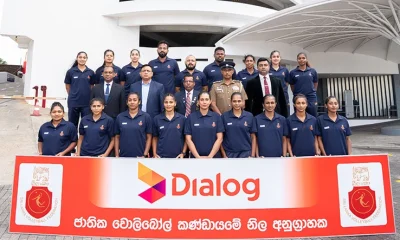
Sri Lanka women’s volleyball team ready for Central Asian challenge
-

 Opinion5 days ago
Murder of Ehelepola family, Bogambara Wewa and Sightings of Wangediya
-
 News5 days ago
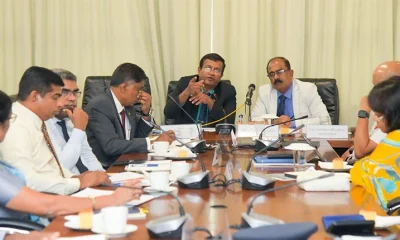
Steps underway to safeguard Sri Lanka’s maritime heritage
-

 Business4 days ago
Historic launch of CCWE Fashion Week & International Summit 2026
-
 Features2 days ago
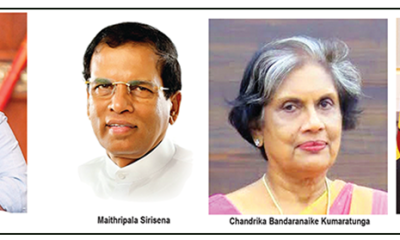
The NPP’s pivot to the past
-

 News1 day ago
Police probe underway to ascertain links between criminals deported from UAE and local politicians
-

 Editorial5 days ago
A play without its protagonist