
News
LG Commissioners in dilemma over guidelines and Elections Act

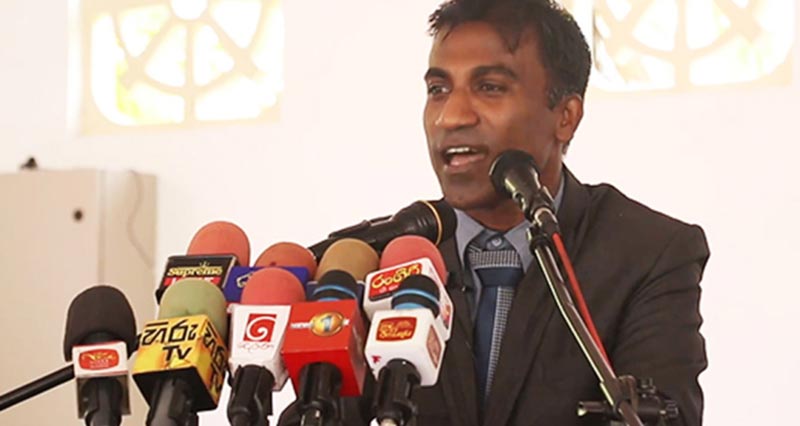
Executive Director of the Institute for Democratic Reforms and Electoral Studies (IRES) Manjula Gajanayake has said the Local Government Commissioners have created confusion and a severe erosion of public trust in the electoral process at local level by adhering to election laws and administrative guidelines selectively without adopting a consistent approach.
The authority to establish local government bodies— particularly the hung ones––has been granted to the Local Government Commissioners in the nine provinces. However, this process has now sparked controversy largely due to ambiguity over how to elect council heads.
At the heart of the issue is the Local Government Elections Act, which does not specify the procedures to be followed in electing the heads of local bodies. To address this issue, the Secretary to the Ministry of Local Government and Provincial Councils has issued a 28-page set of guidelines. This guideline gained much attention during the election of the Mayor of the Colombo Municipal Council, where opposition members claimed that the head of the council had to be elected according to the guidelines in question. However, the guidelines merely state, “Each member should be consulted, and the method of voting should be decided accordingly.”
The Opposition seemed to have ignored that there were three acceptable methods of voting––by a show of hands, through a secret ballot, or by using an electronic system, Gajanayake said. Still, the real issue lies in the application of the guidelines by the Local Government Commissioners.
For instance, the Western Province Commissioner opted for a secret ballot in the Colombo MC. In contrast, in many other councils, the voting method was determined based on the preference of the majority of members. In Local Government Institutions in Uva, North Central, and North Western provinces, where members called for open votes by the show of hands— the commissioners complied.
However, inconsistency re-emerged in the first meeting of the Seethawakapura Urban Council of the Colombo District in the Western Province. Out of 25 members,14 requested an open vote. The Commissioner, however, insisted on a secret ballot. As a result, all 14 members walked out in protest, and the meeting was adjourned without electing a head.
By PRIYAN DE SILVA ✍️





The Cabinet of Ministers has approved the resolution furnished by the Minister of Agriculture, Livestock, Land, and Irrigation to determine the price of the maize by a committee appointed by the Secretary to the Ministry of Agriculture, Livestock, Land, and Irrigation in the future and to import only the quantity of maize that could not be supplied locally for the production of animal feed, under the supervision of the Department of Animal Production and Health.
The Cabinet of Ministers has approved the joint resolution furnished by the President in his capacity as the Minister of Finance, Planning, and Economic Development and the Minister of Industries and Entrepreneurship Development to phase the removal of Cess tax imposed on imported goods under 2,634 combined classification codes identified over 4 years [from 2026 to 2029\.
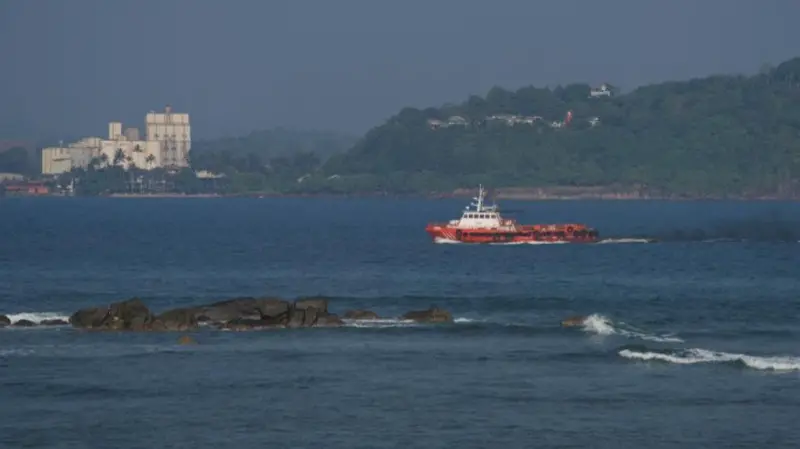
Around 140 people are missing after an Iranian navy ship sank off the coast of Sri Lanka.
The Sri Lankan navy says around 180 people were on board, with 32 rescued. A spokesman tells the BBC the cause of the sinking is not known
Sri Lanka’s navy has confirmed that it’s rescued 32 people after it received a distress call from Iranian navy ship ‘IRIS Dena’ early this morning.
Budhika Sampath, the spokesman of Sri Lanka’s navy says: “Though it was beyond our waters, it was within our search and rescue region. So we were obliged to respond as per international obligations.”
He adds: “We found people floating on the water, rescued them, and later when we inquired we found that those people are from an Iranian ship.”
He also says that according to the documentation of the ship 180 people are believed to have been on board, although the exact number of missing is unknown.
The spokesman says at the time of launching the rescue operations they did not see the vessel but saw oil patches on the water and floating life rafts.
He also tells the BBC that he rejects the reports of a submarine attack causing the sinking, and that the cause is unknown.
Earlier the secretary of the country’s defence ministry Air Vice Marshal Sampath Thuiyakontha told BBC Sinhala that around 140 people are thought to be missing.
So far, Sri Lanka’s military has not been able to confirm what might have caused the ship to sink.
[BBC]

Cabinet approves import of Maize to meet shortfall

Cabinet nod for the removal of Cess tax imposed on imported good

Around 140 people missing after Iranian navy ship sinks off coast of Sri Lanka

South Africa strong favourites as quest for elusive silverware hots up

Australian girl, 8, killed in snowmobile accident in Japan

Russia, China raise diplomatic voices against US-Israeli attacks on Iran

‘Dates have the highest sugar content to fight Coronavirus’

Sunday Island 27 December – Headlines

#SundayIsland 17th December – Headlines

Sunday Island – 28th March

Sunday Island Headlines – 21 March

Sunday Island – 21st February – Headlines
-

 Opinion6 days ago
Jamming and re-setting the world: What is the role of Donald Trump?
-
 Features3 days ago
Brilliant Navy officer no more
-
 Features6 days ago
An innocent bystander or a passive onlooker?
-
 Features7 days ago
Ratmalana Airport: The Truth, The Whole Truth, And Nothing But The Truth
-
 Opinion3 days ago
Sri Lanka – world’s worst facilities for cricket fans
-
 Business7 days ago
IRCSL transforms Sri Lanka’s insurance industry with first-ever Centralized Insurance Data Repository
-

 Business6 days ago
An efficacious strategy to boost exports of Sri Lanka in medium term
-

 Features4 days ago
Overseas visits to drum up foreign assistance for Sri Lanka