
Business
Lessons for Colombo from Manila, Bangkok and Hong Kong

Troubled Transportation:
IPS Policy Insights
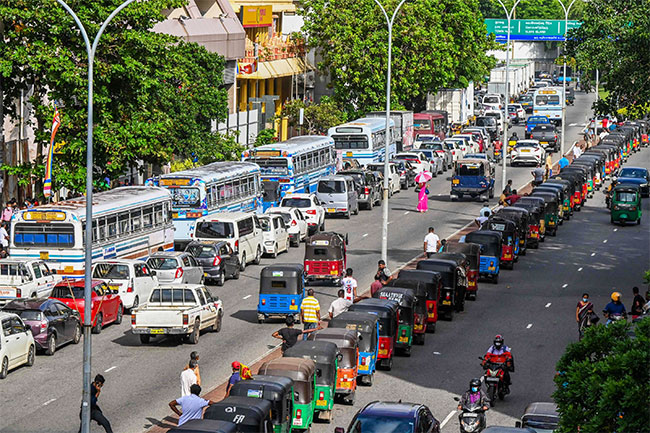
One of the most critical implications of Sri Lanka’s current economic crisis is the hard hit on the transport sector. The foreign exchange shortage has made importing fuel a major challenge, severely affecting road transportation and further impeding the performance of an already crippled economy. This Policy Insight gives context to the ongoing transportation issues in Sri Lanka and offers medium- and long-term solutions to address the issues, based on lessons learnt from the experiences of Manila, Bangkok and Hong Kong.
Poor Public Transportation
The transportation sector in Sri Lanka absorbs a fair share of petroleum imports to the country and has a very low price elasticity. Despite the many price hikes in 2021, the Ceylon Petroleum Corporation (CPC) sold a total of 3.6 billion litres of petroleum products to the transport sector, which was higher than the average of 3.4 billion litres sold from 2015 onwards. This trend of high demand continues even during the historically high petroleum product price in 2022.
A key reason for this consistently high demand for fuel, particularly in commercial capital of Colombo, is the combination of the overreliance on private transportation and the weak public transportation system. The decline in the public transport sector amidst the above-mentioned consistent high demand for petroleum products in 2021 reflects the inadequate contribution of public transportation towards the transport sector in Sri Lanka. When the demand for petroleum products in 2021 was above the previous period’s average, the operated kilometrage and passenger kilometrage of the public operator Sri Lanka Transport Board (SLTB) declined by 19.7 per cent and 28.4 per cent, respectively, while the corresponding contractions in the private transport sector were 4.4 per cent and 2.2 per cent, respectively. Some part of the decline in public transportation in 2021 can be attributed to COVID-19 related social distancing requirements in travelling. As such, amidst the severe financial crisis with the lack of capacity to import fuel in a timely manner and rising fuel prices due to global and exchange rate pressures, the key solutions to the transportation problem lie in improving the public transportation sector and exploring alternative means of transportation.
Grand Policies and Plans
Sri Lanka has undergone various planning and policy contexts in relation to public transportation. During the 2010-2015 period and its The Emerging Wonder of Asia development framework, the transport sector buzzwords included Bus Rapid Transit (BRT), Light Rail Transit (LRT) and Mass Rapid Transit (MRT). During the 2015-2019 period and its Western Region Megapolis Master Plan, the hype included the Rapid Transit System (RTS), the bus system, the rail system, the road system and the already heard LRT. In the most recent Vistas of Prosperity and Splendour framework, the lingo was peppered with a ‘park and ride’ system, metro rail system, radial and circular road system and the now familiar LRT. Despite varied packaging to cater to the administration’s approach, most of these public transportation-related efforts during the last decade were broadly connected to the National Physical Plan (NPP).
LRT Drama
All previous policy frameworks have recognised the importance of developing an LRT system to ease congestion in transport and commuting but several reasons delayed its implementation. The approval from the Central Environment Authority (CEA) for the LRT was received at the latter part of 2018. There were delays in drafting a framework to regulate the LRT system. Subsequent to fulfilling these, in 2019, the Japan International Cooperation Agency (JICA) expressed willingness to provide a soft loan of USD 1.85 billion out of the total estimated investment of USD 2.2 billion for a LRT connecting Malabe and Fort. This included a 12-year grace period, 40-year payback period, and yen interest rate of 0.1 per cent. By June 2020, Sri Lanka has already signed the agreement with JICA for a loan tranche of USD 270 million, preliminary work had begun, and a contract was signed with a project consultancy firm for USD 130 million. However, in 2020, the project was abruptly halted, the agreement with JICA was reversed and steps were made to seek new proposals from private investors under a Public-Private Partnership (PPP) arrangement.
The ever familiar – yet illusive LRT came to the forefront once again in 2022 when Sri Lanka attempted to woo Japan to extend support during the ongoing economic crisis. Sri Lanka has written to the Japanese Prime Minister requesting financial support while extending “deep regret in scrapping the LRT” project in 2020. Still, it is unclear why the soft loan from Japan was rejected in favour of a PPP and to date, public transportation in Sri Lanka is at an incipient level. When Sri Lanka returns to a position to consider such investments, there should be no room for further policy or planning mistakes or back paddling.
Lessons for Colombo
There are several lessons to be learnt based on the experiences of Metro Manila, Bangkok and Hong Kong which are case studies that Sri Lanka’s transport sector can refer to in its efforts to develop public transportation.
Metro Manila’s experience demonstrates the importance of creating a master plan and sticking to it. One such approach is legalising the transportation plan. This would make it more difficult for a project to be postponed or disbanded when governments change. Another option is to garner support from the government, opposition and the public. If the public supports the initiative, the prospective government or the opposition, has a greater incentive to complete it.
Bangkok’s experience shows how successfully managed PPPs have assisted the development of infrastructure projects without burdening the government. In the case of the Bangkok Mass Transit System (BTS) Sky Train, the government did not provide any funding and as a result, does not face any risk associated with the operation of the light rail. A private company providing 100% of the funding and taking the aggregate risk for a project may be extreme in the Sri Lankan context. But it demonstrates that Sri Lanka can be on the lookout for a private company to finance and potentially fund part of a public transportation project.
Similarly, Hong Kong demonstrates how a private company can successfully run a mass transit system and profit by investing in its train stations and developing rental space. This success was mainly hinged upon Mass Transit Railway (MTR)’s capacity to develop the land and receive the rental income and the conducive environment in Hong Kong to do so. As such, incorporating rental space into transportation investments in Sri Lanka could pave the path for future investments in public transportation to become profitable.
However, a PPP should not be considered a “silver bullet” for Sri Lanka’s public transportation issues. Bangkok’s experience showed that projects developed on a piecemeal basis lack integration and become less efficient. As a result, Bangkok’s Purple Line stops 1 kilometre away from the blue line at a different station. If Sri Lanka is to pursue PPPs for public transportation, an integrated approach where a transportation system is considered as a whole instead of a collection of independent projects in critical.
This Policy Insight is based on the new IPS publication ‘Towards a Developed Urban Transportation System: Lessons for Sri Lanka’ by Bilesha Weeraratne and Chathurga Karunanayake. The complete report can be purchased from the Publications Unit of the IPS located at 100/20, Independence Avenue, Colombo 07 and leading bookshops island wide. For more information, contact 011-2143107 / 077-3737717 or email: publications@ips.lk.
To download more POLICY INSIGHTS from IPS, visit: https://www.ips.lk/publications/policy-insights.

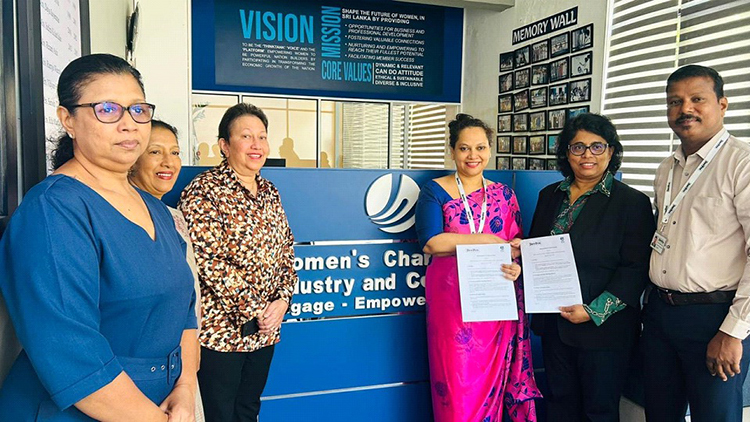
DevPro and Women’s Chamber of Industry and Commerce (WCIC) signed a formal partnership on Wednesday, 28th January to collaborate in promoting women’s economic empowerment and inclusion in Sri Lanka.
DevPro builds on 30 years of OXFAMs legacy in Sri Lanka and works towards Inclusive Economic Development leveraging expertise in inclusive and climate-resilient market systems and enterprise development and innovation. DevPro’s work is guided by the core values of gender justice, inclusivity and community-led development. Through its recent projects, DevPro has supported over 270 women-led MSMEs, across agriculture, handloom, and tourism-related value chains in five provinces in Sri Lanka through a mix of interventions combining skills development, enterprise strengthening, market linkages, and gender-sensitive community engagement to improve income, resilience, and economic participation.
WCIC is the first women-only trade chamber in the world, dedicated to empowering women entrepreneurs and women-led MSMEs in Sri Lanka through skills-building, business advisory services, networking etc. Among its many initiatives, WCIC’s flagship annual event, “Prathibhabhisheka” – Women’s Entrepreneurs Awards has empowered many women owned and women-led businesses in Sri Lanka to enhance their business resilience and competitiveness through improved governance processes, financial health, market recognition and global expansion.
Through this partnership, both DevPro and WCIC, will leverage their collective expertise, networks and resources to advance women’s economic empowerment and inclusion through projects, capacity building, research and policy advocacy focused on women entrepreneurship development, innovative business models, sustainability certification and credentials, export readiness and market integration and financial literacy and inclusion.
The MoU was signed by Gayani de Alwis, Chairperson of WCIC and Chamindry Saparamadu, Executive Director of DevPro in the presence of senior members of both teams.
Business
Writer Business Services enters Sri Lanka to partner with institutions to provide information management and payments solutions


Writer Corporation, one of India’s leading business groups, announced the launch of its subsidiary, Writer Business Services Pvt. Ltd., and the commencement of its operations in Sri Lanka. The expansion reflects Sri Lanka’s strategic importance in Writer’s regional growth plans and its role in supporting a highly regulated digital and financial services market which is currently undergoing digital transformation.
Sri Lanka’s continued focus on strengthening regulatory frameworks, digital platforms, and financial systems is shaping how institutions across banking, government, and enterprise sectors approach their business operations. There is a clear emphasis on secure, compliant, and resilient information and transaction environments that can scale with regulatory and business needs. Writer’s entry into Sri Lanka aligns with this direction, bringing global experience and a partnership-led approach to the market.
As part of its launch, Writer will establish a secure records and information storage facility in Seeduwa, Colombo. Designed to meet global standards for security, compliance, and disaster resilience, the facility will support banks, financial institutions, government bodies, and large enterprises in managing physical and digital information across its lifecycle.
Alongside information management, Writer brings established expertise in integrated payment services to support the modernization of transaction infrastructure across the banking and financial services sector. Its payments capabilities focus on strengthening availability, transaction continuity, and transparency across critical payment channels that underpin institutional reliability and customer confidence.
Writer’s digital payments offerings in Sri Lanka include end-to-end ATM and self-service terminal outsourcing, integrated channel ownership and managed services, field management applications, payment and reconciliation platforms, and remote monitoring with near real-time reporting. These solutions support financial institutions in improving uptime, strengthening governance, and enhancing operational efficiency across payment networks, in line with the continued evolution of electronic and automated payment systems.
Across information management and payments, Writer operates with an integrated portfolio spanning records and information management, business process outsourcing, cloud and digital services, data privacy, cybersecurity and enterprise payments infrastructure. These capabilities support institutions in addressing evolving regulatory requirements, digitization of legacy environments, and rising operational and cyber risks.
Writer’s local presence enables closer collaboration with clients and on-ground delivery, while supporting the development of Centres of Excellence across cybersecurity operations, SOC and NOC services, AI-led solutions, and payments operations and monitoring.
Writer’s Sri Lanka operations will be built, led, and run by Sri Lankan professionals, reflecting a long-term commitment to local talent growth and development.
Commenting on this development, Satyamohan Yanambaka, CEO, Writer Global Services Pvt. Ltd., assured Writer’s long-term commitment to the country’s digital ambitions. He said, “Writer’s entry into Sri Lanka reflects our belief that digital ambition in regulated environments must be supported by trust, sound governance, and strong execution. As institutions scale digital services, the reliability of information and payment systems, channel operations, and governance frameworks becomes increasingly important to public and institutional confidence. Our experience across information management, digital transformation, and enterprise payments enables us to support secure, large-scale financial ecosystems, with a clear commitment to building and leading these capabilities locally.”
Sri Lanka’s Digital Personal Data Protection framework raises expectations around how personal and sensitive information is secured and governed.

Altair Residences have, over the past six months, seen more than 100 individual title deeds being executed by apartment owners, providing owners with a clear, registered, legal title to their apartments in accordance with Sri Lankan property law. This has been a key initiative by the new owners and management of Altair to improve governance and will continue in an orderly manner in the coming months.
With the transition of ownership to Blackstone India, Altair’s Management Council has also been formally constituted, enabling owners to play an active and proactive role in the management of the Altair building. In addition, the management council has appointed Realty Management Services (RMS), a subsidiary of Overseas Realty Ceylon PLC, as the new facility manager of Altair.
Commenting on these milestones, Thilan Wijesinghe, Chairman of TWC Holdings, who, together with a team from TWC, represents Blackstone’s interests in Sri Lanka, said, “The issuance of individual title deeds is a critical step in any professionally developed residential asset. Over the past six months, this process at Altair has moved forward in a structured and transparent manner, alongside the formal establishment of owner-led governance. This, combined with the appointment of experienced facility managers are fundamental building block for long-term value-creation for apartment owners and proper asset stewardship.”
With ongoing improvements to the building being undertaken by Indocean Developers Pvt Ltd (IDPL), the owning company of Altair, the issuance of deeds to owners is expected to accelerate over the coming months.

USA pick former Sri Lanka allrounder Shehan Jayasuriya in T20 World Cup squad

Jofra Archer back as England and Sri Lanka begin World Cup countdown

Showers will occur at times in the Eastern, Northern, North-Central and Uva provinces and in Matale and Nuwara-Eliya districts

DevPro and WCIC come together to accelerate women’s economic empowerment in Sri Lanka

Tobacco and alcohol claim 22,000 lives annually

Development Officers hunger strike drags on for fourth day

‘Dates have the highest sugar content to fight Coronavirus’

Sunday Island 27 December – Headlines

#SundayIsland 17th December – Headlines

Sunday Island – 28th March

Sunday Island Headlines – 21 March

Sunday Island – 21st February – Headlines
-
 Business5 days ago
ComBank, UnionPay launch SplendorPlus Card for travelers to China
-
 Business6 days ago
ComBank advances ForwardTogether agenda with event on sustainable business transformation
-
 Opinion6 days ago
Conference “Microfinance and Credit Regulatory Authority Bill: Neither Here, Nor There”
-
 Business2 days ago
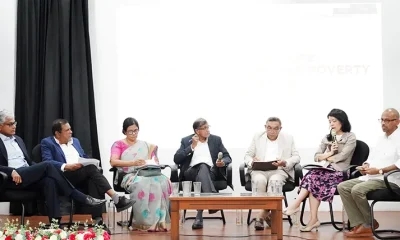
Climate risks, poverty, and recovery financing in focus at CEPA policy panel
-
 Opinion23 hours ago
Sri Lanka, the Stars,and statesmen
-

 Opinion5 days ago
Luck knocks at your door every day
-
 Business7 days ago
Dialog Brings the ICC Men’s T20 Cricket World Cup 2026 Closer to Sri Lankans
-

 News6 days ago
Rising climate risks and poverty in focus at CEPA policy panel tomorrow at Open University