
News
Left with neither pension nor allowance, ex-volunteer soldier demands justice


By Shamindra Ferdinando
Christy Silva Candappa, 80, says in spite of serving the Army during the two JVP-led insurgencies and the war in the North-East he has been denied a pension or at least an allowance.
Candappa says he retired in 2002 in the rank of Sergeant. Responding to The Island queries, the old soldier explained his efforts over the years hadn’t been successful though he tried to convince Army authorities of him being deprived of pension or an allowance.
Candappa produced copies of 16 appeals he made to the incumbent government since the last presidential election in Nov 2019 after having described his failure to convince Defence Secretary General (retd) Kamal Gunaratne of the urgent need to address the issue at hand. Candappa said that he had no option but to take his case to the media against the backdrop of the continuing refusal on the part of the Army to address his grievances.
“I do not blame politicians for this issue. There is no point in finding fault with them. The Army can easily rectify this matter,” Candappa said.
Asked to explain his military career, Candappa said he joined the second battalion of the Ceylon Light Infantry (2/V, CLI) in 1957 and served the Army intermittently for a period of five years. Candappa emphasised that he reported to his battalion every time he was called in. “I received no 19,851 as it was a smaller Army with few volunteer units.”
Declaring that he participated in scheduled activities of the battalion without fail during 1957-1962 period, Candappa recalled his deployment in the wake of the 1958 riots and in the immediate aftermath of 1959 assassination of Premier S.W.R.D. Bandaranaike.
Candappa said that during that period the volunteers were paid a daily allowance of 50 cents, one rupee and Rs 2.
“I loved participating in the Independence Day parade,” Candappa said, recalling him being transferred to the Second battalion of the then Ceylon Army Service Corps (2/V, CASC) in 1962. Candappa said that his unit number was 3385 and served the new unit for a period of 10 years before leaving taking leave without pay.
Candappa said that from 1972 to 1982 he served as an English tour guide and never believed in receiving another opportunity to serve the Army. However, at the behest of the then President Ranasinghe Premadasa those who had left active service were called back in 1988 to bolster the Army, Candappa said, adding that he held the rank of Lance Corporal at that time and served the 2/V CASC till 2002.
Having won the violence marred 1988 presidential election, UNP leader Premadasa faced the daunting task of meeting the JVP challenge in the South, Candappa said, pointing out how the Indian Army took control in the North-East. Once India quit Sri Lanka, fighting resumed with the Army suffering a series of setbacks in the northerner theatre, Candappa said.
“I served in Kankesanthurai, Palaly, Chavakachcheri, Paranthan Elephant Pass, Iyakchchi and Kilinochchi in the North in addition to Weli Oya, Siripura, Ethawetunawewa, Pulmoddai, Valaichenai, Vakarai, Kayankerni , Kadjukale and Kalkudah.” Candappa said that perhaps the Army made some mistake as many documents pertaining to his service during 1957-1972 period were in English. “But, that is no excuse to deprive me of a pension or an allowance,” -Candappa said, adding that during a confrontation in Paranthan he received injuries in an LTTE mortar attack. In spite of the back injury he hadn’t opted to seek a transfer out of the war zone, Candappa said. The old soldier questioned the rationale in depriving him of a pension whereas those who had been categorised as wounded now received a pension after serving the Army for 12 years.


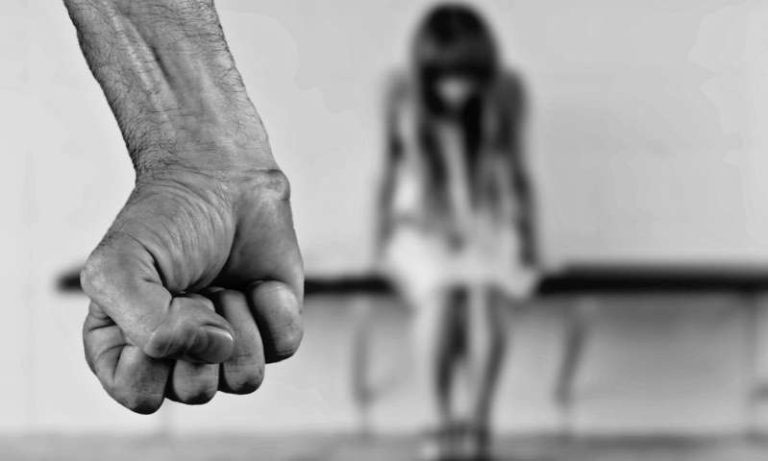
More than 108,000 complaints of child abuse had been received by the National Child Protection Authority (NCPA) between 2015 and 2025, Women and Child Affairs Minister Saroja Savithri Paulraj told Parliament yesterday.
Responding to a question raised by Opposition Leader Sajith Premadasa under Standing Order 27/2, the Minister said 4,421 child abuse cases were pending before High Courts as of April 30 this year, with indictments already filed against the accused.
She said the NCPA was working with 47 Police Child and Women Protection Bureaus under the Police Children and Women Abuse Prevention Division to expedite the hearing and conclusion of these cases.
The Minister said measures were also being taken to protect child victims during legal proceedings by introducing a system to record their evidence through video in a safe and child-friendly environment, thereby reducing the need for them to appear in court.
She said discussions were underway with the Ministries of Health and Mass Media and other relevant institutions to establish nine provincial video evidence recording units.
by Saman Indrajith ✍️
The Court of Appeal yesterday dismissed a writ petition seeking to postpone the 2026 G.C.E. A/L Examination by two months.
The petition, filed by a group of students due to sit the examination for the first and second time, sought an order delaying the examination, which is scheduled to commence next month.
The Court announced its decision after considering submissions made in support of the application and declined to grant leave to proceed with the petition.
As a result, the 2026 G.C.E. Advanced Level Examination will be held as scheduled in August.
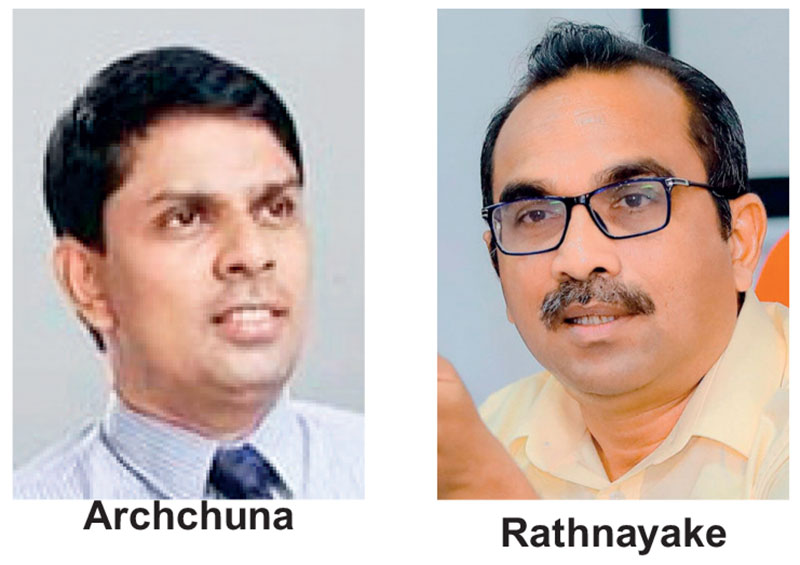
Leader of the House and Minister Bimal Rathnayake yesterday criticised the conduct of MP Archchuna Ramanathan in Parliament, describing the behaviour of certain lawmakers as “uncivilised, disgraceful and indecent”, while a heated exchange followed between government and opposition members.
Rathnayake made the remarks when Ramanathan attempted to raise a point of order during parliamentary proceedings.
“This parliament has one or two members who behave in a very uncivilised, disgraceful manner. We tolerate them because one of them is mentally ill,” Rathnayake said.
He alleged that Ramanathan had insulted even members of the Tamil community.
“The things he says may not be heard through the microphone, but the four walls of this Parliament are witnesses,” Rathnayake said, adding that Ramanathan’s conduct was not limited to Parliament.
He claimed that the Jaffna District Coordinating Committee meeting could not be held due to Ramanathan’s behaviour and said MP Gajendrakumar Ponnambalam had written to the Speaker stating that he could not sit near him.
The Speaker intervened during the exchange, warning Ramanathan not to behave in a manner that would turn Parliament into “a joke”. He also said the MP had previously addressed him in an insulting manner.
Opposition Leader Sajith Premadasa criticised the manner in which Rathnayake and the Speaker had addressed the matter, saying MPs should not be spoken to improperly and urging members to follow parliamentary Standing Orders.
Ramanathan, responding to the remarks, said: “I may be a psycho, but I am not a homosexual.”
by Saman Indrajith ✍️

Sheikh Hasina ally resigns as Bangladesh’s president

Oil prices hit $100 for the first time since May

US hits dozens of trading partners with new wave of tariffs

Arachchige, Rathnayake and Malinga pump Jaffna

Hermann, Liyanage and Mujeeb steer Colombo Kaps to a 23 run win

Showers expected in the Western and North-western provinces and in Galle and Matara districts

‘Dates have the highest sugar content to fight Coronavirus’

Sunday Island 27 December – Headlines

#SundayIsland 17th December – Headlines

Sunday Island – 28th March

Sunday Island Headlines – 21 March

Sunday Island – 21st February – Headlines
-
 Features6 days ago
Two memorable excerpts from a former SLAF commander’s memoir
-
 Business6 days ago
‘Giving up was never an option’: The fisherman who fought back after losing millions in SL
-
 Latest News6 days ago
Davis cup Asia/Oceania Group IV 2026 to be held in Colombo from 20th to 25th July
-
 Life style6 days ago
Taste of the Swiss Alps comes to Colombo
-
 Features6 days ago
Erdoğan’s New Republic
-
 Midweek Review3 days ago
Three high-profile alleged suicides shaping key investigations
-
 News7 days ago
Evidence recorded in money laundering case against Yoshitha Rajapaksa
-
 News7 days ago
Dengue outbreak gallops ahead: Infections surpasses 73,455, leaving 50 dead