
News
Lanka’s Malik Peiris shares ‘China’s Nobel Prize’ of USD 1 mn with Yuen

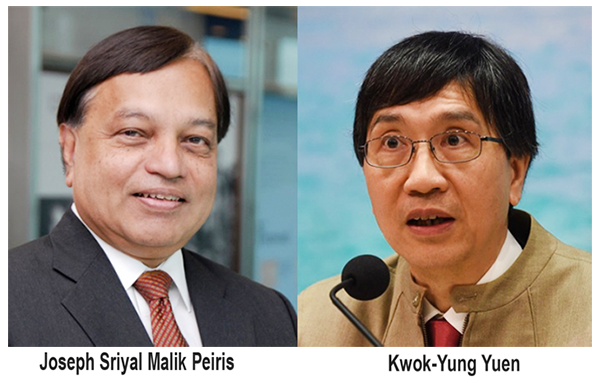
Hong Kong-based scientists Kwok-Yung Yuen and Sri Lanka’s Joseph Sriyal Malik Peiris won the prize in life sciences in the 2021 Future Science Prize, dubbed ‘China’s Nobel Prize’ for their major discoveries of SARS-CoV-1 as the causative agent of the global SARS outbreak in 2003 with impact on combating COVID-19 and emerging infectious diseases, the award organiser announced on Sunday.
The Chines Embassy in Colombo issued the following statement: “The Future Science Prize is a privately funded science honour established by a group of renowned scientists and entrepreneurs in 2016, aiming at recognising scientific breakthroughs and innovations in China with long-term significance to the world. The prize is given in three categories with $1 million for each award, namely the Life Science Prize, Physical Science Prize and Mathematics and Computer Science Prize.
Yuen, from the University of Hong Kong, told the Global Times in an exclusive interview on Sunday that “this is one of the most important prizes not just in China but also internationally. I am really honoured and grateful to get the recognition of the very eminent scientists of the selection committee for the prize.”
Wang Xiaodong, one of the reviewers of the award, said at Sunday’s press conference that “Chinese scientists were able to quickly identify the cause of the COVID-19 pandemic, thanks to their contributions.”
When asked how their discoveries affect people’s understanding of the cause of COVID-19, Yuen explained that since he and his team discovered in 2005 that the horseshoe bat was the natural animal reservouir for the ancestral SARS-CoV-1, they believe that SARSCoV-2 “also went from bats to another mammal(s) before jumping into humans”.
Moreover, SARS-CoV-2 replicates very well in both bat and human intestinal organs, which further supports the bat origin of SARS-CoV-2, he said. But there are also major differences between the two diseases, Yuen noted, in terms of “disease severity, asymptomatic or mildly symptomatic rates and the ability of the virus to suppress interferon and inflammatory responses.”
As world scientists call for the second phase of the coronavirus origins study, experts from the Chinese Centre for Disease Control and Prevention have suggested that investigations should be carried out in countries where horseshoe bats and pangolins reside, those with virus-positive animal data and which supplied Wuhan Huanan seafood market through cold-chain logistics, as more tests and molecular viral research suggest it is possible that the early outbreak in the Huanan market may have been sparked by cold-chain imports.
Jin Dongyan, a professor at the School of Biomedical Sciences at HKU, told the Global Times the same day that Yuen and his research team, where a group of world-leading researchers are gathered, are very valuable to the Hong Kong Special Administrative Region. “From SARS to COVID-19, the team has been engaged in coronavirus-related basic studies while combing through clinical studies. That working mode contributes to the outstanding work of the university to the study of infectious diseases,” Jin said.
Yuen and his research team are devoting their efforts to find out how to prevent potential re-emergence of a SARS and COVID-19-like public health crisis. Studies on the types of coronaviruses that exist in bats, the potential hosts of the cross-species transmission, as well as how humans transmitted the virus to animals are part of their research, Jin said.
Yuen also told the Global Times that he is working on many areas from the pathogenesis of the coronavirus to antivirals and vaccines. “My part of the awarded prize will go back to the HKU for teaching and research purposes,” he added.
Apart from Kwok-Yung Yuen and Joseph Sriyal Malik Peiris, Zhang Jie, a professor at Shanghai Jiao Tong University, won the Physical Science Prize for his development of laser-based fast electron beam technologies. Simon Sze from the “National Chiao Tung University” in the island of Taiwan won the prize in mathematics and computer science.
The science committee of the prizes, composed of 23 outstanding scientists, is at the core of the award selection. Mau-Chung Frank Chang, chairman of the committee, said that the nomination and selection of the prize was established in accordance with the Nobel Prize system, in which the committee invites international experts as nominators and then solicits evaluation letters from experts in relevant fields of the nominated work. Based on the evaluations, the committee then votes to select the final award winners.
In the previous five years, 20 winners were awarded the Future Science Prize, all of whom have been widely recognised both in scientific circles and society. The late Yuan Longping, known as “the father of hybrid rice,” was awarded the Life Science Prize in 2018 “for pioneering the use of hybrid vigor to achieve higher yield and increased stress resistance in rice.”

Latest News
PM departs Sri Lanka to participate in the 56th World Economic Forum Annual Meeting in Davos-Klosters, Switzerland.

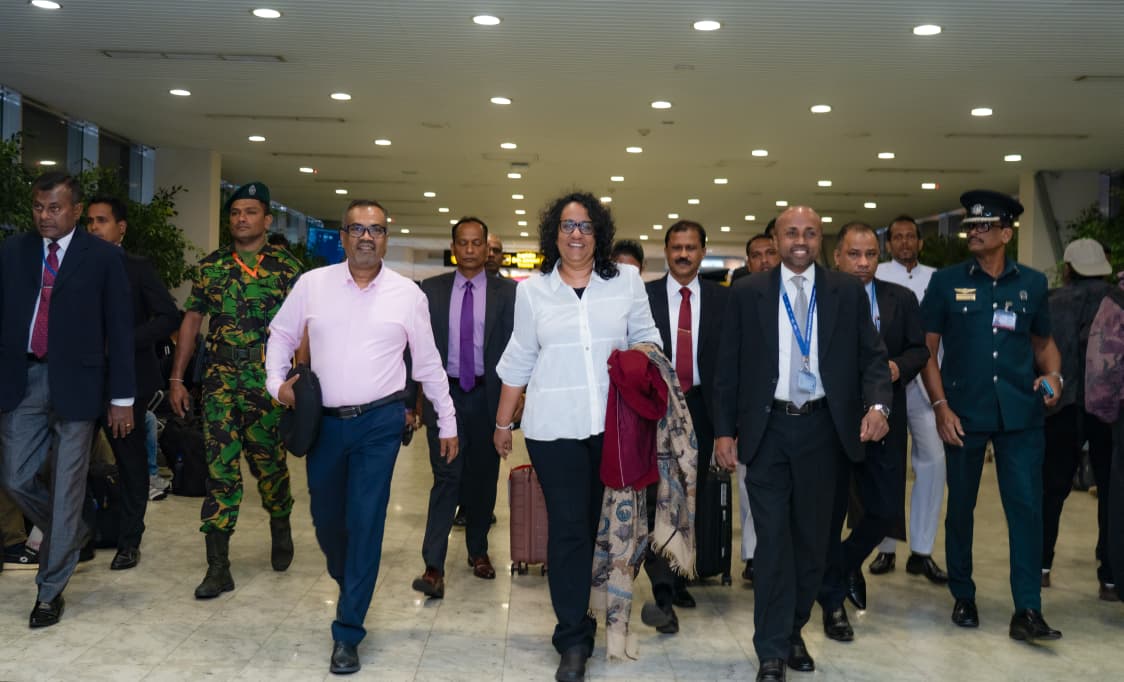
Prime Minister Dr. Harini Amarasuriya departed Sri Lanka on this morning (19 January) to participate in the 56th Annual Meeting of the World Economic Forum (WEF), to be held in Davos-Klosters, Switzerland, from 19 to 23 January 2026.
The World Economic Forum 2026 will be convened under the theme “A Spirit of Dialogue” and will bring together over 3,000 global leaders, including heads of state, government leaders, chief executive officers of leading multinational corporations, policymakers, and technology innovators.
During the visit, the Prime Minister is scheduled to hold a series of high-level bilateral meetings with key international leaders, heads of global institutions, and other distinguished dignitaries.
(Prime Minister’s Media Division)

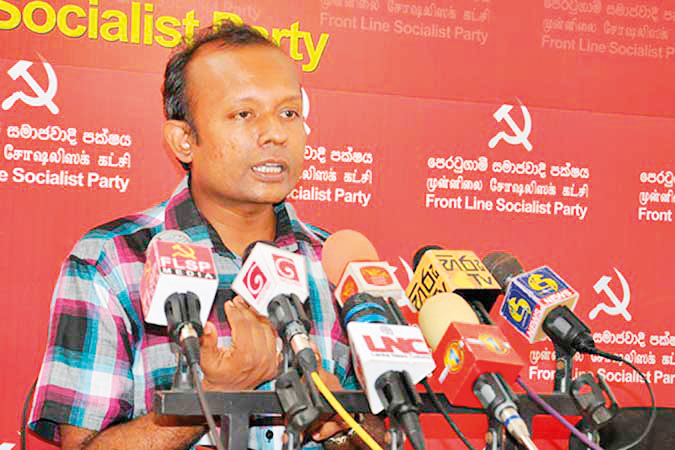
The government is under mounting pressure to release a foreign laboratory report on the controversial coal consignment imported for the Lakvijaya Power Plant, with the Frontline Socialist Party (FSP) accusing the authorities of political interference and tender manipulation.
Speaking to the media after a party meeting in Homagama yesterday, FSP Education Secretary Pubudu Jagoda demanded an immediate explanation for the delay in disclosing the report from a Dutch laboratory, Cotecna, which was commissioned to test samples of the coal stocks in question after doubts were raised about an earlier local laboratory assessment. Jagoda said Cabinet media spokesperson Dr. Nalinda Jayatissa had announced that the report would be submitted by 16 January, but it had yet to be made public.
“The Sri Lankan lab confirmed the coal was substandard and could damage both the environment and power plant machinery. The foreign lab has independently verified the same results, we are told. Yet, political pressure appears to be delaying the release of the report.” He warned that any attempt to issue a false report would eventually be exposed and urged the government and the laboratory to maintain transparency.
SLPP MP D.V. Chanaka told Parliament last week that while 107 metric tonnes of coal were normally required per hour to generate 300 megawatts, but as many as 120 tonnes of newly imported coal were needed to produce the same amount of power due to its lower calorific value. Tests showed the first two shipments had calorific values of 5,600–5,800 kcal/kg, below the required minimum of 5,900 kcal/kg, said.
Jagoda accused the government of tailoring procurement rules to benefit an Indian supplier, citing a drastic reduction in reserve requirements—from one million metric tonnes in 2021 to just 100,000 tonnes in 2025—and alleged previous irregularities by the company, including a 2016 Auditor General finding regarding a rice supply contract and the 2019 suspension of a key agent of the company by the International Cricket Council over match-fixing.
He further criticised systemic manipulation of the coal tender process, including delays in issuing the tender from the usual February-March window to July, and progressively shortening the submission period from six weeks to three, giving an advantage to suppliers with stock on hand.
The Ministry of Energy recently issued an amended tender for 4.5 million metric tonnes of coal for the 2025/26 and 2026/27 periods, following the cancellation of an earlier tender. Jagoda warned that procurement delays and irregularities could trigger coal shortages, higher spot-market purchases, increased electricity costs, and potential power cuts if hydropower falls short.
Jagoda called for urgent investigations into the procurement process, insisting that any mismanagement or corruption should not be passed on to the public.Denying any wrongdoing, the government has said it is waiting for the lab report.
by Saman Indrajith ✍️
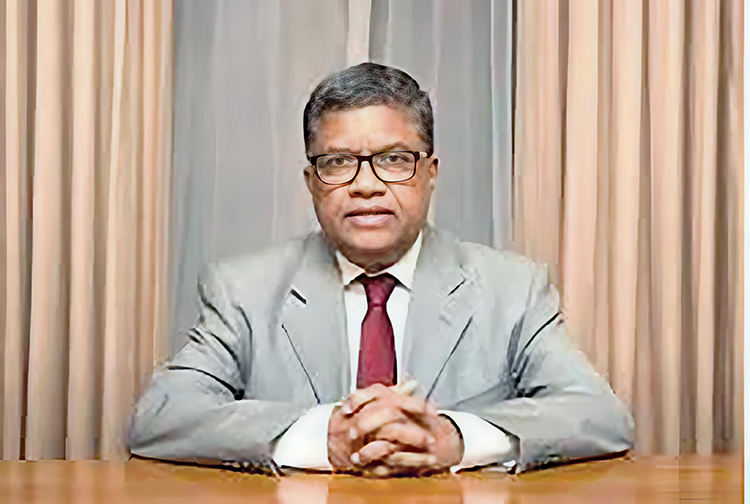
The Communist Party of Sri Lanka yesterday (18) alleged that the US was terrorising countries with unfair tariffs to compel them to align with its bigot policies.
CPSL General Secretary Dr. G. Weerasinghe said so responding to The Island query regarding European countries being threatened with fresh tariffs over their opposition to proposed US take-over of autonomous Danish territory Greenland.
US President Donald Trump has declared a 10% tariff on goods from Denmark, Norway, Sweden, France, Germany, the UK, the Netherlands and Finland with effect from 1 February but could later rise to 25% – and would last until a deal was reached. Targeted countries have condemned the US move.
Dr. Weerasinghe pointed out that none of the above-mentioned countries found fault with the US imposing taxes on countries doing trade with Russia and Iran. Now that they, too, had been targeted with similar US tactics, the CP official said, underscoring the pivotal importance of the world taking a stand against Trump’s behaviour.
Referring to the coverage of the Greenland developments, Dr. Weerasinghe said that news agencies quoted UK Prime Minister Keir Starmer as having said that the move was “completely wrong”, while French President Emmanuel Macron called it “unacceptable.
Dr. Weerasinghe said that Sri Lanka, still struggling to cope up with the post-Aragalaya economic crisis was also the target of discriminating US tariff policy. The top CPSL spokesman said that the recent US declaration of an immediate 25% increase in tariff on imports from countries doing business with Iran revealed the prejudiced nature of the US strategy. “Iran is one of our trading partners as well as the US. Threat of US tariffs on smaller countries is nothing but terrorism,” Dr. Weerasinghe said, stressing the urgent need for the issue at hand to be taken up at the UN.
Responding to another query, Dr. Weerasinghe cited the US targeting India over the latter’s trade with Russia as a case in point. He was commenting on the recent reports on India’s Reliance Industries and state-owned refiners sharply cutting crude oil imports from Russia. The CPSL official said that the EU wouldn’t have even bothered to examine the legitimacy of US tariff action if they hadn’t been targeted by the same action.
Perhaps, those who now complain of US threats over the dispute regarding Greenland’s future owed the world an explanation, Dr. Weerasinghe said. The reportage of the abduction of Venezuela’s President and the first lady underscored that the US intervened because it couldn’t bear the Maduro administration doing trade with China and other countries considered hostile to them, Dr. Weerasinghe said.
The CPSL official said that the NPP couldn’t turn a blind eye to what was happening. Just praising the US wouldn’t do Sri Lanka any good, he said, adding that the Greenland development underscored that the US under Trump was not concerned about the well-being of any other country but pursued an utterly one-sided strategy.
The US dealings with the NPP government, particularly the defence MoU should be examined taking into consideration US tariffs imposed on Sri Lanka at the onset of the second Trump administration and ongoing talks with the US, Dr. Weerasinghe.
By Shamindra Ferdinando ✍️

PM departs Sri Lanka to participate in the 56th World Economic Forum Annual Meeting in Davos-Klosters, Switzerland.

Several killed in Kabul blast, Afghan Interior Ministry says

Senegal beat hosts Morocco to win AFCON 2025 after farcical walk-off

At least six killed in Pakistan as fire rips through Karachi shopping mall

Chile declares ‘state of catastrophe’ as deadly wildfires menace cities

At least 21 killed in Spain after crash involving high-speed trains

‘Dates have the highest sugar content to fight Coronavirus’

Sunday Island 27 December – Headlines

#SundayIsland 17th December – Headlines

Sunday Island – 28th March

Sunday Island Headlines – 21 March

Sunday Island – 21st February – Headlines
-

 Editorial2 days ago
Illusory rule of law
-
 News3 days ago
UNDP’s assessment confirms widespread economic fallout from Cyclone Ditwah
-

 Business5 days ago
Koaloo.Fi and Stredge forge strategic partnership to offer businesses sustainable supply chain solutions
-
 Editorial3 days ago
Crime and cops
-
 Features2 days ago
Daydreams on a winter’s day
-

 Editorial4 days ago
The Chakka Clash
-
 Features2 days ago
Surprise move of both the Minister and myself from Agriculture to Education
-
 Business5 days ago
SLT MOBITEL and Fintelex empower farmers with the launch of Yaya Agro App