
News
Lanka’s coconut industry faces major setback as US slaps 30% tariff

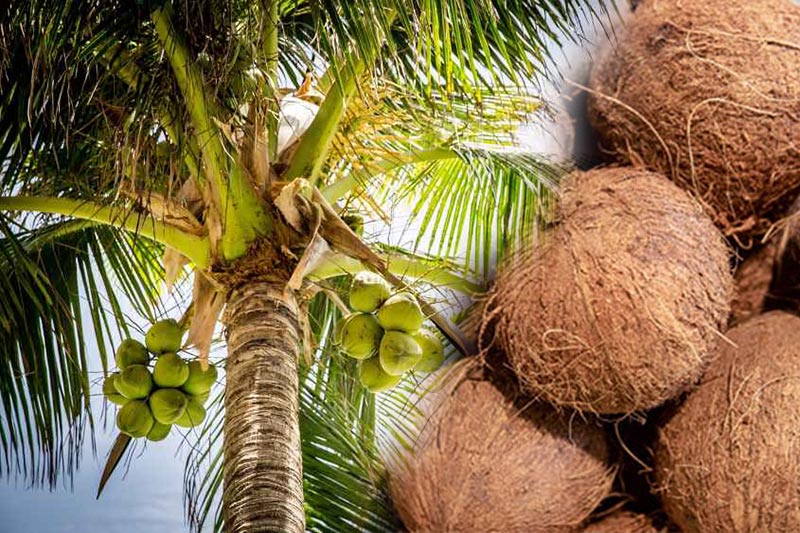
The Ceylon Chamber of Coconut Industry (CCCI) has issued an urgent appeal to the government in response to the United States’ decision to impose a 30% tariff on coconut-based products from Sri Lanka, effective August 1, 2025.
“The move threatens to upend one of the country’s most valuable export sectors, which currently generates over USD 857 million in annual revenue, and risks pushing thousands of rural livelihoods into uncertainty,” a CCCI has said in a media statement.
The United States is Sri Lanka’s single largest buyer of coconut-based products, accounting for more than 20% of the sector’s exports, valued at roughly USD 160 million each year. According to the CCCI, the new tariff all but destroys Sri Lanka’s price competitiveness in the US market. Competing suppliers such as the Philippines, Vietnam, and India enjoy preferential trade access, meaning Sri Lankan products, despite their globally renowned quality, will be sidelined on cost alone.
“This isn’t just a policy shift. It’s a devastating blow to an entire industry that Sri Lanka has worked hard to build,” said Jayantha Samarakoon, Chairman of the CCCI. “Our products are recognized globally for their purity, taste, and nutritional value. But no matter how good they are, a 30% tariff makes them unaffordable for buyers. We will be priced out of the market, not because of quality, but because of cost. While we acknowledge the reduction from the originally proposed 44%, even at 30%, the impact remains deeply damaging to our export competitiveness and to the hundreds of thousands of rural livelihoods tied to this industry.”
The export basket at risk includes a wide range of value-added goods: desiccated coconut, virgin and refined coconut oil, coconut milk and cream, coconut water, coir fibre products, activated carbon, and husk-based growing media. Many of these are premium niche exports that Sri Lanka pioneered in the global market, but buyers will now have little choice but to shift sourcing to cheaper destinations.
The impact, however, goes far beyond trade statistics. Over 800,000 Sri Lankans depend on the coconut industry for their livelihoods, including smallholder farmers, processors, factory workers, logistics providers, and exporters. More than 150,000 direct jobs in the manufacturing and processing sectors are now under immediate threat. A sudden drop in export demand could flood the domestic market with unsold produce, pushing down farm gate prices and cutting off income streams for rural families already grappling with inflation and rising production costs.
The CCCI also warns of broader economic fallout. A downturn in coconut exports could trigger a collapse in investor confidence and foreign direct investment, particularly as Sri Lanka works to position itself as a reliable, competitive sourcing destination under its ongoing IMF reform program. With other coconut-producing countries offering stronger policy support and lower-cost structures, there is a real risk of local industrialists shifting operations abroad — taking jobs, capital, and long-term opportunity with them.
In light of this, the Chamber is calling for urgent and coordinated government action to safeguard the sector. It has urged immediate engagement with the Office of the US Trade Representative to explore options for tariff relief or exemptions. The Chamber also called for a renewed push to secure bilateral trade agreements that ensure fair access to key markets, alongside targeted support to help exporters absorb short-term shocks and improve long-term competitiveness.
“This is no longer just an economic issue. It’s a national priority,” Samarakoon stressed. “If we allow this industry to fall through the cracks, we risk losing not only a major export earner, but a vital pillar of rural resilience, food security, and industrial growth. The time to act is now.”

News
Karu argues against scrapping MPs’ pension as many less fortunate members entered Parliament after ’56
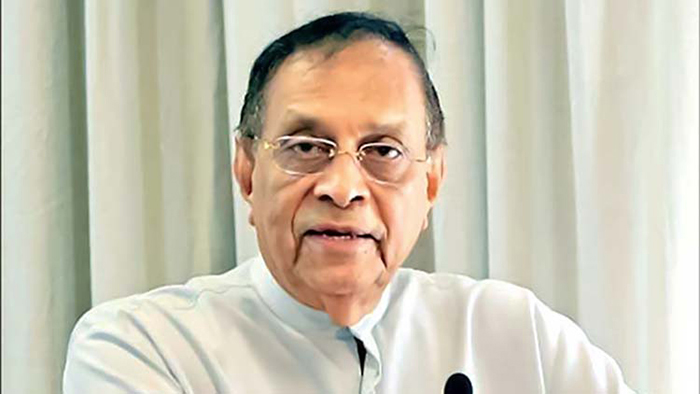
Former Speaker of Parliament Karu Jayasuriya has written to President Anura Kumara Dissanayake expressing concerns over the proposed abolition of MPs’ pensions.The letter was sent in his capacity as Patron of the Former Parliamentarians’ Caucus.
In his letter, Jayasuriya noted that at the time of Sri Lanka’s independence, political participation was largely limited to an educated, affluent land-owning elite. However, he said a significant social transformation took place after 1956, enabling ordinary citizens to enter politics.
He warned that under current conditions, removing parliamentary pensions would effectively confine politics to the wealthy, business interests, individuals engaged in illicit income-generating activities, and well-funded political parties. Such a move, he said, would discourage honest social workers and individuals of modest means from entering public life.
Jayasuriya also pointed out that while a small number of former MPs, including himself, use their pensions for social and charitable purposes, the majority rely on the pension as a primary source of income.
He urged the President to give due consideration to the matter and take appropriate action, particularly as the government prepares to draft a new constitution.The Bill seeking to abolish pensions for Members of Parliament was presented to Parliament on 07 January by Minister of Justice and National Integration Dr. Harshana Nanayakkara.
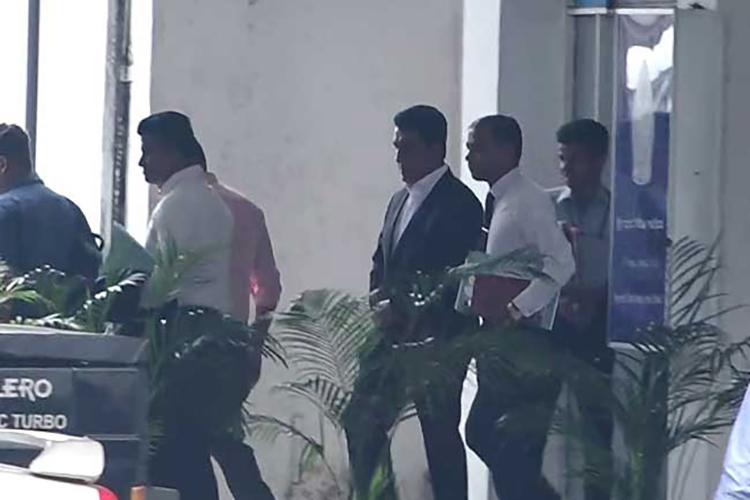
Five suspects, including former Minister Johnston Fernando and his two sons, who were arrested by the Financial Crimes Investigation Division (FCID), were further remanded until 30 January by the Wattala Magistrate’s Court yesterday.
The former Minister’s , sons Johan Fernando and Jerome Kenneth Fernando, and two others, were arrested in connection with the alleged misuse of a Sathosa vehicle during Fernando’s tenure as Minister.
Investigations are currently underway into the alleged misuse of state property, including a lorry belonging to Lanka Sathosa, which reportedly caused a significant financial loss to the state.
In connection with the same incident, Indika Ratnamalala, who served as the Transport Manager of Sathosa during
Fernando’s tenure as Minister of Co-operatives and Internal Trade, was arrested on 04 January.
After being produced before the Wattala Magistrate’s Court, he was ordered to be remanded in custody until 09 January.The former Sathosa Transport Manager was remanded on charges of falsifying documents.
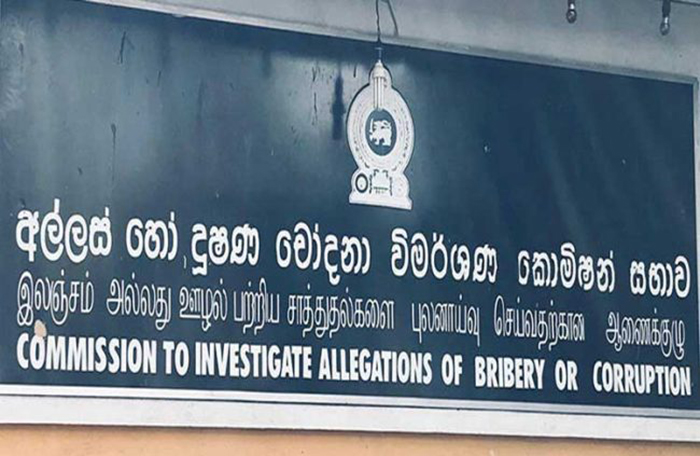
The Commission to Investigate Allegations of Bribery or Corruption (CIABOC) yesterday informed the Colombo Magistrate’s Court that indictments had been filed in the Colombo High Court against former Minister and NDF Badulla District MP Chamara Sampath Dassanayake over a corruption allegation.
The Bribery Commission notified the court when the case, in this regard, was taken up yesterday before Colombo Chief Magistrate Asanga S. Bodaragama.
At the hearing, the CIABOC notified the court that indictments had been presented before the Colombo High Court against the accused.
Accordingly, concluding the proceedings before the Magistrate’s Court, the Magistrate ordered MP Dassanayake to appear before the High Court once a notice was issued.

U – 19 World Cup: Bangladesh ease past USA

U – 19 World Cup: Australia top Group A after bowling SL out for 58

Alleged drug kingpin and ex-Olympian Ryan Wedding arrested after years on the run

Showers above 50 mm are likely at some places in the Northern, North-central, and North-western provinces and in Trincomalee district

Karu argues against scrapping MPs’ pension as many less fortunate members entered Parliament after ’56

Johnston, two sons and two others further remanded over alleged misuse of vehicle

‘Dates have the highest sugar content to fight Coronavirus’

Sunday Island 27 December – Headlines

#SundayIsland 17th December – Headlines

Sunday Island – 28th March

Sunday Island Headlines – 21 March

Sunday Island – 21st February – Headlines
-

 Editorial6 days ago
Illusory rule of law
-
 Features6 days ago
Daydreams on a winter’s day
-
 Features6 days ago
Surprise move of both the Minister and myself from Agriculture to Education
-

 Features5 days ago
Extended mind thesis:A Buddhist perspective
-
 Features6 days ago
The Story of Furniture in Sri Lanka
-

 Opinion4 days ago
American rulers’ hatred for Venezuela and its leaders
-
 Features6 days ago
Writing a Sunday Column for the Island in the Sun
-
 Business2 days ago
CORALL Conservation Trust Fund – a historic first for SL