
News
Lankans ask court to save elephants from accidental death

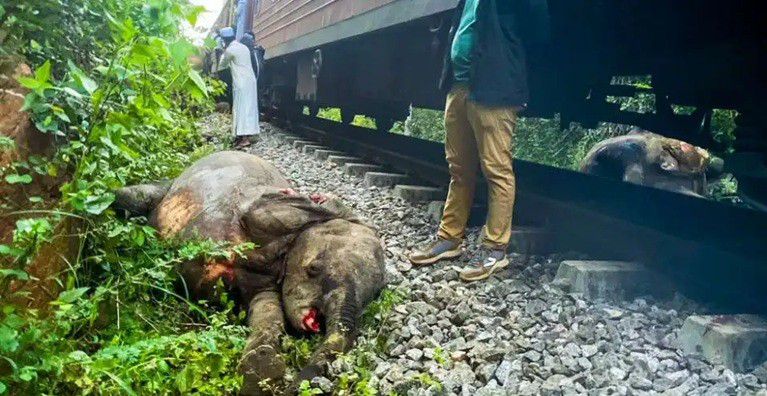
Buddhist people have emotional attachment toward elephants because animals are linked to their religious tradition
By Quintus Colombage
(UCAN) People across Sri Lanka have supported a call to protect elephants, a revered animal in Buddhist culture, after an increasing number of them died in the wild, struck by passenger trains.
Media in the Buddhist-majority nation began to discuss the issue after a passenger train struck a herd of elephants and killed six of them in Habarana east of Colombo on Feb. 20. The train also derailed.
As discussions progressed, the Centre for Environmental Justice, an environmental conservation, filed a petition on March 3, seeking the intervention of Sri Lanka’s Supreme Court.
The petition sought the court’s direction to officials of forest, railways, transport, and wildlife departments to jointly initiate mitigation measures, such as improving driver visibility on railway lines.
The petitioners also recommended enlisting security forces, especially the Air Force, and seeking international help to adopt modern technologies to protect elephants.
The petition said 151 elephants have died due to train collisions over the past 13 years. The elephant population is also fast decreasing from 5,879 in 2011 to 3,130 in the 2024 survey, it said.
Nihal Gamlath, a Christian environmental activist from Habarana, said environmentalists, cutting across religious lines, have proposed several steps to protect the animals. “But they have yet to act.”
However, on Mar. 4, the government rescheduled trains, and the Railway Department cleared bushes to visibility, helping drivers stop trains if elephants cross the tracks at night.
Gamlath, married to a Buddhist, said elephants are legally protected in Sri Lanka, with strict regulations against capturing wild elephants, though some tamed them and kept them as status symbols.
Habarana has a large elephant population and is renowned for attracting hundreds of tourists, boosting foreign income for the country’s struggling economy.
He said people have “an emotional” attachment toward elephants because of their link with Buddhism.
In the Buddhist tradition, “elephant is considered sacred and auspicious, linked to religious ceremonies, processions, and temple rituals, and its teachings,” said Gamlath.
Elephants symbolize strength, wisdom, and peace for Buddhists. They also believe that Buddha’s mother, Queen Maya, dreamt of a white elephant entering her right side, which signifies the Buddha’s miraculous conception.
Hundreds of Buddhist temples across the country showcase decorated elephants in their processions.
Nimal Kodithuwakku, a Buddhist and environmental activist, said he was in “deep pain witnessing six elephant killings.” The incident also brought his aged mother to tears, he said.
“Most of the killed elephants were female, and one small elephant died after struggling for two days near the railroad tracks. Another elephant also fought two days for life,” he said Kodithuwakku.

News
“Investments in Professional Education Are Investments in Institutional Strength and National Progress” – PM

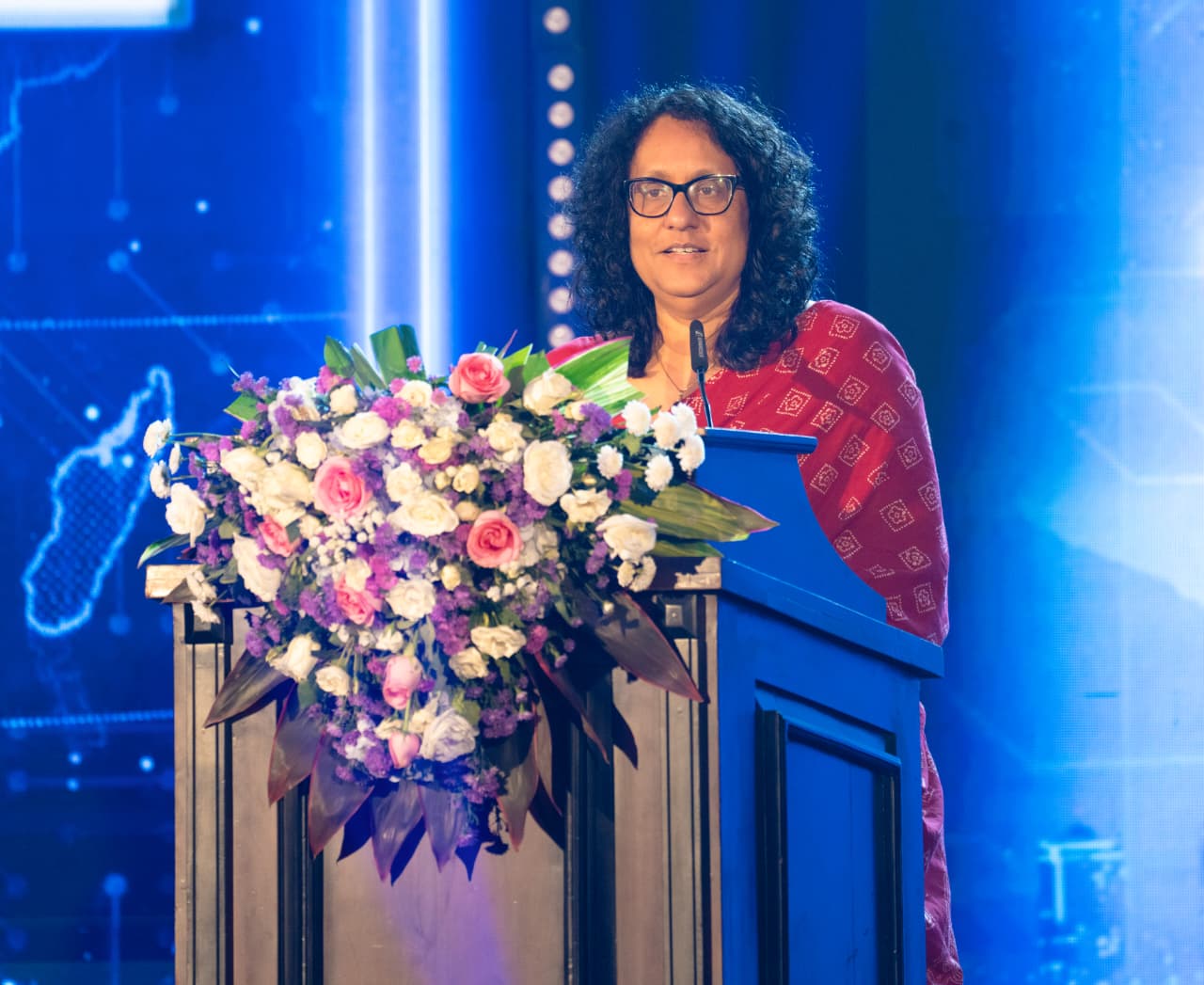
Prime Minister Dr. Harini Amarasuriya stated that strengthening Sri Lanka’s professional education framework and aligning it with internationally recognised standards is essential to building a skilled, ethical, and globally competitive workforce.
The Prime Minister made these remarks while addressing the official launch of the QS-accredited Chartered Qualification in Human Resource Management (CQHRM) at SCQF Level 11 (New Syllabus), organised by the Chartered Institute of Personnel Management (CIPM) Sri Lanka under the theme New Heights of Recognition. The event was held on Wednesday, 18 February at the Cinnamon Life, Colombo.
Emphasising the importance of expanding professional and vocational education pathways, the Prime Minister stated:
“This is of crucial importance to us in broadening our educational pathways and opportunities. We need to increase access to education that is globally recognised and that offers multiple pathways in professional and vocational fields. This aligns closely with the reform process we have initiated in the education sector and with our commitment to lifelong learning where individuals can work and learn at the same time, and where education is not limited to a particular age group but continues throughout life.”
Highlighting Sri Lanka’s national priorities, the Prime Minister further observed:
“At a time when Sri Lanka is focused on economic recovery, institutional reform and sustainable growth, the need for competent and ethical human resource leadership is clear. A competitive economy depends not only on investment and infrastructure but also on skilled professionals who can lead institutions effectively.”
The Prime Minister noted that the QS accreditation of the CQHRM qualification strengthens international recognition of Sri Lankan human resource professionals, enhances professional progression pathways, and reinforces confidence in the country’s professional education system. She also underscored the role of human resource leadership in advancing equity and inclusion within workplaces, including fair recruitment practices, safe working environments, leadership development for women, and inclusive policies for persons with disabilities and neurodivergent individuals.
Addressing the future of work, the Prime Minister stressed the importance of preparing for rapid technological transformation, including the growing impact of artificial intelligence on industries and workforce management, encouraging institutions to proactively adapt to emerging demands.
The event was attended by Deputy Minister of Industry and Entrepreneurship Development, Chathuranga Abeysinghe, along with other distinguished guests.
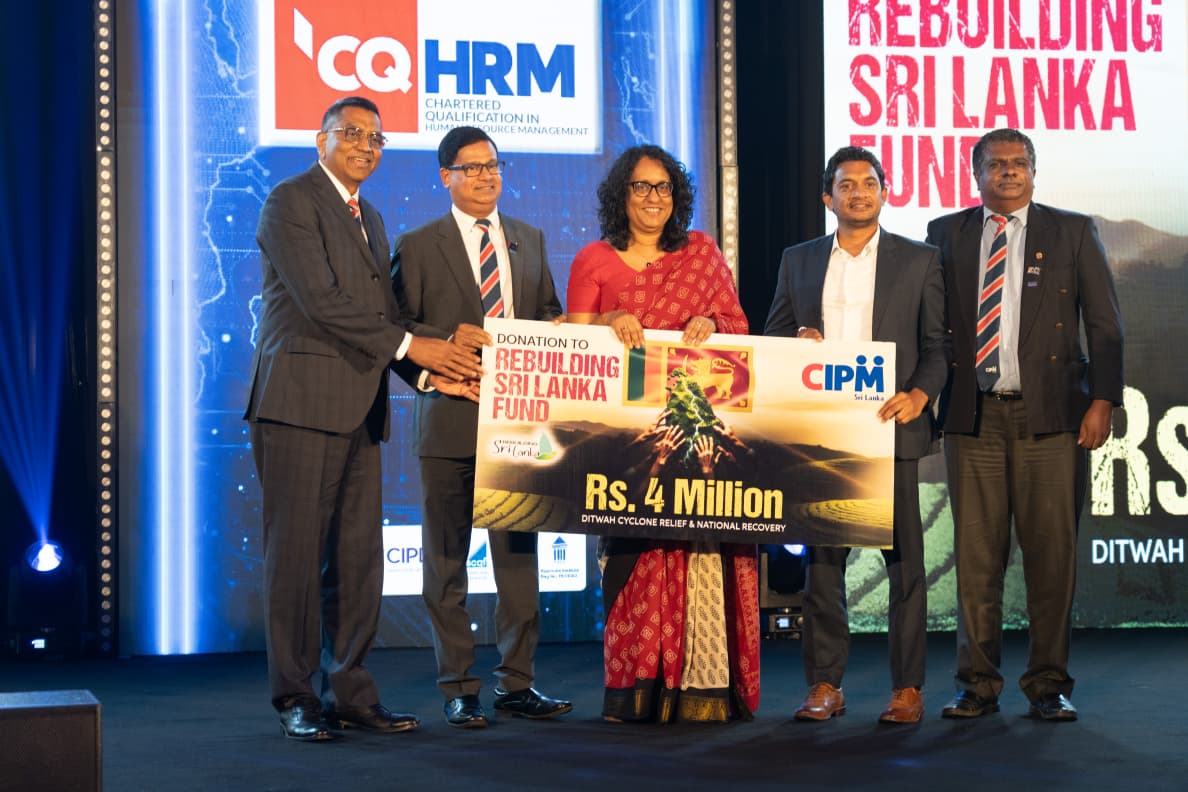
[Prime Minister’s Media Division]
Latest News
Advisory for Severe Lightning issued to the Western and Sabaragamuwa provinces and Nuwara-Eliya, Galle and Matara districts
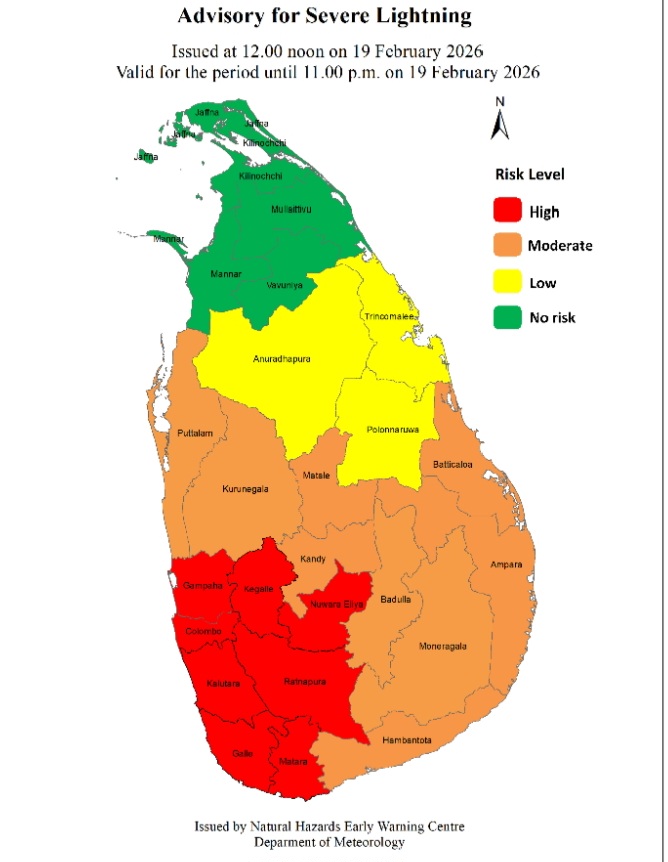
Advisory for Severe Lightning
Issued by the Natural Hazards Early Warning Centre at 12.00 noon 19 February 2026 valid for the period until 11.00 p.m. 19 February 2026
The public are warned that thundershowers accompanied with severe lightning are likely to occur at some places in in the Western and Sabaragamuwa provinces and in Nuwara-Eliya, Galle and Matara districts after 2.00 p.m.
There may be temporary localized strong winds during thundershowers.
General public is kindly requested to take adequate precautions to minimize damages caused by lightning activity.
ACTION REQUIRED:
The Department of Meteorology advises that people should:
Seek shelter, preferably indoors and never under trees.
Avoid open areas such as paddy fields, tea plantations and open water bodies during thunderstorms.
Avoid using wired telephones and connected electric appliances during thunderstorms.
Avoid using open vehicles, such as bicycles, tractors and boats etc.
Beware of fallen trees and power lines.
For emergency assistance contact the local disaster management authorities.
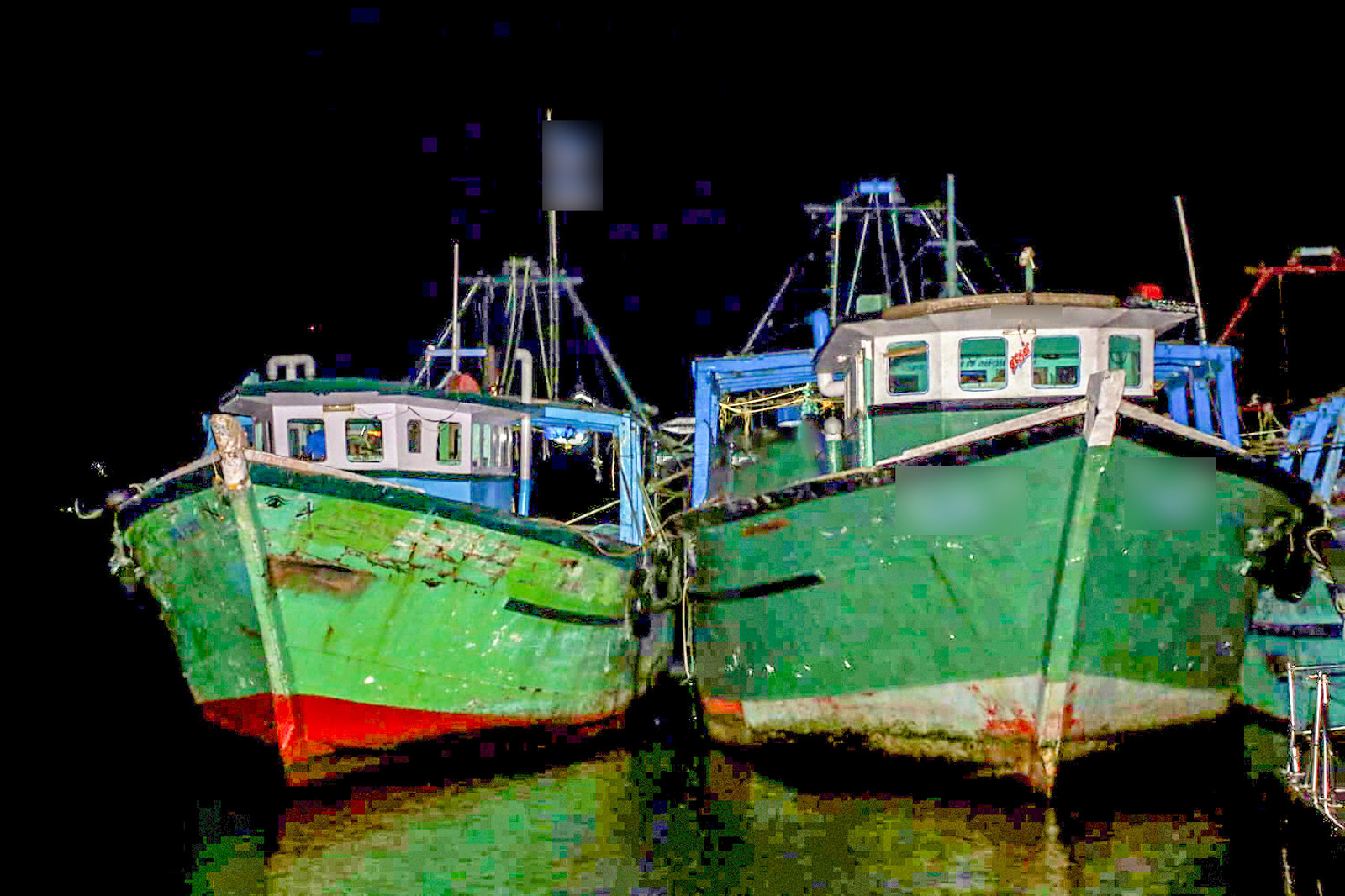
During operations conducted in the dark hours of 18 Feb 26, the Sri Lanka Navy and Coast Guard seized 04 Indian fishing boats and apprehended 22 Indian fishermen, while they were poaching in Sri Lankan waters north of Mannar and off the Delft Island, Jaffna.
Recognizing the detrimental effects of poaching on marine resources and the livelihoods of local fishing communities, the Sri Lanka Navy and Coast Guard continue to conduct regular operations as proactive measures to deter such activities. These efforts underscore the collective robust approach and steadfast commitment to safeguarding the nation’s marine ecosystems while ensuring the economic security and wellbeing of its citizens.
The 02 fishing boats along with the 10 fishermen held in Mannar were handed over to the Fisheries Inspector of Mannar and the remaining 02 fishing boats intercepted off the Delft Island, together with 12 Indian fishermen were handed over to the Fisheries Inspector of Myliddy for onward legal proceedings.

“Investments in Professional Education Are Investments in Institutional Strength and National Progress” – PM

Zimbabwe stun Sri Lanka to enter Super Eight unbeaten

Ex-UK Prince Andrew arrested on suspicion of misconduct in public office

Advisory for Severe Lightning issued to the Western and Sabaragamuwa provinces and Nuwara-Eliya, Galle and Matara districts

Navy and Coast Guard seize 04 Indian fishing vessels poaching in Sri Lankan waters

Hope’s 75, Forde and Joseph’s wickets help West Indies go into playoffs unconquered

‘Dates have the highest sugar content to fight Coronavirus’

Sunday Island 27 December – Headlines

#SundayIsland 17th December – Headlines

Sunday Island – 28th March

Sunday Island Headlines – 21 March

Sunday Island – 21st February – Headlines
-

 Life style5 days ago
Marriot new GM Suranga
-

 Business4 days ago
Ministry of Brands to launch Sri Lanka’s first off-price retail destination
-
 Features5 days ago
Monks’ march, in America and Sri Lanka
-

 Features5 days ago
The Rise of Takaichi
-
 Features5 days ago
Wetlands of Sri Lanka:
-

 News5 days ago
Thailand to recruit 10,000 Lankans under new labour pact
-
 News5 days ago
Massive Sangha confab to address alleged injustices against monks
-

 News3 days ago
IMF MD here