
Features
Lanka yet to capitalise on Yohani’s ‘Manike Mage Hithe’


Yes, India is the victor and we are the losers where our very own singing sensation is concerned.
While India is capitalising on Yohani de Silva’s mega rise to stardom, with ‘Manike Mage Hithe,’what have our folks done! Absolutely nothing, I would say…up to this point in time.
 Sri Lanka Tourism should have stepped into the scene and made Yohani the Ambassadress of Sri Lanka Tourism.
With such an awesome, and distinguished, following in neighbouring India, Yohani, as Ambassadress, could easily entice Indian holidaymakers to head for our paradise island.
An enticing advertising campaign, with Yohani at the helm, would certainly generate a lot of interest with the Indian public.
Right now, they all seem focused on Yohani and ‘Manike Mage Hithe’ so Sri Lanka Tourism should take the cue and move into action, quickly.
In the meanwhile, Ivan Corea, Sri Lanka-born writer and lecturer on Compassionate Leadership, formerly of California, now based in the UK, is requesting the US Ambassador to Sri Lanka, Alaina Teplitz, and the US Embassy in Colombo, to facilitate his idea of arranging for American child prodigy Karolina Protsenko to be flown down to Colombo, with her family.
 He has recommended a joint performance of ‘Manike Mage Hithe’ with Karolina Protsenko and Sri Lanka’s global superstar, Yohani, as was exclusively reported in this column last Tuesday.
Speaking from the UK, Ivan Corea said: “US Ambassador to Sri Lanka Alaina Teplitz recently went on social media to say: I enjoyed listening to @Karolina_Violin play the #SriLankan song #ManikeMageHithe on the streets of California! I hope you enjoy it too. Such a testament as to music as the universal language, Ambassador Teplitz tweeted.
“I urge Ambassador Teplitz and the US State Department to facilitate such a visit as a gesture of goodwill to the people of Sri Lanka and the country’s music industry, post-Covid. Such an event would be a huge boost for Sri Lanka’s tourism and the travel trade industry, hit hard by the pandemic and the slowing down of international travel.
“I think it would be a tremendous gesture if the Ambassador would consider facilitating a goodwill visit of American child prodigy Karolina Protsenko and her family.
“Millions are following Karolina, who is a virtuoso on the violin, and has introduced ‘Manike Mage Hithe’ to new audiences in the United States, playing the song, busking on the streets of Santa Monica, in California.
“Yohani is Sri Lanka’s global icon. It would be an amazing global experience if both music icons perform together, maybe with the Galle Fort or Sigiriya as a backdrop. I’m sure millions, worldwide, would watch it.
 “I must pay tribute to Yohani. Her parents have brought her up so well. She is well grounded and humble. With the right people supporting her well-being, and her burgeoning global career, I’m sure she is going to be a huge star. The future is bright for both Yohani and Karolina!
“I fully support Ivan Alvis’ wonderful idea of Sri Lanka Tourism appointing Yohani as an Ambassadress of Tourism for Sri Lanka; just imagine the interest Yohani would generate for her island home!”
For the record, ‘Manike Mage Hithe’ entered the BBC Asian Music Charts, at No. 8, and is now down to No. 13.



by R N A de Silva
rnades@gmail.com
“I was good with numbers and liked mathematics, but it changed when letters started to replace numbers”- such sentiments are common expressions that we hear. Perhaps the challenges that the students face in mathematics as a school subject are mainly due to the fear of algebra. For many students the transition into secondary education brings this profound sense of academic dread – algebra. This anxiety is more a structural byproduct of human minds adapt to radical shifts in thinking than a personal failure of the individual student. Many students who have been dealing only with numbers suddenly feel that they are in unfamiliar territory as they have to combine numbers with letters, symbols and rules. Dismantling this fear has to be done by the educators through reshaping how it is introduced and contextualised so that it becomes an accessible gateway of logical reasoning.
Let us look at the reasons for the development of the fear of algebra.
The Challenge of the ‘unknown’
In the first few years of formal schooling, mathematics becomes a tangible experience. They can count with their fingers or tools like counters and beads. They can measure lengths of tables or rooms or divide boxes or fruits into fractions. The operations are predictable and visible. There is stability in numbers as three is always a three. Algebra disrupts this stability. Letters such as x and y are introduced which do not possess fixed values. Suddenly, they are asked to manipulate symbols which they cannot physically see. This demand for abstract thinking can leave students bewildered. When a student enters this stage prematurely or without adequate background, the brain struggles to attach meaning to symbols.
Foundational gaps
As mathematics is uniquely sequential and cumulative, a weak grasp of basic skills may hinder progress in algebra. If a student leaves primary school with a shaky understanding of mathematical operations, it will be a disruption to their ability to follow algebraic steps. Solving an algebraic equation such as 3x – 2 = 10 consists of two levels of cognitive processing. Determining the properties applicable to isolate the variable requires higher order strategic thinking while executing the basic arithmetic operations requires lower order execution. If difficulties arise with lower order execution, they lose track of the broader algebraic strategy. Building confidence starts with consistent practice of foundational skills.
Fear of making mistakes
In general, a problem in algebra may involve a multi-step process unlike in a standard arithmetic problem. This increases the chances of making mistakes thus resulting in an incorrect final answer although the process is correct. Unfortunately, the traditional grading systems often rely heavily on the final result than the logical process. This can lead to an intense fear of failure. Subsequently, this threat of failure may turn into a highly stressful experience.
Now, let us consider strategies to eliminate or minimise the growth of the fear of algebra.
Using concrete examples to clarify abstract ideas
It is essential for teachers to use concrete examples to bridge the gap between simple mathematics and symbolic reasoning, rather than forcing students to jump to abstractness unassisted. A few examples are given below.
Solving an equation such as 3x + 10 = 100 can be introduced in the form of a story. ‘I went to a shop and gave the shopkeeper Rs 100 asking for three candies. He gave me three candies and also Rs 10 as balance. What is the price that I have paid for a candy?’ The gradual introduction of a variable will be made easier with such narratives.
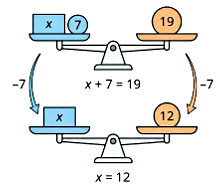
Figure 1
Equations can also be framed as games of balancing on a scale to understand what you do to one side of the scale need to be done on the other side too to maintain balance. (See figure 1)
Factorisation is an area that many students struggle with. The need for a quadratic expression to be converted to a product can be shown through tiles that need to be fully covered in a rectangular area. Factors of X^2 + 5x + 6 can be manipulated with tiles as shown below to obtain the answer as (x + 3)(x + 2). (See figure 2)

Figure 2
With such demonstration, symbols lose their mystical quality.
Embrace mistakes as stepping stones
Errors should be treated as valuable diagnostic data by the teachers where the students are able to dissect where a problem went wrong. Creating a supportive learning environment that normalises mistakes as learning opportunities helps reduce anxiety and encourages persistence.
Assessment should also be done to reward logical reasoning and correct algebraic procedures without giving too much weight to minor arithmetical errors. Formative assessments need to be conducted regularly as algebra is introduced, before the students become overwhelmed by the complexities of cumulative assessments.
Connect with real life applications
Many students fail to see how algebra connects to everyday life, making it harder for them to stay motivated. Wherever possible, teachers can demonstrate practical uses of algebra such as tracking expenses to find the balance remaining after expenditure, estimating travel time or fuel consumption, use of recipes dealing with proportion, tiling the floor of a room and finding measurements for a scaled model of a building. Showing how algebra helps in designing games or solving real-world problems enhances interest and comprehension.
Algebra may feel intimidating at first, but it is an opportunity for students to sharpen their reasoning, resilience and problem-solving skills. When the anxiety is eliminated, algebra reveals itself as an extremely useful and elegant toolkit for problem solving. Using appropriate teaching methods algebra can be transformed from an intimidating barrier into a powerful bridge to intellectual exercise. “An ounce of algebra is worth a ton of verbal argument.” said John Haldane.
(The writer is a senior mathematics examiner of the International Baccalaureate Organisation)
By Ifham Nizam
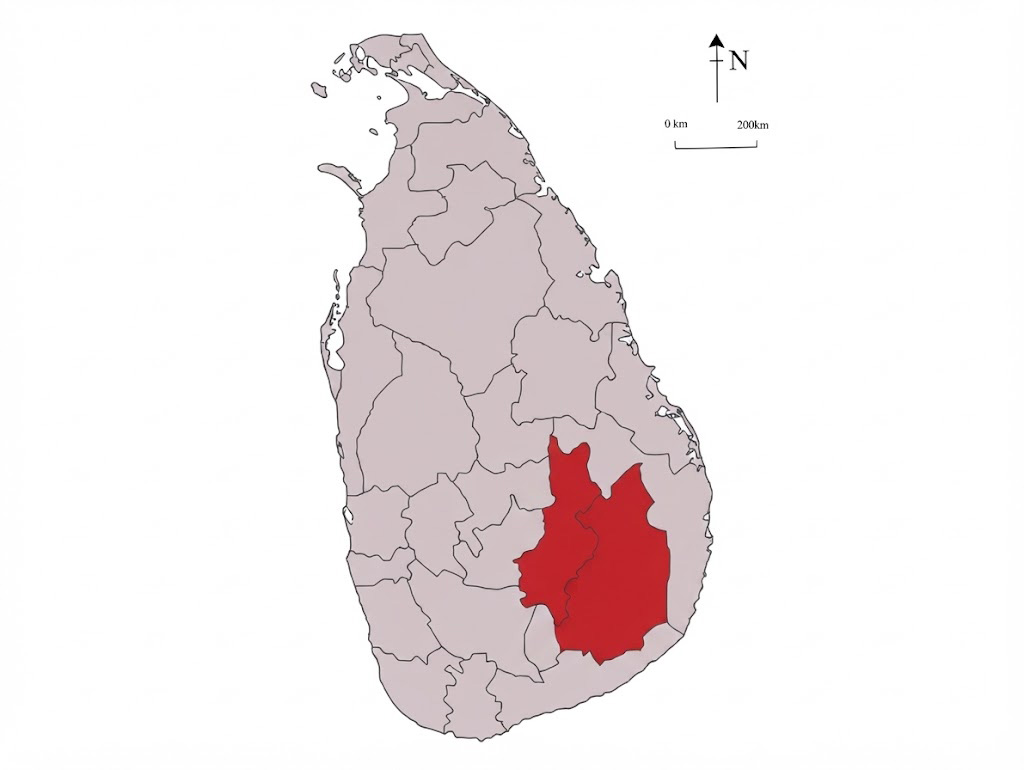
Two forest areas in the Badulla District — Mahiyanganaya Moopalana, covering 29.79 hectares, and Mahiyanganaya Heerussagala, covering 168.09 hectares — have been officially gazetted as forest reserves, bringing a combined 197.88 hectares of ecologically important land under formal protection.
The two forests, located in the Riddimaliyadda Divisional Secretariat Division within the Mahiyanganaya forest range, are dry-monsoon forests that provide habitats for a variety of native plant and animal species.
The declarations form part of the Government’s Vanaspathi forest conservation programme, under which 20 forests, covering a total of 9,538.68 hectares, across six districts, were granted protected status. The latest additions have taken the forest area, protected under the programme, to nearly 65,000 hectares, according to reports.
Environment Minister Dr. Dammika Patabendi and Deputy Minister Anton Jayakody were associated with the conservation programme.
Commenting on the significance of the declarations, Dr. Patabendi said the reserves are intended to deliver long-term environmental, ecological and social benefits.
“Through the declaration of these reserves, we aim to protect Sri Lanka’s biodiversity, safeguard water sources and watershed areas, create opportunities for eco-tourism, and preserve areas of archaeological importance found within these forests,” the Minister said.
Moopalana Forest
The 29.79-hectare Moopalana Forest is a dry-monsoon forest containing a range of natural resources and providing habitat for native species.
The forest is also linked to the livelihoods of surrounding rural communities. Local people obtain forest-based products such as rattan, veniwel and kitul, making the area significant, not only for biodiversity conservation, but also for traditional livelihood activities.
Several small waterways that become active during the rainy season are also found within the forest.
Heerussagala Forest
The larger 168.09-hectare Heerussagala Forest is likewise a dry-monsoon forest with important ecological resources and habitats for native flora and fauna.
The forest also has a direct connection with the local water system, with Nagadeepa Wewa being fed by the forest area.
Adding to its significance is the nearby Nagadeepa Temple, an area associated with archaeological value.
The protection of the forest, therefore, encompasses ecological, water-resource and cultural considerations.
The Ministry of Environment states that its broader approach to environmental management is based on sustainable natural-resource management, with government agencies, communities and other stakeholders participating in conservation efforts.
The gazetting of Moopalana and Heerussagala consequently places nearly 200 hectares of Badulla’s dry-monsoon forest under formal protection, strengthening the legal framework for conserving their biodiversity, water resources and associated cultural values.
The two forests are among 20 forest areas officially declared reserves in the latest phase of the Vanaspathi programme, which covers forests in Badulla, Anuradhapura, Ampara, Kegalle, Nuwara Eliya and Vavuniya.
For the communities surrounding these forests, their protection also represents the preservation of natural resources that support local livelihoods and water systems — while ensuring that these forest ecosystems remain part of Sri Lanka’s natural heritage for future generations, says Environment Ministry Consultant Dr. Ravindra Kariyawasam.

This has reference to J. A. A. S. Ranasinghe’s article titled ‘Shouldn’t Foreign Experts be appointed as MD of SLP?’, published on 21 Sept.
He starts by saying that it is a good thing that a foreigner has been appointed as CEO of SriLankan Airlines. I have nothing personal against Vipul Misra, the acting CEO of Sri Lankan Airlines, but surely did the Authorities look hard enough? From the names that were purported to be short listed, there were more experienced Sri Lankans with greater exposure to Commercial Aviation all over the world and not only in and around India.
One thing is certain. Even if the qualifications and anticipated ability were less on paper, a Sri Lankan Citizen of unquestionable integrity and loyalty to the airline and country was the need of the day. I know they are out there. In the past we have seen many Air Ceylon, Air Lanka and Sri Lankan Airlines, Chairmen, CEOs and ‘Board Members’ who were recipients of these high posts as political payoffs and contributed absolutely nothing and were quite literally there for the ride. The airline just operated on ‘autopilot’ day to day because of the loyalty and interest of the employees.
Emirates Airlines didn’t come to help us because they loved us. As soon as they took over the management, they dumped their excess Airbus A330’s on Air Lanka to enable Emirates to run a ‘mean and lean’ operation. It was reported that the Emirates Group was the agent for the Rolls Royce Trent Engine. Air Lanka’s 340’s had CFM 56 engines. The commissions that they made on the supply of different types of engines that the A330’s had, matched the money paid for the purchase of the Air Lanka shares. The net result was that they purchased Air Lanka shares for a song! In 2001, when it was obvious that the number of aircraft were in excess even for Air Lanka’s route network, the Bandaranaike International Airport (BIA) was conveniently attacked and the Asian Herald Tribune declared that the “Terrorists have reduced the airline to a more manageable size!”
All the airline managements feathered their own nest. The most recent example being a conflict of interests in the Australia/ Colombo and return, direct flights done by JetStar Airlines, instead Sri Lankan Airlines increasing its frequencies, as some Sri Lankan board members were working with the JetStar General Sales Agent!
If the National Airline wants to save the situation, I would like to humbly suggest we appoint a Sri Lankan, international airline pilot of high integrity as the Chairman of the board of Management of Sri Lankan Airlines. Why an airline pilot? He has been around for years and knows what the final, finished product should be. Being at the operating (pointy) end of the airline, he has seen what to do as well as what not to do not only in his own airline but in other well-run airlines. Most importantly to keep the expat CEO under check and properly orientated and on track.
Sri Lankan Airlines will eventually be judged by its on-time performance with safety.
GUWAN SEEYA

Akalanka provides glimmer of hope for Sri Lanka

A tech-savvy new generation stepping in to reinvent Sri Lankan hospitality

Samaira and Revaan claim ATF Under 14 singles titles

Why do students ‘fear’ algebra?

Two Badulla forests covering nearly 200 hectares gazetted as reserves

Prepare for worst-case weather scenarios — Sajith

‘Dates have the highest sugar content to fight Coronavirus’

Sunday Island 27 December – Headlines

#SundayIsland 17th December – Headlines

Sunday Island – 28th March

Sunday Island Headlines – 21 March

Sunday Island – 21st February – Headlines
-

 News5 days ago
Mastermind Naufer Moulavi among 15 found guilty
-
 News7 days ago
Mahaweli rises as heavy rain triggers flood, landslide fears
-
 News6 days ago
Protest against setting up of cement factory in highly populated area near BIA
-

 Midweek Review5 days ago
Thileepan’s fast unto death: An authentic narrative that many missed
-

 Latest News4 days ago
Showers above 100 mm are likely at some places in the Western, Sabaragamuwa, Central and North-western provinces and in Galle and Matara Districts
-

 Editorial6 days ago
Trouble beginning in earnest
-
Editorial5 days ago
Big Bad Bills
-

 Weather7 days ago
Showers about 100 mm are likely at times in the Western, Sabaragamuwa and North-western provinces and in Galle, Matara, Kandy and Nuwara-Eliya Districts