
News
Lanka unveils world-first simplified dengue early action protocol


The Sri Lanka Red Cross Society (SLRCS), in collaboration with the International Red Cross and Red Crescent Societies (IFRC) and the National Dengue Control Unit (NDCU) of the Ministry of Health (MoH), has officially launched a Simplified Early Action Protocol (sEAP) for Dengue Prevention. This landmark initiative is the first-ever dengue-focused sEAP globally, signifying a critical shift from reactive disaster response to proactive, life-saving public health measures in Sri Lanka.
Dengue remains a significant public health challenge in Sri Lanka, placing considerable pressure on the national health system.
During monsoon seasons and following environmental consequences like the recent Ditwah cyclone, the increase in mosquito breeding significantly elevates the risk of a large outbreak. By acting early – before dengue cases escalate – the sEAP helps protect lives, reduce community vulnerability, and strengthen resilience in high-risk areas.
The two-year project, running from July 2025 to June 2027, was developed in close coordination with the NDCU and the MoH. It targets five of the country’s most high-risk districts: Colombo, Gampaha, Kalutara, Jaffna, and Kandy.
Interventions under the protocol are triggered by a combination of meteorological and epidemiological forecasts:
The Meteorological Department forecasts average rainfall exceeding 100mm in the Western Province, typically two to four weeks before a subsequent dengue outbreak.
The weekly national caseload exceeds 1,500 cases during peak months (May, June, July, December, and January), or if the target districts’ caseload exceeds 1.5 times their respective average.
The protocol outlines clear activities across two phases:
In Readiness Phase Coordination meetings with NDCU/MoH; mapping of high-risk zones; training households on water storage container care; strengthening school circles. Includes pre-positioning of essential cleaning materials, specialized dengue kits, and Information, Education, and Communication (IEC) materials.
When above triggers activated together with government bodies Sri Lanka Red Cross Society through its trained volunteer network sprang into action by Providing logistical support for MoH-level dengue response teams; conducting house-to-house surveillance campaigns; mass/social media mobilization; and distributing mosquito repellent to children in high-risk zones.
“The sEAP is a key component of the SLRCS’s efforts to integrate Anticipatory Action (AA) into its health programmes, enabling early interventions before a full-scale dengue outbreak occurs. As a tropical country, Sri Lanka has faced recurrent dengue epidemics for decades. The Sri Lanka Red Cross Society, as a leading humanitarian organisation with a strong record of working during and after disasters, has extensive expertise in responding to dengue outbreaks. With a skilled and well-trained volunteer network, robust field presence, and close collaboration with government health authorities, the SLRCS is well-positioned to implement timely and effective dengue preparedness and response actions.”
The Early Actions defined in the protocol are focused on feasible, low-cost, community-level interventions, which include:
House-to-house surveillance campaigns to eliminate mosquito breeding sites before and after the rainy season.
Training households on covering, emptying, and cleaning domestic water storage containers.
Distribution of mosquito repellent, particularly to children from high-risk zones.
The expected outcomes of the sEAP are to empower communities to reduce the life-threatening risk and loss of lives, decrease morbidity and mortality, and lessen the impact on education by preventing children from Dengue Epidemic.

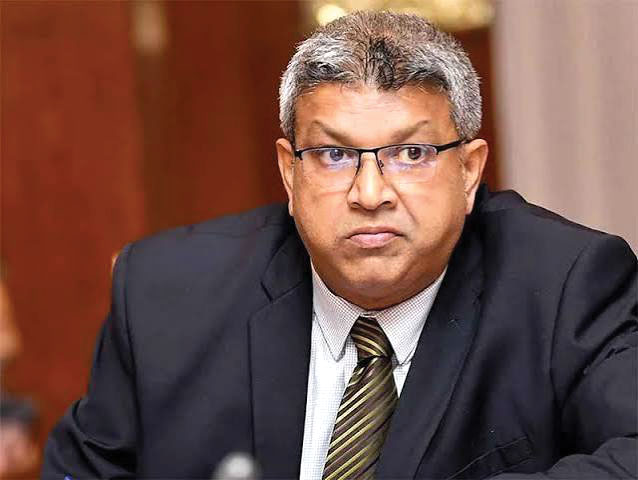
Appointment of committee eyewash, says UNP
The government is considering changes to prison regulations pertaining to the treatment of Buddhist monks serving jail terms, including their right to wear monastic robes when taken outside prison.
Justice and National Integration Minister Harshana Nanayakkara announced the proposed changes yesterday (14) following the submission of an interim report by a committee appointed to review the rules and procedures governing prisons.
The report was handed over to Secretary to the President Dr Nandika Sanath Kumanayake at the Presidential Secretariat.
One of the key recommendations is to amend Prison Standing Order 356 by introducing a new provision, 356(A). The proposed revision would require prison authorities to consult the Department of Buddhist Affairs on the removal of a monk’s robes upon admission to prison. The Commissioner of Prisons would be allowed 10 days to notify the department and take the necessary steps.
A separate amendment to Departmental Order 550 would allow Buddhist monks to wear their robes whenever they are taken outside prison, unless their respective Nikaya formally requests that the privilege be withdrawn.
The committee has also recommended extending similar arrangements, with suitable modifications, to members of other religious clergy who are imprisoned.
The proposals follow concerns raised over the treatment of Ven. Galagoda Aththe Gnanasara Thera after he was taken into custody. President Anura Kumara Dissanayake subsequently held discussions with representatives of the three main Buddhist Nikayas and appointed the committee to examine the existing legal framework.
Nanayakkara said the interim report had been forwarded to the Acting Commissioner General of Prisons, along with instructions to revise the relevant standing orders in accordance with its recommendations.
The proposed amendments have yet to be confirmed as formally implemented.
Meanwhile, the UNP yesterday criticised the government’s decision to appoint a committee to make recommendations on the attire to be worn by imprisoned Buddhist monks and other religious leaders when taken outside prison, describing the move as unnecessary.
In a statement issued yesterday (14), the UNP said the procedures governing the matter were already clearly set out in the Department of Prisons’ Standing Orders, making the appointment of a separate committee unwarranted.
The party cited remarks by Professor G.L. Peiris, Convenor of the Janathawadi Joint Opposition, who had described the committee’s appointment as a
“complete eyewash” and questioned the need for such a move.
Referring to Standing Order 550 of the Prisons Department, the UNP said convicted prisoners appearing before court for legal proceedings should not be required to wear prison uniforms.
It further stated that the regulations allowed prisoners to wear civilian clothing consistent with what they wore before imprisonment, including attire appropriate to their cultural and religious backgrounds.
The UNP accused the government of unnecessarily prolonging the issue by appointing a committee, despite the existence of regulations governing prisoners’ attire.
The party also called on the government to seek forgiveness from the Mahanayake Thera and the Sangha Council of the Kotte Sri Kalyani Samagri Dharma Maha Sangha Sabha of the Siyam Maha Nikaya over the decision concerning the religious attire of Ven. Galagoda Aththe Gnanasara Thera.
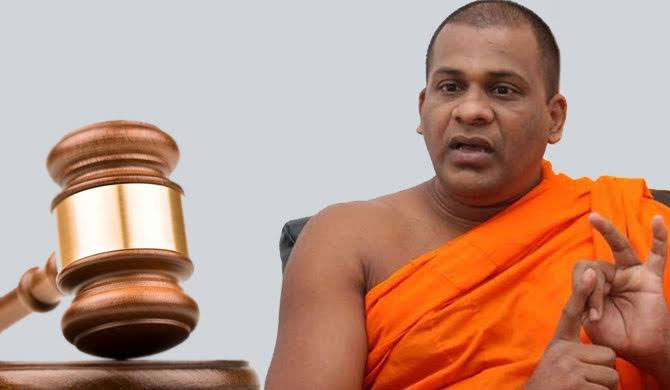
Court of Appeal President Justice Rohantha Abeysuriya yesterday withdrew from the bench hearing petitions challenging the decision by prison authorities to require Ven. Galagoda Aththe Gnanasara Thera to wear prison attire following his imprisonment.
The decision was announced when the petitions seeking to invalidate the prison authorities’ decision were taken up for consideration on October 14.
Following his withdrawal, a three-judge bench was appointed to hear the petitions.
The petitions relate to the prison authorities’ decision to require Gnanasara Thera to wear prison attire after he was taken into custody to serve the remainder of his sentence for contempt of court.
In September this year, the Supreme Court annulled the presidential pardon granted to Gnanasara Thera by former President Maithripala Sirisena in May 2019.
Following the ruling, the Court of Appeal directed the Commissioner General of Prisons to take the necessary steps to enforce the remainder of the monk’s prison sentence.
Gnanasara Thera had originally been sentenced to six years’ imprisonment for contempt of court but had served only around nine months before receiving the presidential pardon in 2019.
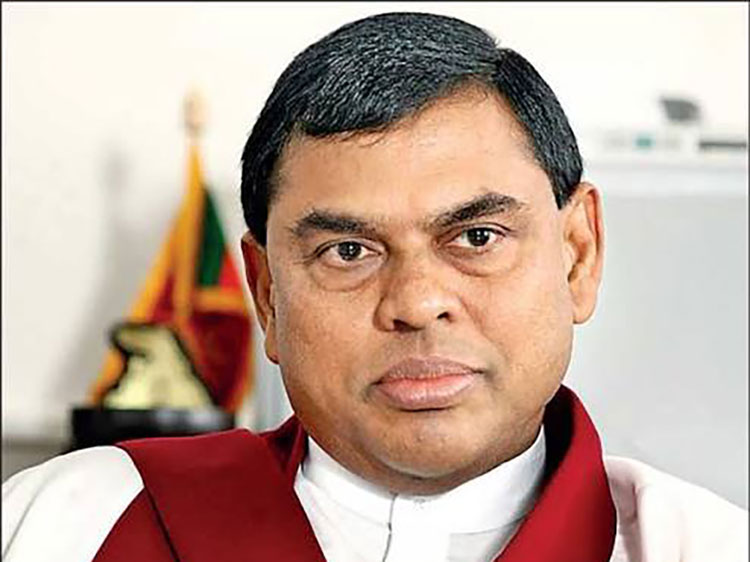
The Fort Magistrate’s Court yesterday issued an arrest warrant for former Minister Basil Rajapaksa over the alleged misuse of funds belonging to the Sri Lanka Tourism Promotion Bureau during the 2014 Uva Provincial Council election.
The Magistrate also directed the CID Illegal Assets Investigation Division to take necessary steps to obtain a Red Notice through Interpol.
The orders were issued following submissions made by the CID in connection with the alleged financial irregularities.
The CID’s Illegal Assets Investigation Unit informed the court that Rs. 7.8 million allocated to the Sri Lanka Tourism Promotion Bureau in 2014 had allegedly not been used for the Bureau’s promotional activities.
Instead, the funds had allegedly been used to provide 12,000 T-shirts during the Uva Provincial Council election, causing a financial loss to the government, the CID told court.

Prison rules to be revised over monks’ attire

AC President recuses himself from hearing prison attire case pertaining to Gnanasara Thera

Court orders steps to obtain INTERPOL Red Notice against Basil

CID informs Fort Magistrate’s Court investigation into money laundering case against Namal completed

No force used to make Gnanasara Thera wear prison garb – Prisons

Saudi SC sets aside death sentence imposed on Lankan

‘Dates have the highest sugar content to fight Coronavirus’

Sunday Island 27 December – Headlines

#SundayIsland 17th December – Headlines

Sunday Island – 28th March

Sunday Island Headlines – 21 March

Sunday Island – 21st February – Headlines
-

 News6 days ago
NDB fraud Rs 60mn more than reported
-

 News6 days ago
Removing monk’s robes matter for Sangha to decide: Mahanayake Theras
-

 News4 days ago
Sri Lanka escalates anti-graft drive with Shiranthi’s jailing
-

 News5 days ago
NPP govt. reminded of its responsibilities as US warship leaves Colombo
-

 Latest News5 days ago
Farhan, Sadaqat help Pakistan ace 183 chase to go 1-0 up
-

 News6 days ago
BHC, Colombo: “LTTE remains a proscribed org. in the UK”
-

 Latest News3 days ago
Farhan and Sadaqat help Pakistan seal series in style
-

 News4 days ago
Iranian ships stranded, Lanka fears US sanctions