
News
KUWERA KANDY: A story of property rehabilitation and re-purposing

PROJECT: KUWERA KANDY – 20-ROOM LUXURY BOUTIQUE HOTEL
CONSULTANT: DANYA UDUKUMBURE ASSOCIATES (PVT) LTD.
PROJECT TYPE: RENOVATION & REFURBISHMENT – CIVIL & INTERIOR
LOCATION: RAJAPIHILLA MAWATHA, KANDY
AREA: 1500 Sqm
STRUCTURAL ENGINEER: GIHAN DISSANAYAKE
MAIN CIVIL CONTRACTOR: ANC HOLDINGS (PVT) LTD.
PHOTOGRAPHER: SAMEERA KOTELAWALA
 By Danya Udukumbure
AIA(SL), RIBA, Urb.Des, AP GBC (SL)
danyaudu@yahoo.com
Following the economic crisis, the cost of construction has skyrocketed, resulting in a significant slowing down of construction work in the country. During this economic downturn, there is less demand for new construction projects due to reduced consumer spending and investment. On the other hand, as promising as it may be, new construction is also consuming our world’s limited resources faster than we can replenish them. The situation calls us to consider other creative alternatives such as the rehabilitation and reuse of the existing built environment by adapting them through creative and sensitive treatments. On one hand renovation projects, may be more resilient to fluctuations in demand. Renovation projects often have lower upfront costs compared to new construction since they typically involve repurposing existing structures rather than building from scratch. They also tend to have shorter timelines than new construction because they can often bypass lengthy permitting processes, avoid the need for extensive site preparation and the major portion of the building is already there. Not only the civil renovation but a carefully and tastefully curated interior design further elevates the value of the property. The goal is to address cosmetic, structural, and functional issues, ensuring the property meets current market standards and expectations.
This article aims to raise consciousness on what it means to work on an old building by being completely aware of what we are facing in order to make the best decisions. There are as many ways to implement adaptive reuse in buildings, so the question lies in where and how to start. Why is adaptive reuse important? What aspects should we have in mind before tackling a renovation project? How to approach these projects? Let me share my experience on one such project, through the journey of the transformation of ‘Kuwera’ – a 20 room luxury boutique hotel in Kandy.
-
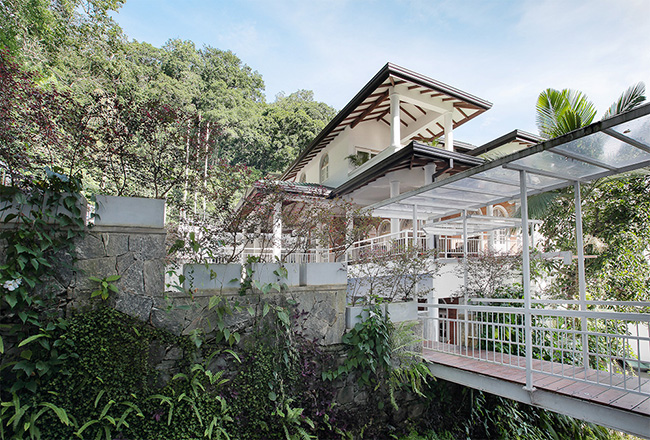
- After rehabilitation and re-purposing
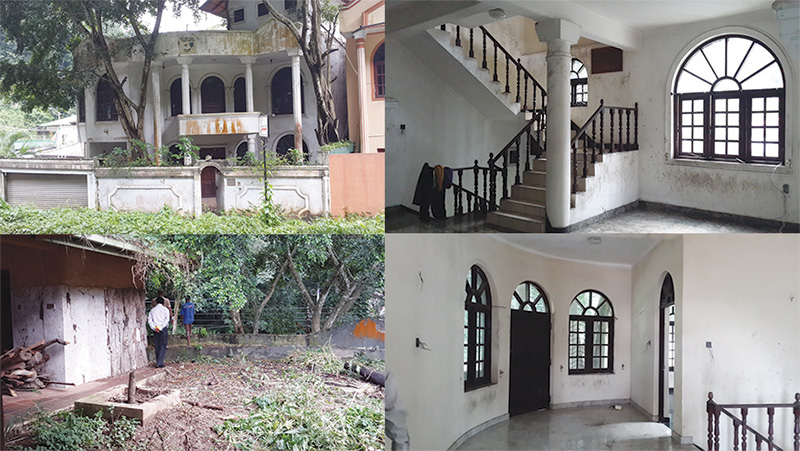
The project was a total civil and interior refurbishment of a property that was in a state of neglect for several years, and was re-purposed in to a luxury boutique hotel. It was a unique situation where it involved two adjoining lands with existing residential buildings. The property was set amidst lush green hills, cool breeze, a gurgling brook running in-between the two lands and providing views towards mountain landscapes and tree tops. Without human habitation for a long period of time, it was home to bats and monkeys and was on its way to deterioration. However, it was a prime location and a popular touristic area with close proximity to the Kandy lake round. Therefore, a complete transformation was required to make it fit for a luxury boutique hotel to accommodate high-end local and foreign travellers.

Most often, property rehabilitation is perceived as a daunting challenge which may require more expertise, effort, time and cost compared to a new construction. However, planning and execution with proper professional assistance can remarkably increase the value of the property and enhance the return on investment making it one of the more lucrative investment options in real estate. Further, the process of property rehab is inherently green. The construction material is already produced and transported onto the site, which makes it a sustainable initiative.
In such cases, choosing the most appropriate intervention is done through the consideration of the current physical condition of the building and the new proposed use. It was necessary to run a thorough analysis of the site and the buildings, to first detect what can be rescued or what has to be discarded. Detailed measured drawings of the building and its elements were done to take stock of things. The transformation required extensive attention to detail, starting from structural stability. With the help of the structural engineer, the structural stability was evaluated – checking for settlements, cracks and identifying what elements required strengthening. Unlike building new, it had to be treated like a wounded soldier, meticulously identifying and carefully repairing each of its elements, such as roofs, ceilings, doors and windows, handrails and stairs, plumbing etc.
The new requirements – which were rather complex, were carefully detailed out and a plan was prepared to identify how each of these can be accommodated within the existing setup. The entire scheme consisted of 20 rooms, reception, indoor dining, roof top dining and bar, swimming pool, spa & Jacuzzi, sauna, gym, industrial kitchen, staff accommodation and other facilities. A state-of-the art MEP system was introduced with smart automation system for bedrooms, smart security, A/C, hot water, dumbwaiter system for food transport etc. All this was done without any drastic changes to the floor layouts or the structure. The two buildings were connected with a bridge over the stream. The site was sloping, so the floors were at different levels. The left wing consisted of four levels with 08 rooms and the right wing has five levels with 12 rooms. Practical problems occurred when supplying food from the kitchen at a lower level in one building to the rooftop bar at the other building. These were resolved by having the bridge and the dumb waiter fixed from the exterior of the building, therefore minimising the need for any major changes to the existing layout.
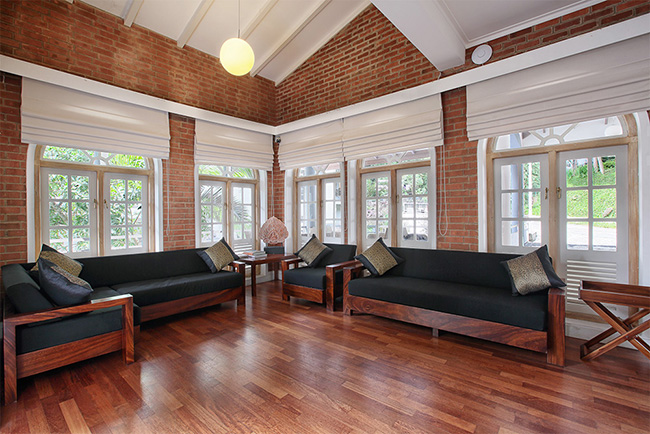
One of the biggest challenges of the project was to define the architectural language of the project. The existing buildings had unrefined elements of classical architecture, with mouldings and arched windows etc. which was popular among the locals at one time. To make the project more cost sensitive, the architect opted to refine the existing character instead of introducing a brand-new theme. Therefore, the decorative elements were simplified, and continued where necessary to make it cohesive, the paint on the doors and windows were stripped and a rustic antique finish was given to achieve a new look, by removing the plaster, the brickwork was exposed to make feature walls, the tiled floors were replaced with timber boarded floors for durability and rustic elegance. The final outcome was warm, cosy elegant spaces with a ‘modern cottage architectural sense’. This in fact helped to reinforce the sense of nostalgia and comfort the historic city of Kandy emanate to the tourists and guests who visits the city, giving hints of its colonial past. The cleaner lines and minimal ornamentation merged with traditional elements like pitched roofs, overhangs and arched doorways accentuated this. Stone was used for exterior walls, floors and steps. In modern cottage designs, warmth and texture plays a pivotal role.
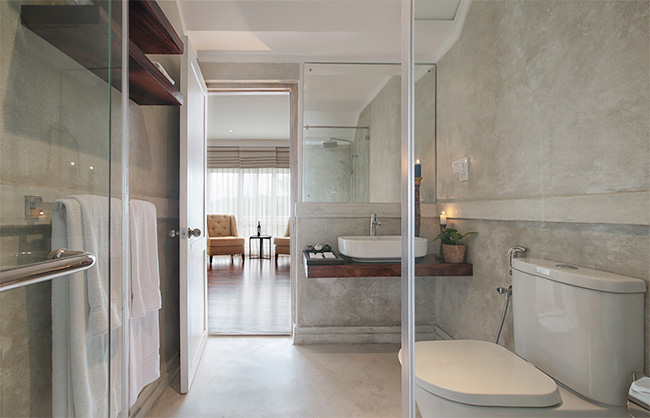
Interior detailing also was a major challenge. There were no repetitive spaces – each room, each bathroom was different to the other and each of these spaces had its own set of problems to be resolved. Inspired by the traditional charm of French and English cottage style, this modern cottage style interior, blends cosiness and character with contemporary sensibilities. The works included selection of finishes, materials, lighting and colour, designing and sourcing hard furniture items (beds, closets, chairs, shelving, etc.) and decorative elements (wall hangings, ornaments) to soft furnishing items. (curtains, linen, mattresses, cushions, carpets, fabrics, etc.) Focusing on comfort, natural materials and sleek accents were used to curate warm and welcoming spaces. Soft neutral tones, creamy whites, beige-greys and rustic brick walls help tie up the theme. The subdued shades were used sparingly with less contrast to give the impression of ease and opulence. The light colours open up the surroundings and suggest airiness, rest and liquidity sending a message of relaxation and comfort. A touch of yellow greens and blue greens makes you feel renewed with a calming restful effect.
Majority of the furniture was custom designed to complement the theme and fit the individual spaces. A combination of timber finishes in natural matt stains and washed finishes added character and rustic charm for the spaces giving a mix of vintage and contemporary styles. The soft furnishings – linen, curtains and carpets etc. were carefully selected for a cosy and refined look. Achieving a sense of old and new elements were essential and the detailing was done accordingly
The bathrooms are unique as they were predominantly finished with a warm white terrazzo with mouldings to match the theme, giving it a refreshing sparkle with lightness while providing a sense of soothing calm.
A large volume of drawings and documentation was required in completing this work, not to mention a hands-on project plan and execution process. In spite of the heavy load of work, it was extremely satisfying to witness the final outcome. After the refurbishment, the hotel was re-launched as ‘Kuwera Kandy’. Carrying out a renovation project is certainly a challenge but also a very rewarding task. When you opt for property rehab one must know that each building is unique and that procedures and decisions are specific to each project. The entire team involved should be committed and have the ability to adapt since these types of projects usually bring up unpredictable situations as they develop. In the end, the reward is that the building is saved from the inevitable passing of time, adding contemporary value, and bringing new functions to everyday life, while keeping its integrity and features that make it unique.

* New Auditor General should not have been sworn in before Speaker – Opp.
* Suspended House Dy. Sec. Gen. Chaminda Kularatne takes his case to CA today
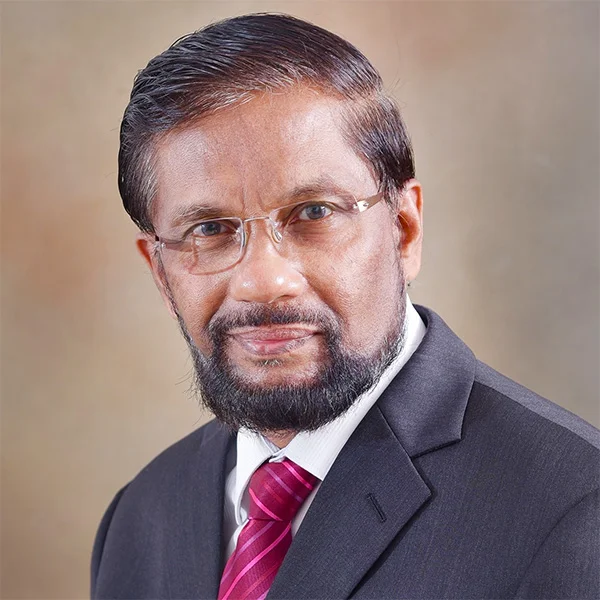
General Secretary of the National People’s Power (NPP) Dr. Nihal Abeysinghe yesterday said that there was no need for Speaker Dr. Jagath Wickramaratne to step down in view of the complaint lodged against him with the CIABOC (Commission to Investigate Allegations of Bribery or Corruption).
NPP General Secretary said so in response to The Island query whether the parliamentary group of the ruling party discussed the growing Opposition calls for the Speaker, who is also the Chairman of the Constitutional Council, to step down to facilitate the investigation.
The NPP parliamentary group consists of 159 MPs, including 18 National List (NL) members.
NL member Dr. Abeysinghe asked whether any other person, who had been investigated by the CIABOC, stepped down from his or her position to facilitate the inquiry.
The top official emphasised that the CIABOC could go ahead with its investigation without any hindrance.

Chamindra and Dr. Jagath
Opposition sources said that there hadn’t been a similar situation before and the CIABOC investigation into Speaker Dr. Wickramaratne is unprecedented as he heads the 10-member CC responsible and directly involved in all key appointments, including that of members to the CIABOC.
Sources pointed out that the newly appointed Auditor General, Ms. Samudrika Jayaratne, took the oath of secrecy before the Speaker on 5 February in Parliament after suspended Deputy General Secretary of Parliament Chaminda Kularatne complained to CIABOC.
In accordance with Section 9 of the National Audit Act, No. 19 of 2018, Jayaratne took the oath of secrecy in her capacity as the Auditor General of the National Audit Office and Chairperson of the Audit Service Commission.
Sources said that Kularatne would move the Court of Appeal today (10) against his removal at the behest of the Staff Advisory Committee, headed by the Speaker.
By Shamindra Ferdinando

The Trincomalee Magistrate’s Court yesterday (09) further remanded 10 persons, including four Buddhist monks, arrested on 19 January, 2026, for allegedly placing a Buddha statue in the coastal reservation, on 16 January.
The Buddhist monks, including Ven. Balangoda Kassapa Thera, and six other individuals, were further remanded until 11 February.
They have been accused of violating the Coast Conservation Act by placing a Buddha statue on a block of land belonging to the Trincomalee Bodhiraja Temple.
Of the four monks, Ven Balangoda Kassapa Thera and Ven Trincomalee Kalyanawansa Tissa Thera moved the Court of Appeal against the Magistrate’s Court decision. The case was heard on 22 January before a Bench comprising the President of the Court of Appeal, Justice Rohantha Abeysuriya, and Justice K. Priyantha Fernando.
Manohara de Silva, PC, and President’s Counsel Uditha Igalahewa, PC, appearing for the petitioners, urged the Court to take up the matter urgently, describing it as a case of exceptional importance.
However, the Court of Appeal on 3 February dismissed the petitions against the remanding of Ven Balangoda Kassapa Thera and Ven Trincomalee Kalyanawansa Tissa Thera.
The order was issued by the Court of Appeal bench consisting of the President of the Court of Appeal, Justice Rohantha Abesuriya and Justice Priyantha Fernando.
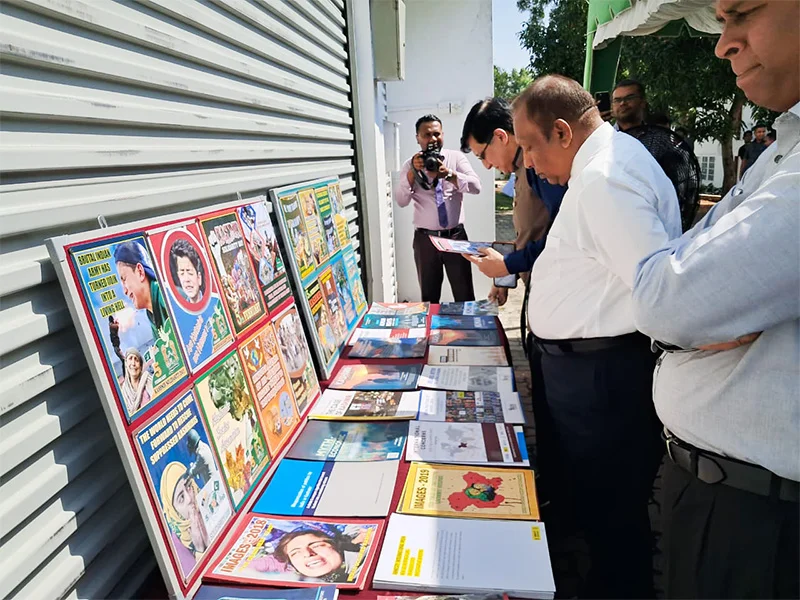
The Pakistan High Commission in Colombo recently organised a seminar and photo exhibition at the HC premises to commemorate Kashmir Solidarity Day. The following is the text of the statement issued by the PHC: “The event highlighted Pakistan’s continued support for the Kashmiri people and emphasised the importance of a peaceful and just resolution of the Jammu and Kashmir dispute. Members of the Pakistani community, friends of Kashmir, and local journalists attended the event.
The seminar concluded with remarks by the High Commissioner of the Islamic Republic of Pakistan, Major General (R) Faheem-ul-Aziz, HI (M). He reaffirmed Pakistan’s principled stance on the Jammu & Kashmir issue and underscored the need for sustained international engagement. He noted that the situation in Indian Illegally Occupied Jammu & Kashmir (IIOJK) has remained a matter of concern for decades and called upon the international community, particularly the United Nations, to play its role in promoting peace, stability, and respect for human rights.
The High Commissioner emphasised that the Jammu and Kashmir dispute should be resolved in accordance with international law and relevant UN Security Council resolutions, cautioning that prolonged tensions could have broader implications for regional peace and security.
The event featured keynote addresses by Shiraz Yunus and Ms. Suriya Rizvi, who highlighted the importance of dialogue, interfaith harmony, and peaceful coexistence. They also drew attention to humanitarian concerns and stressed the need for safeguarding fundamental rights in the region.
Earlier, messages from the President and the Prime Minister of Pakistan, issued on the occasion of Kashmir Solidarity Day, were read out by the Press Attaché and the Trade & Investment Attaché, respectively.
As part of the Photo Exhibition, photographs and digital presentations, depicting the humanitarian situation in IIOJK, were displayed during the seminar.”

Pakistan withdraw boycott of India match at T20 World Cup

Mainly dry weather will prevail in the most parts of the island.

NPP: Speaker won’t step down, CIABOC can investigate him

Trinco Buddha statue case: All suspects, including 4 monks re-remanded till 11 Feb.

Pakistan HC commemorates Kashmir Solidarity Day

Celebrity Millennium brings in over 2,000 Thai cruise passengers, signals a new growth market

‘Dates have the highest sugar content to fight Coronavirus’

Sunday Island 27 December – Headlines

#SundayIsland 17th December – Headlines

Sunday Island – 28th March

Sunday Island Headlines – 21 March

Sunday Island – 21st February – Headlines
-
 Features2 days ago
My experience in turning around the Merchant Bank of Sri Lanka (MBSL) – Episode 3
-

 Business3 days ago
Zone24x7 enters 2026 with strong momentum, reinforcing its role as an enterprise AI and automation partner
-

 Business2 days ago
Remotely conducted Business Forum in Paris attracts reputed French companies
-

 Business2 days ago
Four runs, a thousand dreams: How a small-town school bowled its way into the record books
-

 Business2 days ago
ComBank and Hayleys Mobility redefine sustainable mobility with flexible leasing solutions
-
 Business3 days ago
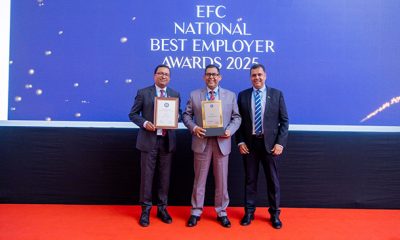
HNB recognized among Top 10 Best Employers of 2025 at the EFC National Best Employer Awards
-

 Business3 days ago
GREAT 2025–2030: Sri Lanka’s Green ambition meets a grid reality check
-

 Editorial5 days ago
All’s not well that ends well?