
Latest News
Kusal Mendis 143 and Avishka Fernando 100 as Sri Lanka finish on 324


Kusal Mendis crashed 143 off 127 balls, Avishka Fernando hit 100 off 115, and together the pair put on a 206-run stand that formed the bulk of Sri Lanka’s 324 for 5 in Dambulla.
Only 49.2 overs of Sri Lanka’s innings was possible, with a shower coming down to prevent the last four balls from being delivered. Right at the start of the match, another shower had forced a 40-minute delay.
Still, with the surface offering only modest turn, this remains a commanding score at the venue as no team batting second has ever made more than 289. New Zealand will hope the ground remains wet so that the balls Sri Lanka have to operate with are damp, and come on to the bat a little quicker.
Seamer Jacob Duffy was the best of New Zealand’s bowlers, claiming 3 for 41 from his 8.2 overs. He’d had the dangerous Pathum Nissanka caught at deep third for 12, then dismissed Kusal and Charith Asalanka in his death-bowling spell.
The spinners were less impressive. Mitchell Santner conceded 53 from his 10 and did not take a wicket, Ish Sodhi gave away 62 from his 10 though he did end Avishka’s innings, and Michael Bracewell took one wicket but went for 73 from his nine overs, having been hit for two sixes and a four by Kusal in his final over.
Early on, Kusal and Avishka gained significant momentum through the powerplay, in which Sri Lanka scored 57 runs. In the fifth over, bowled by Duffy, Kusal smoked a straight drive, then crashed a short ball in front of midwicket to hit his first two fours of the innings. Next over, bowled by debutant Nathan Smith, Avishka lifted him down the ground, then swivel-pulled him over the fine leg boundary for six.
That period did have a hiccup – Kusal was dropped on 11 by Duffy, who could not hold a sharp return catch. But otherwise Sri Lanka’s progress was smooth. Though the pitch had been expected to take some turn, there was only a little turn for New Zealand’s spinners. Kusal and Avishka settled into a steady rhythm of accumulation, both batters using the sweep to good effect when the New Zealand bowlers delivered consecutive dot balls.
Avishka was also strong over cover, going inside out repeatedly, while Kusal found runs square of the wicket on the offside. They both milked the bowling of Sodhi and Bracewell, neither of whom were able to build pressure over substantial periods. Kusal got to his fifty off the 64th ball he faced, before Avishka got to his own half century – his ninth – off his 60th ball.
They raised the tempo slightly after getting to those milestones, but largely batted in the same gear. Avishka was dropped on 77 by Sodhi in the outfield, though the fielder only really got fingertips to the chance. Kusal got to his century first, in the 37th over, off 102 balls. Avishka got there in the 38th. For both batters, this was their fourth ODI ton.
Avishka was out soon after, caught at mid off, but the partnership had delivered Sri Lanka to the brink of the death overs. At his fall, the total was 222 for 2 in the 39th over.
Both Kusal and Asalanka were effective through the last 10, Kusal largely bashing spinners down the ground, while Asalanka found runs square of the wicket. The rain returned with Asalanka being caught on the square leg boundary for 40 off 28.
Brief scores:
Sri Lanka 324 for 5 in 49.2 overs (Kusal Mendis 143, Avishka Fernando 100, Charith Asalanka 40; Jacob Duffy 3-41, Michael Bracewell 1-73, Ish Sodhi 1-62) vs New Zealand
[Cricinfo]

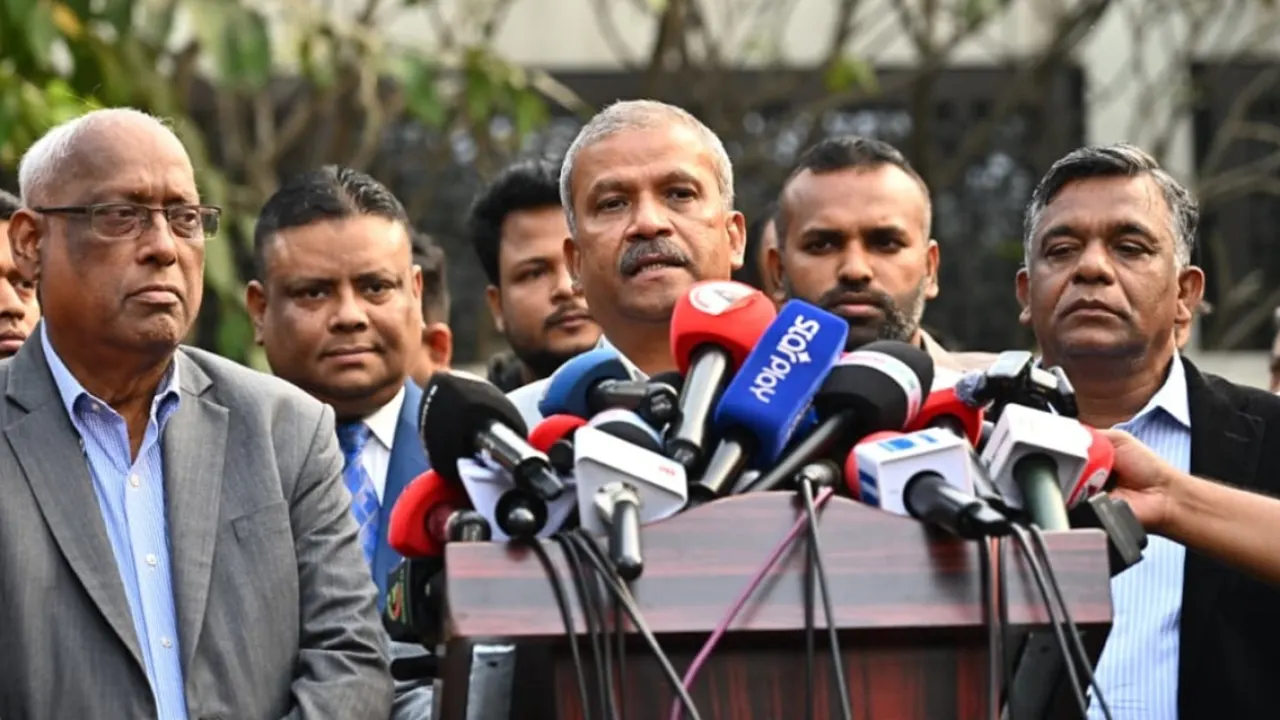
The Bangladesh government has formed a committee to look into the previous government’s decision to not allow the team to play its 2026 T20 World Cup matches in India, a move that led to Bangladesh being removed from the tournament in February and March.
The sports ministry made an announcement on Monday that additional secretary Dr AKM Wali Ullah will head the committee that includes chief selector Habibul Bashar, the former Bangladesh captain, and Faisal Dastagir. The trio has been asked to look into all matters related to Bangladesh not sending a team to the T20 World Cup. They will be expected to submit a report within 15 working days.
The sequence of events that culminated in Bangladesh missing the tournament began on January 3, when the BCCI directed Kolkata Knight Riders to remove Mustafizur Rahman from their IPL 2026 squad for an unspecified reason, at a time when relations between the Indian and Bangladeshi governments were strained.
In the next 24 hours, Asif Nazrul, Bangladesh’s sports adviser (minister) at the time, posted on his official Facebook account that he wanted the ICC to move Bangladesh’s T20 World Cup matches out of India and to Sri Lanka. Nazrul was an adviser in Bangladesh’s interim government that was formed in August 2024 after a student-led uprising toppled the Awami League regime.
“I have asked the BCB to explain the entire matter to the ICC,” Nazrul wrote on his official Facebook page on January 4. “The board should inform that where a Bangladeshi cricketer cannot play in India despite being contracted, the entire Bangladeshi cricket team cannot feel safe going to play in the World Cup. I have also instructed the Board to request that Bangladesh’s World Cup matches be held in Sri Lanka.”
After the BCB informed the ICC that Bangladesh would not play in India, the ICC said that was not acceptable because it felt there were no valid security concerns. The impasse continued even after an ICC delegation visited Bangladesh to discuss the issue.
On January 24, after the ICC board had met and dismissed Bangladesh’s demand to play their matches in Sri Lanka, Bangladesh were removed from the tournament and replaced by Scotland.
The day before the national elections in Bangladesh, Nazrul mad a u-turn, saying he had not made any of the decisions to withdraw Bangladesh from the T20 World Cup, and laid the responsibility on the players.
When the new government was formed, the sports minister Aminul Haque said he wanted to repair Bangladesh’s sporting relationship with India. He also said in parliament that he wanted a proper investigation into the manner in which the T20 World Cup issue had been handled by the BCB and the previous government.
[Cricinfo]

Former President Mahinda Rajapaksa has arrived to appear before the Commission to Investigate Allegations of Bribery or Corruption (CIABOC) this morning (12) to provide a statement regarding the alleged SriLankan Airlines Airbus deal.
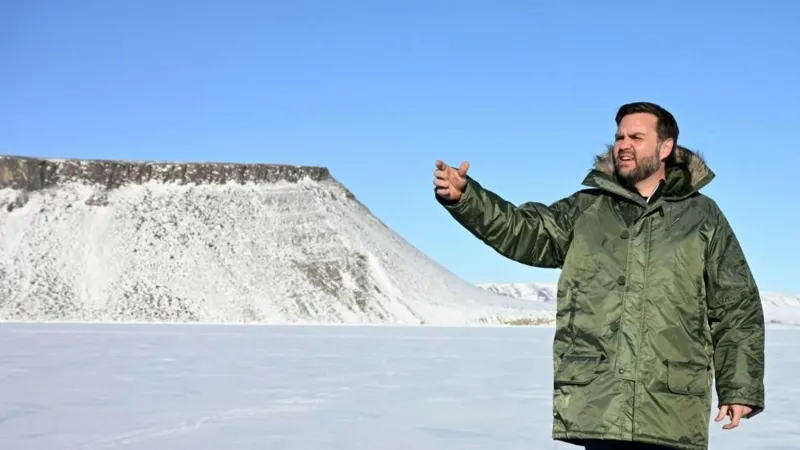
The US has been holding regular negotiations with Denmark to expand its military presence in Greenland, according to multiple officials familiar with the discussions, with talks between both sides progressing in recent months.
US officials are seeking to open three new bases in the south of the territory, a semi-autonomous part of Denmark, as they work to resolve a diplomatic crisis sparked by President Donald Trump when he threatened to seize Greenland by force.
Trump said in January that the US should “own” Greenland to prevent Russia or China from taking it. He said this could happen the “easy way ” or “the hard way”.
The White House confirmed the administration was engaged in high-level talks with Greenland and Denmark, but declined to comment on details of the negotiations. A White House official told the BBC the administration was very optimistic the talks were headed in the right direction.
Denmark has previously expressed a willingness to discuss additional American military bases in Greenland, and its foreign ministry confirmed talks with the US were taking place. “There is an ongoing diplomatic track with the United States. The Ministry of Foreign Affairs will not go into further detail at this time,” a spokesperson said.
US officials have floated an arrangement in which the three new military bases would be formally designated as US sovereign territory, according to one source with knowledge of the negotiations.
The bases would be in southern Greenland and primarily focus on surveillance of potential Russian and Chinese maritime activity in an area of the northern Atlantic between Greenland, Iceland and the United Kingdom known as the GIUK Gap, the officials who spoke to the BBC said.
The two sides have not formally agreed to anything yet and the final number of bases could change, the sources said. One of the new bases would likely be located in Narsarsuaq, on the site of a former US military base that housed a small airport.
Any other new military bases would likely also be located on sites in Greenland that have existing infrastructure such as airfields or ports, which could be upgraded at a lower cost than building new facilities, analysts said.
US officials have not raised the possibility during talks of somehow seizing control of Greenland, something that Denmark and Nato have publicly rejected.
Despite Trump’s threats, the countries have been actively working towards a deal in recent months.
The talks have been confined to a small working group of officials in Washington who have made headway negotiating outside of the spotlight while the administration has been consumed by the war in Iran.
General Gregory Guillot, the head of US Northern Command, gave a broad sense of the negotiations during congressional testimony in March. He said the US was seeking to open new bases, but the sources close to the talks described new details that paint a picture of regular high-level meetings that have progressed in recent months.
The delicate diplomatic effort is being led by Michael Needham, a senior state department official who has been tasked with crafting a deal that satisfies Trump while also respecting Denmark’s redlines around protecting its borders.
“Needham is running point” on Greenland, said a senior diplomat with knowledge of the talks. Behind the scenes, the person said, the administration is “approaching it very professionally”.
The teams have met at least five times since mid-January. Needham is usually accompanied by one or two US officials from the state department or National Security Council, several sources said. His counterparts in the room include Jesper Møller Sørensen, Denmark’s ambassador to the US, and Jacob Isbosethsen, the top Greenlandic diplomat in Washington.
Trump’s special envoy to Greenland, Republican Louisiana Governor Jeff Landry, hasn’t taken part in the negotiations and is largely absent from the diplomatic process, three sources said.
“He was supposed to be more of like a rah-rah cheerleader of the idea that we could just flex our muscles and take over Greenland as a security asset,” said a close Landry ally who asked not to be named. Landry “has never been to any of the actual talks.”
Landry’s office did not respond to a request for comment.
The US currently has one military base in Greenland, down from approximately 17 military facilities during the height of the Cold War. Pituffik Space Base is located in northwestern Greenland – it monitors missiles for NORAD but is not configured to conduct maritime surveillance.
Some current and former officials, as well as Arctic security experts, told the BBC that Washington could have advanced its interests in Greenland without threatening a Nato ally in such strong terms.
“Why threaten an ally with a military operation or invasion when what you want is something that could be negotiated quite easily?” said one former senior US defence official.
Others, however, praised the co-operation between the US and Denmark.
“Wherever the US and our allies leave a vacuum, that vacuum is often filled by China and Russia,” retired General Glen VanHerck, the head of Northern Command and North American Aerospace Defense Command (NORAD) from 2020 to 2024, told the BBC.
Behind closed doors, negotiators have sought to reach a compromise under the framework of an existing decades-old security agreement between the US and Denmark.
The 1951 pact grants the US a wide berth to expand its military operations in Greenland. The Danish government must approve any US military expansions in the territory, but Denmark has historically supported America’s military operations there and has never rejected a US request to expand its presence, Arctic security experts said.
Representatives of the Greenland government in Washington declined to comment. The US state department also declined to comment.
Trump expressed interest in the US gaining greater access to Greenland during his first term as president. But his renewed interest earlier this year set off a diplomatic crisis that highlighted tensions between Nato and the Trump administration.
[BBC]

Bangladesh government asks committee to look into 2026 T20 World Cup fiasco

Former President Mahinda Rajapaksa has arrived at the Bribery Commission

US in closely-guarded talks to open new bases in Greenland

Trump says Iran ceasefire is on ‘massive life support’

Draw on the cards, but Mominul and Shanto extend Bangladesh’s lead

Miller, Axar and Ashutosh keep Delhi Capital’s IPL alive

‘Dates have the highest sugar content to fight Coronavirus’

Sunday Island 27 December – Headlines

#SundayIsland 17th December – Headlines

Sunday Island – 28th March

Sunday Island Headlines – 21 March

Sunday Island – 21st February – Headlines
-

 News5 days ago
MIT expert warns of catastrophic consequences of USD 2.5 mn Treasury heist
-

 News2 days ago
Lanka Port City officials to meet investors in Dubai
-

 Editorial5 days ago
Clean Sri Lanka and dirty politics
-

 Editorial4 days ago
The Vijay factor
-

 News3 days ago
SLPP expresses concern over death of former SriLankan CEO
-

 News6 days ago
Development Officer bids Rs. 48 mn for CPC’s V8 at auction
-

 News3 days ago
Police inform Fort Magistrate’s Court of finding ex-CEO of SriLankan dead under suspicious circumstances
-
 Opinion6 days ago
Postmortem reports and the pursuit of justice