
News
Kiriella insists it’s prerogative of Speaker to bring Ranjan from prison to Parliament

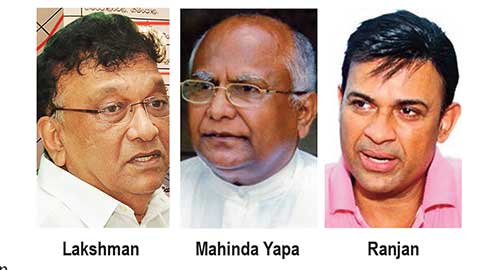
By Saman Indrajith
Chief Opposition Whip and Kandy District MP Lakshman Kiriella yesterday told Parliament that it was the prerogative of the Speaker to bring MP Ranjan Ramanayake or not.
Raising a point of order, MP Kiriella said that neither the court nor the Department of the Attorney General could intervene in the matter and asked the Speaker to summon MP Ramanayake to Parliament.
“The Appeal Court, in the matter of MP Premalal Jayasekera, said that it was the duty of the Speaker to allow or disallow an MP to sit in Parliament. It said that the court had no powers in that matter. Anura Bandaranaike, as the Speaker, once clearly stated that the court could not intervene in parliamentary affairs. Similarly, during the tenure of Chamal Rajapaksa as the Speaker, the court gave a ruling to stop the impeachment against Shirani Bandaranayake but the Speaker did not stop it on the same ground that the court could not intervene in the affairs of Parliament. Therefore, the Speaker is the one who should make the final decision in this regard.
“The Speaker has made a statement that if the Attorney General and Court permitted him to bring MP Ramanayake to Parliament, he would do so. When he tried to bring Premalal Jayasekera, the Attorney General objected, but the Speaker went ahead using his powers and allowed Jayasekera to attend Parliament. That means the Speaker has the powers, and, therefore, I request hims bring MP Ramanayake to parliament.
Opposition Leader Sajith Premadasa said that MP Ramanayake had been sentenced to jail for contempt of court and soon after that the Chairman of Elections Commission had stated that Ramanayake’s parliament seat might go vacant only if he continued to be in jail for over six months.
“According to that statement, Ramanayake still is an MP and he should be allowed to attend Parliament. He has that right under the privileges of an MP. As per legal experts, the sections 66, 89, 91 and 105 have ensured that he is still an MP. The Speaker is duty bound to ensure the rights and privileges of MPs so he is expected to take action to facilitate MP Ramanayake’s coming to parliament,” Opposition Leader Premadasa said.
TNA MP M.A. Sumanthiran: “I want to flag several points in this regard. Before doing so, I am bound by the law and tradition to disclose my interest in the matter as the counsel who appeared for Ranjan Ramanayake in his case at the Supreme Court. I was privileged to appear for a clean and honest politician in court and I am proud of that. Nevertheless, he has been convicted and sentenced. The sentence of four years rigorous imprisonment is unprecedented and exceptionally severe. Parliament has a responsibility in this regard because we have not enacted a law for contempt of court. This has an implication to the Articles in the Constitution the Opposition Leader has just mentioned because it says for an offence for which the prescribed punishment is two years or more. There is nothing prescribed in the law, for parliament has failed to enact laws for contempt of court. Although there have been in the public realm a lot of instances where even drafts had been made we have not done that. By failing to do that, it has been something like freedom of the wild ass anything can be given as a sentence. That is not a good thing. In this case, Parliament has to take steps to enact a law. English law is to be substantive law because we do not have statute law now, and in English law itself scandalizing the court is no longer an offence of contempt of court. Unfortunately the court disregarded it. I like to bring to your notice a serious lacuna in the law with regard to statute for contempt of court in this unprecedented injustice to an honest member of parliament.”
Minister Mahindananda Aluthgamage: Sumanthiran is the one who put Ramanayake in trouble by instructing him to go to the Supreme Court. You did not even go to the court when he was sentenced. Not a single MP was there to support Ranjan. If another lawyer had appeared for Ranjan Ramanayake he would have walked free today. Ramanayake did not have a counsel on that day. We all are saddened by the predicament Ranjan Ramanayake is in today. I have filed two cases against him and next week I will withdraw them by filing two motions because if those cases would be heard to an end, Ramanayake may get four more years in prison. We stand for MPs’ rights, but do not forget Ramanayake denigrated and continued to humiliate the judiciary. The Speaker should consider that the ruling to imprison Ramanayake was given by the Supreme Court.
MP Premalal Jayasekera: I was imprisoned by a High Court. We have records that one of the MPs had been told by the then Justice Minister that I would be sent to gallows. She had said the same to one of the chairmen of an institute. Therefore, I appealed against the judgment handed down to me. However, the ruling given to MP Ramanayake is not by a High Court but by the Supreme Court – the highest and apex court of the country. He has no court to go above that.
State Minister Nimal Lanza said that Ramanayake had humiliated and denigrated all, not only parliament, judiciary, police but all. “Ramanayake is in the same plight as the proverbial woodpecker that finally pecked on the banana tree. MP Sumanthiran should have pointed out those laws at the court not here.”
Justice Minister Ali Sabry: “We regret punishment MP Ramanayake received. The Opposition Leader cited Section 89 of the Constitution. The sub section 4 of section 89 clearly states that no person shall be qualified to be an elector at an election of the President, or of the Members of Parliament or to vote at any Referendum, if he is subject to the following disqualification. That is if he is serving or has during the period of seven years immediately preceding completed serving of a sentence of imprisonment (by whatever name called) for a term not less than six months imposed after conviction by any court for an offence punishable with imprisonment for a term not less than two years or is under sentence of death or is serving or has during the period of seven years immediately preceding completed the serving of a sentence of imprisonment for a term not less than six months awarded in lieu of execution of such sentence, provided that if any person disqualified under this paragraph is granted a free pardon such disqualification shall cease from the date on which the pardon is granted. So it is clear that Ramanayake is presently serving. This is different from the case of Premalal Jayasekera. The Supreme Court is the apex court of the country and since 1972 we cannot refer its decisions to another court for reversal. So no appeal is pending.”

By Shamindra Ferdinando
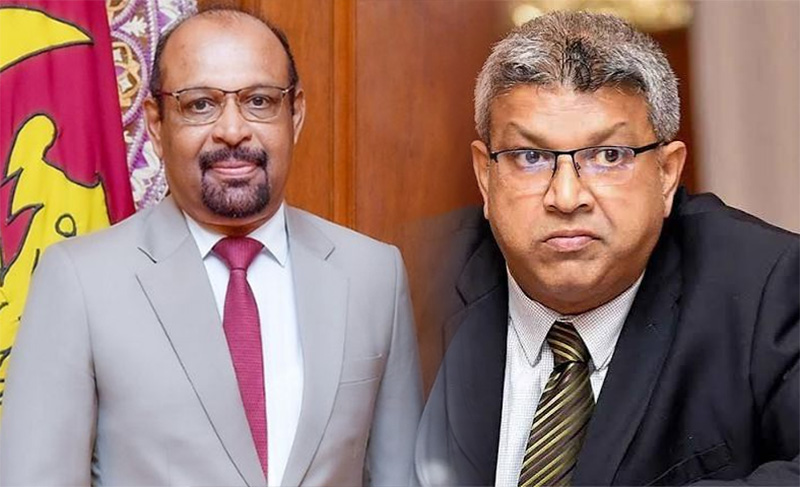
Justice and National Integration Minister Harshana Nanayakkara said yesterday that the Cabinet was studying a set of recommendations made by a Committee, led by retired Supreme Court judge Sithambarampillai Thurairaja, PC, regarding a systematic, fair and transparent mechanism for granting presidential pardons to convicted prison inmates.
Attorney-at-law Nanayakkara said so when The Island raised the issue in the wake of the ongoing controversy over prison authorities compelling General Secretary of the Bodu Bala Sena (BBS) Ven. Galadodaaththe Gnanasara to wear civilian attire when produced in court.
The Minister declined to elaborate but said the Cabinet of Ministers was yet to reach consensus on the recommendations. The NPP government, on 25 June 2025, appointed Thurairaja’s committee to study the provisions of the Article 34(1) of the Constitution, along with other statutory acts and judicial rulings.
Justice Thurairaja handed over his report to Justice and National Integration Ministry Secretary Ayesha Jinasena, PC.
The other members of the Committee were Deputy Minister of Mass Media Dr. Kaushalya Ariyarathne, Additional Secretary to the Ministry of Justice and National Integration Piyumanthi Peiris, Additional Solicitor General Nerin Pulle, Senior Deputy Inspector General of Police (SDIG) Legal Asanga Karawita, Chairperson of the Bureau of Rehabilitation Professor Wasantha Subasinghe, Specialist Dr. Chiththahari Abayanayake, former Acting Commissioner of Prisons Nishan Dhanasinghe, Acting Commissioner General of Prisons Prasad Hemantha Kumara, Senior Assistant Secretary (Legal) to the Ministry of Justice and National Integration Roshani Hettige, and Senior Assistant Secretary to the Ministry of Justice and National Integration Chandima Welikala.
The government called for guidelines regarding presidential pardon over a year before the Supreme Court rescinded, in September this year, the presidential pardon granted by Maithripala Sirisena to Ven Gnanasara serving a six-term of rigorous imprisonment for contempt of court. That pardon was granted in May 2019, the third controversial release by Sirisena during his presidency.
President Sirisena pardoned an ex-LTTE terrorist and also the Royal Park murderer Don Shramantha Jude Anthony Jayamaha, in 2016 and 2019, respectively. The Supreme Court, in June 2024, annulled the pardon granted to Jayamaha and ordered his arrest though he still remains free having fled overseas no sooner he was granted the pardon.
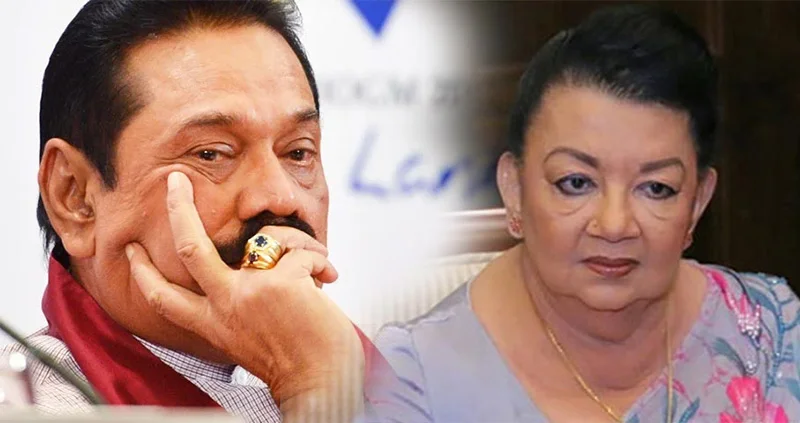
Former President Mahinda Rajapaksa was admitted to a private hospital yesterday morning (12).
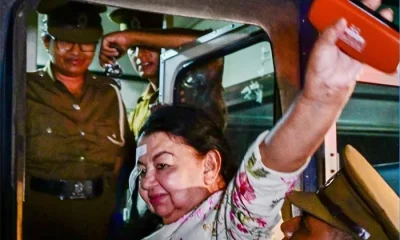
Meanwhile, former First Lady Shiranthi Rajapaksa, who is currently in remand custody at Welikada Prison, has been admitted to the Cardiology Unit of the National Hospital in Colombo.

“JVP did not bomb Dalada Maligawa; it seized weapons from security personnel stationed there”
By S. K. Samaranayake
Most Venerable Tibbotuwawe Sri Sumangala Mahanayake Thera of the Malwathu Chapter yesterday said the President has assured that a final decision on new prison regulations would be taken withn two weeks and until then whenever bhikkhus were produced before court, they must be allowed to wear robes. The monk said the Mahanayaka Thera has written to the Commissioner General of Prisons about their decision.
The Mahanayake Thera said so when SJB MPs, led by General Secretary Ranjith Madduma Bandara, paid a courtesy call on him.
During the meeting, the Mahanayake Thera expressed the following views:
“Currently, a massive campaign is underway on social media to insult and disrespect the Maha Sangha. Some individuals carrying out these attacks are not linked to any political party. We expected the government to intervene and completely put an end to this, which is entirely possible. Laws should be introduced to control this. The insults directed at monks must be stopped immediately. We cannot accept these acts, no matter who commits them. We even saw fabricated images circulated on social media depicting the President in robes and monks in lay attire. Such disrespect is completely unacceptable and must be curbed.
“We also know that some individuals currently representing Parliament have past ties to the Sasana. All we ask is for the mudslinging and insults targeting monks to be halted immediately. Certain elements continue to spread falsehoods about the government. Before this administration came to power, they claimed temples were finished, Buddhism was over, and the Perahera wouldn’t take place. But didn’t they just conduct the Kandy Perahera brilliantly?
“Various people are even complaining about the Casket (Karanduwa) of the Dalada Maligawa. In particular, we saw former Diyawadana Nilame Niranjan Wijeratne criticising the matter. Much of what he said was false. During his tenure, the previous casket was coated in lacquer, which nobody talks about. Replacing the old brass casket with a golden casket is a very commendable step what is wrong with that? Just as items from royal eras are retired and modern equivalents are put to use, the older casket has been given due respect and securely housed. There is no issue there. Some people claim the JVP bombed the Maligawa too. Nothing of the sort happened; it was LTTE terrorists who bombed the temple. The JVP merely seized weapons from the security personnel stationed there.”
Meanwhile, speaking during the visit, SJB General Secretary Ranjith Madduma Bandara and other parliamentarians charged that the current administration is laying the groundwork to turn the country into a secular state.
“It is impossible to introduce new laws for monks within two weeks; it takes much longer,” Bandara noted. “The President has the authority to issue an interim directive that any monk presented to court must appear in robes, but he chooses not to do so because he does not want to. Everyone who speaks out against this is targeted and smeared on social media, driven by a network of 2,000 to 3,000 social media operators tied to the government who attack and insult me. Even during the case of Father Mathew Peiris, who committed murder, his clerical cassock was not stripped. Inside the prison religious leaders were respected.
“The public base of this current government is rapidly eroding as a result of their actions, which is why they are attempting to strike at Buddhism to secure minority votes. Any government is constitutionally bound to protect the Buddha Sasana. We will not allow them to destroy Buddhism and turn this country secular; we will defend Buddhism to the very last, and all Sri Lankans must step forward for this cause.”
Following their meeting at the Malwathu Chapter, the delegation proceeded to the Asgiri Mahavihara, where they met the Mahanayake Thera of the Asgiri Chapter, Most Venerable Warakagoda Sri Gnanaratana Mahanayake Thera, and Anunayake Venerable Narampanaye Sri Ananda Thera to brief them on the current situation.
The delegation included SJB Parliamentarians Ranjith Madduma Bandara, Kins Nelson, Sujeewa Senasinghe, A.C. Alahapperuma, Rohana Bandara, Suranga Ratnayake, Rohini Kaviratne, Chandrani Kirielle, alongside prominent figures such as Lakshman Kiriella, Wasantha Yapa Bandara, Ranjith Aluwihare, and Professor Upul Dissanayake.

Heavy showers (100-150) mm likely at some places in the Western, Sabaragamuwa, Central, Uva and Southern provinces showerss above 75 mm are likely in the other areas of the island.

Presidential pardons: Govt. studying Justice Thurairaja’s recommendations – Minister

Mahinda and Shiranthi hospitalised

Monks must be allowed to wear robes when produced in court: Mahanayake Theras

Jt. Opp. seeks presidential pardon for Ven. Gnanasara

Shiranthi’s anticipatory bail application rejected

‘Dates have the highest sugar content to fight Coronavirus’

Sunday Island 27 December – Headlines

#SundayIsland 17th December – Headlines

Sunday Island – 28th March

Sunday Island Headlines – 21 March

Sunday Island – 21st February – Headlines
-

 Features5 days ago
The Sri Lankan who made Scottish history
-

 Sports5 days ago
Nissanka absence opens door for Sri Lanka’s young guns
-

 News6 days ago
Gnansara Thera to be assigned to prison printing section: Officials
-

 News4 days ago
NDB fraud Rs 60mn more than reported
-

 News4 days ago
Removing monk’s robes matter for Sangha to decide: Mahanayake Theras
-

 Features5 days ago
Future of Sri Lanka’s state university system: Should it be shut down and reopened?
-
 News6 days ago
OIC of FCID summoned before Maligakanda Magistrate
-
 News5 days ago
Shiranthi R remanded until 13 Oct.