
Connect with us

News

Kiriella alleges govt. only interested in consolidating its hold

Published

on

Kiriella

By Saman Indrajith

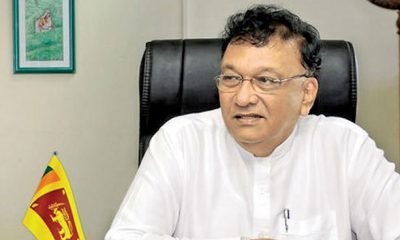
The Main Opposition SJB alleges that the government has no genuine desire to help the country come out of the present crisis but has only focused on consolidating its hold on power..

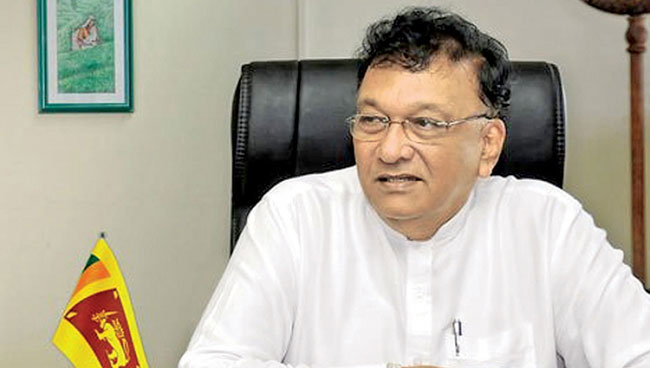
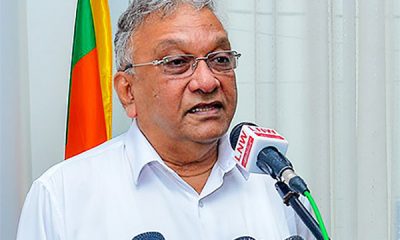
Addressing the media at the Opposition Leader’s Office in Colombo on Tuesday, Chief Opposition Whip and SJB Kandy District MP Lakshman Kiriella said: “Many concerned citizens have called for a consensus among the political parties to get out of this crisis. In an article published by The Island in its today’s instance, a group of economists too has stressed the need for such a consensus to lead the country out of the present crisis. If you read newspapers published during past several days, you will see that the opinion of many economists is that there is a need for a consensus among the political parties and that we should work together as a single party before the IMF. We as the Opposition have expressed in and out of parliament our willingness to work with the government and other parties for the same purpose. But this government has no genuine desire to steer the country out of crisis. Instead, it is concerned with consolidating its power. Take for example the agreement this government reached with the IMF. We asked the agreement to present the agreement to Parliament before it was inked. The government did not do that. Instead, it presented the agreement to the House after signing it. Such actions will not help bring about a consensus among stakeholders.”

“The IMF has recently announced that it works with the people of Sri Lanka and whatever assistance that it would offer would be for the benefit of the people of this country. If so, the government should have kept people’s interests at heart. The government has not been able to discuss with the IMF how to reduce the tax burden on people or at least to bring down power tariffs.


Latest News

Advisory for strong winds and rough seas for the sea areas extending from Kankasanthurai to Chilaw via Mannar and from Galle to Pottuvil via Hambantota

Published

on

By

Advisory for Strong Winds and Rough Seas
Issued by the Natural Hazards Early Warning Centre at 04.30 p.m. 28 May 2026 For the period from 04.30 p.m. 28 May 2026 to 04.30 p.m. 29 May 2026.

Please be prepared as the sea areas extending from Kankasanthurai to Chilaw via Mannar and from Galle to Pottuvil via Hambantota will be rough at times with strong gusty winds up to (60-65) kmph.

The naval and fishing communities who are engaged in fishing and naval activities in the above sea areas are requested to be vigilant in this regard

Continue Reading

News

Farmers Affected by the Nilwala Salinity Barrier paid Rs. 1.2 Billion in Compensation

Published

on

By

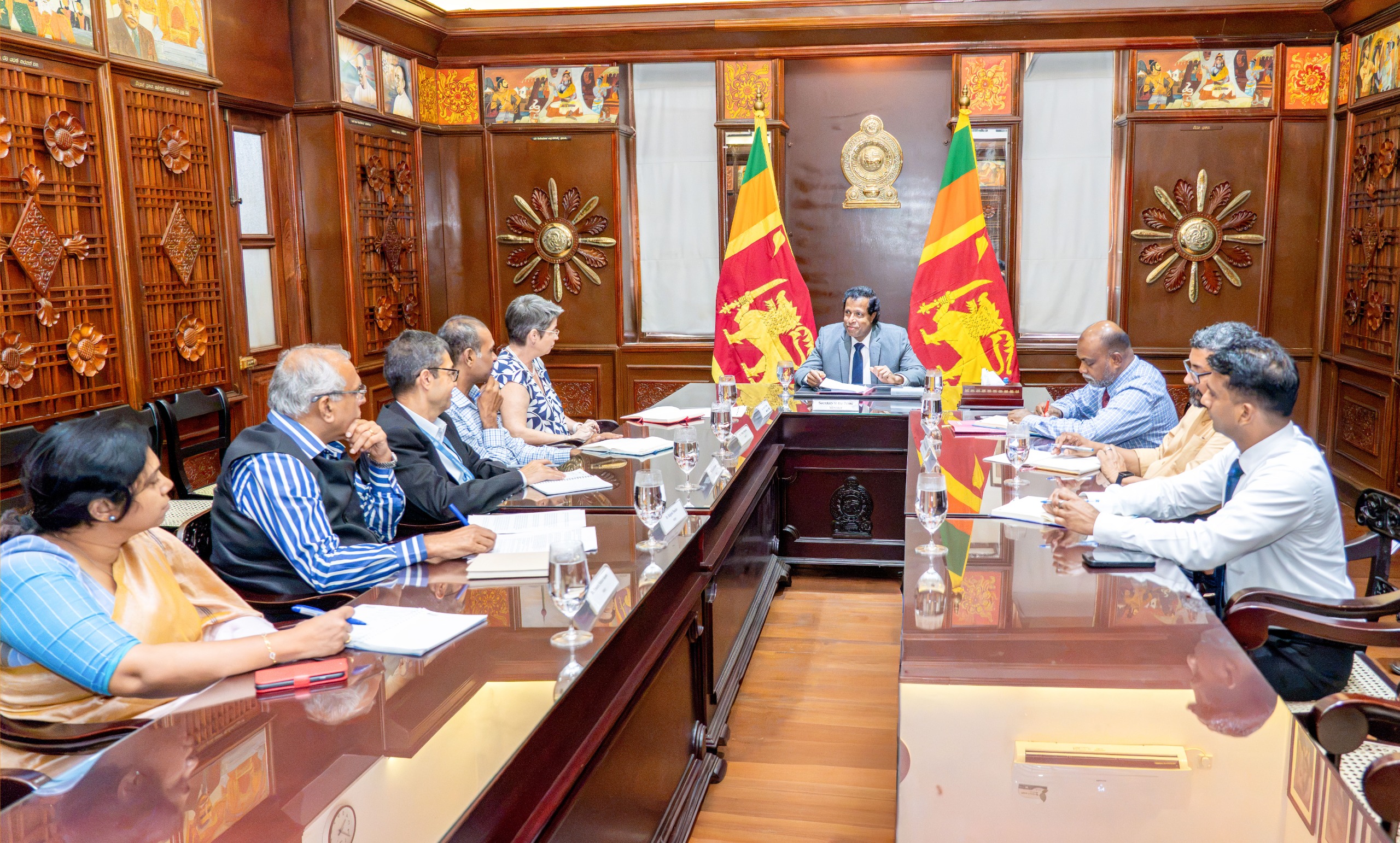
Compensation was awarded on Wednesday (27) morning  under the patronage of President Anura Kumara Dissanayake to farmers who were unable to cultivate their lands between 2019 and 2022 due to flooding caused by the salinity barrier across the Nilwala River. The event was held at the Malimbada Pradeshiya Sabha Auditorium in Matara.

The salinity barrier, constructed in 2019, caused continuous damage to agricultural lands in several areas of the Matara District, including Kamburupitiya, Kekanadura, Malimbada, Wilpita, Madiha and Thalalla.

Although previous governments failed to provide a proper solution to the issue, the present Government allocated Rs. 1.2 billion in the 2026 Budget to compensate the affected farmers. Accordingly, compensation is being paid for seven consecutive cultivation seasons, from the 2019 Yala season to the 2022 Yala season.

All farmers who had duly reported crop damage to Agrarian Service Centres during the relevant cultivation seasons are eligible for compensation. Payments are to be made in respect of 12,800 acres of uncultivated farmland.

Compensation was symbolically awarded today to 250 farmers by the President, while payments to all eligible farmers are expected to be completed within the next 14 days.

Addressing the gathering, President Anura Kumara Dissanayake stated that the country has now established a strong economy founded on discipline and accountable governance, enabling the Government to provide the highest compensation payments in the nation’s history during times of hardship.

He stressed that the Government’s policy is to provide compensation within a short period whenever damage occurs. At the same time, he noted that the Government has initiated programmes not only to address the immediate concerns faced by the public, but also to gradually strengthen their economic conditions and integrate them into the national economy.

The President further pointed out that Rs. 90 billion has been allocated under the Ministry of Industries to provide loans to small-scale entrepreneurs, while Rs. 25 billion has been allocated for the 2026 “Praja Shakthi” programme aimed at strengthening rural economies.

Highlighting the progress achieved in several key economic indicators after decades, the President stated that economic growth should be measured not only by data, but also by improvements in the people’s quality of life.

President Anura Kumara Dissanayake also stated that the public has no desire to remove a government that remains accountable to the people, adding that only thieves, fraudsters and drug traffickers dream of doing so.

He further alleged that those facing corruption and fraud charges before the courts were attempting to spread falsehoods out of fear, but noted that the present Government continues to move forward while gaining increasing public confidence.

The President also expressed his appreciation to the staff of the Matara District Secretariat, the Department of Agrarian Development, the Department of Agriculture, and the Agricultural and Agrarian Insurance Board for their dedication in implementing the compensation programme.

He further stated that the Government has planned a wide-ranging development programme for the Matara District, including permanent solutions to the Matara flood issue and measures to provide stable income sources and improved living standards for economically disadvantaged communities.

Emphasising that education is the most important pathway to improving people’s lives, the President noted that the Government has already launched a broad education reform programme, including the modernisation of schools islandwide and the establishment of 50 vocational training centres.

Speaking at the event, Industry and Entrepreneurship Development Minister Sunil Handunnetti said:

“We promised during the election campaign that we would bring an end to the Nilwala tragedy. There are several issues involved, including flooding and the inability of farmers to cultivate due to the salinity barrier. Even before coming to power, the coordination committee was repeatedly confronted with the grievances of affected farmers.

“Today, these beneficiaries are not only receiving compensation, but a panel of experts has also been appointed to identify sustainable solutions to the problems associated with the Nilwala River.

By the end of this year, feasibility studies will be completed and the necessary steps will be taken to permanently resolve the salinity barrier issue. Rs. 500 million has been allocated for this purpose.

“In addition, Rs. 1.2 billion has been allocated to compensate farmers who suffered crop losses over several cultivation seasons from 2019 to 2022. Before coming to power, we protested for years demanding compensation for these farmers. Today, we are able to provide compensation without requiring people to protest.

“Some farmers are receiving compensation amounting to nearly Rs. 2.9 million. We have allocated a substantial amount of money for these farming communities. We plan to complete all compensation payments by 18 June this year.

“Some people claimed that greater compensation could be obtained through protests, while others urged farmers to reject this compensation. However, instead of asking you to protest, we protested on your behalf and ensured that this compensation was granted. The officials present here can bear witness to that. We understood your suffering and your difficulties very well. Certain individuals also claimed that accepting this compensation would result in farmers losing ownership of their lands. That is completely false.”

Parliamentarian Professor L. M. Abeywickrama also addressed the gathering, stating:

Today, what you are receiving is compensation that farmers were unable to secure during previous administrations despite repeated protests and which had almost reached a point where it would never be granted. Whenever farmers protested, they were given false assurances that compensation would be provided and were then sent away. By the following cultivation season, they would once again suffer crop damage, protest again and receive yet another empty promise. This cycle continued for many years.

During the previous administration, there was even a proposal to acquire the affected lands after paying full compensation. However, we pledged to provide relief to the farming communities in five Divisional Secretariat divisions in the lower Nilwala basin who had been unable to cultivate their lands for seven consecutive seasons, from the 2019 Yala season to the 2022 Yala season.

We held several rounds of discussions on this matter under the leadership of the Secretary to the President at the Presidential Secretariat as well as at the Parliamentary Secretariat. It was through those discussions that we were able to make this compensation programme a reality. This became possible due to the collective effort of both the political authorities and public officials. Officials of the Agrarian Service Centres, the Department of Agriculture, the Agricultural and Agrarian Insurance Board, representatives of the District Coordination Committees and many others worked with great dedication towards this effort.

A committee of experts has now been appointed to provide a sustainable solution to the Nilwala salinity barrier issue, and LKR. 1,000 million has been allocated for this purpose. However, as the project cannot be completed within this year, we utilised those funds, together with allocations already set aside for canal and embankment rehabilitation, to restore and clean the canals and waterways connected to the Nilwala River. As a result, despite the heavy rains experienced in recent times, we were able to minimise flooding in Matara.

Minister of Women and Child Affairs Saroja Savithri Paulraj, Deputy Minister Arkam Ilyas, Southern Province Governor Professor Susiripala Manawadu, Members of Parliament Lal Premanath and Ajantha Gammaddege, along with several other public representatives, state officials and representatives of farmers’ organisations, were also present at the event.

(PMD)

Continue Reading

News

State Vesak Festival held with the participation of the President

Published

on

By

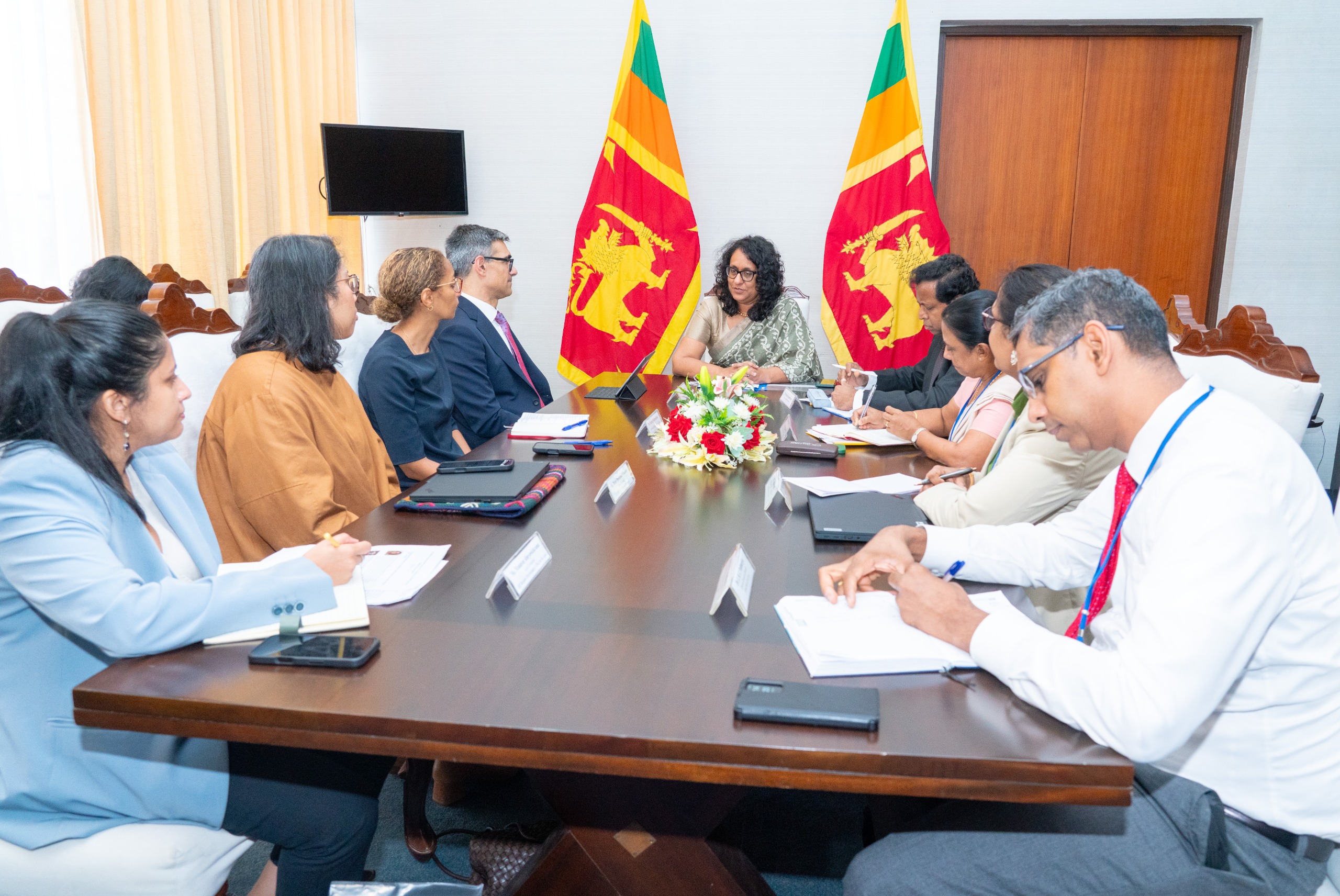
President Anura Kumara Dissanayake stated that a spiritual revival is essential in fostering economic revival within the country, and that the best determination people can make on this Vesak Full Moon Poya Day is to properly recognise the responsibility entrusted to all citizens to safeguard the Buddha Sasana and the Dhamma for future generations, and to unite in fulfilling that responsibility.

The President made these remarks on Wednesday morning (27) while attending the inaugural ceremony of the State Vesak Festival held at the Midellawala Purana Rajamaha Viharaya in Thihagoda.

The President also pointed out that Buddhism does not belong solely to those of us living today or only to the monks clad in robes, but that the Buddha Dhamma was preached for the liberation and well-being of all humanity. He further stated that the Government expects to promptly introduce the necessary legislation to enable the Maha Sangha to maintain the Sangha institution in accordance with Vinaya discipline.

The 2026 State Vesak Festival, marking the 2570th Buddhist Year, is being held under the theme “Abhiththaretha Kalyane” and titled “Dakshina Prabha”, centred around the city of Matara from Wednesday  until 1 June, in line with National Vesak Week.

The “Dakshina Prabha” National Vesak Festival consists of two Vesak zones: the “Prathipaththi Pooja” zone and the “Amisa Pooja” zone. The Prathipaththi Pooja zone is centred around the historic Matara Fort area, while the Amisa Pooja zone is located within the city of Matara and the Beach Park vicinity.

The Prathipaththi Pooja zone features an exhibition of sacred relics, Dhamma sermons and discussions conducted by eminent preachers, devotional poetry recitals, and programmes on almsgiving, observance of sil and meditation.

The Amisa Pooja zone includes a giant Vesak pandal erected near the Fort Wall and city centre, a creative Vesak lantern competition at the Matara Beach Park, devotional music performances by the Tri-Forces and Police near Pigeon Island, puppet shows and cultural performances showcasing Southern traditional arts.

Several special attractions have also been organised, including a modern AI-powered light display featuring Buddhist symbols and patterns in the sky, Jataka story presentations through traditional Southern puppetry, and digital screenings of Jataka stories and films across the city using LED displays.

In parallel with the State Vesak Festival, a photographic exhibition organised by the High Commission of India in Sri Lanka was also inaugurated under the patronage of President Anura Kumara Dissanayake and Indian High Commissioner Santosh Jha. The President and accompanying dignitaries also viewed the exhibition.

A special commemorative stamp issued for the 2570th State Vesak Festival, along with a set of three Vesak commemorative stamps featuring three temples in the Matara District, was also officially released at the event. The first stamp was presented to the President.

President Anura Kumara Dissanayake also presented official “Pooja Bhoomi Sannas” declarations to several religious sites of historical significance in the Southern Province.

Addressing the State Vesak Festival, President Anura Kumara Dissanayake stated:

“Today, we are participating in a historic and significant occasion in Sri Lanka. The Buddha was one of the greatest teachers ever to appear in the world. His birth, Enlightenment and Parinirvana all fall on this Vesak Full Moon Poya Day. We have commemorated this sacred occasion over many centuries.

What is the reason that this Dhamma has survived for so long? Buddhism was introduced to Sri Lanka 236 years after the passing of the Buddha, that is, 2,334 years ago from today. I believe the reason this Dhamma has endured for such a long period, while preserving its essence, is because it is based on causality and grounded in realism.

The Buddha preached the Dhamma he had realised to sixty disciples on the very first Esala Full Moon Poya Day after attaining Enlightenment. He instructed them to preach this Dhamma for the welfare and happiness of the many.

The first factor behind the endurance of the Dhamma is therefore its foundation on causality. The second factor is our venerable Maha Sangha who are guardians of the Dhamma and Vinaya.

For a long period, the Dhamma survived through oral tradition. Until the teachings were committed to writing, it must have been extremely difficult for a single monk to memorise the entirety of the teachings. Therefore, according to the various Nikayas, the Dhamma was divided and preserved orally with immense dedication by the Maha Sangha.

We know that the Digha Nikaya was preserved by the Digha reciters, the Majjhima Nikaya by the Majjhima reciters, and the Samyutta Nikaya by the Samyutta reciters.

In this manner, the Maha Sangha preserved and transmitted the Dhamma and its essence orally for centuries. Later, during the reign of King Walagamba, the Tripitaka was committed to writing and preserved in written form.

Today, there are books of sermons within temples. But who conveys the essence of those books to the Buddhist people? I have never seen a monk merely turning pages and preaching directly from a text. Our monks study the Dhamma, absorb that knowledge and then preach it to the people.

There was a request to amend Sections 41 and 42 of the Viharagam and Devalagam Act of 1931. There was also a request to restore the authority to take disciplinary action through the Dhamma courts against monks who violate discipline.

The Maha Sangha of the three Nikayas formally submitted this request to me in writing. Our Minister presented a Cabinet paper on the matter, which received Cabinet approval. Accordingly, amendments were drafted.

As we know, all such amendments must receive the approval of the Attorney General’s Department. The Department proposed several revisions, and recently I facilitated discussions between the Chief Prelates and Secretaries of the Malwathu, Asgiri, Ramanna and Amarapura Chapters, together with the Commissioner of Buddhist Affairs and the Attorney General.

I was informed by the venerable Maha Sangha that a final consensus had been reached during these discussions. Therefore, we will very soon introduce the necessary laws to enable the Sangha institution to be maintained in accordance with Vinaya discipline.

This Dhamma does not belong only to those of us living today, nor solely to monks in robes. It was preached for the liberation and well-being of all humanity. Therefore, we all bear the responsibility of ensuring that the essence of this Dhamma is preserved without being destroyed.

As our Sobitha Nayaka Thera pointed out, we have witnessed instances today where the Dhamma is distorted under the very guise of the Dhamma itself. What can rulers do in such circumstances? He invited me to act as kings of the past once did. We are prepared to do so. However, for such measures, we require the support of the venerable Maha Sangha who are guardians of the Dhamma and Vinaya.

I invite everyone to work together to safeguard the Dhamma preached for the liberation of all humanity. I do not wish these actions to be interpreted merely as political or governmental decisions. I would rather they be understood as measures we must take as Buddhists. These should become Buddhist decisions taken for the sake of the Dhamma, the Buddhist people and the future.

Looking at our history, whenever we declined spiritually, we also declined economically. Likewise, when we declined economically, we declined spiritually as well. Every era in which we experienced spiritual revival was also an era of economic prosperity.

Therefore, as we move towards becoming an economically prosperous nation once again, our country also requires a spiritual revival. The effort of both myself and this Government is to bring about that economic and spiritual revival together.

During the reigns of King Dutugemunu, King Wasabha, King Mahasen and King Parakramabahu I of Polonnaruwa, Sri Lanka experienced both spiritual enlightenment and economic prosperity.

Economic prosperity cannot be achieved merely by constructing buildings, roads, factories and technological infrastructure. True economic revival can only be achieved within a righteous society, a society built on understanding, compassion towards others, and the rejection of hatred, anger and hypocrisy.

A righteous society and economic revival must progress together. Therefore, we aspire to make this era one that will be remembered in Sri Lankan history as a period of spiritual revival. Alongside that, I am confident that economic revival will also be achieved.

We have already undertaken significant work towards this objective. In particular, the World Buddhist Conference is scheduled to be held in Sri Lanka this November. I believe this will become a major milestone in the country’s spiritual revival.

Whenever religious places encounter hardship or disaster, the Government stands ready to intervene and assist. We must build a nation founded on both righteousness and strong economic progress.

Just as the Government has its responsibilities in this regard, I also strongly hope that our venerable monks will fulfil the responsibilities entrusted to them. Buddhism and our society share an inseparable historical bond.

Before Buddhism arrived in Sri Lanka 2,334 years ago, what kind of society existed here? It was the Dhamma that transformed this land into a society with a refined culture and identity. Without the spread of Buddhism, it is difficult even to imagine what kind of civilisation we would have become.

We are a people who feel compassion for the suffering of others. During times of disaster, people do not consider race or caste, they feel empathy for everyone.

Buddhism played a tremendous role in shaping the Sri Lankan nation into one that is cultured, humble and hospitable. I believe the arrival of Arahat Mahinda Thera laid the foundation for the Sri Lankan nation itself.

Therefore, distorting this noble Dhamma causes pain to all of us. The decline of disciplined monks within a distorted interpretation of the Dhamma is also deeply painful.

After 21 monks were arrested in connection with narcotics offences, I held discussions with the Maha Nayaka Theras of the three Nikayas. They proposed that, if possible, the monks should be disrobed before being produced before court. How can we take monks to court in handcuffs?

The representatives of the three Nikayas agreed to this proposal and further decided that those proven innocent could later be re-ordained. However, legal procedures are governed by the law and not by the Dhamma, and therefore that course of action could not be implemented.

Any disgraceful incident connected to the Dhamma causes us deep sorrow. We are a nation shaped around the temple. In our villages, the Poson festival was the principal celebration. The monk who taught us Buddhism was our village chief monk.

When monks walked along the gravel roads to the tank for their evening bath, people would kneel by the roadside in reverence. We are a people shaped by that spirituality. It was the monks who taught us the Dhamma, morality and the future. When disputes arose in our villages, it was the monks who resolved them.

Because of this deep spiritual connection, these incidents cause us great pain.

Therefore, the Venerable Theras must be granted the authority necessary to maintain discipline within their institutions. I know that not only I, but also the Maha Sangha led by the Maha Nayaka Theras, are deeply distressed by these developments.

If there are forces attempting to build opposition against liberating this Dhamma based on such incidents, then the time has come for us to reflect upon ourselves. Otherwise, should we allow a Dhamma protected for over 2,615 years to perish before our very eyes?

Throughout history, monks risked their lives to protect the Upasampada ordination lineage. Should we not remember them? Kings of the past lived in hiding to protect the Dhamma.

If a Dhamma protected in such a manner is now being distorted before our eyes and subjected to slander and false accusations, what should we do?

On this Vesak Full Moon Poya Day, we must reflect upon ourselves. The Buddhist community, priests, moulavis, kurukkals, all of us, must work once again towards safeguarding our children and younger generations and towards reviving religion in our country.

Schoolchildren and members of the security forces are being arrested due to narcotics-related offences. Drugs are spreading in large quantities. Why is this happening?

Where discipline, morality and social values collapse, crime, abuse and social crises inevitably emerge. At this moment, when we commemorate the Birth, Enlightenment, and the Passing away (Pari nibbāna) of our Supreme Teacher, a responsibility has been entrusted to all of us to free this country from such conditions. I invite everyone to unite in that effort.”

(PMD)

Continue Reading

Trending