
Sports
King’s ball of the century sets up Australia’s 16-0 Ashes whitewash

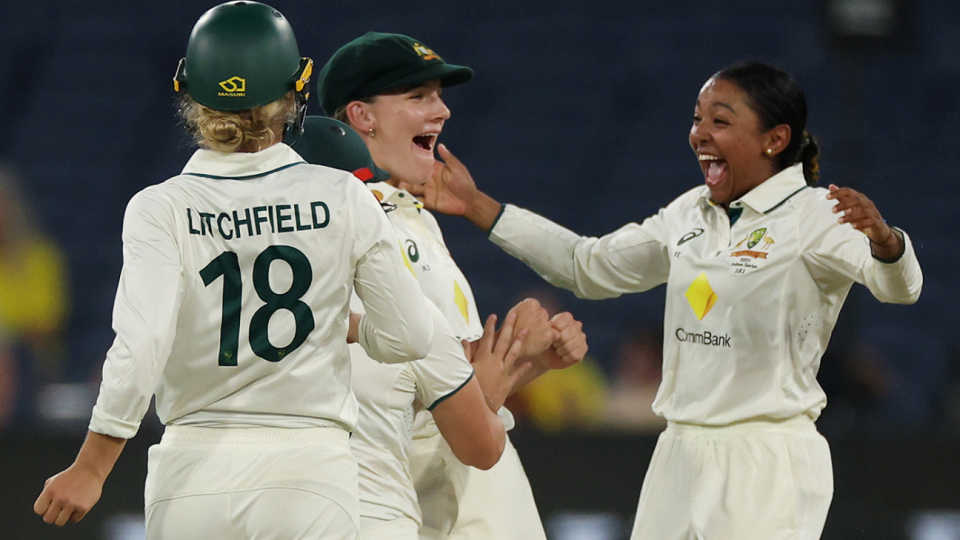
These will forever be known as Alana King’s Ashes. Australia’s legspinner delivered another spellbinding performance at the MCG to ensure England were whitewashed 16 points tonil for the first time in the multi-format era after an innings and 122 rout inside three days.
King took her maiden Test five-wicket haul, nine for the match and 23 for the series at a 11.17 to equal Ash Gardner’s record haul of 23 scalps in the 2023 Ashes and finish as Player of the Series.
Gardner took 4 for 39 to cap a wonderful series. The spin duo bowled 47.4 overs together unchanged to claim the last nine wickets of the match and allow England to start their recriminations a day early.
It was a day of celebration for Australia with Beth Mooney earlier becoming just the fourth female and the first Australian to score international centuries in all three formats, making 106 as the hosts piled up 440 and a first innings lead of 270, their second-highest such lead in a women’s Test. Annabel Sutherland was Player of the Match for her 163.
Despite taking four wickets in the first innings, and having multiple chances missed, captain Alyssa Healy oddly waited 22 overs in England’s second innings before throwing King the ball. England had shown some resilience with Tammy Beaumont and Heather Knight compiling a half-century stand and looking relatively untroubled after Maia Bouchier had her middle stump flattened by Darcie Brown in the first over to end a miserable tour.
But when King and Gardner were finally locked in tandem, they created carnage just as they had done throughout the ODI series. With England 79 for 1, Knight bunted a catch to short leg where Phoebe Litchfield held her second sharp close catch of the match.
King then bamboozled Nat Sciver-Brunt for the second time in the match and the fourth time in the series. Sciver-Brunt had spoken after her first innings half-century about wanting to play King off the back foot despite twice being bowled playing back, including on day one for 51.
She changed tack in the second, instead pushing forward at every opportunity and sweeping anything pitching outside leg. King forced a leading edge that landed just wide of silly mid-off and then fizzed another past the outside edge, but Sciver-Brunt did well to hold the line.
With that set-up, she played for turn on the front foot trying to defend and King got one to skid into her front pad and trap her lbw. Sciver-Brunt took a review with her to underscore how deceived she was.
King then delivered the ball of the series to Sophia Dunkley. She drifted one outside leg at 72.1kph, ala Shane Warne to Mike Gatting, it dipped and pitched and spun sharply past Dunkley’s forward defence and crashed into the top of off. There was an audible gasp from the 11,804 in attendance when the replay came up on the big screens. It meant Dunkley was in no doubt as to what had happened, unlike Gatting.
Danni Wyatt-Hodge avoided falling to King for a fourth time as Sciver-Brunt, instead meekly sweeping Gardner straight to short fine.
King’s third and fourth scalps were from arguably her two worst balls. Beaumont dragged on from a non-committal jab at a shorter legbreak wide of off for 47.
Ryana MacDonald-Gay had been strangely upbeat in the press conference on the second night, but her mood would surely have shifted after hitting a rank full toss from King straight to deep midwicket.
In the midst of those two dismissals, Mooney took an excellent catch off Gardner via a thick deflection from Amy Jones’ outside edge. Sophie Ecclestone’s bizarre Test match concluded when she top-edged a long-hop from Gardner to midwicket.
With both spinners on four wickets each, the race to join Peggy Antonio on Australia’s bowling honours board at the MCG was comical as skied balls and edges somehow evaded fielders hands. Lauren Bell and Lauren Filer faced the most balls ever for a 10th wicket pair in women’s Tests before Filer finally chipped one to catching mid-on.
Earlier, Mooney joined Sutherland on the MCG honours board as the second century maker in the Australia’s innings.
Having spent the night unbeaten on 98, Mooney looked a bundle of nerves through the first five balls of the day. Ecclestone beat her twice and she nearly caused a mix-up trying to invent a non-existent single. But off the last ball of the over she breathed a huge sigh of relief as Ecclestone dropped short to allow her to punch two off the back foot through point and raise her arms aloft.
Thereafter, England finally had a decent hour as they held their catches to reward their bowlers. Ecclestone gave Tahlia McGrath nothing to hit before she skipped out to the wrong line and dragged a catch to mid-on.
Filer then cranked up the pace despite having delivered 21 overs on day two. She had Kim Garth caught behind for a third-ball duck and could have easily had Mooney lbw from around the wicket in the next over. Mooney was initially given not out and DRS showed it was umpire’s call on impact in line with off but it was crashing into middle.
Mooney’s luck continued five balls later when she gloved down the legside but Amy Jones caught it while part of the ball brushed the ground as it entered her gloves. Filer was finally rewarded when she clattered Mooney’s off stump with the left-hander playing down the wrong line.
In between, Ecclestone pinned King lbw for 3 which brought Ellyse Perry to the crease at No.10 for the first time in her career. It was odd that Perry was fit to bat but came in behind Garth and King. But the moment she ran her first runs, a two to wide long-off, it was clear she was in a lot of discomfort with her corked left hip. She chipped a return catch back to Ecclestone to end the innings and unjustly dent her extraordinary Test average.
Australia had bizarrely lost 5 for 9 despite their extraordinary batting depth and handed Ecclestone her third Test five-wicket haul, albeit her most expensive ahead of the 5 for 129 she took in the last Ashes Test in Nottingham.
Brief scores:
Australia Women 440 in 130.3 overs (Annabel Sutherland 163, Beth Mooney 106, Sophie Ecclestone 5-143) beat England Women 170 in 71.4 overs (Nat Sciver-Brunt 51, Alana King 4-45) & 148 in 68.4 overs (Tammy Beaumont 47, Alana King 5-53, Ash Gardner 4-39)by an innings and 122 runs
[Cricinfo]


There are heists, and then there are heists, and the one at Sabina Park on Sunday will live long in the memory of those who watched it. For 16 overs of the chase, Sri Lanka had looked in total control of their defence of 169. But in a frenzied finish, West Indies ransacked 60 runs off just 22 deliveries to complete the chase with two balls to spare.
Sherfane Rutherford was dropped twice on the way to an unbeaten 54 off 40, and he was part of the defining stand of the match – 81 off 53 with Rovman Powell. But despite their intervention, West Indies still needed more and it was the returning Jason Holder that delivered, smashing 21 off five balls to seal the win and the series.
The result stretched Sri Lanka’s wait for a T20I series win in the Caribbean, but more immediately, left them scratching their heads. In terms of planning, they could not have done much more, while the pitch was tailored to their strengths – namely the spin trio of Maheesh Theekshana, Wanidu Hasaranga and Dunith Wellalage.
The latter had even picked up skipper Shai Hope off just the second delivery of the innings, while Hasaranga snagged two through the middle. Theekshana, meanwhile overcame a tough 15-run opening over – courtesy Shimron Hetmyer. – to give away just 11 off his next three.
With the bat too, Sri Lanka had done seemingly enough, with Pathum Nissanka’s fast start supplemented by some helpful middle-order cameos and bookended by a coming-of-age 43 off 28 from Wellalage.
But at the key moments, it was West Indies, who held their nerve. Player-of-the-Match Shamar Joseph ended with career-best figures of 5 for 33, and did so bowling in the game’s most difficult periods – the last over of the powerplay and the final over of the innings.
And then when the game seemed over, West Indies’ fabled firepower belatedly came to the fore, as they came in clutch once more.
In the first game, West Indies struck 29 in the death overs. And in the second game, 27. With 60 needed in that same period in the decider, the odds weren’t exactly in their favour.
But across two Dushmantha Chameera overs, where the usually reliable quick struggled – searching fruitlessly for yorkers – West Indies pilfered 47 runs, and staged a comeback for the ages.
How they got there was modern West Indies cricket in a nutshell. Sri Lanka strangled the middle overs, with their trio of spinners all proving tough to get away. The powerplay had fetched a respectable 51 – much of it owing to Hetmyer’s 32 off 19 – but the middle overs turned as sluggish as the surface, with West Indies trudging to 110 for 4.
But having struggled to get Sri Lanka’s death bowling away for much of the series, they capitalised on the off-colour Chameera to secure an all-time smash and grab. The pacer’s third over went for 24, and then his last for 23. They were the 17th and 19th of the innings. From being on the verge of defeat at the end of the 16th, the game was over before the 20th had begun.
Sri Lanka, though, might wonder what might have been had they not grassed two straightforward chances from Rutherford when he was on 24 and 25.
Sri Lanka had started well in the powerplay in the earlier games, and that looked to be the case on Sunday night as well.
While Kusal Mendis was for once dismissed cheaply – a chipped leading edge plucked out of the air by Matthew Forde followed by a spicy send-off and heated words – Pathum Nissanka, who has had a quiet tour by his standards, belatedly took up the attacking mantle.
On a surface that was gripping from the very first delivery, Nissanka started patiently before gradually flexing his striking chops. His 26 off 17 including two fours and two sixes.
But just as he might have been settling in for a game-defining stint, Joseph induced a top-edge and followed it up with one that straightened down the line to completely bamboozle new batter Pavan Ratnayake. Two in two – echoing Holder’s powerplay heroics in the first game – and Sri Lanka were kept to 51 for 3, their lowest powerplay of the series.
Joseph would somehow better this outcome later on with a sublime triple-wicket final over to give the hosts some much-needed momentum into their chase.
Following Joseph’s double-strike, Sri Lanka were rightfully wary of losing any further wickets, which saw Kamindu Mendis join Kamil Mishara – who had got his eye in during the powerplay – out in the middle. The pair strung a stand of 21 off 22 to keep things ticking, and this trend continued with each successive partnership over the period.
Dasun Shanaka’s arrival brought some power to the proceedings, as he wasted little time in tearing into Roston Chase with a six over long-on. His stand with Kamindu was brief but effective as the pair managed 16 off seven, followed by one worth 23 off 21 with Wellalage.
On another day, Shanaka’s dismissal – cleverly bowled by Holder – might have signalled a drop in the scoring rate, but Wellalage – brought into the XI in the previous game to strengthen the lower-order batting – produced a knock that was a statement.
A slog sweep over deep square-leg off Chase signalled his early intent, but it was over the extra cover region that the left-hand batter truly prospered. Time and again, he was able to manufacture drives and scythes into that vacant – but generally tough to access – region in front of square on the off side.
And he was ably supported by Hasaranga, as the pair managed an innings-best stand of 49 off 28. By the time Wellalage fell in the final over – miscuing one off the impressive Joseph – he could walk off safe in the knowledge that he might have struck a potentially series clinching 43 off 28.
Sri Lanka’s target, having come to terms with the pitch midway through their innings, might have been in the region of 160-170. But while they managed 169 in their 20 overs, it’s likely they will feel like they left runs behind – particularly as they had 156 for 6 at the start of the penultimate over.
The West Indies fightback was triggered by a piece of magic from Rutherford at deep point, as he picked up and sent in an arrowed direct hit to find Hasaranga well short in trying to steal a second.
Then returned Joseph at the last, and he responded to a first-ball boundary by removing Wellalage next delivery and Chameera one ball later, capturing his second double of the evening. Joseph capped off proceedings with a searing final-ball yorker to dismiss Theekshana as the last man.
It meant West Indies had restricted Sri Lanka to just 15 off the last 12 deliveries, and kept themselves in the game – something that eventually proved even more crucial in the game’s frenetic closing moments.
Scores:
West Indies 170 for 5 in 19.4 overs (Brandon King 16, Shimron Hetmyer 32, Rovman Powell 33, Sherfane Rutherford 54*, Jason Holder 21*;Dunith Wellalage 1-23, Dushmantha Chameera 1-64, Maheesha Theekshan 1-36, Wanidu Hasaranga 2-17) beat Sri Lanka 169 in 20 overs (Pathum Nissanka 26, Kamil Mishara 28, Kamindu Mendis 20 Dasun Shanaka 16, Dunith Wellalage 43, Wanidu Hasaranga 21; Akeal Hosein 1-31, Matthew Forde 1-39, Jason Holder 1-33, Sharmar Joseph 5-33, Roston Chase 1-32) by five wickets
[Cricinfo]
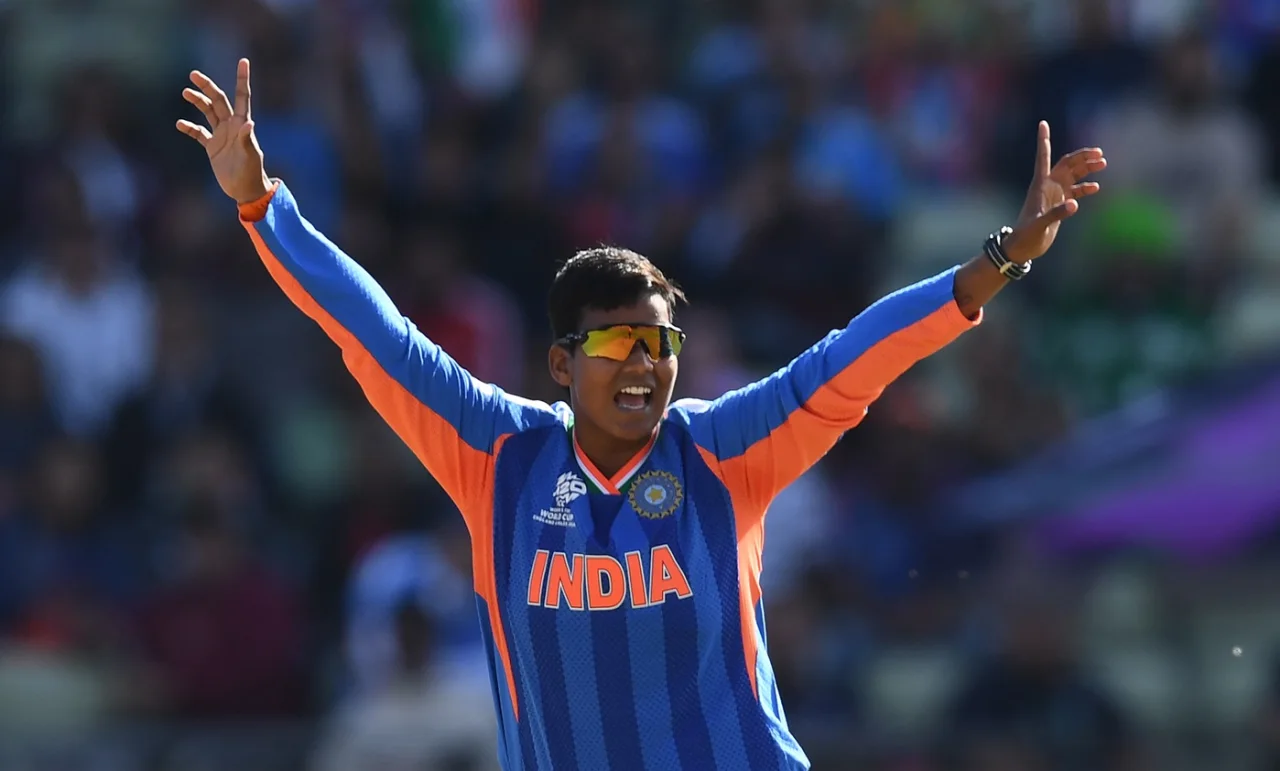
Smriti Mandhana and Deepti Sharma bailed India out with bat and ball respectively to fire them to an emphatic opening win over Pakistan in front of a sellout crowd in Birmingham on Sunday.
Mandhana top-scored with 68 to lift India from 18 for 2 to 170, their highest in a T20 World Cup against Pakistan. Then, Deepti struck twice in two overs after Pakistan’s openers rattled 38 in quick time.
Deepti’s blockbuster act, though, was a direct hit from short third to run out the dangerous Muneeba Ali for 41, triggering a collapse Pakistan didn’t quite recover from. They lost 5 for 26 through the middle phase as India’s spinners tightened their grip. They were eventually bowled out for 106, with Deepti finishing with 5 for 10 to become the highest wicket-taker in women’s T20Is.
In a match where both teams missed a number of opportunities on the field, the eventual difference was India’s death-overs lift. Richa Ghosh, who allayed fears of a form slump during the warm-ups last week, smashed 34 off 17. This included a sequence of four fours and a six off her last eight legal deliveries to help India muscle 60 off the last six overs when it seemed like they’d finish around 150.
That not only helped India finish on a high, but also gave them a massive net run rate cushion in what is being dubbed the group of death.
India looked to go hard early. Shafali Verma launched her first ball for six, but was caught behind four balls later off left-arm spinner Sadia Iqbal in trying to manufacture a boundary opportunity. Jemimah Rodrigues then played an uncharacteristic swipe to be taken at cover in the fourth over, giving left-arm seamer Tasmia Rubab a wicket off her second ball on World Cup debut. At 18 for 2, India needed to stem early damage.
Mandhana offset some of that early pressure by hitting two boundaries off spinner Rameem Shamim in the fifth over. Mandhana was on 27 when Aliya Riyaz dropped her running back from mid-off to deny Rubab a second wicket. At that stage, India were struggling for momentum at 44 for 2 in the 8th over.
Fatima Sana rustled through the middle overs with spin as Harmanpreet Kaur also took her time to settle in, scoring 5 off 10 at one stage. But the introduction of left-arm spinner Nashra Sandhu forced a slight change in approach as Harmanpreet hit her for two boundaries in her first over, and India scored 24 between overs 7-10.
Mandhana was particularly superb in stepping out and hitting inside-out over cover, one such boundary helped her raise a 34-ball half-century. Soon after, Saira Jabeen reprieved her for a second time at deep midwicket off Iqbal. You got the sense the floodgates had truly opened.
Mandhana holed out to long-on for 68 to give Pakistan a reprieve. That turned into double-delight three balls later when Bharti Fulmali was stumped, giving Iqbal the charge. When Harmanpreet flicked Fatima Sana to deep square, India had lost 3 for 14. India then went through a 21-ball period without a boundary before the runs came in a torrent in the last two overs.
Rubab, who came into her final overs with figures of 3-0-17-1, was then taken to the cleaners with Ghosh hitting her for a sequence of 4, 6, 4, 4 in a 23-run over. After displaying her brute force in the leg-side arc between mid-on and deep midwicket in the penultimate over, Ghosh’s deft touches helped pocket 15 off the final over to help India sign off with momentum on their side.
Muneeba should’ve been out in the second over when she jabbed at a sharp-turner from offie Shreyanka Patil, only for Ghosh to fluff an opportunity. Then in the fourth over, Shreyanka deceived her in flight to slice a drive to point where Arundhati Reddy put down a straightforward chance. In between that, Muneeba threw Kranti Gaud off her lengths by walking across to scoop. She was also quick to pick length and cut well as Pakistan raced to 37 for 0 in four overs.
Across the next six overs, Pakistan lost the cream of their middle order as India’s spinners tightened their grip, picking up 4 for 21. Deepti aside, Shree Charani, on T20 World Cup debut, gave an excellent account of herself, picking up 3 for 21 in the middle overs. Deepti then picked up three wickets in her fourth over to wrap up the game in the 17th, giving India a massive win and walking away with the Player of the Match award.
SCORES:
India Women 170 for 6 in 20 overs (Smriti Mandhana 68, Harmanpreet Kaur 36, Richa Ghosh 34, Deepti Sharma 12*; Sadia Iqbal 2-41, Fatima Sana 2-33, Tasmia Rubab 1-41, Rameem Shamim 1-30) beat Pakistan Women 106 in 17 overs (Muneeba Ali 41, Gull Feroza 12, Ayesha Zafar 12, Aliya Riyaz 18; Deepti Sharma 5-10, Shree Charani 3-21, Shafali Verma 1-22) by 64 runs
[Cricinfo]


Fresh from his historic record-breaking performance in Rome, Rumesh Tharanga will be one of the headline attractions in the men’s javelin event at the Ostrava Golden Spike meeting which will be held today.
Tharanga produced a sensational throw of 92.62 metres at the Diamond League meeting in Rome earlier this month, setting a new Sri Lankan record and achieving a world-leading mark for the season. His remarkable effort not only shattered the meeting record but also propelled him to eighth place on the world all-time list.
The achievement elevated the Sri Lankan star to the status of the second-best Asian javelin thrower in history and further strengthened his credentials as one of the leading contenders on the international circuit.
In Ostrava, Tharanga will extend the newly commenced rivalry with two-time world champion Anderson Peters of Grenada. Peters finished second behind the 23-year-old in Rome, setting the stage for another highly anticipated contest between the two elite throwers.
However, Tharanga is not aiming for a big throw. “I am not prepared for a big throw in Ostrave. We are still not set for peak performances,” Tharanga told in an online interview conducted by Chathura Ranasinghe.
The women’s javelin competition is also expected to be of a high standard, featuring an impressive field led by two-time World Under-20 champion Adriana Vilagoš. She will be joined by Poland’s Maria Andrejczyk, the silver medallist at the Tokyo Olympics in 2021, and Croatia’s Sara Kolak, the Olympic champion from Rio 2016.
With several of the world’s top javelin athletes in action, the Ostrava meeting promises an exciting showcase of throwing talent, with Tharanga aiming to build on the momentum generated by his career-defining performance in Rome.

Holder completes heist for West Indies after Joseph picks up five

Mandhana, Deepti, Ghosh star as India breeze past Pakistan

Showers will occur in the Western, Sabaragamuwa and North-western provinces and in Galle, Matara, Kandy and Nuwara-Eliya districts

Theft of USD 2.5 mn from Treasury: CoPF accused of complicity in NPP cover-up

Viral diseases on the rise

Ranil warns of another economic crisis, calls for Opposition unity

‘Dates have the highest sugar content to fight Coronavirus’

Sunday Island 27 December – Headlines

#SundayIsland 17th December – Headlines

Sunday Island – 28th March

Sunday Island Headlines – 21 March

Sunday Island – 21st February – Headlines
-

 News4 days ago
CIABOC summons Yoshitha over his participation in British Navy training programme
-

 News6 days ago
Local firms move millions of dollars overseas for phantom imports: Govt.
-

 Midweek Review6 days ago
July 09: An inexcusable overall security failure and exceptional contingency plan
-

 Opinion7 days ago
Could Sri Lanka once again face an economic crisis similar to 2022?
-

 News6 days ago
AI raises concerns over arrest of Sallay and rapper under PTA
-

 News3 days ago
Commonwealth lawyers urge Lanka to uphold rule of law
-
 News7 days ago
Sallay refuses to end hunger strike unless probe is taken out of CID led by Shani
-

 Features2 days ago
Politics of protected species