
Sports
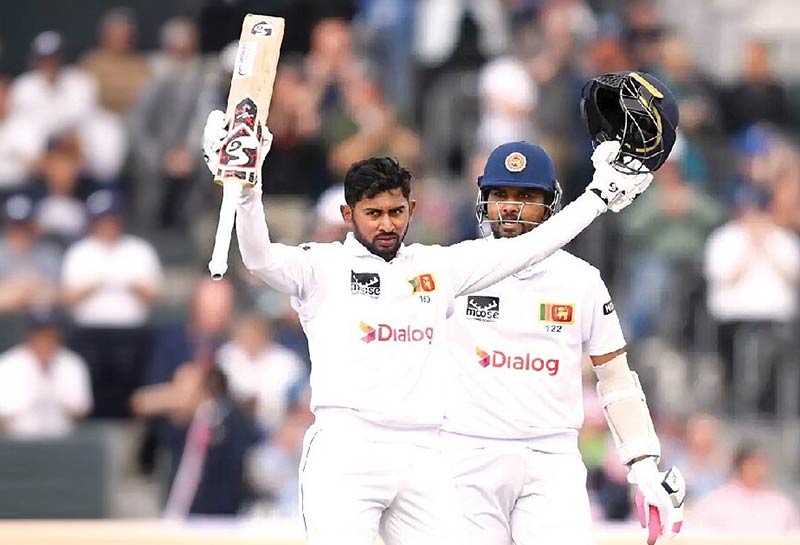
Kamindu at three in long run, a good move

Rex Clementine in London
The Finance Minister has more clout than the Central Bank Governor but while the Finance Minister can be a person elected by the people and some strange ones have held the plumb portfolio, the Central Bank Governor, who has equal privileges as a Cabinet Minister, is generally chosen after careful consideration. The reason being that he plays a pivotal part in holding the economy together, making key decisions on monetary policy, financial stability and reserve management.
Similarly, in cricket, seniority earns a player the captaincy but number three in the batting line up is handed to someone after careful consideration. The whole batting unit of a team revolves around the number three. He can be in the middle facing the second ball of the innings after the opening batter had picked up a golden duck or he can be padded up for two sessions and walk in after tea at 190 for one. Number three is not for the faint-hearted.
Sri Lanka have generally placed a lot of emphasis on their number three. The men picked to bat in that position are mostly been technically sound with an ability to grind the bowling and bat for long hours.
In Sri Lanka’s early days, Roy Dias occupied the slot and then Asanka Gurusinha was drafted in at number three while Roy was still around. Roy moved down to number four making way to Gura. Now, that’s grooming the next generation.
Then after Gura prematurely retired, Marvan Atapattu was tried in that slot. He was solid. But then, once the need for an opener arose, Marvan was pushed to open the innings. Number three fell vacant again and various players were tried out with little luck.
Eventually, Kumar Sangakkara settled in there nicely and occupied the slot for his entire career that stretched for 15 years.
Unlike, Marvan, Roy or Gura, Sanga was not known for his technical brilliance. It is his strong mindset and willingness to learn and improve that pushed Dav Whatmore to give him the prime slot. That proved to be a masterstroke as Sanga pushed all limits and went on to end up as the leading run scorer for Sri Lanka in Test match cricket.
When Sanga started, his cover drives went through the fine-leg or mid-wicket region. But by the time he was done, there was no better role model for technical perfection than him.
Physically, it would have been a lot demanding as well for Sanga for the first six years of his Test career, kept wickets. But finally, when Ashanta de Mel decided to take the wicket keeping gloves from him in 2006, it proved to be a wise decision as he went on to become world’s number one ranked batter for a number of years.
Since Sanga, for nine years now, the number three slot has been tossed around with various batters tried in the position and none have been able to secure it.
Given the form that Kamindu Mendis has enjoyed in Test match cricket in his brief career so far, the selectors were pushing hard to get him to bat at three.
It nearly happened at Lord’s but with the series still in line, they didn’t want to push it. But at The Oval, with the series lost, they were going in that direction. In the 11th hour, they put an hold to the move but it is bound to happen in Galle, when Sri Lanka play the Kiwis in less than two weeks time.
Good call for someone who has played all his cricket in Galle. The home ground is a much better option than the overcast Oval. But, Kamindu over these few months has shown that he has got it in him to overcome any condition. It was certainly dark and gloomy at Old Trafford when he notched up that fabulous hundred.
Many have lamented that Kamindu at number seven has been wasted. He was denied a hundred at Lord’s in the second Test as he ran out of partners. In the second innings at Lord’s, as Sri Lanka employed the nightwatchman, Kamindu was pushed further down the order to number eight and there was very little he could do batting so low.
It will be a good move letting your best batter bat through the innings rather than pushing him too low where too often he will have to bat with the tail.
Most seniors like Dimuth Karunaratne, Angelo Mathews and Dinesh Chandimal are in the twilight of their careers and are unlikely to be around in the next 36 months and smooth transition is something that needs to be done.By pushing Kamindu to three, Sri Lanka in fact are looking at the future.





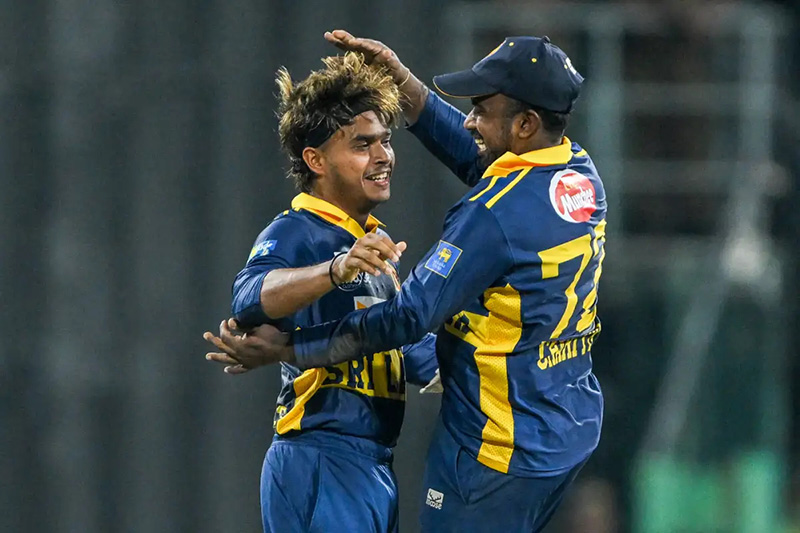
In a campaign where Sri Lanka have been forced to reshuffle their deck more often than they would have liked, Dunith Wellalage has found himself tossed the new ball during the Power Play and the young all-rounder has swum rather than sunk.
With Matheesha Pathirana, Wanindu Hasaranga and Eshan Malinga all ruled out by injury during the 20-nation showpiece, the former champions have had to plug gaps on the run. Wellalage, who may well have been watching from the sidelines had the cupboard been full, has instead been handed a front-row seat and he has made it count.
“It was a challenge bowling during the Power Plays and the key was for me to deny the batsmen boundaries,” Wellalage told reporters on the eve of Sri Lanka’s crunch Super Eight clash against New Zealand at the R. Premadasa Stadium. “I had to be clever with my lengths and when I did that the batters had to take a few chances. I relished the new challenge.”
Called upon to operate inside the first six overs against England when field restrictions were on, a phase usually reserved for the more experienced bowlers, the left-arm spinner rolled his arm over with maturity beyond his 23 years. He finished with three wickets, varying his pace and length like a seasoned campaigner.
With seven scalps from five outings, Wellalage is Sri Lanka’s second highest wicket-taker in the tournament behind Maheesh Theekshana’s eight. Not bad for a man who began the competition as a supporting act.
But it is not just with the ball that the former Under-19 captain has been asked to come forward. Sri Lanka’s think tank has nudged him up the batting order, promoting him from his usual berth at seven or eight, a move that has drawn praise from Batting Coach Vikram Rathour.
“I usually bat at number seven or eight, but I have been told to be ready to go up at number five if the situation arises,” Wellalage explained. “My role is to get some quick runs. The coaches have been very supportive and I enjoy the challenge.”
It is a role that demands clear thinking and brave stroke-play, the art of finding gaps rather than swinging blindly for the ropes. In a side that has at times been guilty of losing wickets in clusters, Wellalage’s calm head has offered stability.
Wednesday’s contest in Colombo is a must-win for Sri Lanka, who were handed a sobering 51-run defeat by England in their Super Eight opener. Another slip and the equation becomes steep; win, and the semi-final dream remains alive.
“We have got to now win both these games,” Wellalage said. “We have played New Zealand a lot in recent years and we know that we can beat them in these conditions. We are still in with a chance to make it to the semis and winning tomorrow will be important.”
Sri Lanka’s struggles in global tournaments since lifting the T20 crown in 2014 have been well documented. They have had to navigate qualifying routes and even missed out on the 2024 Champions Trophy, the first Men’s ICC event they failed to feature in since making their World Cup debut in 1975.
Yet Wellalage believes the tide is slowly turning.
“We know how important a home World Cup is. The fans have turned up in numbers and we have always believed that we can make it to the semi-finals,” he said. “The last two games haven’t gone to our plan but we are looking forward to the must-win clash tomorrow.”
Sri Lanka boast a healthy record at the RPS, where the surface often demands application over audacity. It is not a venue for reckless slogging but for bowlers who hit their straps and batters willing to graft before they unfurl.
“We have a good record at this ground and our winning percentage here has been good. All players are looking forward to doing well tomorrow,” Wellalage added.
by Rex Clementine
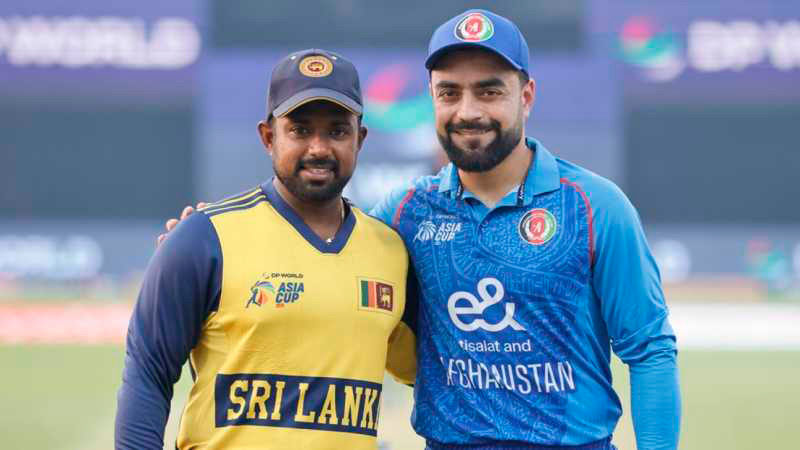
Afghanistan will host Sri Lanka for the first time in March for a multi-format white-ball series, with three ODIs and three T20Is to be played in the UAE from March 13 to 25.
The T20I leg of the tour will be played in Sharjah on March 13, 15 and 17. The ODI leg will be played in Dubai on March 20, 22 and 25.
The T20I series will start just five days after the T20 World Cup ends on March 8. The ODI series will end just one day before both the IPL and PSL get underway on March 26. Players from both countries – Dasun Shanaka, Rashid Khan, Kusal Perera and Noor Ahmad, among others – are in various squads across the two franchise competitions.
This will be only the second bilateral T20I series between the two teams. The first time was in February 2024.
In ODIs, this will be the fourth bilateral series between Afghanistan and Sri Lanka after previous meetings in 2022, 2023 and 2024. (Cricinfo)

Kanilka Anthony (5/66) and Dinal Fernando bowled the bulk of the overs and shared eight wickets between them as Trinity restricted S. Thomas’ to 189 runs on day one of the Ranil Abeynayake Memorial Trophy cricket encounter at the BRC ground on Tuesday.
Trinity are the hosts of this match which is also a Division I Tier ‘A’ tournament encounter.
With the Anthony-Fernando pair threatening to bundle out the visitors for a low score, number nine batsman Shanil Perera dropped anchor with an unbeaten 37 for them to post their eventual total.
In reply,Trinity were 54 for one wicket at close.
Batting first Jayden Amaraweera and Aaron Kodithuwakku put on a stand of 85 runs for the second wicket but rest of the batsmen failed to capitalize on the patiently put on base.
The Thomians got off to a bad start after open bat Yevan Gunathilake was out for five runs with just eight runs on the board . But there were no further wickets in the morning as the second wicket pair batted for 35 overs together.
Amaraweera made 50 in 115 balls and Aaron’s 72 came in 181 balls.
Scores:
S. Thomas’ 189 all out in 77.4 overs
(Aaron Kodituwakku 72, Jaden Amaraweera 50, Shanil Perera 37n.o.,
Kanika Anthony 5/66, Dinal Fernando 3/34)
Trinity 54 for 1 in 16 overs
(Pulisha Thilakarathne 25n.o.) (RF)

Fair weather except for a few showers in the Southern province and in Rathnapura and Monaragala districts after 2.00 p.m

X-Press Pearl disaster fuels global call to classify plastic pellets as hazardous

Foreign Minister Herath decries deadlock in global disarmament

CoPF orders officials to establish legal framework for Rs. 200 for estate workers daily attendance allowance

Colombo drives nearly half of Lanka’s TB cases: Officials

Fonseka clears Rajapaksas of committing war crimes he himself once accused them of

‘Dates have the highest sugar content to fight Coronavirus’

Sunday Island 27 December – Headlines

#SundayIsland 17th December – Headlines

Sunday Island – 28th March

Sunday Island Headlines – 21 March

Sunday Island – 21st February – Headlines
-

 Features4 days ago
Why does the state threaten Its people with yet another anti-terror law?
-
 Features4 days ago
Reconciliation, Mood of the Nation and the NPP Government
-

 Features4 days ago
Victor Melder turns 90: Railwayman and bibliophile extraordinary
-

 Features3 days ago
LOVEABLE BUT LETHAL: When four-legged stars remind us of a silent killer
-
 Features4 days ago
Victor, the Friend of the Foreign Press
-
 Latest News5 days ago
New Zealand meet familiar opponents Pakistan at spin-friendly Premadasa
-

 Latest News5 days ago
Tariffs ruling is major blow to Trump’s second-term agenda
-

 Latest News5 days ago
ECB push back at Pakistan ‘shadow-ban’ reports ahead of Hundred auction