
Opinion
Just the first step …

by Geewananda Gunawardana
The last election was a momentous landmark in Sri Lanka’s history. It is an important first step in the right direction. Political analysts and historians will dissect the results for years to come. The two-toned map that was flashed all over media, raises major questions that are relevant in taking the next step: what is the reason for such a marked difference in opinions about the direction the country should take? Are the voters well informed?
What is the extent of the participation in the democratic process? We may not have definitive answers until the academics start authoring their theses in years to come. This essay suggests that our collective experience over millennia that shaped our culture also plays a key role in shaping our political psyche. The proposition is that our entrenched reverence of the elite, forces us to overlook their dark side and leave our future in their hands.
Monarchs ruled us for millennia, and it ended with the Kandyan Nayak Dynasty. Then the European colonizers ruled us for 450 years. After independence, it was the elite that ruled the country. Pluralist democracy is a relatively new concept to us. The centuries old subservience to monarchy is engraved in our psyche so deeply that it has become a national trait to submit ourselves to the whims of the elite unconditionally. For example, having a certain family name is enough to address one with absurd honorifics when they have no redeeming qualities of their own.
The role of equally absurd caste system in politics and the Buddhist monastic order is another. The last election will go down in history as the first step, albeit a small one, towards wiping out the scourge of reverence to elitism from the face of this country. However, most of us fail to untangle the complex web tying elitism, corruption, and the all-important economy together.
If the dictionary defines elite as the richest, most powerful, best educated, or best trained group in a society, why should it carry such a negative connotation, is a fair question to ask. Seeing the electoral map that emerged on September 22nd, and its eerie similarity to another one that caused much discontent in the past, it becomes evident that, despite being the victims of elitism, most people have not found the answer to this question.
Worse yet, they do not realise that they are caught in a cyclic process that prevents them from finding the answer. Seeing things as they really are or knowing what impediments exist is an important part in the way to emancipation, be it political, social, or spiritual.
The term elite becomes a negative attribute under several conditions: if that select group of people came to wealth, power, or intellect by unjust, unethical means; if they are out of touch with the needs and concerns of the ordinary people; and if they start exerting their influence and authority over the others to deprive their basic rights. I may draw ire and criticism for writing about elitism when the country is facing a major economic crisis. I beg to differ; it may look complex, but all our problems began with our indifference to elitism for so long.
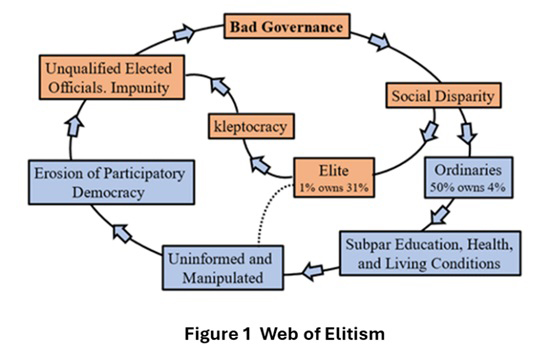 Based on most recent data (https://wid.world/country/sri-lanka/) the top one percent of the Sri Lankan population owns 31% of the nation’s wealth. That figure for the top 10% of the population is a staggering 64%. This is while the bottom 50% of the population’s wealth is a measly 4%. Once vibrant middle class has disappeared. The income disparity follows the same trend and, as a result, Sri Lanka ranks among the top countries with worst income and wealth distribution.
This is a major roadblock to economic development of a country and a cause for the breakdown of social structure. We need not look far; Sri Lanka is a prime example. While there is no ideal income or wealth distribution ratio, the impact of this inequality is out there for everyone to see. The few privileged dominate the political power and economy. Their superior purchasing power determines the cost of goods and services in the market.
Not having such resources, the underprivileged, a euphemism for the ordinary people, ends up with limited access to food, shelter, clothing, education, healthcare, and many other essentials. The heart wrenching irony is that those who break their back to keep the economy going – farmers, estate, and domestic workers, for example – end up at the bottom of that scale. Sadly, it is those destitute who lack access to information that become easy pray to schemers with dubious political agendas. We must reject attaching labels with potentially negative connotations to movements aimed at correcting such injustices or inequalities.
Unfortunately, our cultural and religious outlook stand in the way of realising the cause and effect of this vicious cycle. The truth is that there is nothing wrong with being rich. No one denies that, and in a just society, everyone has the right to aspire to be rich and powerful as well. Therein lies the multibillion question: Did our rich and powerful earn these rights in a just and equitable manner? Our cultural and religious thinking has compelled us to think that the rich got rich because they have accumulated good karma in previous lives.
The not so fortunate suffer due to their bad karma, and there is nothing they can do about it except for accumulating good karma and hope for better things in the next life. What a load of hog wash? We do not and should not oppose or envy the accumulation of wealth by ethical and legal means. That is necessary for the economic development of the country. The problem arises when most people do not have access to three square meals let alone access to the economy while the elite enjoy all manner of luxuries at the expense of the poor. Supermarket shelves may be laden with luxury goods, but if the ordinary citizen cannot afford them, that has nothing to do with karma. That is the result of bad governance. It is that injustice that we abhor, not someone’s wealth.
Instead, we should be asking if any of the following activities are involved in the rich and powerful gaining such privileges: bribery, extortion, cronyism, nepotism, parochialism, patronage, influence, graft, and embezzlement. If they did, there are three words to describe their actions: Corruption, Corruption, and Corruption. No explanations necessary, Sri Lanka’s elite is synonymous with corrupt, except for a handful of true entrepreneurs. No matter how good the policies are, without the eradication of corruption, there is no way to restore the economy or the social order. In Sri Lankan context, elite, corruption, bad governance, and the collapse of economy and social structure are the same. How they are interdependent and intertwined is illustrated in Figure 1. That is the reason that eradication of corruption has become the battle cry. But how well has the population understood that message? The answer lies in the electoral map that emerged on the 22nd. Not very well, is the answer, and that must be changed before taking the next step.
Fortunately, just enough people understood the facts. That is a small step in the right direction; however, note that 7.8 million thought otherwise. What is important is that without more people getting this message, or understanding the true cause of all our problems, there is no way to take the second step. As history attests, we could very well end up taking back that small step. That is why it must be the responsibility of all sensible citizens of the country to explain it clearly to their fellow citizens. But have no illusions, look at the figure again, the same evil forces will stand in their way.
At the last election, 3.5 million eligible voters stayed home; it is true that some of them have left the country. It is not that those who skipped voting are immune from the misery the country is going through, but they have lost faith in the political system. That erosion of participatory democracy is the goal of the elite, see the figure, and they have accomplished it.
Those who skipped voting must be convinced that exercising their hard-won democratic right is not only a civic duty, but that is also the only way to salvage the country. Statistics are not available yet, but if the women were compelled to think that they have no part in politics and stayed home, they must be made aware that economic or social development cannot be accomplished without the participation of half the population. Furthermore, they have a right to participate in the economy and benefit from it.
This is especially so when they and their young children are the worst affected by the crisis. Therefore, staying away is not the solution.
The other alarming fact emerging from that map is the geographic distribution of the populations that lacks this understanding. It is unfortunate, and scary at the same time, but that tells us that there are other organized forces in operation that either hide or downplay the evils of corruption and promote other agenda. These forces arise from sources that use racial, religious, caste, or ideological divisions for their own agenda. It must be made clear to those who fall for such tactics that the effect of corruption and bad governance transcend all other human-caused divisions. The limited access to food, shelter, clothing, education, healthcare, and other essentials effect people of all religions, races, casts, trades, and political affiliations. The only exception is the elite.
We must accept the fact that there is a group of people that simply do not want to hear the truth. Their worldview is limited to their own experience. They neither see it, nor admit it that change is a universal reality. Those are the ones resistant to change, unadaptable, obstinate, or inflexible; Hanamiti karaya, traditionally called, or dinosaurs in modern parlance. Recall those who predicted that doomsday would arrive following the election? That shows that there are academic elites as well, let us not forget how the fertilizer saga and the covid treatment unfolded. They must be left alone; in a changing, increasingly educated society, they will become irrelevant. Nobody wants to revive the feudal system or re-establish the Kandyan Nayak dynasty.
The subject of corruption has been discussed and dissected to death in all forums ranging from academic journals to all formats of media, to political rallies. Yet, the message has not reached a large segment of the population in a way they can relate to. Explaining it in terms accessible to all is everyone’s responsibility, and that may be the way to bridge that red and yellow divide of the map. In that respect, at the risk of being condemned to eternal damnation, I lay some of the blame on our religious leaders for not enlightening their followers.
All religions are based on morals and ethics; is there any religion that does not condemn bribery, extortion, cronyism, nepotism, parochialism, patronage, influence, graft, and embezzlement? If so, shouldn’t all religions condemn corruption instead of bestowing blessings on corrupt and unethical elite for personal gains? Shouldn’t the religious leaders teach us the significance of putting our lives in order, here and now, and that the path to liberation is not a bartering system?
The US president John F Kennedy’s words should resonate at this moment: “Ask not what your country can do for you – ask what you can do for your country.” Let us not forget that we have not done our part for the country; with our subservient psyche, we condoned corruption until we became destitute. We waited until we could not feed our children. Some of our most important responsibilities are to elect capable leaders who are qualified to do the job, give them enough room to maneuver, and hold them accountable.
If we are committed to elect our leaders based on their merits, as we demonstrated on the 21st, that sends a strong warning to all political parties: if you wish to win, assure that your nominees are qualified and are not tainted by corruption. Do not try to hide criminal and corrupt individuals behind the party list. There should be democracy and meritocracy within the political parties, they should not continue to be subservient to elitism.
We took the first step in the right direction, but it will take many such steps before we reach our goal, a prosperous and happy nation. Our country had been a kleptocracy, a society ruled by people who use their power to steal their country’s resources. And that is the source of all our problems. The challenge the nation faces is that the same people use all manner of trickery to deceive us and hide the truth. They are good at it; the election results demonstrate that two thirds of the voters did not understand the root cause of the problem. This essay may be an exercise in analyzing the root cause, but that does not serve the purpose unless the message is understood at the grassroot level, throughout the country. For the democracy to function, the voters must be well informed.
To put it bluntly, the message they need to hear is “do not let the corrupt politicians, old or new, left or right leaning, from the North or South, come back to power.” Let us look at it this way: how can the corrupt eradicate corruption? Or why should they? For example, during the last two years, when the nation was on starvation rations, the siphoning of nations wealth away from its coffers continued. Through endless political deals, they covered up their corrupt acts and protected criminals. Are those responsible actors, saviours or traitors? Is that the way to recovery? Do we want corrupt leaders to continue to exploit us? The ill effects of corruption cross party lines, race, religion, caste, and all other divisions.
We are all victims, except the elite. If corruption is eradicated, that will open the way for sensible economic policies to work. That in turn will allow us to solve other social problems; in fact, most problems will go away. It does not happen the other way around. We must end our servitude to the corrupt elite if we must escape from this vicious cycle. The mantra that will save us from the evil is “Do not elect or reelect corrupt politicians.” We should make it a practice to recite it a few times a day.


Agriculture, or the production of food, has framed the history of social development through millennia. Honed over centuries of tending to a land and its soils, a traditional understanding of a crop and its needs is what the phenomenon of agriculture produced. Sri Lanka provides a good example. Here, irrigated rice production demonstrates a sophisticated system of water collection and control. The rice farming landscape maintained a high biodiversity component, that had co-evolved with the management cycles of the land. The grain itself was not only a source of carbohydrate, but also a source of selected minerals and nutritional compounds, as seen in the variety and composition of the grain. At the last reckoning (1950), there were 500 named varieties, each with different, colour, shape and texture complexes, that were recorded. This diversity was the first victims to the industrialisation of agriculture. Today it is difficult to find more than 20 that remain within the farming communities. In traditional farming systems, farming demanded a knowledge of the environment. A farmer to be successful required an intimate knowledge of the land and the changes that seasonality brought to it. There was always the drive to produce more but productivity of the traditional system, was limited to the optimal biological energy. In terms of energy, it was always internal, the soil, farm livestock and the farmers’ energy to produce food. In Rice production, this system was recorded to have a yield of about 2000 kg per hectare around 1960. With the onset of agricultural development, focused on productivity, this level of yield was seen to be insufficient and an agricultural development programme that focused on crop intensification began. The changes began with the introduction of hybrids and artificial fertiliser. Under this approach, crop plants were bred to have smaller leaf and root biomass and the production was concentrated in harvestable biomass. One problem with this approach is that while it takes a smaller root mass to absorb the fertiliser efficiently, there are no other roots extending outwards, providing root exudates into the soil microbial community to keep the soil alive. The fossil based fertiliser are salts that are taken by the plant to create rapid growth. But such growth is at the expense of its natural defences, bringing about attacks by pests which then have to be controlled using pesticides. It is a downward spiral.
The gain in crop yield, using the industrial approach, is impressive; by 2025 it was at 4700 kgs. But there was a significant cost to attain this level of productivity. In terms of energy, roughly 6.4 MJ of energy is required to produce 1.0 kg of rice all of this energy is fossil based. This change, from traditional agriculture to industrial agriculture meant moving from having no need of fossil energy to provide 1MJ of food, to needing over 6.4 MJ of fossil energy to do the same with industrial agriculture. Further, the toxic nature of many of these inputs have been clearly demonstrated by the decline of the health and well-being of our farming population. Thus, if agricultural productivity keeps on depending on fossil inputs, the decline of public health will become a fact. But, the international agro-industrial complex defends their market by promoting the ‘safety’ of these toxins. Public statements questioning banning of proven toxic compounds claiming them to be ‘benign pesticides like glyphosate ‘suggesting, that they do not cause kidney disease and cancer’. Having been a personal participant in the battle to protect the health of our people by maintaining the ban on Glyphosate, I have witnessed the hypocrisy around the use and safety of such toxins in our agricultural environment, biologists claiming conservation goals, suddenly become cheerleaders for Glyphosate. The insensitivity and cruelty of such people becomes clear, when they state that they would see our farmers suffer and die, with poisoning today, because of a hypothetical possibility of a famine tomorrow. As a defender of such poison stated publicly, “If the hybrids and their chemicals disappear tomorrow, many more people would die of starvation than the number who die of poisoning now. Reality is a hard thing.” What a bitter, tragic, statement. In a more sensitive world, we should strive towards addressing the current tragedy and reducing the number of people dying today from agricultural toxins, while looking for alternatives that can help us maintain productivity without toxins into the future.
Then there is the reality of climate change. It was in 2015 at the Paris COP on biodiversity that the Sri Lankan position paper was presented stating that: “We are aware that the optimum operating temperature of chlorophyll is at 37 deg C. In a warming world where temperatures will soar well above that, food production will be severely impacted. We would request the IPCC to address responses to this phenomenon.”
Up till today, the agricultural establishment has carefully ignored this reality. We needed a strong programme of adaptation where crop seeds would be bred for heat resistance. Why is a heat wave so dangerous? Apart from the heat stress in human and animals, it could exceed the threshold for enzymatic activity. All of agriculture depends on the good growth of plants, all plants rely on their chlorophyll to grow and produce. Chlorophyll is a molecule that functions to an optimum at about 37degrees, above that their performance falls. In heat waves exceeding 39 degrees, plant productivity will be impacted and yields drop. A brutal spring heat wave in Australia, reduced farmers’ yields and demonstrated the oncoming danger. This reality is now with us and we still do not have heat resistance bred into the seeds.
To compound the ambient heat problem, landscape considerations in the current trend is to simplify the cropping area so that machines can work more efficiently. But this style of management just compounds the problem. In an industrial monoculture, all trees and shrubs in a cropping land are removed for efficiency of operation. To change the landscape in this manner is to remove all the cooling elements on it. A large tree, for instance produces the cooling equivalent of 9 room size air conditioners working non-stop, all day. A group of trees around a farm could make a difference to its level of productivity.
It has become obvious that the current approach to agriculture with its total dependency on fossil energy to provide food places us in a path of dangerous dependency, it is also evident that our traditional methods of production also have a limit in productivity. So how do we proceed? One way might be to adopt the approach of a successful neighbour; earlier this year the President of Viet Nam addressed the Sri Lankan Parliament where he stated the way that Viet Nam approached the challenges. They faced their development challenges with a philosophy of ‘Doi Moi’. Doi Moi means a new way of thinking and that the direction of growth ‘must stem from national realities’. Can we build a modern, scientific, agricultural system which is rooted in the reality of our traditions.? Can we wean our agricultural system away from fossil dependency? Can we adapt our agriculture to be resilient to the changing climate ? Can we build modern farmers who can interact with the environment and not just agricultural labourers dependent external input ?
by Dr. Ranil Senanayake
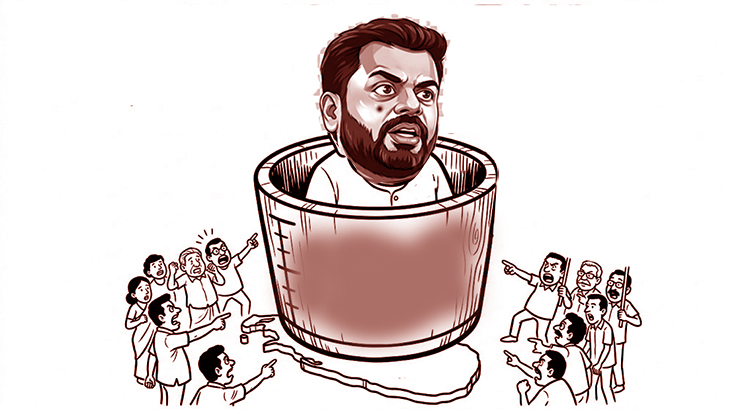
I was taken aback by the response of the well-known academic Uswatte-Aratchi (U-A) to my article “Achievements of the Hunduwa”, which appeared in The Island on 15 March. In his piece, titled “Pot calling the kettle black?” (The Island, 23 April) U-A accuses me of belittling Sri Lanka in just the same way President Anura Kumara Dissanayake (AKD) did with his reference to Sri Lanka as a hunduwa. Being an academic of repute, U-A’s comments cannot be ignored and before I proceed further to explain, let me state that I am very sorry if what I stated appeared in any way to be derogatory; my intentions were otherwise.
U-A states, “Most sensible people, even uneducated, judge that the volume of a little drop (of whatever) is smaller than that of a hunduwa; so is weight. When the learned doctor emphatically maintains ‘we are not a hunduwa’ but ‘a little drop in the ocean’, is the pot calling the kettle black or worse?” He implies that my ‘insult’ is worse. Whilst conceding that a drop is smaller than a hunduwa, what baffles me is how an academic overlooked the fact that comparisons should be made based on context. Whereas AKD used hunduwa in the parliament to belittle the country, I used the term ‘little drop’ to highlight our achievements, which are disproportionate to our size. In contrast, AKD used hunduwa to trifle with the country.
“Surely, this little drop in the Indian ocean performed well beyond its size to have gained international recognition way back in history,” I said in my article. This cannot in any way be considered derogatory. In fact, what U-A stated in his article about the achievements of countries, either smaller or with populations smaller than ours, only supports my view that there is no correlation between a country’s size and its achievements.
U-A casts doubt on the assertion that Sri Lanka was once the ‘Granary of the East’; he cites instances of drought and famine. There may have been bad periods, as we are at the mercy of nature, but it does not negate the fact that there were periods of plenty too. Our rulers in days of yore did everything possible to feed the populace by building tanks and extensive irrigation systems. In addition to major works, there were networks of small projects, Uva being referred to as ‘Wellassa’; the land of one hundred thousand paddy fields fed by small tanks. What has the present government done to ease farmers’ burden? Absolutely nothing! Whilst farmers are struggling to eke out a living, rice millers are importing super-luxury vehicles and even helicopters!
I agree with U-A that unfortunately the contribution of the ordinary people is not well recorded in history. This is a universal problem, not limited to Sri Lanka. When one watches some of Prof. Raj Somadeva’s programmes, it becomes clear how ordinary people helped complete gigantic projects. Although there are many documentaries on how the pyramids were built, no one seems interested in exploring how Great Stupas in Anuradhapura were built with millions of bricks.
AKD is doing just the opposite of what he preached whilst in Opposition and does not seem to have any sense of shame. His hunduwa reference, possibly, makes him the only President to have demeaned the country.
by Dr Upul Wijayawardhana
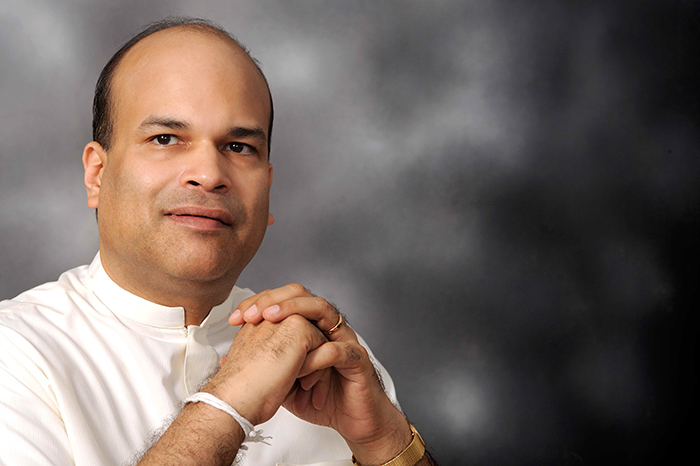
Recent statements from Washington show how global politics is being increasingly framed along civilisational terms. The U.S. Secretary of State Marco Rubio has referred to the idea of a shared “Western civilisation,” describing the U.S. and Europe as bound by common history, cultural heritage, and institutional traditions. At the same time, U.S. President Donald Trump has amplified comments about countries such as India, China, and Iran in the context of migration and geopolitical competition that reinforce a tendency to interpret global politics in civilisational terms. Taken together, these statements point to a broader shift: global affairs are being interpreted not only through the language of power and interest, but also through civilisational identities.
The appeal of such framing is understandable. It offers a sense of clarity in an era of rapid technological disruption, demographic change, and geopolitical uncertainty. But apparent clarity is not the same as analytical accuracy. Moreover, it is not an entirely new framing either. As early as the 1990s, political scientist Samuel Huntington had argued that global politics would evolve into a “clash of civilisations,” where cultural and religious identities would become the principal fault lines of international relations.
Civilisational explanations can obscure more than they reveal, particularly when they imply that cultural cohesion, rather than institutional adaptability, is the primary source of national strength. A historical record of the modem West suggests otherwise.
A look at history
Much of the West’s post-Cold War dynamism has rested not on homogeneity, but on openness — to talent, ideas, capital, and global competitive pressures. Its advantage has been institutional: the capacity to absorb diversity and convert it into innovation within rules-based systems.
Nowhere is this more evident than in today’s innovation economy. AI, in particular, has become the defining frontier of global competition, shaped by deeply international talent flows and research ecosystems. Companies such as Microsoft, Open Al, and NVIDIA exemplify systems in which breakthroughs depend on globally sourced expertise, cross-border collaboration, and the ability to attract the most capable minds regardless of origin.
The COVID-19 pandemic underscored this complementary reality: innovation now operates through globally distributed production systems. Rapid vaccine development and distribution, by firms such as Modema and AstraZeneca, depended on international research networks and global manufacturing ecosystems. In the case of AstraZeneca, large-scale production through partnerships such as that with the Serum Institute of India illustrated how innovation and industrial capacity now operate across borders.
This is not an argument against immigration control. Immigration must be governed effectively, and civic norms must be upheld. But managing diversity is fundamentally different from retreating from it.
In an era of intensifying geopolitical competition, openness remains a critical strategic asset. The West’s advantage lies not only in military alliances or economic scale, but in institutional resilience and its capacity to attract, integrate, and retain talent. Civilisational framing, by contrast, risks misdiagnosing this advantage —privileging identity over capability and boundaries over performance. Demographic realities reinforce this point. Many advanced economies face ageing populations. In this context, immigration is not simply a cultural or political issue, but an economic necessity.
Without sustained inflows of sldlled labour and human capital, growth slows, fiscal pressures increase, and innovation ecosystems weaken.
Openness as an advantage
The defining challenges of the 21st century —including AI governance and climate change —further highlight the limits of civilisational thinking. These are problems that cannot be addressed within cultural silos. Against this backdrop, framing global politics in terms of civilisational hierarchy carries risks. It encourages a narrowing of identity at precisely the moment when cooperation and adaptability are essential.
The question, therefore, is not whether identity matters. It dearly does. Societies require shared norms, institutional trust, and continuity. The more important question is whether democracies can manage change without losing confidence in the openness that has sustained their development. The strength of the West has historically rested on its ability to combine stability with adaptation — to absorb new influences while preserving core principles such as the rule of law, individual liberty, and accountable governance.
Therefore, the policy challenge ahead is not to retreat into notions of cultural purity, but to govern openness with clarity and purpose. This requires strengthening integration frameworks and reinforcing institutional trust. It also requires recognising that engagement with other civilisational spaces is not a concession, but a necessity in a globally interconnected world.
In a world of intensifying geopolitical rivalry, it may be tempting to define strength in narrower terms. But doing so risks undertnining one of the West’s most important strategic assets. Openness — disciplined, governed, and anchored in strong institutions — is not a vulnerability. It is a source of sustained advantage.
(Milinda Moragoda –Former Sri Lankan Cabinet Minister, diplomat and the Founder of the Pathfinder Foundation, a strategic affairs think tank. The Hindu – 08, May 2026)
By Milinda Moragoda

Jackson Pollock painting sells for record $181m at auction

New ownership group takes over Colombo Kaps in LPL

Thailand to slash tourist visa-free stays

President inquires into the well-being of soldiers at the Ragama “Ranaviru Sevana”

Rizwan and Agha resist but Bangladesh on course for 2-0 sweep

ICC deputy chair has ‘cordial and constructive’ meetings with new SLC committee

‘Dates have the highest sugar content to fight Coronavirus’

Sunday Island 27 December – Headlines

#SundayIsland 17th December – Headlines

Sunday Island – 28th March

Sunday Island Headlines – 21 March

Sunday Island – 21st February – Headlines
-

 Features3 days ago
Sri Lankan Airlines Airbus Scandal and the Death of Kapila Chandrasena and my Brother Rajeewa
-
 News7 days ago
Ex-SriLankan CEO’s death: Controversy surrounds execution of bail bond
-
 News4 days ago
Lanka’s eligibility to draw next IMF tranche of USD 700 mn hinges on ‘restoration of cost-recovery pricing for electricity and fuel’
-

 News3 days ago
Kapila Chandrasena case: GN phone records under court scrutiny
-
 Midweek Review7 days ago
A victory that can never be forgotten
-
 News3 days ago
Rupee slide rekindles 2022 crisis fears as inflation risks mount
-
 Opinion6 days ago
Electricity tariffs have skyrocketed: Can further increases be prevented?
-
 Features5 days ago
Mysterious Death of United Nations Secretary General Hammarskjöld