
News
Julie Chung: US-Sri Lanka relations have reached unprecedented highs

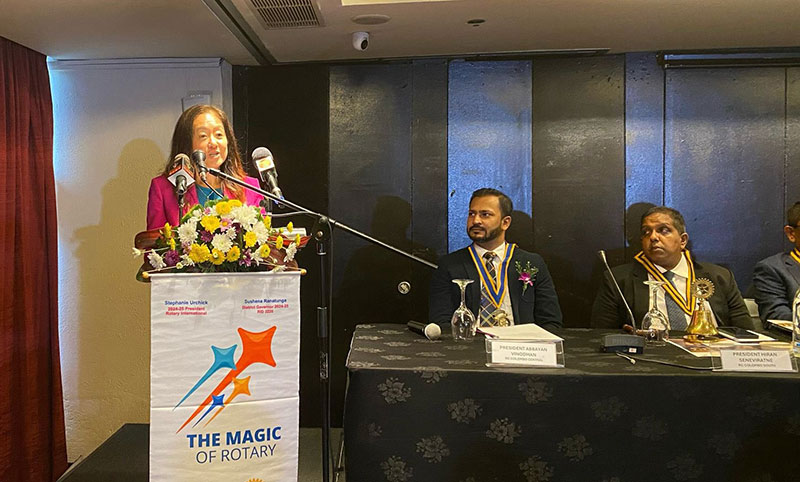
US Ambassador to Sri Lanka Julie Chung said the US-Lanka relationships have reached unprecedented highs and are further growing with her country’s continued commitment to Sri Lanka’s security and prosperity, particularly in the Indo-Pacific region.
Addressing the members of Rotary Clubs at a special event at the Ivy Room of the Cinnamon Grand Colombo on Wednesday, the Ambassador said: “Our bilateral relationship is strong and enduring. The United States and Sri Lanka share a century-long economic partnership, and as Sri Lanka strengthens its economy, the potential for American companies in industries like energy, infrastructure, agribusiness, technology, and tourism is immense.”
The event, which brought together business leaders and community figures, provided Ambassador Chung with an opportunity to reflect on the strong and enduring relationship between the two countries.
In her remarks, Ambassador Chung highlighted the rich history of bilateral relations between the two nations, dating back to the establishment of diplomatic ties in 1948. She emphasized the shared values, mutual respect, and commitment to democratic principles that have shaped the partnership.
“We have worked together across various fields including economic development, education, and national security, and our cooperation has reached far beyond government-to-government relations to enrich the lives of people in both countries,” Chung said. “Our partnership is truly wide-ranging, and it’s wonderful to see the Rotary Club’s role in fostering the people-to-people connections.”
Ambassador Chung praised the longstanding US programmes in Sri Lanka, such as the Fulbright Commission, which has been active for over 70 years, and the return of the US Peace Corps volunteers in 2023, which have strengthened the educational and cultural bonds between the two nations. She also emphasized the significant role of Rotary in bridging the gap between the US and Sri Lanka, with shared values of service, leadership, and community development.
“Rotary’s work in promoting peace, countering diseases, and fostering entrepreneurship aligns closely with the shared goals of both the US and Sri Lanka,” Chung remarked. “Your efforts in projects such as Little Hearts, Healing Minds Matter, and Ability Plus are making a real difference across Sri Lanka and will continue to yield positive outcomes as the country recovers economically.”
The Ambassador also underscored the importance of economic growth in strengthening the relationship between the two countries. She noted that a stable and prosperous economy creates opportunities for investment, job creation, and innovation. Ambassador Chung highlighted President Trump’s vision for trade, emphasising that the US is committed to creating a favourable investment climate not only for American businesses but also for Sri Lankan companies.
“Our bilateral relationship is strong and enduring,” said Chung. “The United States and Sri Lanka share a century-long economic partnership, and as Sri Lanka strengthens its economy, the potential for American companies in industries like energy, infrastructure, agribusiness, technology, and tourism is immense.”
Ambassador Chung also touched on the United States’ continued commitment to Sri Lanka’s security and prosperity, particularly in the Indo-Pacific region. She mentioned key initiatives such as US Navy port calls, the establishment of the Sri Lankan Marine Corps, and the donation of a King Air maritime patrol aircraft, which have significantly enhanced Sri Lanka’s maritime security and surveillance capabilities.
“The United States is proud to be Sri Lanka’s largest export market, and we are working together to boost trade and security cooperation across the Indo-Pacific,” she said.
The Ambassador concluded by expressing optimism for the future of US-Sri Lanka relations, emphasizing that both nations’ shared commitment to democratic principles and economic progress will continue to drive cooperation. She thanked the Rotary Club members for their dedication to service and their role in strengthening the bonds between the two nations.
“Our partnership, built on people, progress, and partnership, will thrive as we work together to build a safer, stronger, and more prosperous future for both of our nations,” Ambassador Chung concluded. “I look forward to many more years of collaboration and success.”


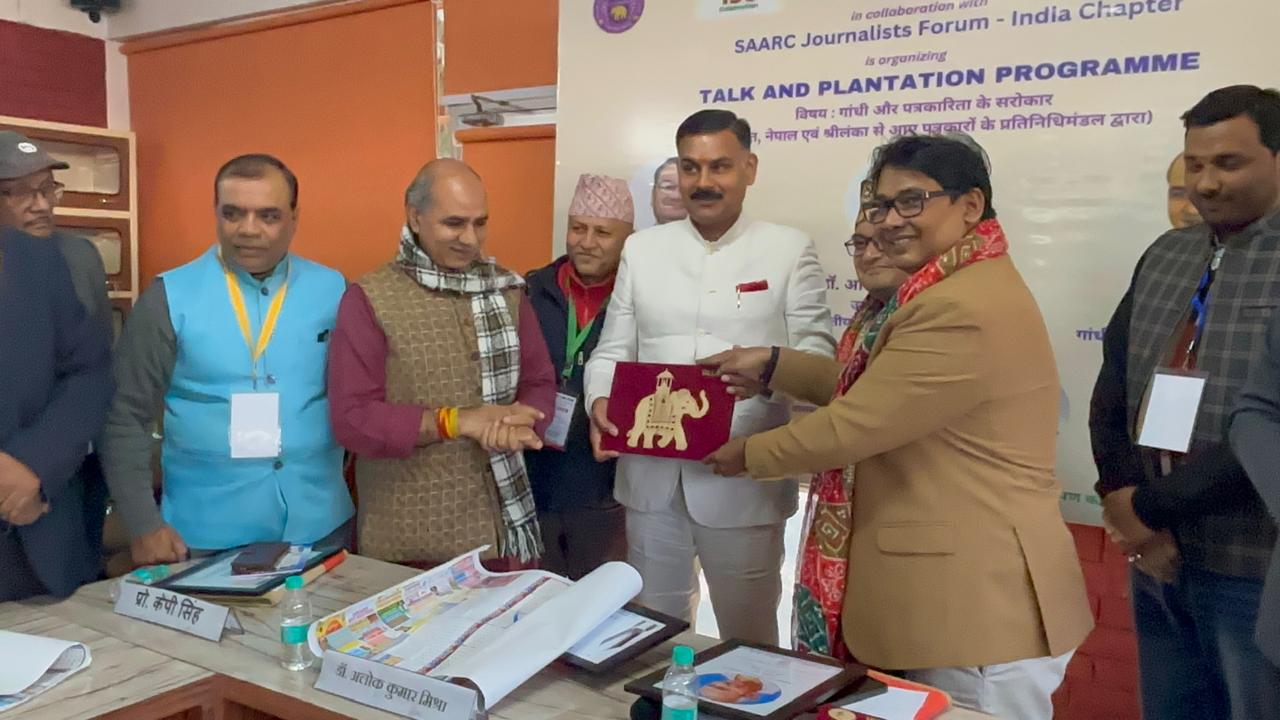
Members of the South Asian Journalists Forum have gathered at the University of New Delhi for a two day conference themed ‘Peace and Co-operation’.
Journalists from Bangladesh, Nepal, Sri Lanka and India are attending the conference hosted by the University of Delhi in collaboration with the India Chapter of SJF, and will deliberate on how the media can act as a catalyst for regional stability and mutual coexsistence.
A tree plantation campaign was also held at the Ghandi Bhawan premises of the University to mark the event and symbolize growing regional ties.
The Sri Lanka delegation is led by President of SJF’s Sri Lanka Chapter Rahul Samantha Hettiarachchi.

The Governor of the of Gujarat, Acharya Devvrat, along with the Deputy Chief Minister of Gujarat, Harsh Sanghvi, met with Prime Minister Dr. Harini Amarasuriya on Thursdy [February 05] at the Parliamentary Complex to discuss the arrangements related to the exposition of the Devnimori Sacred Relics of Lord Buddha, which have been brought to Sri Lanka under the patronage of Indian Prime Minister Narendra Modi and the Government of India.
These sacred relics of Lord Buddha were discovered during archaeological excavations conducted in the 1960s at the historic Devnimori site in Gujarat, the home state of Indian Prime Minister Narendra Modi. Until now, these relics had never been taken outside India. As a result of discussions held between President Anura Kumara Dissanayake and Indian Prime Minister Narendra Modi during his recent visit to Sri Lanka, the people of Sri Lanka have been granted this rare opportunity to venerate these sacred relics.
The exposition of the relics is being held for a period of seven days, from February 05 to February 11, at the Gangaramaya Temple in Hunupitiya, Colombo. Discussions were held between both parties regarding the arrangements related to this event.
The discussion was attended by Samar Nanda, Joint Secretary of the Indian Ministry of Culture; Dr. Satyanjal Pandey, Acting High Commissioner of India in Sri Lanka; Abhijit Halder, Director General of the International Buddhist Confederation; along with several others.
[Prime Minister’s Media Division]

The Indian Naval Ship (INS) GHARIAL made a port call in Colombo for operational turnarounds on 04 Feb 26. The Sri Lanka Navy welcomed the visiting ship in compliance with naval traditions.
Commanded by Commander Gaurav Tewari, INS GHARIAL is a vessel with a length of 124.8 meters.
During this visit, ten (10) Bailey Bridges, brought by ship, through the coordination of the High Commission of India in Sri Lanka, will be handed over to the Disaster Management Center. These bridges will provide temporary transportation links while bridges damaged across the island by adverse weather conditions are repaired.
The crew’s itinerary features scheduled goodwill activities with the Sri Lanka Navy, alongside visits to several tourist attractions across the island.

Sooryavanshi 175 makes India six-time Under-19 world champions

Mighty India meet multicultural USA in polarised World Cup

At least 31 killed, dozens wounded in Islamabad mosque blast

The SSC finally steps out of the sunshine and into the floodlights

SAARC journalists meet in New Delhi

Governor of Gujarat met with Sri Lanka PM to discuss exposition of Devnimori Relics

‘Dates have the highest sugar content to fight Coronavirus’

Sunday Island 27 December – Headlines

#SundayIsland 17th December – Headlines

Sunday Island – 28th March

Sunday Island Headlines – 21 March

Sunday Island – 21st February – Headlines
-

 Business7 days ago
Hayleys Mobility ushering in a new era of premium sustainable mobility
-

 Business4 days ago
SLIM-Kantar People’s Awards 2026 to recognise Sri Lanka’s most trusted brands and personalities
-
 Business7 days ago
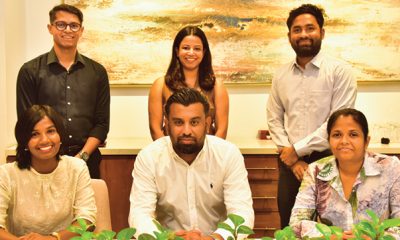
Advice Lab unveils new 13,000+ sqft office, marking major expansion in financial services BPO to Australia
-
 Business7 days ago
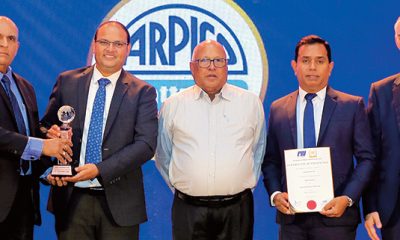
Arpico NextGen Mattress gains recognition for innovation
-

 Business6 days ago
Altair issues over 100+ title deeds post ownership change
-

 Editorial7 days ago
Govt. provoking TUs
-

 Business6 days ago
Sri Lanka opens first country pavilion at London exhibition
-

 Business5 days ago
All set for Global Synergy Awards 2026 at Waters Edge