
News
Jugglery alleged in Constitution making process: SJB, Gevindu make strong case against jumbo Cabinet


By Shamindra Ferdinando
Opposition and Samagi Jana Balavegaya Leader, Sajith Premadasa, says that the current economic crisis shouldn’t be exploited to form a jumbo Cabinet, under any circumstances.
“The national economy is in such a pathetic state that those struggling to make ends meet shouldn’t be burdened further,” the Colombo district MP said. The growing opposition to further expansion of the Cabinet-of-Ministers is quite understandable, the former UNP Deputy Leader said, urging the government to drop the relevant provisions.
The Opposition Leader said so when The Island sought his opinion on the provisions, pertaining to the formation of a National Government, in terms of the proposed 22 Amendment to the Constitution. Declaring his party has absolutely no intention of joining the government, lawmaker Premadasa warned the public would revolt if the limits on the number of Cabinet Ministers and Deputies/State Ministers were violated.
The SJB leader emphasized that whoever is in power should adhere to the limit of 30 Cabinet Ministers and 40 non-Cabinet rankers.
Lawmaker Premadasa said that political stability and economic revival couldn’t be achieved by expanding the Cabinet-of-Ministers.
SLPP National List MP Gevindu Cumaratunga last week strongly condemned, in Parliament, what he called controversial provisions pertaining to the National Government. Cumaratunga told The Island that he took up the issue at a recent party leaders’ meeting. The provision for Parliament to decide the number of ministers and Deputies/State Ministers would be abused, the leader of civil society group Yuthukama said.
Referring to the inclusion of provisions pertaining to a National Government, in the 19th Amendment that had been endorsed in 2015, lawmaker Cumaratunga said that the proposed 22 Amendment interpreted National Government as an administration formed by the recognized political party or the independent group which obtains the highest number of seats in Parliament, together with the other recognized political parties or the independent groups.
The first time entrant to Parliament said that this should be examined, taking into consideration the strength of political parties represented in Parliament. Of the 225 MPs in Parliament, a total of 199 were elected: the SLPP (145/17 National List seats) and SJB (54/07 National List seats)) ticket. The third largest grouping in Parliament belonged to the Illankai Thamil Arasu Kadchi (ITAK/01 National List seat), the MP pointed out. The powers that be owed the public an explanation how the SLPP backed President Ranil Wickmesinghe intended to form the National Government without having a formal agreement with the second largest party in Parliament.
MP Cumaratunga recalled how the then UPFA MP Vasudeva Nanayakkara, at the Committee Stage of the 19th Amendment, asked the then Justice Minister Wijeyadasa Rajapaksa, PC, for an interpretation of national government and was told national government meant formation of an administration by the party securing the largest block of seats and the party with the second highest number of seats. Vasudeva Nanayakkara declared that they wouldn’t support the 19th Amendment unless the government provided an interpretation of the National Government.
However, what had been put to the Speaker for approval was very much different from the assurance given in Parliament, MP Cumaratunga said. The MP pointed out that the difference was instead of the union of party with the highest number of seats and the second highest being the national government, the gazette referred to the party with the highest number of seats and other parties in Parliament as the national government. The section in question is 46 of the 19th Amendment.
Lawmaker Cumaratunga said that the 2015 wrongdoing had been repeated.
Parliament website posted the 19th Amendment with the original clause given below: “If at the conclusion of the General Election held immediately after the coming into force of this Article, the recognized political party or the independent group obtaining the highest and the recognized political party or the independent group obtaining the second highest number of seats in Parliament agree to form a Government of national unity, then, notwithstanding the provisions of paragraph (1), the number of Ministers of the Cabinet of Ministers and the number of Ministers outside of the Cabinet of Ministers and the Deputy Ministers, may be increased up to forty-five and fifty-five, respectively, if Parliament agrees to such increase, within two weeks of the first sitting of such Parliament.”
MP Cumaratunga said that finally the limits had been done away with for obvious reasons. Responding to another query, the Yuthukama leader said that the change of provisions, pertaining to the National Government, surreptitiously could be compared with the jugglery in manipulating the relevant Parliamentary Select Committee’s recommendations as regards the National List appointees.


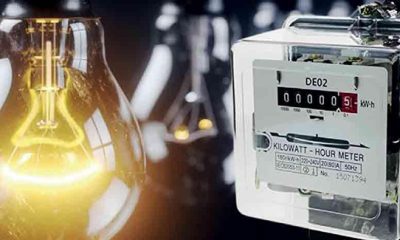


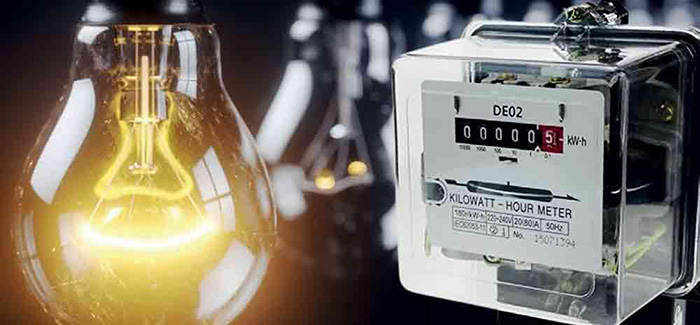
The Public Utilities Commission of Sri Lanka (PUCSL) and the Treasury are facing heightened scrutiny as the Ceylon Electricity Board (CEB) presses for an 11.5 percent electricity tariff increase, a move closely tied to IMF-driven state-owned enterprise (SOE) reforms aimed at curbing losses and easing fiscal pressure on the State.
The proposed hike comes as the Treasury intensifies efforts to reduce the budgetary burden of loss-making SOEs under Sri Lanka’s IMF programme, which places strong emphasis on cost-reflective pricing, improved governance and the elimination of quasi-fiscal deficits.
Power sector sources said the PUCSL has completed its technical evaluation of the CEB proposal and is expected to announce its determination shortly.
The decision is being closely watched not only as a test of regulatory independence, but also as an indicator of how Treasury-backed fiscal discipline is being enforced through independent regulators.Under the IMF agreement, Sri Lanka has committed to restructuring key SOEs, such as, the CEB to prevent recurring losses from spilling over into public finances.
Treasury officials have repeatedly warned that continued operational losses at the utility could ultimately require state intervention, undermining fiscal consolidation targets agreed with the IMF.
The CEB has justified the proposed 11.5 percent hike by citing high generation costs, foreign currency loan repayments and accumulated legacy losses, arguing that further tariff adjustments are necessary to stabilise finances and avoid a return to Treasury support.
However, critics argue that IMF-aligned reforms should not translate into routine tariff hikes without meaningful improvements in efficiency, cost controls and governance within the utility.
Trade unions and consumer groups have urged the PUCSL to resist pressure from both the CEB and fiscal authorities to simply pass costs on to consumers.
They also note that improved hydropower availability should reduce dependence on expensive thermal generation, easing cost pressures and giving the regulator room to moderate any tariff increase.
Energy analysts say the PUCSL’s ruling will reflect how effectively the Treasury’s fiscal objectives are being balanced against the regulator’s statutory duty to protect consumers, warning that over-reliance on tariff increases could erode public support for IMF-backed reforms.
Business chambers have cautioned that another electricity price hike could weaken industrial competitiveness and slow economic recovery, particularly in export-oriented and energy-intensive sectors already grappling with elevated costs.
Electricity tariffs remain one of the most politically sensitive aspects of IMF-linked restructuring, with previous hikes triggering widespread public discontent and raising concerns over social impact.
The PUCSL is expected to outline the basis of its decision, including whether the proposed 11.5 percent increase will be approved in full, scaled down, or restructured through slab-based mechanisms to cushion low-income households.
An energy expert stressed that Sri Lanka navigates IMF-mandated fiscal and SOE reforms, the forthcoming ruling is widely seen as a defining moment—testing not only the independence of the regulator, but also the Treasury’s ability to pursue reform without deepening the burden on consumers.
By Ifham Nizam ✍️

Massive waste, corruption, irregularities and mismanagement at laboratories of the country’s premier hospital, revealed by the National Audit Office (NAO), couldn’t be suppressed by sacking or accusing him of issuing death threats to Health Secretary Dr. Anil Jasinghe, recently sacked Director of the National Hospital of Sri Lanka (NHSL) Dr. Rukshan Bellana told The Island.
Dr. Bellana said so responding to Dr. Jasinghe’s request for police protection claiming that he (Bellana) was directly responsible for threatening him.
The NPP government owed an explanation without further delay as the queries raised by NAO pertained to Rs 900 mn fraud/loss caused as a result of procurement of chemical reagents for the 2022 to 2024 period remained unanswered, Dr. Bellana said, pointing out that NAO raised the issue in June last year.
Having accused all other political parties of corruption at all levels, the NPP couldn’t under any circumstances remain mum on NAO’s audit query, DR. Bellana said, claiming that he heard of attempts by certain interested parties to settle the matter outside legal procedures.
The former GMOA official said that the NPP’s reputation was at stake. Perhaps President Anura Kumara Dissanayake should look into this matter and ensure proper investigation. Dr. Bellana alleged that those who had been implicated in the NAO inquiry were making an attempt to depict procurement of shelf time expired chemical reagents as a minor matter.
By Shamindra Ferdinando ✍️

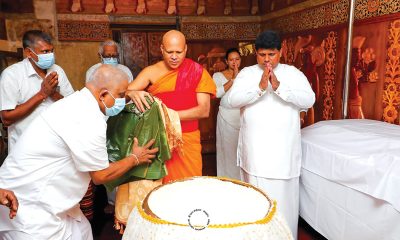
Continuing a centuries-old tradition, dating back to the era of ancient kings, the annual ‘Aluth Sahal Mangalya’—the offering of alms prepared from the maiden harvest of rice—was ceremonially observed at the Sri Dalada Maligawa on Duruthu Full Moon Poya Day, 03rd January.
The religious observances were conducted with the participation of Ven. Thibbatuwawe Sri Medhankara Thera, a member of the Thevava (officiating clergy) of the Sacred Tooth Relic, and Diyawadana Nilame Pradeep Nilanga Dela.
In keeping with long-established customs, paddy harvested from lands belonging to the Sri Dalada Maligawa was brought from the Atuwa (granary) in Pallekele. The newly harvested rice was subsequently prepared and offered as Buddha Pooja to the Sacred Tooth Relic.
Text and Pic by SK Samarnayake ✍️

Showers will occur at times in the Eastern and Uva provinces and in Nuwara-Eliya, Matale, Polonnaruwa, and Mullaittivu districts

Curran, bowlers lead Desert Vipers to maiden ILT20 title

PUCSL and Treasury under IMF spotlight as CEB seeks 11.5% power tariff hike

Bellana says Rs 900 mn fraud at NHSL cannot be suppressed by moving CID against him

First harvest of rice offered to Dalada Maligawa

Grade 6 module controversy: SLPP asks PM to resign

‘Dates have the highest sugar content to fight Coronavirus’

Sunday Island 27 December – Headlines

#SundayIsland 17th December – Headlines

Sunday Island – 28th March

Sunday Island Headlines – 21 March

Sunday Island – 21st February – Headlines
-

 News2 days ago
Health Minister sends letter of demand for one billion rupees in damages
-
 News5 days ago
Leading the Nation’s Connectivity Recovery Amid Unprecedented Challenges
-

 Features6 days ago
It’s all over for Maxi Rozairo
-

 Opinion4 days ago
Remembering Douglas Devananda on New Year’s Day 2026
-
 News6 days ago
Dr. Bellana: “I was removed as NHSL Deputy Director for exposing Rs. 900 mn fraud”
-
 News5 days ago
Dons on warpath over alleged undue interference in university governance
-

 Features6 days ago
Rebuilding Sri Lanka Through Inclusive Governance
-

 Business5 days ago
Sri Lanka Tourism surpasses historic milestone with record tourist arrivals in 2025