
Latest News
Josh Hoey breaks world 800m short track record with 1:42.50 in Boston


Josh Hoey had said he was excited to take a shot at the world 800m short track record in Boston and he was right on target as he clocked 1:42.50* to improve the 28-year-old mark at the New Balance Indoor Grand Prix – the first World Athletics Indoor Tour Gold meeting of the season – on Saturday (24).
Seven weeks on from setting a world 600m short track best, also in Boston, the US world indoor champion made more history as he took 0.17 off the world record of 1:42.67 set by Wilson Kipketer at the World Indoor Championships in Paris in 1997.
Hoey went into the race as the second-fastest indoor 800m runner of all time thanks to the North American record of 1:43.24 he ran at the US Indoor Championships in New York last year. But paced by his brother Jaxson, he leapt to the top of that all-time list, winning the race by more than two seconds.
Jaxson led his brother through the first 200m in 24.81 before 400m was reached in 50.21. Jaxson then stepped aside and Josh passed 600m in 1:16.19, holding on to cross the finish line in 1:42.50.
“We did a lot of pacing work,” said Josh, reflecting on his preparations for the race. “Just kind of kept steadily improving, taking it week by week, block by block, and we were able to make
this work.”
A world best had been set earlier in the programme, USA’s 2024 world indoor 1500m bronze medallist Hobbs Kessler clocking 4:48.79 to break the 2000m short track world best of 4:49.99 set by Kenenisa Bekele almost 19 years ago.
World short track 3000m record-holder Grant Fisher also dipped under the old world best, finishing second in 4:49.48.
[World Athletics]


Well, everything about this game is big picture. If we needed a reminder of how much in cricket is sustained by this fixture, it came over the past two weeks, when it dangled over the precipice of not happening at all. The result of an India-Pakistan match might feel like it means everything, but, as the ICC view has appeared for at least the last decade and a half, it doesn’t have to mean anything at all. It just needs to happen.
And then there’s the rivalry. Indian captain Suryakumar Yadav triumphantly declared, after the second of three Asia Cup wins over Pakistan in Dubai, that this was no longer a rivalry, as if it were solely the cricket played within the boundary that had set its terms. India may now measure its cricketing standards against teams that play superior cricket to Pakistan, but crowds still pack stadiums more consistently against this side, and it draws more eyeballs than games against purportedly better competition. In Pakistan, meanwhile, there has never really been an attempt to deny that a win against India matters most of all.
Perhaps it is absence that has made Pakistan supporters’ hearts grow fonder. They have won three games against India in the past decade, and two of them have become iconic enough to be referred to in numerical shorthand. You’d need little further explanation in Pakistan beyond “180 runs” and “152-0” to know what you were talking about. But while they represent two of Pakistan’s three wins, the 17 defeats on the other side of the ledger have clustered into one sad muckheap.
The slightly smaller picture is that this game doesn’t have much riding on it from the tournament’s perspective. Both sides have come through scares to compile 2-0 records against less fancied opposition, and a defeat is unlikely to complicate progress to the next round for either. This, really, is a game that exists for its own sake, outside the context of the tournament it is a part of.
On the field, well, we know the score. India have both a cricketing and psychological edge, having won their three games against Pakistan at the Asia Cup in three different ways. They won with the ball in the first, the bat in the second, and the mind in the final, opening up further wounds in a rivalry whose tide Pakistan are struggling to find ways to reverse. India’s top order is uniquely devastating in T20Is, their middle order has heft, their spin has dazzling world-class variety, and their fast bowling has Jasprit Bumrah. There are increasingly few nits to pick with any of it.
It can feel bleak at times for Pakistan, but only those who know little about Pakistan cricket will assume they go in without hope. Curiously, for all the gulf that has opened up between these sides, Pakistan will be scratching their heads wondering how they don’t come into this match with a three-game T20 World Cup win streak over India. After their decisive win in 2021, they let victory slip from their hands in Melbourne in 2022 and in New York in 2024. It is where they will have learned how vast the difference between hope and belief is, and in moments where the match presents them with opportunities, as those two and last year’s Asia Cup final did, Pakistan will need to find a way to grasp them.
India against Pakistan gets talked about a lot, and almost never for the right reasons. But, for a few hours on Sunday, that’s exactly what could happen. That, in itself, is perhaps a good enough reason to get a game on Sunday, and, with any luck, a good one.
Perhaps no player in this India side loves playing against Pakistan more than Hardil Pandya. Against this opposition, he has a better bowling average, a better bowling economy rate and a better bowling strike rate than his overall T20I numbers. While his T20I batting numbers against Pakistan are not great, every Pakistan fan remembers his 43-ball 76 in a losing cause in the 2017 Champions Trophy final. In the last three games, he has dismissed Babar Azam, Saim Ayub and Fakhar Zaman, with his two-in-one credentials in this fixture offering India the ultimate luxury.
Shaibzada Farhan has played three matches against India, all within two weeks of each other. He scored 40 in the first, following up with two half-centuries, and helped Pakistan get off to dream starts in two games against India at the Asia Cup. Most famous was his relative comfort in dealing with Jasprit Bumrah, against whom he scored at a strike rate of 150 without once losing his wicket. He struck him for three sixes during that purple patch, more than any other batter has managed against Bumrah in their T20I careers. If Pakistan are to finally get over the line against India, they may require the same overperformance at the top, even if Bumrah is a hard man to keep down for long.
Abhishek Sharma has made a recovery in time for the game and will replace Sanju Samson. India wish to add another spin option, which likely means one of Washington Sundar or Kuldeep Yadav will come in for Arshdeep Singh.
India (probable): Ishan Kishan (wk), Abhishek Sharma, Tilak Varma, Suryakumar Yadav (capt), Hardik Pandya, Shivam Dube, Rinku Singh, Axar Patel, Kuldeep Yadav, Varun Chakravarthy, Jasprit Bumrah.
Pakistan have shown a willingness to stick with Babar Azam in the middle order, and with a commanding performance over USA, there is little immediate clamour for change. There remains a possibility of Fakhar Zaman being brought in, possibly as Usman Khan’s replacement, which would hand Farhan the gloves. Wholesale changes, however, are unlikely.
Pakistan (probable): Sahibzada Farhan (wk), Saim Ayub, Salman Agha (capt), Babar Azam, Shadab Khan, Usman Khan (wk)/Fakhar Zaman, Mohammad Nawaz, Faheem Ashraf, Shaheen Shah Afridi, Usman Tariq, Abrar Ahmed
Business
“We Are Building a Stable, Transparent and Resilient Sri Lanka Ready for Sustainable Investment Partnerships” – PM

Prime Minister Dr. Harini Amarasuriya addressed members of the Chief Executives Organization (CEO) during a session held on Thursday [3 February 2026] at the Shangri-La Hotel, Colombo, as part of CEO’s Pearl of the Indian Ocean: Sri Lanka programme.
The Chief Executives Organization is a global network of business leaders representing diverse industries across more than 60 countries. The visiting delegation comprised leading entrepreneurs and executives exploring Sri Lanka’s economic prospects, investment climate, and development trajectory.
Addressing the gathering, the Prime Minister emphasized that Sri Lanka’s reform agenda is anchored in structural transformation, transparency, and inclusive growth.
“We are committed not only to ensuring equitable access to education, but equitable access to quality education. Our reforms are designed to create flexible pathways for young people beyond general education and to build a skilled and adaptable workforce for the future.”
She highlighted that the Government is undertaking a fundamental pedagogical shift towards a more student-focused, less examination-driven system as part of a broader national transformation.
Reflecting on Sri Lanka’s recent political transition, the Prime Minister stated:
“The people gave us a mandate to restore accountability, strengthen democratic governance, and ensure that opportunity is not determined by patronage or privilege, but by fairness and merit. Sri Lanka is stabilizing. We have recorded positive growth, restored confidence in key sectors, and are committed to sustaining this momentum. But our objective is not short-term recovery it is long-term resilience.”
Addressing governance reforms aimed at improving the investment climate, she said:
“We are aligning our legislative and regulatory frameworks with international standards to provide predictability, investor protection, and institutional transparency. Sustainable investment requires trust, and trust requires reform.”
Turning to the recent impact of Cyclone Ditwa, which affected all 25 districts of the country, the Prime Minister underscored the urgency of climate resilience.
“Climate change is not a distant threat. It is a lived reality for our people. We are rebuilding not simply to recover, but to build resilience, strengthen disaster mitigation systems, and protect vulnerable communities.”
Inviting CEO members to consider Sri Lanka as a strategic partner in the Indo-Pacific region, she highlighted opportunities in value-added mineral exports, logistics and shipping, agro-processing, renewable energy, pharmaceuticals, and innovation-driven sectors.
“We are not looking for speculative gains. We are seeking long-term partners who share our commitment to transparency, sustainability, and inclusive development.”
She further emphasized collaboration in education, research, vocational training, and innovation as essential pillars for sustained economic growth.
Concluding her address, the Prime Minister expressed appreciation to the Chief Executives Organization for selecting Sri Lanka as part of its 2026 programme and reaffirmed the Government’s readiness to engage constructively with responsible global investors.
The event was attended by the Governor of the Western Province, Hanif Yusoof, and other distinguished guests.

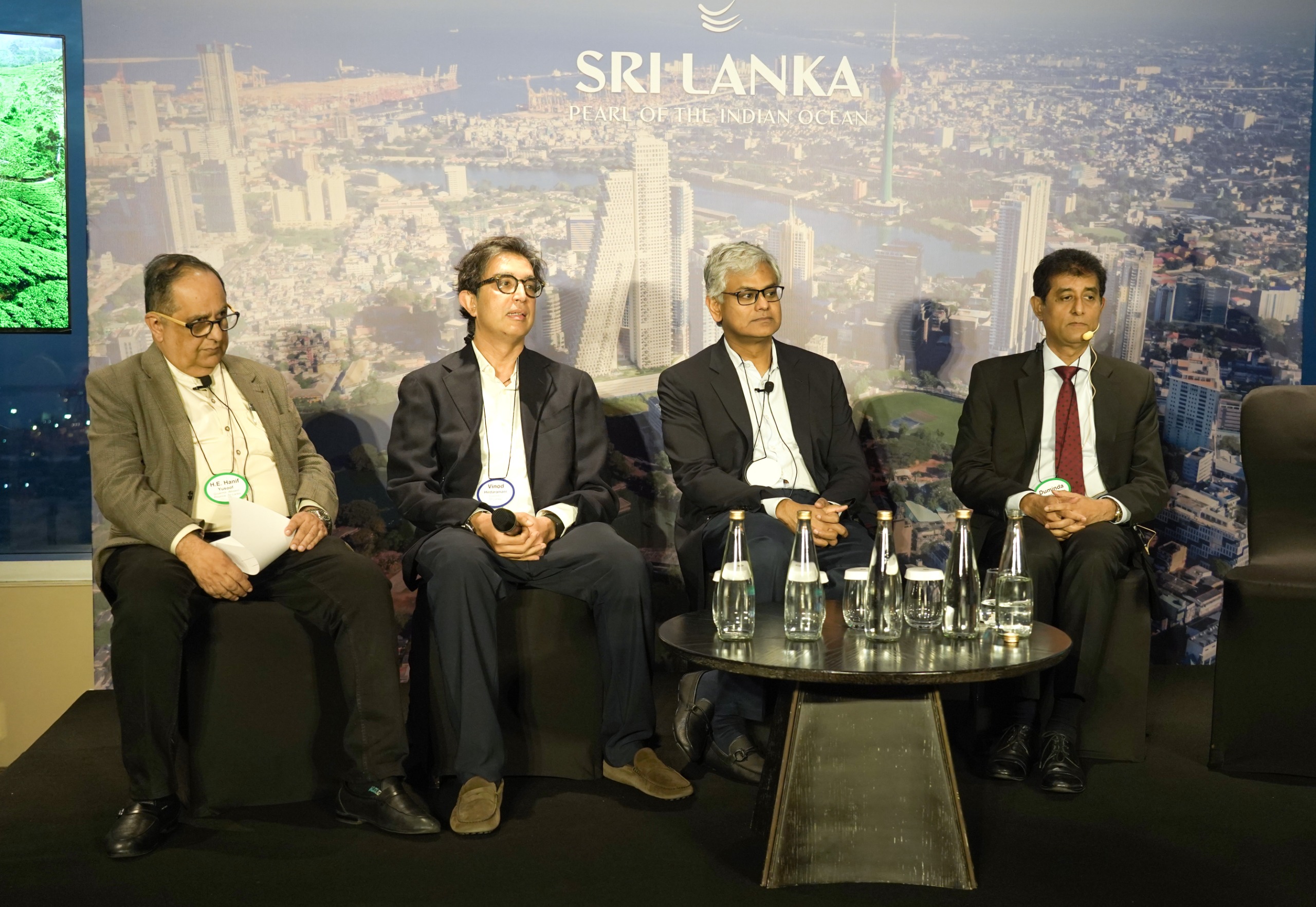
[Prime Minister’s Media Division]

The United States military has attacked a boat in the Caribbean Sea, killing three people, as it continues deadly air strikes that have killed at least 133 people since September 2025.
US Southern Command (SOUTHCOM), which oversees military operations in Latin America and the Caribbean, said US forces “conducted a lethal kinetic strike” earlier on Friday, killing three people.
The US military again repeated its claim, without providing any evidence, that it was targeting people suspected of drug trafficking, and described those slain in the attack as “narco-terrorists”.
SOUTHCOM released a video of the attack that appears to show a missile strike on the boat which then explodes into flames, leaving the vessel obliterated.
International law and human rights experts have repeatedly said such attacks amount to extrajudicial executions, even if those targeted are alleged to be engaged in trafficking drugs.
The killings on Friday follow an attack on Monday in the eastern Pacific Ocean, where SOUTHCOM said it struck a vessel, killing two people and leaving one survivor.
SOUTHCOM said it had notified the US Coast Guard that there was a survivor from the attack, but did not provide details on the survivor’s condition or chances of rescue and survival.
The first attack by US forces on vessels in international waters, which took place in September 2025, included a follow-up strike that killed survivors who were clinging to the wreckage of a destroyed boat.
US administration officials, including Defense Secretary Pete Hegseth and the commander of the operation, Admiral Frank Bradley, were placed under scrutiny for the order to carry out the second attack on survivors.
[Aljazeera]

Fairly heavy showers are likely at some places in the Rathnapura, Kalutara, Galle and Matara districts

India vs Pakistan is finally here. Over to cricket now

“We Are Building a Stable, Transparent and Resilient Sri Lanka Ready for Sustainable Investment Partnerships” – PM

US military kills 3 in latest attack on boat in the Caribbean

Prez AKD congratulates BNP’s Tarique Rahman on B’desh election win

Massive Sangha confab to address alleged injustices against monks

‘Dates have the highest sugar content to fight Coronavirus’

Sunday Island 27 December – Headlines

#SundayIsland 17th December – Headlines

Sunday Island – 28th March

Sunday Island Headlines – 21 March

Sunday Island – 21st February – Headlines
-

 Business4 days ago
Autodoc 360 relocates to reinforce commitment to premium auto care
-

 Midweek Review4 days ago
A question of national pride
-

 Opinion3 days ago
Will computers ever be intelligent?
-
 Midweek Review4 days ago
Theatre and Anthropocentrism in the age of Climate Emergency
-

 Editorial6 days ago
The JRJ syndrome
-

 Opinion4 days ago
The Walk for Peace in America a Sri Lankan initiative: A startling truth hidden by govt.
-

 Foreign News6 days ago
Portugal elects Socialist Party’s Seguro as president in landslide
-

 Opinion5 days ago
Beyond 4–5% recovery: Why Sri Lanka needs a real growth strategy