
Business
Joint Apparel Association Forum : ‘Maintaining GSP+ is critical to Sri Lanka’s apparel sector’


With the current GSP+ regulation set to expire by the end 2023, it is imperative that Sri Lanka takes measures to secure concessionary access to the European market. Securing GSP+ depends on Sri Lanka upholding the already ratified conventions spanning human rights, labour, environment and governance. If Sri Lanka is to lose GSP+, the combined loss for the apparel sector is estimated at USD 494 million, which is 79% of the estimated trade loss.
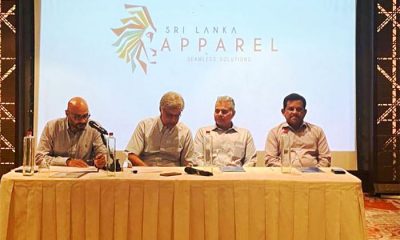
Secretary General of the Joint Apparel Association Forum Sri Lanka, Yohan Lawrence spoke on the critical need to retain GSP+ post-December 2023. In this interview, Lawrence shares his perspectives on the importance of trade concessions for Sri Lanka’s apparel sector and the economy, the potential consequences if revoked, and the apparel sector at present.
What is the current state of Sri Lanka’s economy, and how does it impact the apparel sector?
Sri Lanka’s overall economic outlook shows slow but steady signs of recovery, especially after the Sri Lankan Government reached a staff-level agreement with the IMF for a 4-year Extended-Fund Facility programme (EFF) earlier this year. This is critical to inspire investor confidence and attract much-needed foreign direct investment (FDI) to the country.
With that being said, the country was able to achieve over USD 1 billion in March in exports for the first time in 2023; however, in apparel exports specifically, there has been a 15-25% drop in orders as a result of the global economic slowdown caused by the increase in interest rates to combat high inflation in the West specifically in major exporting countries including the US, UK and Europe.
Recent data shows apparel exports declining by 14.95 per cent Year-on-Year (YoY) to USD 1.18 billion in the first quarter of this year compared to the same period last year, which is the lowest since the first quarter of 2013. The industry projects it could be five to six more months before it sees a recovery in global demand.
Can you explain the Generalised Scheme of Preferences (GSP+) and why securing it is essential for Sri Lanka’s apparel sector?
GSP+ is a trade incentive granted by the European Union (EU) to developing countries, eligible to import items to the EU market, guaranteeing increased trade with the EU. It has also been observed that the EU’s GSP+ helps developing countries alleviate poverty by generating employment across vulnerable communities specifically, adding skill, knowledge and technological know-how to a pool of resources and creating jobs based on international values and principles.
Latest data shows that EU imports from Sri Lanka amounted to about €2.55 billion in 2021, of which approximately 54% benefitted from reduced tariffs under the GSP+ arrangement. Moreover, 85% of Sri Lanka’s current exports are eligible for tariff reductions under the GSP+ scheme. Such preferential access granted through GSP+ provides Sri Lankan apparel exporters with an advantage of diversification and exploring new export opportunities.
It is important to note that the apparel industry has experienced a rapid decline in demand (15%-25%) amidst an ongoing dip in apparel exports in the first quarter of this year. Securing GSP+ within the two-year period post-December 2023 becomes critical in this context, as the apparel industry cannot absorb a further reduction in orders with the loss of the concessionary scheme nor the Sri Lankan economy bear the loss of essential foreign exchange inflows and investment incentives the GSP+ scheme underwrites.
What can the global apparel industry do to help Sri Lanka secure GSP+?
GSP+ concessions are conditional on qualifying countries ratifying and effectively implementing 27 international conventions spanning human rights, labour rights, the environment, and good governance. Therefore, at this point, the onus is on Sri Lanka to ensure that the required criteria are met.
We must understand that over 30% of Sri Lanka’s apparel exports are to the EU and having GSP+ in this current economic environment is critical. Apparel factories in the north and east regions, for example, export at least over 80% of their products under this scheme. Sri Lankan apparel was the very first large-scale manufacturing sectors to enter the region and remains the single largest sector in those areas today. This has infused much-needed investment into the community and providing employment opportunities, especially for women in the North and the East (the majority of whom are breadwinners), following the end of the civil war.
Therefore, concessionary schemes like this help Sri Lanka to be price competitive within the EU market.
Is JAAF in talks with the European Commission at the moment? If so, how is that going?
As an industry body, we do not engage directly with the EU Commission regarding GSP+; as it is a matter dealt with from Government to Government. On the other hand, whenever a delegation visits our country, we make every effort to arrange a meeting with them in our capacity as the leading authority representing the apparel sector, as and when necessary.
However, we work closely with relevant Government authorities and the newly established International Trade Office to ensure the importance of GSP+ is recognised and that Sri Lanka makes its application within the required timeline, abiding by protocol.When can we expect to receive the report by the European Commission that was due to be released in early 2023?
While we do not know the details, our understanding is that this is imminent, and we are confident that the Government is fully aware of the importance of the continuity of GSP+. A cabinet paper was recently submitted highlighting the importance of securing the trade scheme.
Earlier this month, talks were held between the Ministry of Foreign Affairs and the EU Joint Commission, with the visiting delegation providing a brief on the new cycle of the EU GSP+ Regulations to be adopted for 2024 – 2033.
Will this make it challenging to secure GSP+?
We do not see it that way because, as stated earlier, the onus is on Sri Lanka to ensure the required criteria are met. But availing of GSP+ will positively impact worker earnings, which is why it becomes critical to ensure that we obtain this benefit to safeguard workers’ livelihoods.
Throughout Sri Lanka’s economic crisis, many global brands showed their support for Sri Lanka’s apparel sector – is this continuing, and is there any concern over the potential loss of GSP+ at the moment?
It is heartening to know the support we continued to receive from major brands throughout the economic crisis and the trust placed in Sri Lanka’s ability to deliver. This continues to this day. These brands have acknowledged that the talent and skills of our employees have played a significant role in displaying the country’s resiliency.
This was only possible with the Government’s support and other entities including the Export Development Board to ensure our plants could operate unhindered during the fuel and energy crisis. More than concerns about GSP+, global brands and local manufacturers are working together to power through the global economic slowdown and cushion the impact of the global economic downturn on the sector. We hope to see a turning point at the end of the year.
What could happen to Sri Lanka’s apparel sector after 2023 if GSP+ is not secured?
If GSP+ concessions are withdrawn, Sri Lanka will not only severely lose its competitive edge, risking the sustenance of the apparel industry but will also lose USD 494 million worth of exports, at a time when the country’s priority should be in reaching as many diverse markets as possible. The Institute of Policy Studies also indicated that the apparel industry would be among the worst-hit sectors if Sri Lanka is to be withdrawn from the GSP+.
Other sectors that would be affected include tobacco, seafood, and rubber. With Sri Lanka being identified as a country with the least use of its preferential market access among all GSP+ countries, the loss of preferential access will halt the industry’s drive to increase the current utilization rate (63%) and efforts to expand Sri Lanka apparel’s market share in the EU.
What is JAAF’s plan for Sri Lanka’s apparel sector if GSP+ is not an option? Will you be looking to grow the country’s market share outside Europe?
The EU market is integral to Sri Lanka Apparel. We have a number of European investments in the sector, some going back 40 years and protecting this market is one of our key objectives. That said, we acknowledge the need to have a wider base of exports and have been actively engaging with top Government and Foreign Ministry officials for some time now, to expedite negotiations on Free Trade Agreements (FTAs) outside the EU and the UK.
At a time when the country’s economy is in a critical state, securing new FTAs can help export diversification and reduce barriers for Sri Lankan apparel exporters. Furthermore, it will generate much-needed foreign exchange for the country. Therefore, securing an FTA with China is one of our key priorities.
There is also great potential within the Indian market with the Indo-Sri Lanka FTA. Under the current arrangement, the country can only export 8 million ready-made pieces annually, but Sri Lanka has the potential to export much more. Beyond this, we also see potential in countries like Canada, Japan, South Korea and Australia and continue to push for better market access to these countries.
If the apparel sector is to successfully diversify its markets and, in the process, increase its resilience and secure the jobs of the untold hundreds of thousands, earning a living through this sector. The strategic vision of the Sri Lankan Government and the coordinated actions of its diplomatic missions will be most important.





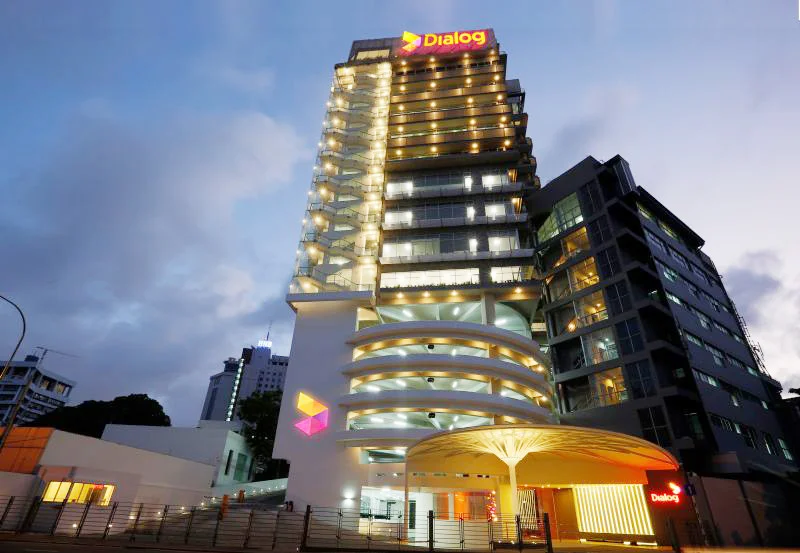
Dialog Axiata PLC announced, Friday 6th February 2026, its consolidated financial results (Reviewed) for the year ended 31st December 2025. Financial results included those of Dialog Axiata PLC (the “Company”) and of the Dialog Axiata Group (the “Group”).
Group Performance
The Group delivered a strong performance across Mobile, Fixed Line and Digital Pay Television businesses recording a positive Core Revenue growth of 16% Year to Date (“YTD”). Group Headline Revenue reached Rs179.6Bn, up 5% YTD, despite the continued strategic scaling down of low-margin international wholesale business. In Q4 2025, Revenue was recorded at Rs46.5Bn up 2% Quarter-on-Quarter (“QoQ”) and 2% Year-on-Year (“YoY”).
The Group Earnings Before Interest, Tax, Depreciation and Amortisation (“EBITDA”) reached Rs86.0Bn up 30% YTD supported by Core Revenue performance and Cost Rescaling Initiatives. On a QoQ basis Group EBITDA demonstrated a modest growth to record at Rs23.0Bn up 2% QoQ with an EBITDA margin of 49.5% in line with the Revenue performance. Group EBITDA margin reached 47.9% for FY 2025, up 9.2pp.
Group Net Profit After Tax (“NPAT”) reached Rs20.8Bn for FY 2025, up 67% YTD mainly resulting from robust EBITDA growth, despite higher tax and net finance costs. Normalized for forex impact, NPAT growth was recorded at +>100% YTD to reach Rs22.1Bn. On a QoQ basis NPAT grew 3% to reach Rs5.9Bn resulting from strong EBITDA performance.
On the back of strong operational performance, the Group recorded Operating Free Cash Flow (“OFCF”)
of Rs49.3Bn for FY 2025 up >100% YTD.
Dividend Payment to Shareholders
In line with the dividend policy and financial performance of the Group and taking into account the forward investment requirements to serve the nation’s demand for Broadband and Digital services, the Board of Directors of Dialog Axiata PLC at its meeting held on 6th February 2026, resolved to propose for consideration by the Shareholders of the Company, a dividend to ordinary shareholders amounting to Rs1.50 per share. The said dividend, if approved by shareholders, would translate to a Dividend Yield of 5.0% based on share closing price for FY 2025. The dividend so proposed will be considered for approval by the shareholders at the Annual General Meeting (AGM) of the Company, the date pertaining to which would be notified in due course.
Company and Subsidiary Performance
At an entity level, Dialog Axiata PLC (the “Company”) continued to be the primary contributor to Group Revenue (76%) and Group EBITDA (74%). Aided by sustained growth in the Data segment and cost-rescaling initiatives, Company revenue was recorded at Rs135.8Bn for FY 2025, up 18% YTD, EBITDA rose 32% YTD to reach Rs63.6Bn. On a QoQ basis, Q4 2025 Revenue was recorded at Rs34.8Bn, down 1% QoQ due to a reclassification of Hubbing Revenue, while EBITDA decline 1% QoQ to record Rs17.0Bn, largely attributable to network restoration costs and donations made in relation to the Cyclone Ditwah relief efforts. Furthermore, NPAT was recorded at Rs15.6Bn for FY 2025, up 41% YTD. Normalised for forex impacts, the company NPAT was up +>100% YTD to reach Rs17.0Bn. On a QoQ basis, Company NPAT was recorded at Rs4.5Bn, down 6% QoQ.
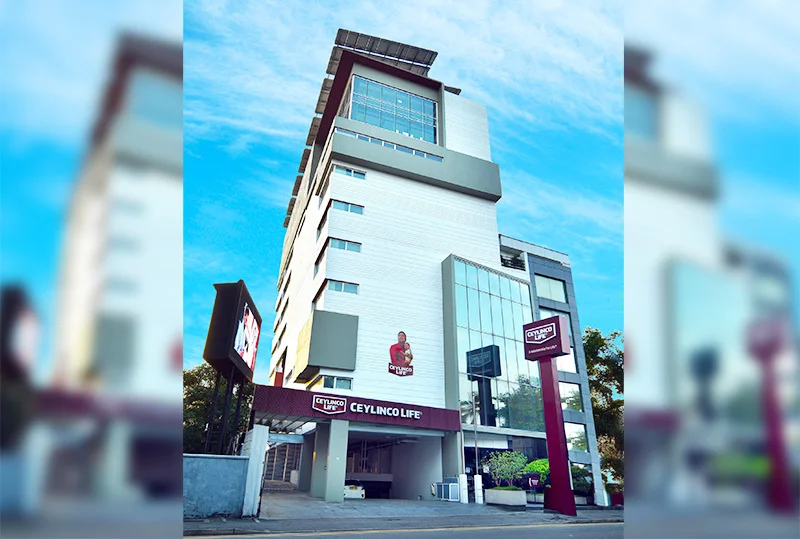
Ceylinco Life has announced the launch of the 25th consecutive edition of its flagship Pranama Scholarships programme, marking a significant milestone in the company’s long-standing commitment to recognising and rewarding excellence among the children of its policyholders.
Under the 2026 programme, the life insurance market leader will present scholarships with a total cumulative value of Rs. 22.7 million, continuing a rewards initiative that has now been conducted without interruption for a quarter of a century. Since its inception, the Ceylinco Life Pranama Scholarships programme has benefitted 3,466 students across the country, representing a total investment of Rs. 240 million in nurturing academic achievement and outstanding performance in sports, arts and other extracurricular pursuits.

The artistic genius of Sri Lankans was amply manifest all over again at ‘Kala Pola ‘26’ which was held on February 8th at Ananda Coomaraswamy Mawatha Colombo 7; the usual, teeming and colourful venue for this annual grand exhibition and celebration of the work of local visual artists.
If there is one thing that has flourished memorably and resplendently in Sri Lanka over the centuries it is the artistic capability or genius of its people. It is something that all Sri Lankans could feel a sense of elation over because from the viewpoint of the arts, Sri Lanka is second to no other nation. With regard to the visual arts a veritable dazzling radiance of this inborn and persisting capability is seen at the annual open air ‘Kala Pola’.
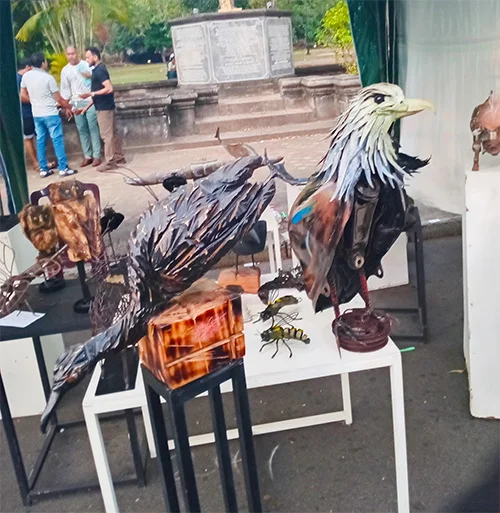
A bird of Sri Lanka created from scraps of iron waste.
All capable visual artists, wherever they hail from in Sri Lanka, enjoy the opportunity of exhibiting their work at the ‘Kala Pola’ and this is a distinctive ‘positive’ of this annual event that draws numberless artists and viewers. There was an abundance of paintings, sketches and sculptures, for instance, and one work was as good as the other. Ample and equal space was afforded each artist. Its widely participatory and open nature enables one to describe the exhibition as exuding a profoundly democratic ethos.
Accordingly, this time around at ‘Kala Pola ‘26’ too Sri Lankans’ creative efforts were there to be viewed, studied and enjoyed in the customary carnival atmosphere where connoisseurs, local and foreign, met in a sprit of camaraderie and good cheer. Many thanks are owed once again to the George Keyt Foundation for the presentation of the event in association with the John Keells Group and the John Keells Foundation, not forgetting the Nations Trust Bank, which was the event’s Official Banking Partner. The exhibition was officially declared open by Chief Guest Marc-Andre Franche, UN Resident Coordinator in Sri Lanka.
By Lynn Ockersz

Namibia begin campaign in crucial game against Netherlands

Markram, Ngidi help South Africa ease past dogged Canada

Pakistan withdraw boycott of India match at T20 World Cup

Mainly dry weather will prevail in the most parts of the island.

NPP: Speaker won’t step down, CIABOC can investigate him

Trinco Buddha statue case: All suspects, including 4 monks re-remanded till 11 Feb.

‘Dates have the highest sugar content to fight Coronavirus’

Sunday Island 27 December – Headlines

#SundayIsland 17th December – Headlines

Sunday Island – 28th March

Sunday Island Headlines – 21 March

Sunday Island – 21st February – Headlines
-

 Features2 days ago
My experience in turning around the Merchant Bank of Sri Lanka (MBSL) – Episode 3
-

 Business3 days ago
Zone24x7 enters 2026 with strong momentum, reinforcing its role as an enterprise AI and automation partner
-

 Business2 days ago
Remotely conducted Business Forum in Paris attracts reputed French companies
-
 Business2 days ago
Four runs, a thousand dreams: How a small-town school bowled its way into the record books
-
 Business2 days ago
ComBank and Hayleys Mobility redefine sustainable mobility with flexible leasing solutions
-
 Business3 days ago
HNB recognized among Top 10 Best Employers of 2025 at the EFC National Best Employer Awards
-

 Business3 days ago
GREAT 2025–2030: Sri Lanka’s Green ambition meets a grid reality check
-

 Editorial5 days ago
All’s not well that ends well?