
Business
JAAF re-appoints Chairman Sharad Amalean & Executive Committee at 19th AGM

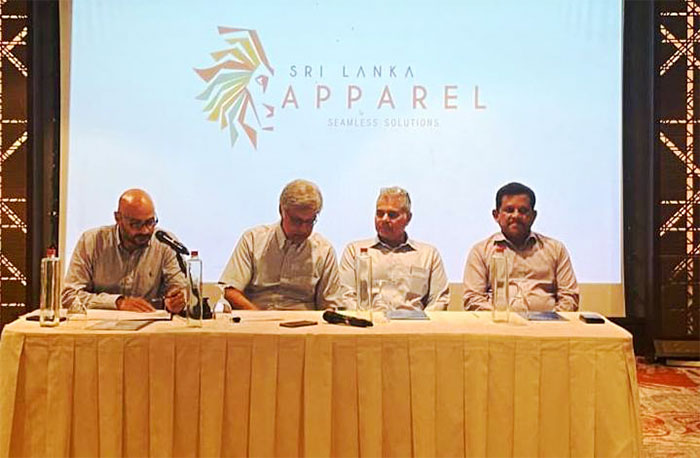
The Joint Apparel Association Forum (JAAF), the apex body that guides Sri Lanka apparel towards its ultimate goal of being the world’s number one apparel sourcing destination, held its 19th Annual General Meeting recently, re-appointing industry veteran Sharad Amalean as Chairman. It also unanimously re-elected its Executive Committee including Saifudeen Jafferjee and Felix Fernando as Deputy Chairmen.
Delivering the Chairman’s address, Amalean highlighted that JAAF identifies the importance of bringing in a new generation of young leaders with motivated youthful energy to drive the apparel industry beyond 2025. He stressed that while the past year has not been easy, the credibility JAAF has sustained over the years has undeniably aided the industry to work closely with the Government, relevant authorities and regulatory bodies. This has been a key driver in the ease of doing business in an unprecedented socio-economic fabric, a competitive edge in a challenging business climate.
“2022 was a defining moment for Sri Lanka. The textile and apparel sector should be proud that we prevailed and achieved a turnover of LKR 5.5 billion at the end of last year. I thank our stakeholders, team members and associates working in manufacturing plants all over the country for this achievement,” stated Amalean. He concluded his address with the reminder to adopt a positive outlook for 2023 as the IMF assistance is on the horizon.
Past Chairman of the Sri Lanka Apparel Exporters Association (SLAEA) Aroon Hirdaramani stressed that 2023 will be a challenging year with inventory pile-ups and an increase in costs and input prices. “Luxury brands will go on to do better than others, with the US being in a superior position globally,” he noted in his address.
Highlighting vital policy priorities crucial for the industry to optimise potential in 2023 and beyond, Secretary General of JAAF Yohan Lawrence pointed out that 2022 has been an year of mixed fortunes for apparel exports, starting off with a promise but seeing declining growth in the last months of 2022. “The global recession, overstocking of retail goods in warehouses and the impact of the Ukraine-Russia war on global supply chains took its toll. While Sri Lanka ended 2022 with exports worth USD 5.5 billion which is nearly a 10% increase from previous years, a closer look at the data reveals a worrying trend.”
He quantified Bangladesh’s USD 45 billion export industry growing by a massive 28% as against Sri Lanka’s YoY of 10%. “This growth in Bangladesh indicates that competitor nations are gaining market share from Sri Lanka. We comprise only 1 to 2% of global trade and this will reduce if the government fails to take immediate action.” He noted that with Bangladesh classified as a Least Developed Country, it has unrestricted access to the EU and the UK, while Sri Lanka’s GSP+ and DCTS programme dictate rules of origin, allowing only 50% of exports qualifying for duty free access to those countries.





HNB PLC, the leading private bank in Sri Lanka, has partnered with IDEAL Motors (Pvt) Limited to provide customers with attractive leasing solutions for brand-new vehicles & generators .
The partnership introduces a range of benefits designed to support individuals, entrepreneurs, and businesses seeking reliable vehicle and power solutions. Through this collaboration, customers can access structured lease facilities, special interest rates, free life insurance coverage, and attractive discounts through HNB General Insurance.
Commenting on the partnership, HNB, Senior Vice President/ Head of Retail Banking, Kanchana Karunagama, said, “At HNB, we believe that the right financial support can help people and businesses move forward with greater confidence. This partnership with IDEAL Motors shows our commitment to creating meaningful solutions that make vehicle and power investments more accessible, while helping our customers achieve their personal and business aspirations. By combining HNB’s financial expertise with IDEAL Motors’ industry capabilities, we are creating opportunities that support the ambitions of Sri Lankans and contribute towards a stronger, more connected economy.”
Customers purchasing vehicles through IDEAL Motors will also benefit from exclusive offers including free registration, and discounts on Bolero Maxx Pik-Up, Alfa Plus Load Carrier, Mahindra Pik-Up Single Cab, Mahindra Pik Up Double Cab, XUV 3XO vehicles, creating greater value throughout their ownership journey.
IDEAL Motors (Pvt) Limited, Director Legal and Corporate Affairs, Nimesha Welgama, said, “Our collaboration with HNB represents a shared commitment to supporting Sri Lankans in achieving greater financial independence through accessible ownership solutions. By combining IDEAL Motors’ mobility and power solutions with HNB’s financial expertise, we aim to empower individuals and businesses with opportunities that contribute to economic progress and community development. This partnership highlights our vision of creating lasting value by enabling customers to confidently invest in their future.”
With IDEAL Motors recognised for its diverse portfolio of automotive and power solutions, and HNB’s extensive expertise in financial services, the partnership aims to provide a seamless experience from selection to ownership, supported by flexible financing options and customer focused solutions.
The partnership further strengthens HNB’s commitment to supporting economic progress by providing financial solutions that enable customers to invest in personal mobility, commercial growth, and business continuity. Through collaborations with leading industry partners, HNB continues to expand opportunities for Sri Lankans while delivering a banking experience built around accessibility, trust, and value.
Business
Sri Lanka Insurance Corporation General and the Ministry of Education committed to protect Sri Lanka’s schoolchildren

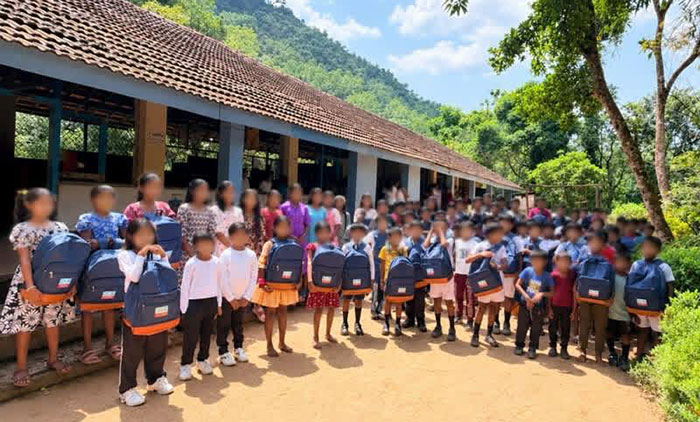
Sri Lanka Insurance Corporation General Ltd (SLICGL) and the Ministry of Education, Higher Education and Vocational Education share a commitment to protect Sri Lanka’s children throughout their school education. The pledge is delivered through the Suraksha Student Insurance Scheme, which protects over 4 million school children.
The Government of Sri Lanka, through the Ministry of Education, Higher Education and Vocational Education, provides the Suraksha Student Insurance Scheme free of charge to schoolchildren throughout the country. SLICGL is proud to partner with the Ministry in delivering this national initiative, which helps safeguard students against the financial impact of unforeseen circumstances.
Eligible students include those aged 5-21 years in Grades 1-13 from government schools, government-approved private schools, and Pirivena education, as well as students aged 4-21 years in assisted special schools.
The scheme provides hospitalisation, outpatient and critical illness cover, as well as personal accident cover for permanent and temporary disability, together with a life insurance benefit for children from low-income families on the death of a parent. Cover applies to incidents within and outside school premises.
For a child, an illness or accident can be far more than a temporary setback. It can place added pressure on a family and, in some circumstances, disrupt schooling. Suraksha acts as a safety net, giving children and their families greater peace of mind and helping them stay in school despite life’s uncertainties. The scheme is easily accessible through SLICGL’s islandwide network of 200 branches and customer service centres.
Children’s Day is a celebration of hope, the hope for every child to have the opportunity to learn, grow and build a better future. Celebrating children also means protection, not for a single day but for every day they spend in the classroom.
Commemorating Children’s Day, SLICGL extended support towards the educational needs of children at an underprivileged school. The project highlighted the company’s belief in protecting the future not only by being supportive when the unexpected happens, but also in helping create an environment in which children can learn, grow and fulfil their potential.
As Sri Lanka’s National Insurer, SLICGL’s role goes further than protecting people against risk. It is also about contributing to a stronger, safer and more resilient country as children’s education, wellbeing and aspirations contribute directly to help build the journey ahead.
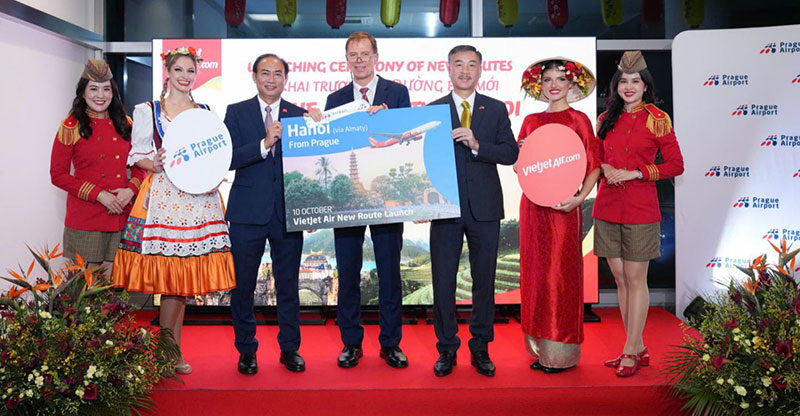
Vietjet, which already flies between Colombo and Ho Chi Minh City, has officially launched new services connecting Hanoi with Almaty, Kazakhstan, and Prague, Czech Republic, as well as Almaty with Prague, expanding its intercontinental network and marking its entry into the European Union. The new air links offer more affordable travel options while fostering greater tourism, trade and cultural exchange between Asia and Europe.
For Sri Lanka, the new routes widen the network that Vietjet is building out of Colombo. The airline has operated non-stop flights between Colombo and Ho Chi Minh City since August 2026, three times a week on Tuesdays, Thursdays and Saturdays, while its new Ho Chi Minh City to Maldives service via Colombo is scheduled to begin on 5 December 2026. With Hanoi now linked to Central Asia and Europe, Sri Lankan travellers have a growing choice of destinations reachable through Vietjet’s extensive network.
The inauguration ceremonies took place at Almaty International Airport and Václav Havel Airport Prague on 10 October, amid a warm welcome from local leaders, residents and visitors. The inaugural flights were greeted with traditional water cannon salutes and performances showcasing local cultural heritage, marking the beginning of new journeys connecting the three regions and welcoming international travellers to Vietnam. Passengers on the inaugural flights also received commemorative gifts from Vietjet and the airports, adding a special touch to their journeys.

Showers or thundershowers will occur at most parts of the island

Prison rules to be revised over monks’ attire

AC President recuses himself from hearing prison attire case pertaining to Gnanasara Thera

Court orders steps to obtain INTERPOL Red Notice against Basil

CID informs Fort Magistrate’s Court investigation into money laundering case against Namal completed

No force used to make Gnanasara Thera wear prison garb – Prisons

‘Dates have the highest sugar content to fight Coronavirus’

Sunday Island 27 December – Headlines

#SundayIsland 17th December – Headlines

Sunday Island – 28th March

Sunday Island Headlines – 21 March

Sunday Island – 21st February – Headlines
-

 News6 days ago
NDB fraud Rs 60mn more than reported
-

 News6 days ago
Removing monk’s robes matter for Sangha to decide: Mahanayake Theras
-
 News5 days ago
NPP govt. reminded of its responsibilities as US warship leaves Colombo
-

 News4 days ago
Sri Lanka escalates anti-graft drive with Shiranthi’s jailing
-
 Latest News6 days ago
Farhan, Sadaqat help Pakistan ace 183 chase to go 1-0 up
-
 News6 days ago
BHC, Colombo: “LTTE remains a proscribed org. in the UK”
-

 Latest News3 days ago
Farhan and Sadaqat help Pakistan seal series in style
-
 News4 days ago
Iranian ships stranded, Lanka fears US sanctions