
News
Johnston: New project underway to ease traffic congestion

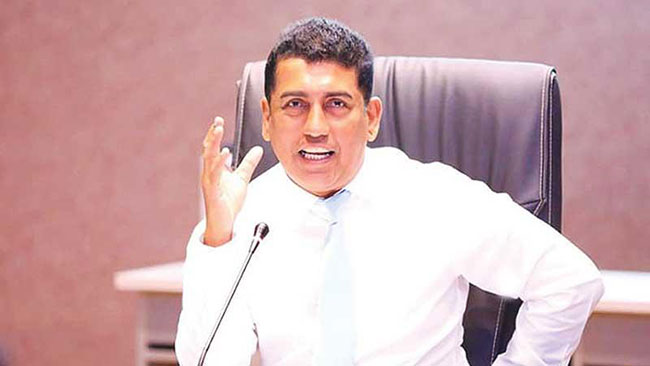
Chief Government Whip and Highways Minister Johnston Fernando said that road networks of Colombo and other main cities in every district would be developed by integrating and redesigning them using the latest technology to make traffic jams a thing of the past.
Speaking at a meeting held at the Ministry of Highways yesterday (12) on finding solutions to traffic congestion in Colombo and main cities, the minister said that with the number of vehicles increasing day by day, roads of the main cities had become congested and traffic policemen were overworked.A new project would be introduced to end traffic jams by managing vehicular flows by introducing new entry points and alternative routes with new roads in and around the main cities.
The new project would be implemented first in the cities of Colombo, Kandy, Gampaha, Galle and Kurunegala, Minister Fernando said, adding that it would be gradually introduced to the other main cities in every district. A recent research by the experts at the University of Moratuwa has revealed that from 2008-2018, the number of buses increased by 36 percent and the number of other vehicles increased by 130 per cent in the country.
“We incur massive financial and man-hour losses due to traffic congestion due to the absence of proper traffic management in Greater Colombo areas and the loss has been estimated to be over Rs 32 billion a year. Our country is losing 1.5 percent of the GDP due to traffic congestion. Our road network in the city is not capable of handling increasing traffic flows. We have identified nine main roads leading to Colombo and suburbs for the first stage’s development. Similarly, 15 such roads in and around the Gampaha city, 12 roads in Kandy and eight roads in and around Galle would also be developed to solve the traffic congestion in those cities. In addition, two new bridges would be built across the Ittepana and Madu rivers to end traffic congestion in Galle by introducing an alternative route. In order to end traffic congestion in Kurunegala city an alternative route would be constructed while developing the outer-circular road and introducing flyovers at Yangalmodera, Alawwa, Mahawa and Muththettugala,” the Minister said.
Minister Fernando said that people of Colombo and surrounding areas had blamed successive governments for their failure to tackle the issue. The new project would solve their problems, he added.
Among those present were Secretary to the Ministry of Highways R.W.R. Pemasiri, Chairman of the Road Development Authority Chaminda Athaluwage, Director General of RDA Sardha Weerakoon and top officials of the ministry (SI)


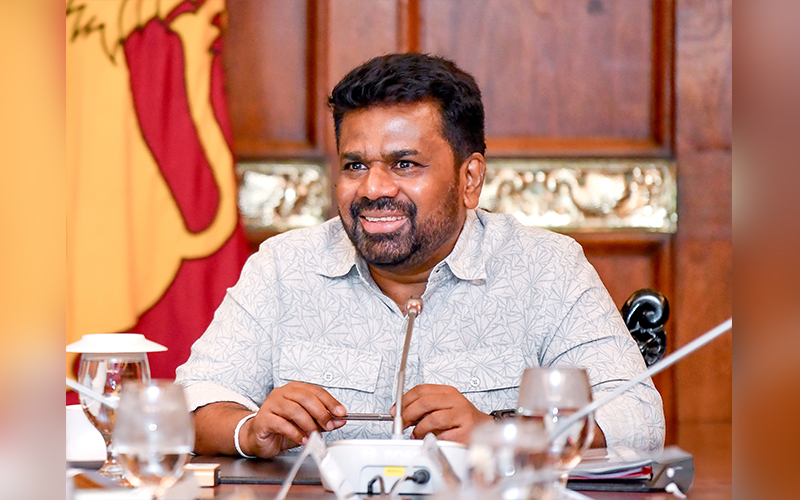
A discussion to review the progress of projects implemented under the Ministry of Digital Economy in 2025 and to examine new projects planned to be implemented under the 2026 budgetary allocations was held on Monday (19) morning at the Presidential Secretariat under the patronage of the Minister of Digital Economy, President Anura Kumara Dissanayake.
Special attention was paid to the plans and progress of programmes to promote a cashless economy.
Accordingly, an extensive discussion was held on the progress of projects planned by the Government to promote a cashless economy in Sri Lanka, including the digitalisation of government institutions, promotion of QR transactions, establishment of a Cloud infrastructure centre, a national programme to provide high-speed broadband facilities, provision of single-window facilities, the digital identity card project and the project to digitalise payment of traffic spot fines.
Noting that much of the economic activity of rural communities remains in the informal sector, the President emphasised the need to formally document these activities and stressed that this is essential when formulating future economic and development plans.
The performance, progress and future plans of institutions under the Ministry of Digital Economy, including Sri Lanka CERT, the Data Protection Authority and the Telecommunications Regulatory Commission (TRC), were also reviewed.
The current status and new recruitments of the GovTech institution, established to implement the Government’s digitalisation programme, were also discussed.
Deputy Minister of Digital Economy, Eranga Weeraratne, Secretary to the President, Dr. Nandika Sanath Kumanayake, Senior Presidential Adviser on Digital Economy, Dr. Hans Wijayasuriya, Senior Additional Secretary to the President, Roshan Gamage, Secretary to the Ministry of Digital Economy, Varuna Sri Dhanapala, senior officials of the Ministry and heads of institutions under the Ministry also participated in the discussion.


A simmering confrontation between the government and the powerful Ceylon Electricity Board (CEB) trade unions intensified yesterday, with the latter signalling continued industrial action, even as authorities moved decisively to prevent any disruption to electricity supply.
The dispute centres on the government’s determination to restructure and unbundle the CEB under amendments to the Electricity Act, a reform drive officials describe as unavoidable to curb losses, strengthen governance and stabilise the national power sector. This has also been a long-standing demand of international donors, particularly the International Monetary Fund and the World Bank.
Some 24 CEB unions, including powerful engineers’ and workers’ organisations, have rejected the move, warning that the proposed restructuring could weaken institutional coordination, undermine job security and eventually place additional pressure on consumers.
Union representatives said work-to-rule campaigns and other limited forms of industrial action would continue, despite electricity services being declared an essential service — a legal measure that effectively curtails full-scale strike action.
“These reforms are being imposed without proper consultation. Decisions taken in haste could have serious consequences for grid stability and public confidence,” a senior union official told The Island.
The government, however, has adopted a firm posture, cancelling all categories of leave for CEB staff and directing management to ensure uninterrupted operations across generation, transmission and distribution.
A senior official at the Power and Energy Ministry said the administration would not allow labour unrest to jeopardise electricity supply, stressing that energy security was central to economic recovery.
“Electricity is a critical public service. Any attempt to disrupt supply will be dealt with firmly,” the official said.
Engineers’ unions have separately cautioned that restructuring without a clearly articulated technical and regulatory framework could compromise long-term planning and system reliability, though they have stopped short of calling for an outright shutdown.
Despite ongoing discussions between union leaders, CEB management and government representatives, there is no indication of an early resolution, raising the prospect of a prolonged standoff at one of the country’s most strategically important state institutions.
The dispute unfolds amid Sri Lanka’s IMF-backed reform programme, under which state-owned enterprises — particularly in the energy sector — are under increasing pressure to reduce losses and ease the burden on public finances.
Analysts warn that sustained unrest at the CEB could complicate reform timelines and dent investor confidence, even as the government seeks to signal policy resolve.
A retired CEB top official said: “For now, while major strike action remains legally constrained, the confrontation has once again placed the power sector at the centre of national debate, with consumers and businesses watching closely for any fallout.”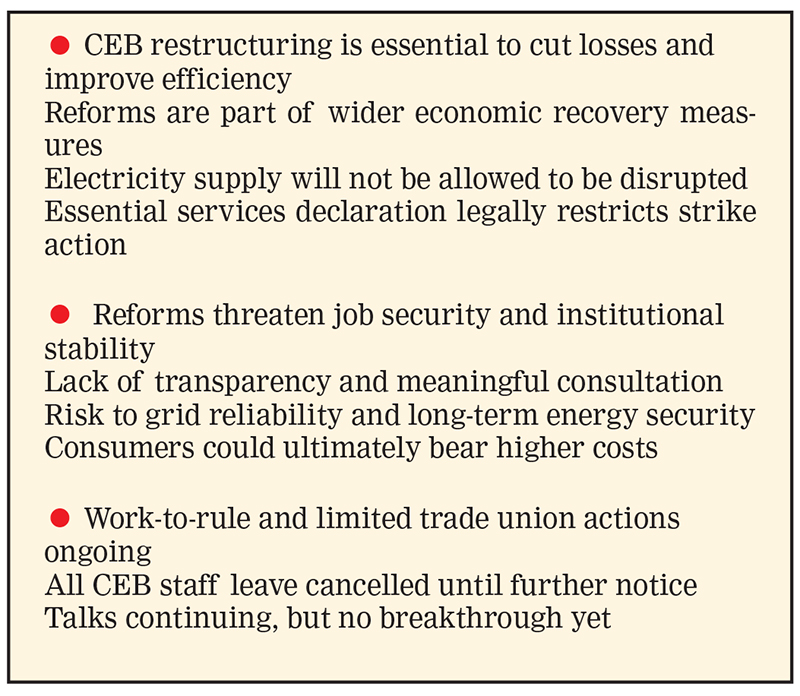
By Ifham Nizam ✍️
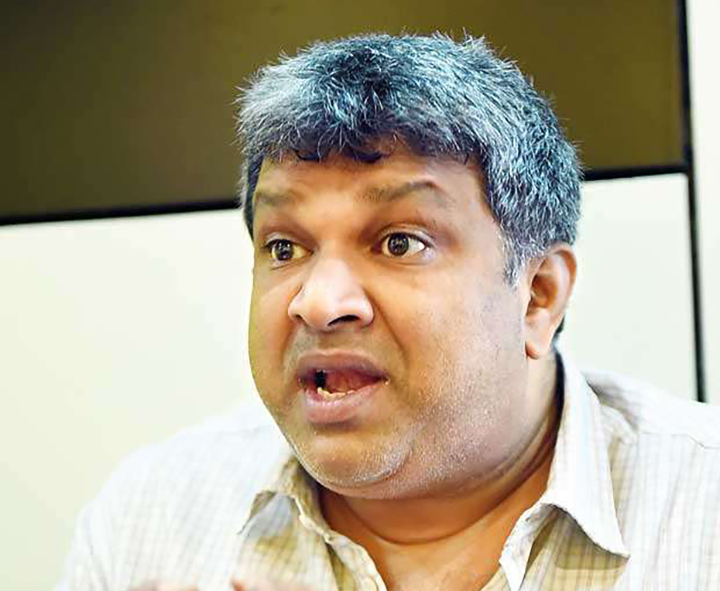
Of over 37,000 held in country’s prisons, nearly 27,000 are suspects
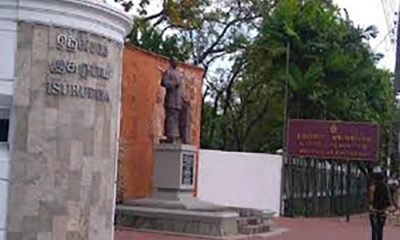
Dumbara Prison built to accommodate 699 persons is now being expanded to hold 2,900 persons. At the moment, Dumbara Prison holds 2,246 men and women – a staggering 1,547 individuals more than its maximum capacity. Of the 2,246 persons held there, 107 are females.
This was revealed when Justice and National Integration Minister Harshana Nanayakkara responded to a query posed by Samagi Jana Balawegaya (SJB) lawmaker Chamindrani Kiriella, in Parliament yesterday (20).
The Kandy district SJB MP raised a spate of questions regarding the current status of prisons with the focus on how the NPP government intended to address the growing congestion within prisons.
The Minister explained that a major building project was now underway to expand Dumbara Prison, situated at Pallekelle, to accommodate 2,500 men and 400 women.
According to Attorney-at-Law Nanayakkara, the proposed Dumbara Prison complex would include 102 housing units for prison personnel.
The Parliament was told that the entire project would cost the taxpayer a staggering Rs 4.3 bn and that Engineering Consultants (Pvt.) Limited (ECL) was responsible for planning and supervision.
The project was progressing and by January 4, 2026, a substantial part of the complex had been built and 2146 inmates already accommodated.
The Minister said that the facility was to accommodate those who were previously held at Nuwara and Bogambara Prisons.
Of some 37,761 held at various prisons, about 27,000 were suspects, the Parliament was told.
MP Kiriella urged Minister Nanayakkara to consider an arrangement, similar to that of South Africa where those languishing in prisons, due to the inability to pay fines, received the required financial assistance from a special fund created for that purpose.
While appreciating the SJB’ers proposal, Minister Nanayakkara said that during 2025, 17,000 persons hadn’t been remanded as part of the government response to overcome overcrowding in prisons. They were being held under supervision, the Minister said.
Minister Nanayakkara said that the primary reason for the congestion was the significant number of those remanded on narcotics-related charges. Of the over 37,000 held in prisons about 30,000 were those who had been arrested on narcotics-related offences, the Minister said. According to the Minister, delay on the part of the Government Analyst’s Department in furnishing relevant reports had created a crisis and action was being taken to recruit 82 persons to that Department. The idea was to establish a system to secure GA reports within three months, the Minister said.
By Shamindra Ferdinando ✍️

U – 19 world Cup: Rain disrupts New Zealand vs Bangladesh game in Bulawayo

U – 19 World Cup: Will Malajczuk’s 51-ball century helps Australia blow Japan away

Rodrigues holds nerve as Delhi Capitals hand Mumbai Indians third straight loss

Second lady Usha Vance announces she is pregnant with fourth child

Plans for 2026 on the journey towards a digital economy Under President’s review

Dry weather will prevail in most parts of the island.

‘Dates have the highest sugar content to fight Coronavirus’

Sunday Island 27 December – Headlines

#SundayIsland 17th December – Headlines

Sunday Island – 28th March

Sunday Island Headlines – 21 March

Sunday Island – 21st February – Headlines
-

 Editorial3 days ago
Illusory rule of law
-

 News4 days ago
UNDP’s assessment confirms widespread economic fallout from Cyclone Ditwah
-

 Business6 days ago
Koaloo.Fi and Stredge forge strategic partnership to offer businesses sustainable supply chain solutions
-

 Editorial4 days ago
Crime and cops
-

 Features3 days ago
Daydreams on a winter’s day
-

 Editorial5 days ago
The Chakka Clash
-
 Features3 days ago
Surprise move of both the Minister and myself from Agriculture to Education
-

 Features2 days ago
Extended mind thesis:A Buddhist perspective