
Latest News
Jayasuriya takes five as Australia lose 7 for 64 but lead still healthy

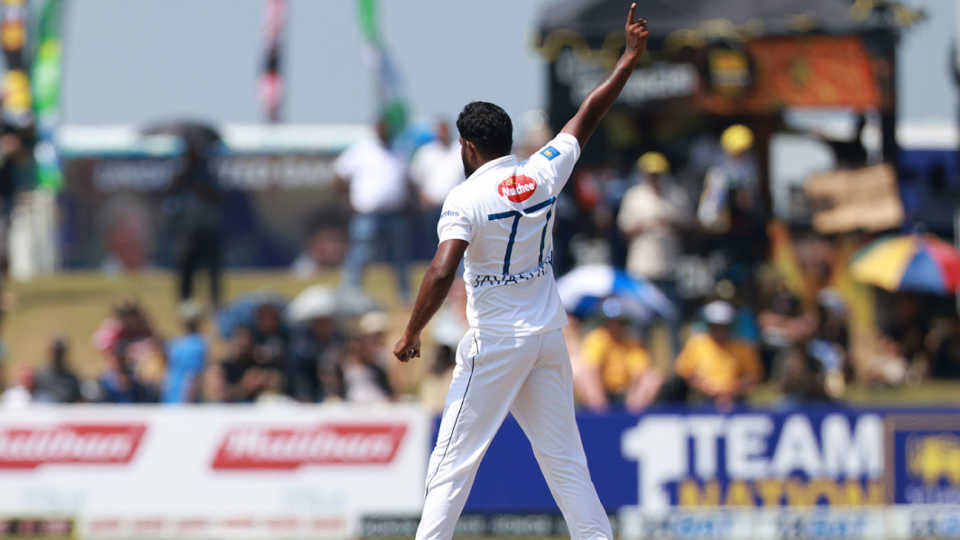
Left-arm spinner Prabath Jayasuriya found venomous bite with the second new ball and dismissed centurions Steven Smith and Alex Carey, but Australia built a first-innings lead of 157 runs as the second Test moved quickly early on day three.
Underlining that the very dry surface in Galle is difficult to bat on, Australia lost 7 for 64 after Smith was caught behind on 131 to end his 254-ball masterclass.
Jayasuriya struggled on day two to threaten and occasionally reverted to a defensive leg-stump line against Smith. But he was a different bowler this morning, with attacking line and lengths bamboozling a slew of batters. Jayasuriya claimed four wickets in the session to finish with 5 for 151 from 38 overs as Australia were bowled out for 414 by lunch.
Sri Lanka’s fightback, however, might have come too late with their struggling batting-order faced with a tough task in their second innings on a deteriorating surface.
Carey and Smith’s magnificent partnership of 259 ended less than 20 minutes into the day’s play. In another batting record for Australia in this series, it was the highest fourth-wicket partnership by a visiting pair in Sri Lanka in Tests, bettering the 258-stand between Michael Hussey and Shaun Marsh in Pallekele in 2011.
Australia resumed in a powerful position at 330 for 3, but they knew there was work to do in their bid to only bat once in this match.
After such a limp performance in the backend of day two, Sri Lanka desperately needed a spark and they immediately took the second new ball. Jayasuriya looked to attack Smith from around the wicket and found bite off the surface that he had been unable to find for much of the series.
But Smith seemed revitalised after looking gassed by the end of day two and disrupted the lengths of the spinners by skipping down the pitch.
Carey overtook his highest first-class score of 143 in style with a firm sweep that rocketed to the boundary and he also moved past Adam Gilchrist’s 144 as the highest score by an Australian wicketkeeper in Asia.
Jayasuriya was rewarded for his attacking line and lengths when Smith’s stout defence was finally breached by a brilliant delivery that pitched on off stump and gripped off the surface.
Smith walked off immediately and received a rousing ovation, but his dismissal reinvigorated Sri Lanka and brought a different complexion to the game. Josh Inglis made his way to the crease one spot lower in the batting-order after spending time off the field during Sri Lanka’s first innings because of a back spasm.
After scoring a memorable debut ton in the first Test, Inglis found himself in a tougher position and had a nervous moment first ball when only an inside edge saved him from being plumb lbw. But Inglis’ stumps were rattled on the next delivery when he played back to a full delivery that skidded on.
Jayasuriya was on a roll, but Carey’s presence still loomed large for Sri Lanka and he brought up his 150 as the lead passed 100 runs.
However, Carey on 156 finally succumbed to the sweep, a stroke he had been almost faultless through the innings, when he played over the top of a Jayasuriya delivery and was clean bowled.
All eyes were on 21-year-old debutant Cooper Connolly, who boasted a first-class average of 61.80 from four matches but three of those was at the pace-friendly WACA ground. This was an initiation into Test cricket for Connolly, who was beaten by a sharp offbreak from Nishan Peiris, who was Sri Lanka’s most threatening bowler on day two.
Connolly has proven to be a big-game performer in his fledgling career, backing his aggressive instincts, and he got off the mark in trademark cavalier fashion with a boundary albeit off a top-edge from a full-blooded sweep.
But Connolly didn’t add to his tally and was too ambitious when he skipped down to Peiris only to slice to backward point in an ugly dismissal. Peiris was denied another wicket when Starc was dropped at short leg by Pathum Nissanka before he had scored.
Beau Webster steadied the situation briefly, but had a difficult time. He was trapped lbw by Jayasuriya on 20 only for umpire Joel Wilson to once again have to overturn a decision. He was also dropped by wicketkeeper Kusal Mendis on 25 off Ramesh Mendis as Sri Lanka’s fielding woes continued.
But Webster was soon bowled by a big offbreak from Ramesh as Australia’s tail quickly fell away.
Brief scores: (Day 3 Lunch)
Australia 414 (Alex Carey 156, Steven Smith 131; Prabath Jayasuriya 5-151, ishan Peiris 3-94, Ramesh Mendis 2- 81 ) lead Sri Lanka 257 by 157 runs

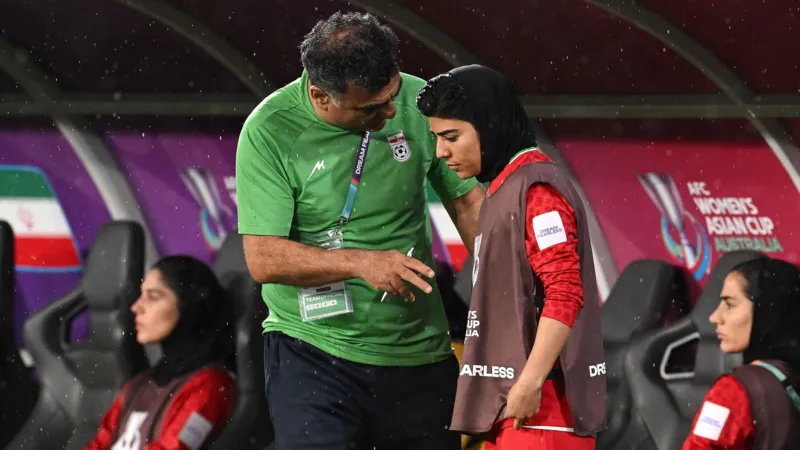
Three more members of the Iranian women’s football delegation – who were given humanitarian visas to stay in Australia – have changed their mind and will return home.
The trio have been named by human rights activists in the Iranian diaspora as Zahra Soltan Meshkehkar, Mona Hamoudi, and Zahra Sarbali.
Concerns grew for the Iranian team after they were silent for the country’s anthem in their opening Asian Cup match against South Korea on 2 March – which led to them being branded “war traitors” in Iran.
Confirming the decisions, Australia’s home affairs minister said his government had done everything it could to ensure the women were given the chance to have a safe future in the country.
“Australians should be proud that it was in our country that these women experienced a nation presenting them with genuine choices and interacted with authorities seeking to help them,” Tony Burke said in a statement.
“While the Australian government can ensure that opportunities are provided and communicated, we cannot remove the context in which the players are making these incredibly difficult decisions.”
Iran’s sports ministry also earlier confirmed the news, first reported by the Islamic Revolutionary Guard Corps-linked Tasnim News Agency, in a statement.
“The national spirit and patriotism of the Iranian women’s national football team defeated the enemy’s plans against this team,” the statement says, also accusing Australia’s government of “playing in Trump’s field”.
Tasnim said the three were on their way to Kuala Lumpur in Malaysia to join the rest of the squad and were “returning to the warm embrace of their families and homeland after withdrawing their asylum application in Australia”.
It said they had resisted “psychological warfare, extensive propaganda and seductive offers”.
It means that, of the seven who initially said they wanted to stay in Australia, only three now remain as defectors. One of the players made the same decision to return to Iran on Wednesday.
Hamoudi and Sarbali were among the original five who refused, after giving minders the slip at the team’s hotel on the Gold Coast, south of Brisbane, last Monday and being taken to a safe house by Australian Federal Police.
Zahra Soltan Meshkehkar, a member of the team’s technical staff, was one of two more women from the group to seek asylum the next day. The other – Mohaddeseh Zolfi – changed her mind hours after being given the right to stay. She is understood to have already rejoined the team.
There was concern in Australia that members of the team and their families might face repercussions in Iran after the players refused to sing the national anthem.
One conservative commentator on Iranian state media accused them of being “wartime traitors” and called for a harsh punishment.
The team did sing the anthem in their last two games before they were eliminated on Sunday, leading critics to believe they had been told to sing by government officials accompanying them during the tournament.
The remaining Iranian players left Australia on Tuesday night local time – two days after they were knocked out of the Asian Cup.
[BBC]
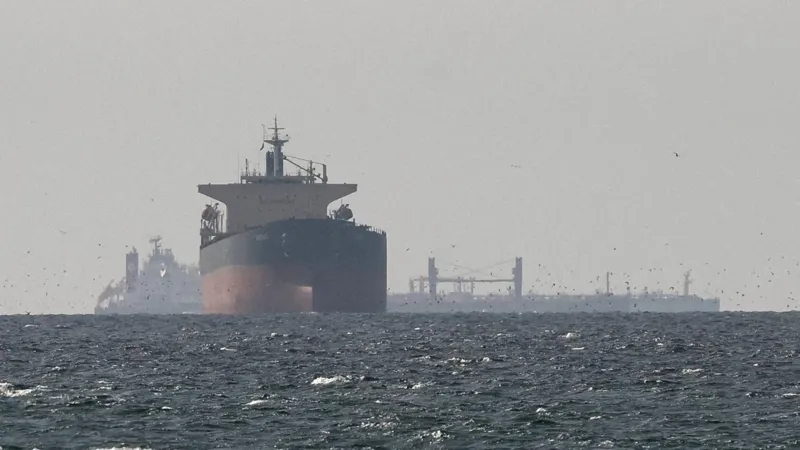
Donald Trump has urged the UK and other nations to send warships to the Strait of Hormuz to help secure the key shipping route out of the Middle East.
The US president said he hoped China, France, Japan and South Korea would also send ships to the passage, where a number of tankers are said to have been attacked since the US and Israel mounted their war against Iran a fortnight ago.
Responding to Trump’s comments, the UK Ministry of Defence said it was discussing “a range of options to ensure the security of shipping in the region” with allies.
Tehran has said it will keep blocking the strait – the world’s busiest oil shipping channel through which about 20% of world oil supplies usually pass.
Its effective closure, as well as strikes on shipping and energy infrastructure since the war started, has led to huge rise in global oil prices.
Trump wrote on his Truth Social platform on Saturday that “many countries” would be sending warships in conjunction with the US to help keep the strait “open and safe”.
He claimed “100% of Iran’s military capability” had already been destroyed, but that Tehran could still “send a drone or two, drop a mine, or deliver a close-range missile somewhere along, or in, this waterway”.
“Hopefully China, France, Japan, South Korea, the UK, and others, that are affected by this artificial constraint will send ships to the area so that the Hormuz Strait will no longer be a threat by a nation that has been totally decapitated.”
He added: “In the meantime, the United States will be bombing the hell out of the shoreline, and continually shooting Iranian Boats and Ships out of the water. One way or the other, we will soon get the Hormuz Strait OPEN, SAFE, and FREE!”
Trump repeated his appeal in a post later on Saturday – extending it to all “the Countries of the World that receive Oil through the Hormuz Strait” – and said the US would provide “a lot” of support to those who participated.
The president has separately threatened to target Iran’s vital oil infrastructure on Kharg Island if its leadership were to “interfere” with ships seeking to pass through the Strait of Hormuz.
He said the US had ‘obliterated” military targets on the small island off Iran’s coast on Friday, calling it “one of the most powerful bombing raids in the history of the Middle East”.
Iran’s military said oil and energy infrastructure belonging to firms working with the US would “immediately be destroyed” should the island’s oil infrastructure be attacked.
Tehran has been stepping up such attacks on energy targets in the Gulf, which have become a key element of its response to US and Israeli strikes. It warned on Thursday that any tanker bound for the US, Israel or its partners was a legitimate target.
The UK Maritime Trade Operations (UKMTO) said in its latest update on 12 March that 16 ships were reported to have been attacked in and around the strait since the war began on 28 February.
Currently, not even the US Navy is escorting tankers through the narrow shipping lane.

Trump’s message came a week after he said the US did not need the UK to send aircraft carriers to the region and accused Prime Minister Sir Keir Starmer of seeking to ‘join wars after we’ve already won”.
He also told the BBC’s US partner CBS that he “couldn’t care less” whether allies could do more to assist with the war, adding: “It’s a little bit late to be sending ships, right? A little bit late.”
He had already criticised Sir Keir for not joining the initial strikes on Iran and refusing at first to allow the US to use UK bases for its joint offensive with Israel – calling him ‘no Winston Churchill”.
The prime minister later approved “defensive” US action on Iranian missile sites from RAF Fairford in Gloucestershire and Diego Garcia in the Indian Ocean, saying Iran’s response had become a threat to Britain.
The UK’s first and only warship set to be present in the region – the Type 45 destroyer HMS Dragon – departed for Cyprus on Tuesday, where it will bolster RAF Akrotiri after it was hit by drone strikes.
The Royal Navy used to keep minesweepers based in Bahrain, but no longer has that capability after it withdrew HMS Middleton.
Ministers have insisted the UK built up an RAF presence in the region before the conflict, with the aim of protecting British military personnel.
[BBC]

In light of the prevailing geopolitical developments in Middle East, the petroleum product supply chain has been adversely affected. At the same time, the demand for fuel has increased abnormally, resulting in a depletion of the country’s existing fuel stock. Therefore, it has become necessary to carefully manage the available fuel reserves in order to sustain the nation’s economic activities.
Furthermore, it has recently been observed that certain groups have been illegally purchasing fuel in excessive quantities. The Government of Sri Lanka intends to prevent such improper consumption and ensure an uninterrupted fuel supply for the day-to-day needs and economic activities of the general public.
Accordingly, a QR code system will be implemented with effect from 06.00 a.m. on 15.03.2026.
Fuel will not be issued by any operating filling station in the country without a valid QR code from 06.00 a.m. on 15.03.2026.
Steps to Obtain the QR Code
- Users who have already registered for the QR Code
- Users whose vehicle ownership and registered mobile number remain unchanged since their initial registration may download their QR Code from the website https://fuelpass.gov.lk/ starting from midnight on 14.03.2026, using the ‘Vehicle Login’ button.
- Users whose vehicle ownership or registered mobile number has changed since their last registration are required to re-register their details through the website https://fuelpass.gov.lk/ starting from 6.00 a.m. on 15.03.2026, using the ‘Vehicle Registration’ button.
- Users who have not previously registered for the QR Code and users with newly registered vehicles at
the RMV - Registration can be completed starting from 06.00 a.m. on 15.03.2026 through the
website https://fuelpass.gov.lk/, using the ‘Vehicle Registration’ button.
The number of litres allocated for each category of vehicle is stated below.
A special fuel issuance system will be implemented for vehicles required to support national production and essential services.
| Vehicle Class | Capacity control volume for fuel pass
(L) |
| Buses | 60 |
| Motor cycle | 5 |
| Van | 40 |
| Motor car | 15 |
| Motor Lorry | 200 |
| Land Vehicles | 25 |
| Three Wheeler | 15 |
| Special Purpose Vehicle | 40 |
| Quadricycle | 5 |
[Sri Lanka Transport Board will issue fuel to the private buses].

‘Gruesome’ war bets fuel calls for crackdown on prediction markets

Three more Iran football team members change minds over asylum

Trump urges UK and other nations to send warships to Strait of Hormuz

Addressing the drug issue in the country must be treated as a national priority – PM

QR code system will be implemented for fuel with effect from 06.00 a.m. today (15th)

Showers will occur at several places in the Western, Sabaragamuwa, Central, North-western and Uva provinces and in Galle, Matara, Mannar and Anuradhapura districts after 2.00 pm.

‘Dates have the highest sugar content to fight Coronavirus’

Sunday Island 27 December – Headlines

#SundayIsland 17th December – Headlines

Sunday Island – 28th March

Sunday Island Headlines – 21 March

Sunday Island – 21st February – Headlines
-

 News7 days ago
Repatriation of Iranian naval personnel Sri Lanka’s call: Washington
-
 Features7 days ago
Winds of Change:Geopolitics at the crossroads of South and Southeast Asia
-

 News6 days ago
Prof. Dunusinghe warns Lanka at serious risk due to ME war
-

 News4 days ago
Historic address by BASL President at the Supreme Court of India
-

 Sports5 days ago
Royal start favourites in historic Battle of the Blues
-

 Sports4 days ago
The 147th Royal–Thomian and 175 Years of the School by the Sea
-

 Business5 days ago
BOI launches ‘Invest in Sri Lanka’ forum
-

 News5 days ago
CEBEU warns of operational disruptions amid uncertainty over CEB restructuring