
News
Japan to provide urgently needed 600,000 doses of AstraZeneca vaccine


President Gotabaya Rajapaksa’s request to Prime Minister of Japan, Yoshihide Suga for 600,000 doses of AstraZeneca vaccine has been met with a positive response.
This was conveyed during a meeting held between the President and the Japanese Ambassador to Sri Lanka Sugiyama Akira at the Presidential Secretariat yesterday morning (09).
The Japanese Government has also acceded to the President’s request to provide medical supplies and healthcare equipment needed to contain the spread of the COVID-19 virus. The President also drew the attention of the Japanese Ambassador to obtain technical assistance required for expeditious response to maritime accidents.
Deputy Ambassador at the Japanese Embassy Kitamura Toshihiro, First Secretary Imamura Kayo, Secretary to the President P.B. Jayasundera, Principal Advisor to the President Lalith Weeratunga and Foreign Secretary Admiral Jayanath Colombage were also present at the meeting.


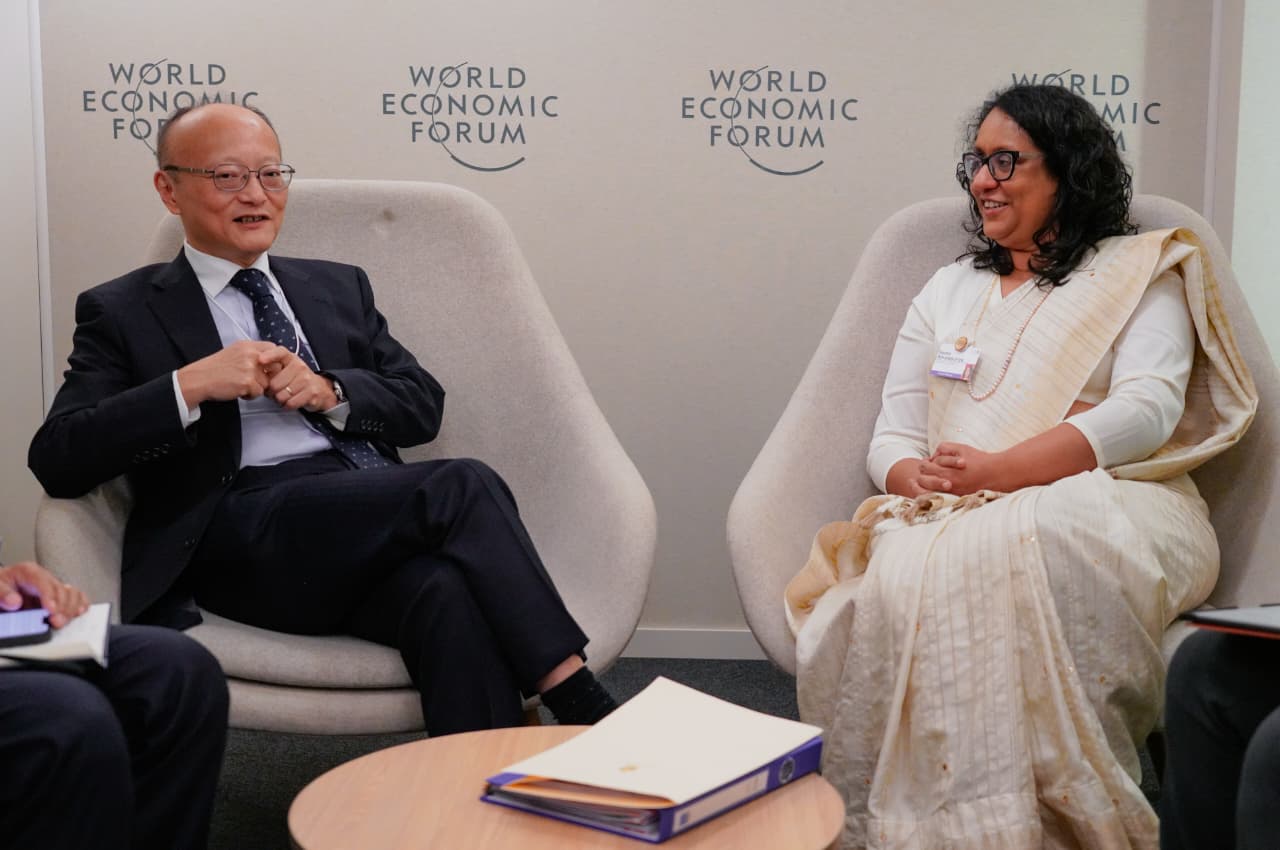
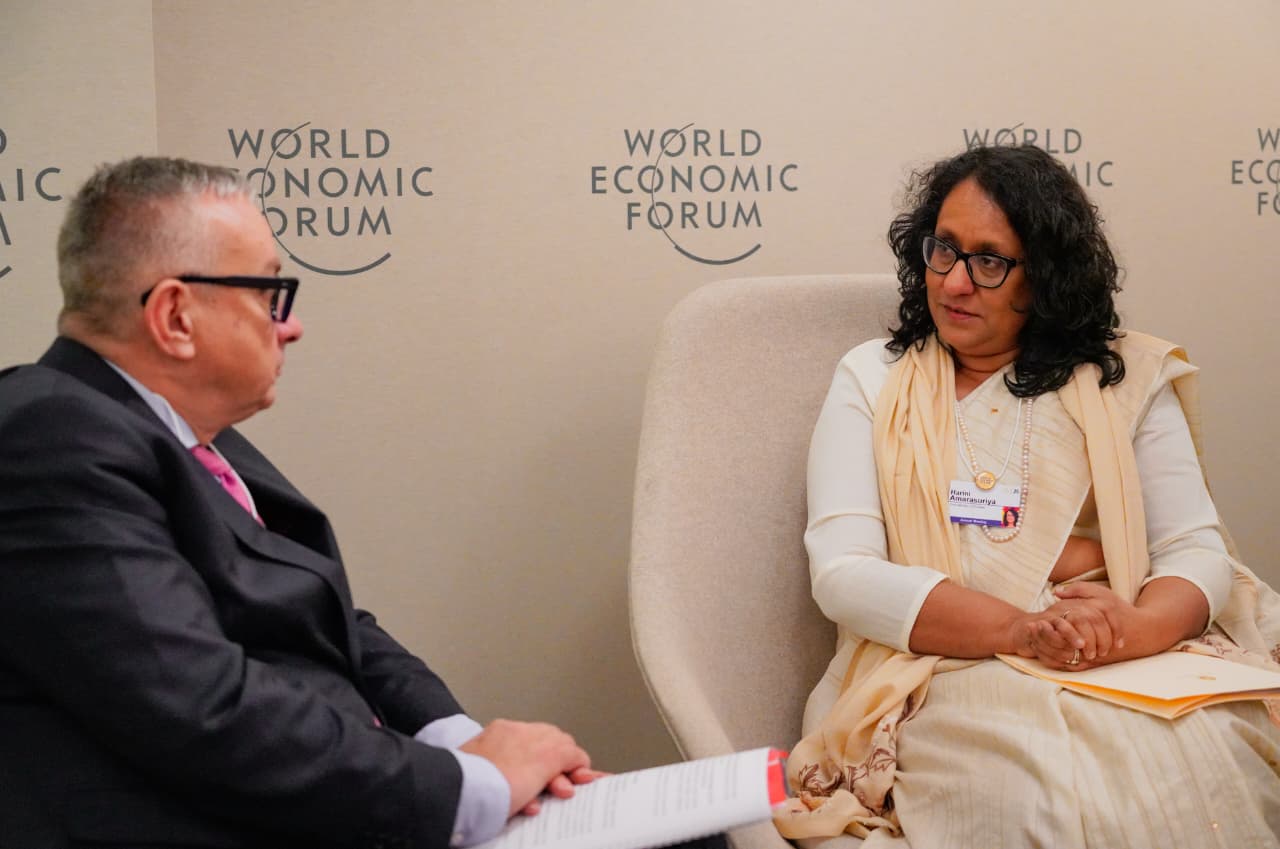
Prime Minister Dr. Harini Amarasuriya participated in a series of high-level bilateral meetings on January 20 on the sidelines of the 56th Annual Meeting of the World Economic Forum in Davos-Klosters, Switzerland.
The Prime Minister attended a productive bilateral meeting with Mr. Jozef Síkela, European Commissioner for International Partnerships. During the discussion, both sides focused on strengthening Sri Lanka–EU cooperation and advancing mutual interests.
Prime Minister Amarasuriya also met with Mr. Masato Kanda, President and Chairperson of the Board of Directors of the Asian Development Bank (ADB), at the WEF Congress Centre. The meeting provided an opportunity to discuss ongoing engagement and future collaboration between Sri Lanka and the ADB.
In addition, the Prime Minister held discussions with Mr. Hassan El Houry, Chairman of Menzies Aviation, where opportunities for collaboration in aviation services and connectivity were explored.
The Prime Minister also participated in a high-level dialogue at the Global Tourism Forum held at the Euronews Hub, Piz Buin, Davos, as part of the World Economic Forum engagements.
Dr. Anil Jayantha, Minister of Labour, and the Deputy Minister of Finance were also present at these meetings.
[Prime Minister’s Media Division]
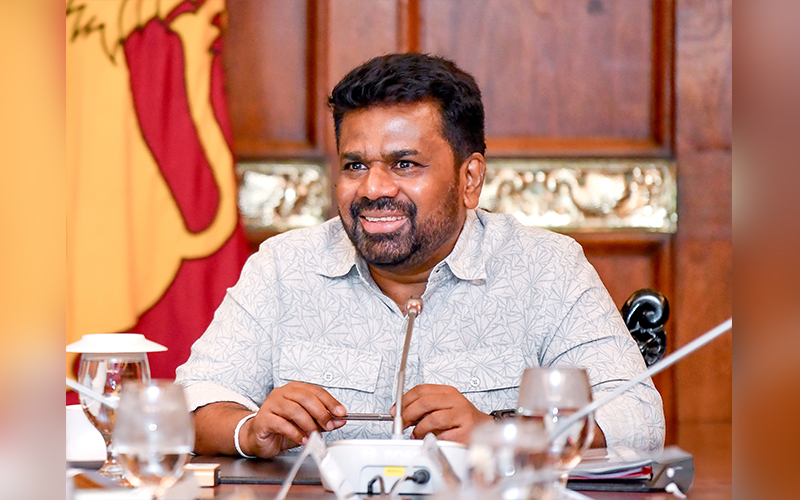
A discussion to review the progress of projects implemented under the Ministry of Digital Economy in 2025 and to examine new projects planned to be implemented under the 2026 budgetary allocations was held on Monday (19) morning at the Presidential Secretariat under the patronage of the Minister of Digital Economy, President Anura Kumara Dissanayake.
Special attention was paid to the plans and progress of programmes to promote a cashless economy.
Accordingly, an extensive discussion was held on the progress of projects planned by the Government to promote a cashless economy in Sri Lanka, including the digitalisation of government institutions, promotion of QR transactions, establishment of a Cloud infrastructure centre, a national programme to provide high-speed broadband facilities, provision of single-window facilities, the digital identity card project and the project to digitalise payment of traffic spot fines.
Noting that much of the economic activity of rural communities remains in the informal sector, the President emphasised the need to formally document these activities and stressed that this is essential when formulating future economic and development plans.
The performance, progress and future plans of institutions under the Ministry of Digital Economy, including Sri Lanka CERT, the Data Protection Authority and the Telecommunications Regulatory Commission (TRC), were also reviewed.
The current status and new recruitments of the GovTech institution, established to implement the Government’s digitalisation programme, were also discussed.
Deputy Minister of Digital Economy, Eranga Weeraratne, Secretary to the President, Dr. Nandika Sanath Kumanayake, Senior Presidential Adviser on Digital Economy, Dr. Hans Wijayasuriya, Senior Additional Secretary to the President, Roshan Gamage, Secretary to the Ministry of Digital Economy, Varuna Sri Dhanapala, senior officials of the Ministry and heads of institutions under the Ministry also participated in the discussion.

A simmering confrontation between the government and the powerful Ceylon Electricity Board (CEB) trade unions intensified yesterday, with the latter signalling continued industrial action, even as authorities moved decisively to prevent any disruption to electricity supply.
The dispute centres on the government’s determination to restructure and unbundle the CEB under amendments to the Electricity Act, a reform drive officials describe as unavoidable to curb losses, strengthen governance and stabilise the national power sector. This has also been a long-standing demand of international donors, particularly the International Monetary Fund and the World Bank.
Some 24 CEB unions, including powerful engineers’ and workers’ organisations, have rejected the move, warning that the proposed restructuring could weaken institutional coordination, undermine job security and eventually place additional pressure on consumers.
Union representatives said work-to-rule campaigns and other limited forms of industrial action would continue, despite electricity services being declared an essential service — a legal measure that effectively curtails full-scale strike action.
“These reforms are being imposed without proper consultation. Decisions taken in haste could have serious consequences for grid stability and public confidence,” a senior union official told The Island.
The government, however, has adopted a firm posture, cancelling all categories of leave for CEB staff and directing management to ensure uninterrupted operations across generation, transmission and distribution.
A senior official at the Power and Energy Ministry said the administration would not allow labour unrest to jeopardise electricity supply, stressing that energy security was central to economic recovery.
“Electricity is a critical public service. Any attempt to disrupt supply will be dealt with firmly,” the official said.
Engineers’ unions have separately cautioned that restructuring without a clearly articulated technical and regulatory framework could compromise long-term planning and system reliability, though they have stopped short of calling for an outright shutdown.
Despite ongoing discussions between union leaders, CEB management and government representatives, there is no indication of an early resolution, raising the prospect of a prolonged standoff at one of the country’s most strategically important state institutions.
The dispute unfolds amid Sri Lanka’s IMF-backed reform programme, under which state-owned enterprises — particularly in the energy sector — are under increasing pressure to reduce losses and ease the burden on public finances.
Analysts warn that sustained unrest at the CEB could complicate reform timelines and dent investor confidence, even as the government seeks to signal policy resolve.
A retired CEB top official said: “For now, while major strike action remains legally constrained, the confrontation has once again placed the power sector at the centre of national debate, with consumers and businesses watching closely for any fallout.”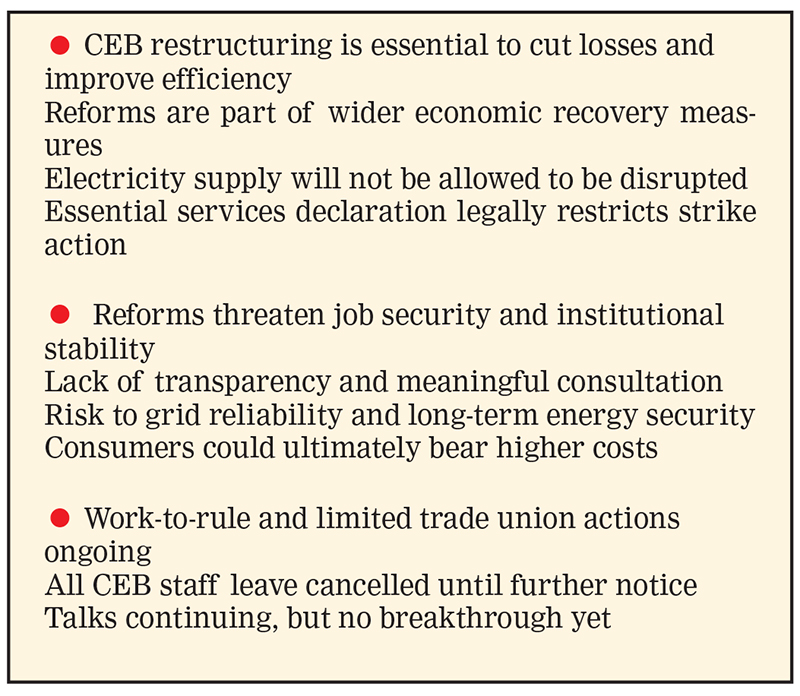
By Ifham Nizam ✍️

Prime Minister participates in high-level bilateral meetings at World Economic Forum

Dushmantha Chameera, Dhananjaya de Silva return for England ODIs

T20 World Cup crisis: PCB writes to ICC supporting Bangladesh’s stance

U – 19 world Cup: Rain disrupts New Zealand vs Bangladesh game in Bulawayo

U – 19 World Cup: Will Malajczuk’s 51-ball century helps Australia blow Japan away

Rodrigues holds nerve as Delhi Capitals hand Mumbai Indians third straight loss

‘Dates have the highest sugar content to fight Coronavirus’

Sunday Island 27 December – Headlines

#SundayIsland 17th December – Headlines

Sunday Island – 28th March

Sunday Island Headlines – 21 March

Sunday Island – 21st February – Headlines
-

 Editorial3 days ago
Illusory rule of law
-

 News4 days ago
UNDP’s assessment confirms widespread economic fallout from Cyclone Ditwah
-

 Business6 days ago
Koaloo.Fi and Stredge forge strategic partnership to offer businesses sustainable supply chain solutions
-

 Editorial4 days ago
Crime and cops
-
 Features3 days ago
Daydreams on a winter’s day
-

 Editorial5 days ago
The Chakka Clash
-
 Features3 days ago
Surprise move of both the Minister and myself from Agriculture to Education
-

 Features2 days ago
Extended mind thesis:A Buddhist perspective