
Sports
Jammu and Kashmir’s long road to India cricketing glory

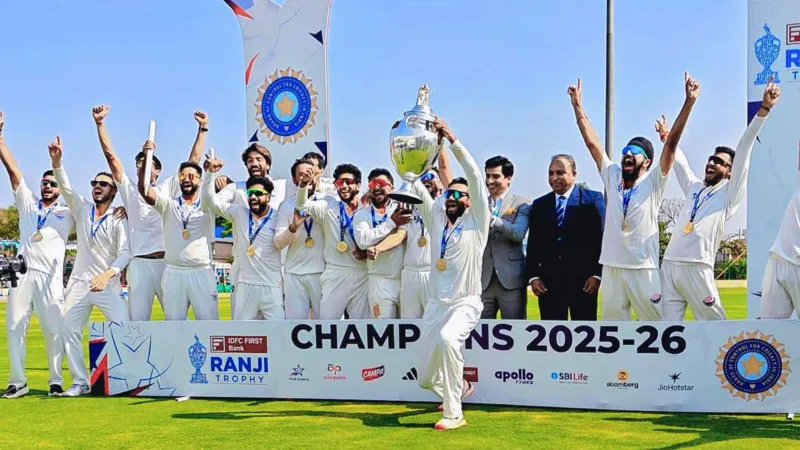
Jammu and Kashmir’s maiden triumph in India’s premier domestic championship last week is more than a sporting milestone – it is one of the most stirring stories in the country’s cricket.
The Ranji Trophy, one of the oldest first-class competitions in the sport, sits at the heart of the game in the world’s most powerful cricketing nation.
To win it is to claim a place in the country’s cricketing mainstream; for Jammu and Kashmir, it marks a breakthrough that was decades in the making.
Cricket in the disputed region dates back to the colonial era, when the Kashmir Willow – prized for its strength and resilience – helped craft bats that powered the sport across India.
For decades, the region was scarred by insurgency, political turmoil and a deep sense of alienation – tensions that culminated in 2019 when Delhi revoked Jammu and Kashmir’s autonomy and split the state into two new federally-administered territories.
Yet, even through these upheavals, passion for cricket ran deep. Success, however, proved elusive.
That changed over a remarkable fortnight.
In a season overshadowed by the ongoing high-voltage T20 World Cup, where India are defending champions, it was this unfancied northern side that quietly commanded attention.
After defeating seven-time champions Delhi to enter the knockouts, Jammu and Kashmir gathered momentum.
Former champions Madhya Pradesh fell in the quarter-finals. Bengal were subdued in the semi-finals. In the final, stood eight-time winners Karnataka, boasting four current internationals – KL Rahul, Mayank Agarwal, Karun Nair and Prasidh Krishna – and overwhelming experience.
Jammu and Kashmir were the underdogs and most expected them to falter. Instead, they produced cricket of composure, skill and steel, outplaying their decorated opponents to claim India’s premier first-class title.
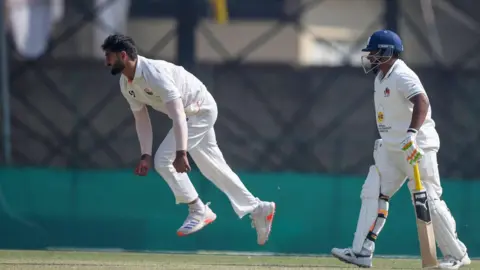
The breakthrough did not come out of nowhere.
Over the past decade, the team has flirted with history, reaching the quarter-finals three times and missing last year’s semi-final by the slimmest of margins – a one-run first-innings deficit against Kerala.
The Jammu and Kashmir Cricket Association was formed in 1959-60. It has taken nearly 67 years – marked by political upheaval, institutional neglect and chronic underinvestment – for the region to complete the circle and reach the summit of Indian domestic cricket.
For decades, cricket’s real power centres lay elsewhere: Mumbai, Delhi, Kolkata, Chennai and Bengaluru. Proximity to these hubs – of money, infrastructure and influence – often determined how quickly cricket flourished in a state.
Jammu and Kashmir, geographically and politically distant from these nerve centres, remained on the margins – a cricketing outpost far removed from the game’s corridors of power.
A lack of basic infrastructure, scant coaching facilities and self-serving administration stunted cricket’s growth for decades. That Jammu and Kashmir won their first Ranji match only in 1982-83 – more than 20 years after gaining state association status – underlines how halting that progress was.
In 1983, during a match in Srinagar city against Clive Lloyd’s touring West Indies, Indian players were booed and jeered – a spectacle that prompted authorities to sideline the state from hosting major fixtures.
The hostility reflected a deepening political alienation in the Muslim-dominated Kashmir region, where resentment against Delhi over autonomy and governance was already simmering. Though a full-blown insurgency against Indian rule would erupt only in 1989, the faultlines were visible.
In 1986, Allan Border’s Australians played what would prove to be the last international match in Kashmir. Four decades on, top-level cricket has yet to return.
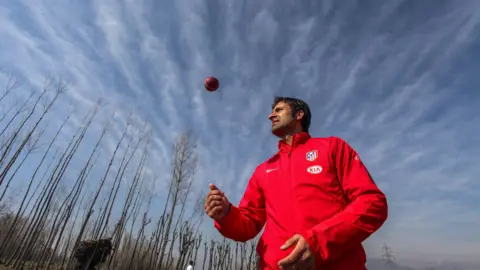
Cricket in Jammu and Kashmir began to turn a corner over the past 15 years as militancy ebbed and political volatility eased. With greater stability came long-missing attention to development and structure.
Three clear inflection points underpin the team’s rise.
The first came between 2011 and 2013, when former India captain Bishen Singh Bedi took charge as coach. He transformed a side burdened by diffidence into one that believed it belonged – urging players long overawed by reputation to compete as equals on the national stage.
Pervez Rasool, the first cricketer from Jammu and Kashmir to play for India, was among the chief beneficiaries of Bedi’s confidence-building approach – a debt he has acknowledged in recent years.
The second inflection point came in 2018-19, when the state association brought in former India all-rounder Irfan Pathan as player-cum-mentor. During his two seasons with the side, Pathan said his central message was simple: shed regional faultlines and play as one team.
That phase unearthed notable talent, including batsman Abdul Samad and the explosive fast bowler Umran Malik – only the second cricketer from Jammu and Kashmir to represent India.
The third inflection point came about five years ago, when the state association was replaced by an Apex Council to oversee the game. It was headed by Mithun Manhas, a former Delhi stalwart born in Jammu who had also played a season for J&K – blending administrative authority with local roots and top-tier experience.
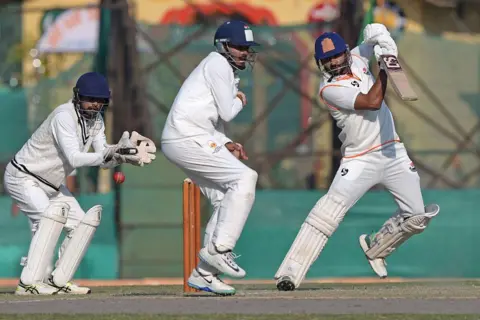
Manhas, now the head of the Indian cricket board, professionalised the set-up, appointing his former Delhi teammate Ajay Sharma as coach and tightening structures around the team.
Top-tier infrastructure followed, along with modern coaching methods – scientific fitness, nutrition planning and structured mental conditioning – bringing the set-up in line with national standards.
Paras Dogra, a seasoned and prolific domestic batsman, was drafted in as captain to anchor the rebuild. Selectors then cast the net wide, scouting both established and emerging talent.
At 41, Dogra proved a natural leader – delivering his own best while elevating those around him, a journey that culminated in this year’s coveted title.
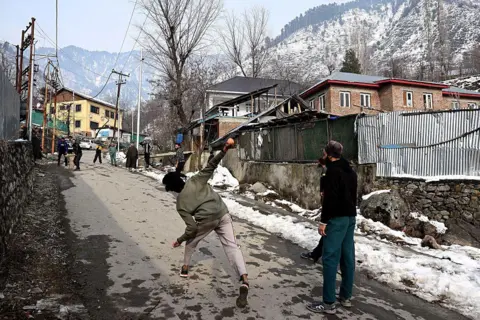
Several batsmen and bowlers stood out, but the spearhead was fast bowler Aquib Nabi, who finished the season with 60 wickets. He had claimed 44 the previous year, earning an IPL contract with the Delhi Daredevils.
Many observers believe he is ready for the highest level – the national team. Former India captain Sourav Ganguly was among those who publicly endorsed him, saying Nabi has the tools to play Test cricket for India.
Whether, and how soon, that leap to the international stage comes remains uncertain.
What is beyond doubt is the significance of Jammu and Kashmir’s surge as a cricketing force – a rise that, in its improbable sweep, recalls Afghanistan’s ascent in the global game.
For India, it matters in at least two profound ways.
First, it underscores how deeply and widely cricket’s footprint now runs across the country – a key reason India stands as the pre-eminent force in the global game.
Second, this triumph offers the beleaguered federally-administered territory and its people something long yearned for: a meaningful stake in the national mainstream through shared pride and sporting excellence.
[BBC]

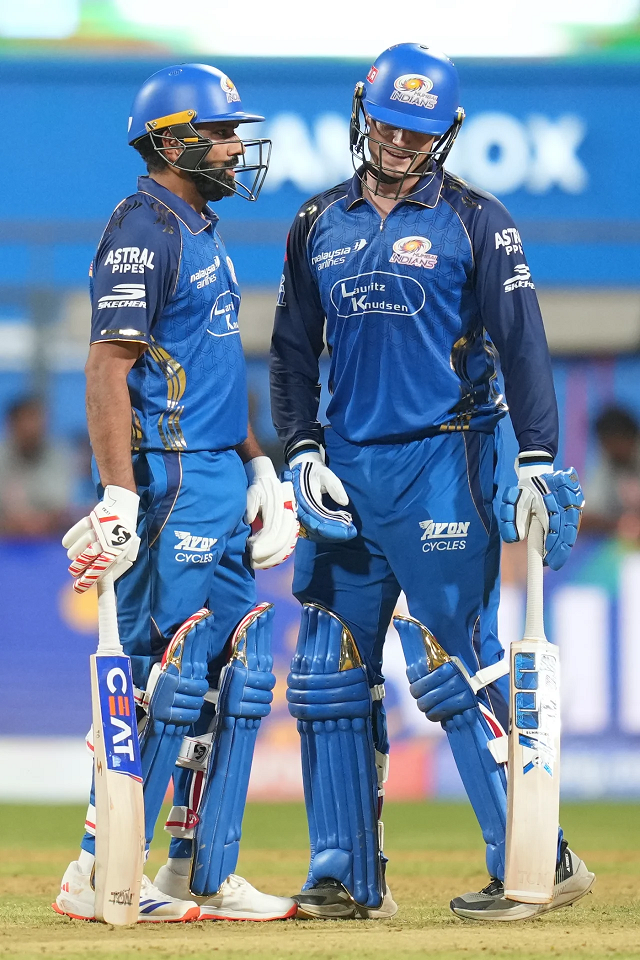
Before Sunday, Mumbai Indians had never chased down a 220-plus target in their previous seven attempts. MI had never won their opening game of the IPL since 2012. On day two of IPL 2026, MI broke two jinxes as they chased down 221 in 19.1 overs to begin their season with a comfortable six-wicket win over Kolkata Knight Riders. Rohit Sharma wound back the clock, smashing 78 off 38 balls, while Ryan Rickelton thumped 81 off 43, the duo adding 148 runs for the opening wicket off 71 balls.
That KKR were coming into this opening game severely depleted on the bowling front was known. The extent of it was visible on Sunday night with Vaibhav Arora and Blessing Muzarabani toothless, Varun Chakravarthy ineffective and Sunil Narine a shadow of his former self.
At the halfway mark, KKR might have been happy reaching 220 for 4, their second-highest score against MI in the IPL. Ajinkya Rahane, who at the toss said that he had “never seen so much of grass at Wankhede”, scored 67 off 40 balls while Angkrish Raghuvanshi, another Mumbai lad, made 51 off 29 as KKR breached the 220 mark. But against a KKR unit missing several of their frontline seamers, MI barely had any hiccups, completing the highest-successful IPL chase at the Wankhede with five balls to spare.
It was a typical Rohit innings that Wankhede has witnessed so many times, laced with some of the most pristine shots. He was on 12 off eight at one stage, but once in, he lit up Mumbai like only he can. Coming into the game, he had a strike rate of less than 100 against Varun in T20s. So, what did he do? He lofted the spinner inside-out over covers first ball and then lifted him for six the next ball. By the time the powerplay was done, Rohit had raced to a 23-ball fifty, his fastest in the IPL and MI’s chase was on course.
They raced to 80 in the first six, past 100 in 8.1 overs and by the time Rohit fell, thanks to a lovely catch by Anukul Roy running back from mid-off, MI’s required rate had gone below nine, which at the start of the innings was above 11 an over.
There were a few raised eyebrows when Rickelton was picked over the more experienced Quinton de Kock , but the former justified his selection. Rickelton needed just the first couple of overs to get a hang of the surface and once he did, there was no stopping him. He deposited Arora for back-to-back sixes, one over extra cover and then over deep midwicket, and that kickstarted a brutal takedown of the KKR bowlers.
While he saw Rohit do his thing in the powerplay, Rickelton took on Narine after the six-over mark. He slog swept him over deep midwicket in his first over and then launched him over the ropes twice in three balls in the next to raise a 24-ball fifty.
He didn’t stop there and only fell courtesy a stunning direct hit from the deep by Anukul. Suryakumar Yadav, the Impact Sub, came and went, but Hardik Pandya and Tilak Varma took MI closer. Hardik finished on an unbeaten 18 off 11 balls, while Naman Dhir hit the winning runs off Anukul as MI started their IPL 2026 in style.
Finn Allen brought his stellar form international cricket to the IPL. After facing five dot balls against Hardik, he went after MI debutant AM Ghazanfar, pumping him to the deep square fence and then spanking him for an 86-metre six over wide long-on. Another six capped off Ghazanfar’s opening over. Rahane then went after Hardik, thumping him for back-to-back sixes and Allen then got on strike and went 4, 4, 4. A monster 26-run over against Hardik helped KKR race past fifty in 3.5 overs, their fastest against MI in the IPL.
Shardul Thqkur, on MI debut, then brought his experience into play and sent back Allen who shoveled a slower length ball to long-off but Rahane carried on. He struck two fours off Thakur as KKR finished on 78 for 1 in six overs.
Two Mumbai boys on opposite ends were critical to their team’s cause. After removing Allen, Thakur sent back Cameron Green, whose innings lasted just ten balls and he then dismissed Rahane with a hard length delivery outside off that was mistimed to extra cover. At this point, KKR were still going at over ten an over but had lost steam, thanks to some terrific bowling from Bumrah, Trent Boult and Thakur.
Enter the other Mumbai boy, Raghuvanshi. He was on 17 off 14 at one stage but found a new lease of life after being dropped by Rohit at long-on. He closed out the 15th over with a four and six against Ghazanfar and then launched Thakur over long-on. Raghuvanshi added 60 off 30 balls with Rinku Singh for the fourth wicket, reaching his fifty off 28 balls as KKR raced past 200 in the 19th over.
Rinku struck unbeaten on 33 off 21 as KKR finished on 220 for 4 but it wasn’t enough.
Brief scores:
Mumbai Indians 221 for 4 in 19.1 overs (Ryan Rickelton 81, Rohit Sharma 78, Suryakumar Yadav 16, Tilak Varma 20, HardikPandya 18*; Vaibhav Arora 1-52, Kartik Tyagi 1-43, Sunil Narine 1-30) beat Kolkata Knight Riders 220 for 4 in 20 overs (Ajinkya Rahane 67, Finn Allen 37, Cameron Green 18, Angkrish Raghuvanshi 51, Rinku Singh 33*; Hardik Pandya 1-39, Shardul Thakur 3-39) by six wickets
[Cricinfo]

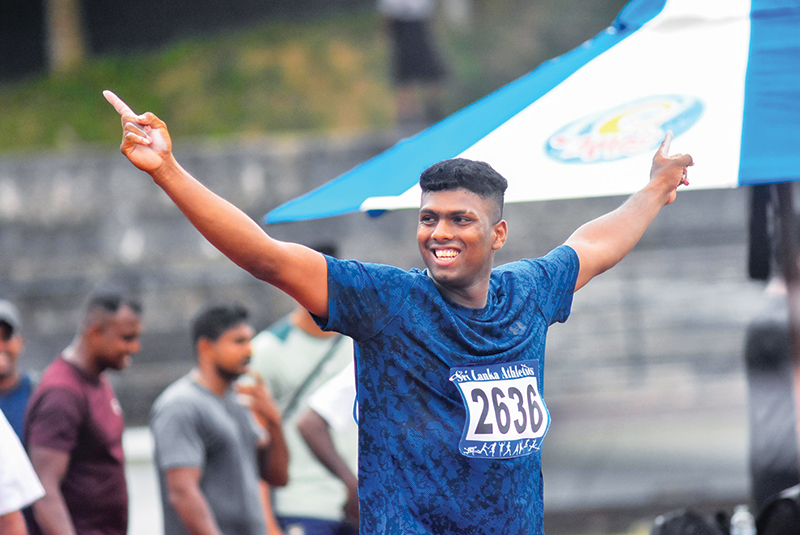
Sri Lankan champion thrower Rumesh Tharanga created history with yet another world-leading effort when he shattered his own national record at the Champions Track and Field event held at Diyagama Mahinda Rajapaksa Stadium on Saturday.
Tharanga produced a massive throw of 89.37 metres in his final attempt, a distance which, once ratified by World Athletics, is expected to stand as the fourth-longest throw ever recorded in Asia. The outstanding performance further cemented his status as one of the region’s leading javelin throwers.
Despite facing little competition from his rivals at the meet, Tharanga displayed the composure and determination of a true champion. Rising above the field, he delivered the record-breaking throw in dramatic fashion with his final effort of the competition.
Coming into the meet, Tharanga already held the world-leading mark of 83.07 metres for the season. Saturday’s performance elevated him to a new level, strengthening his reputation as a strong medal prospect for Sri Lanka on the global stage this year.
Tharanga first attracted widespread international attention when he set a Sri Lankan national record with a throw of 86.50 metres, a performance that earned him the gold medal at an international meet and secured direct qualification for the World Athletics Championships.
The former athlete of St. Peter’s College Colombo has continued to impress since then, producing consistent world-class performances while competing against some of the best javelin throwers in the world. Among his major achievements is reaching the final of the 2025 World Athletics Championships, becoming the first Sri Lankan male javelin thrower to reach the final stage of the event.
With his latest record-breaking performance, Tharanga has once again demonstrated that he is ready to shine and carry Sri Lanka’s hopes at the highest level of international athletics.
By Reemus Fernando
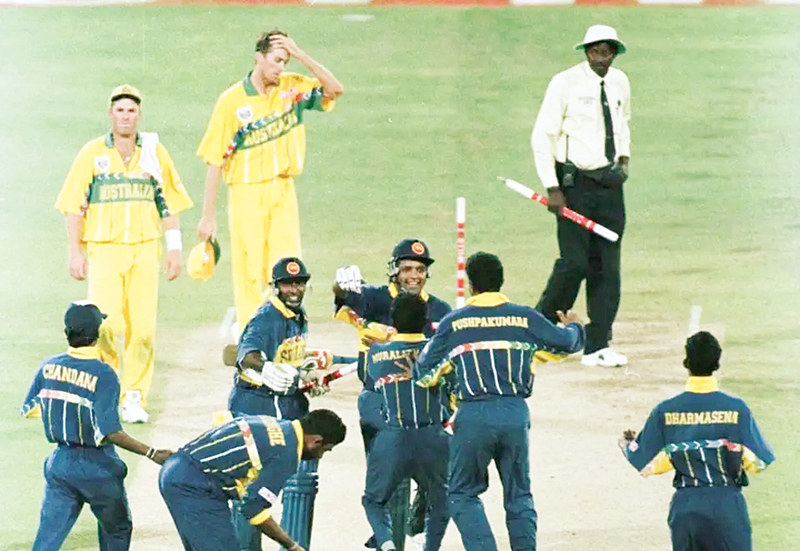
Sri Lanka’s trailblazing 1996 World Cup-winning side will roll back the years when they take on a World XI in Kuala Lumpur, marking three decades since their watershed triumph that changed the game’s field settings for good.
The exhibition match, hosted by the historic Royal Selangor Club, an institution that has been part of Asia’s sporting fabric since 1884, will be preceded by a gala dinner before the old warhorses lace up their boots once more against a Rest of the World XI.
It promises to be more than a nostalgic lap around the park.
“Some of the players took the initiative and I thought it was a splendid idea,” Arjuna Ranatunga, the captain who marshalled his troops like a seasoned general in 1996, told Telecom Asia Sport. “It helps us come together again and more importantly, inspire the next lot coming through.”
Beyond the boundary ropes, the legends will don the coach’s hat, conducting sessions aimed at passing on the baton to aspiring youngsters.
Former Malaysian cricketer Devindran Ramanathan, one of the chief architects behind the event, is keen that this is not just a walk down memory lane but a springboard for the future.
“This isn’t only about celebrating a World Cup win,” Ramanathan said. “It’s about showing young players what’s possible when you dare to dream.”
“When players of that calibre turn up, it shouldn’t end with autographs and photographs. It must open doors and broaden horizons,” he added.
In a heartening initiative, around 20 youngsters from Malaysia’s interior, players who have been making steady strides despite limited facilities, will be brought to the capital on May 15 and 16 to witness the action up close.
For many of them, it will be a once-in-a-lifetime opportunity to rub shoulders with giants of the game, a chance to trade dusty nets for the bright lights and perhaps believe that they, too, can one day play on the big stage.
“The real impact is not the match or the dinner,” Ramanathan noted. “It is whether a young player walks away believing they can go further.”
Malaysia, steadily padding up as a regional cricket hub, has already hosted events like the Under-19 World Cup and continues to expand its footprint in the game. In a sporting landscape dominated by motor racing, racquet sports and football, visits from former world champions in cricket could well help the sport get a firmer grip.
All 14 members of Sri Lanka’s 1996 squad are expected to travel to Malaysia in the second week of May, even as life has taken many of them to different corners of the globe.
Their famous triumph over Australia in Lahore remains one of cricket’s most defining moments, a victory that didn’t just tilt the balance of a final, but shifted the axis of the modern game itself.
(telecomasia.net)

Electricity tariffs to be increased from 1st April

A QR code system to be introduced for agricultural lands and other sectors requiring fuel

Rickelton, Rohit, Shardul break Mumbai’s first-game jinx

Oil tops $116 a barrel as Iran accuses US of preparing invasion

Iranian attack damages Kuwait power and desalination plant, kills worker

Warm weather conditions prevailing over the island are expected to continue

‘Dates have the highest sugar content to fight Coronavirus’

Sunday Island 27 December – Headlines

#SundayIsland 17th December – Headlines

Sunday Island – 28th March

Sunday Island Headlines – 21 March

Sunday Island – 21st February – Headlines
-

 News6 days ago
Senior citizens above 70 years to receive March allowances on Thursday (26)
-

 Features3 days ago
A World Order in Crisis: War, Power, and Resistance
-

 News4 days ago
Energy Minister indicted on corruption charges ahead of no-faith motion against him
-

 News5 days ago
US dodges question on AKD’s claim SL denied permission for military aircraft to land
-

 Business5 days ago
Dialog Unveils Dialog Play Mini with Netflix and Apple TV
-

 Business7 days ago
Postponement of Sri Lanka Investment Forum 2026
-

 News6 days ago
CEB Engineers warn public to be prepared for power cuts after New Year
-

 Sports4 days ago
SLC to hold EGM in April